
Where can I see a good castle?
How about the Tower of London?
Began by William the Conqueror, this iconic castle was built over hundreds of years by numerous kings of England including the formidable Edward I. William was desperate to have a stronghold in his newly conquered land where he was seen as the enemy of the English and the focus of numerous rebellions. Henry III (1216-72) and Edward I (1272-1307) transformed William’s Tower into one of the strongest castles in England by adding two sets of high curtain walls, one inside the other, to make it impregnable. Here you will find a royal residence used by kings for over 500 years as well a a notorious prison where they could incarcerate their rivals. It is where the crown jewels can be seen as well as well as being the last place that the two “Princes in the Tower” were last seen alive, the place where Henry VI was murdered, Guy Fawkes was tortured and where Anne Boleyn was imprisoned before her execution on Tower Hill.
What about great castles outside of London?
How about Dover Castle?

Medieval castles are widespread ranging from Dover in the south to Carlisle in the North.Dover has a very interesting history, dating from just after the Battle of Hastings and the Norman conquest right up to World War Two when it helped mastermind the evacuation of Dunkirk. Deep in those famous chalk cliffs under the iconic castle was an underground hospital for the casualties of the Second World War. Although outside the medieval period, a drive along the coast takes us to castles such as Deal Castle and Southsea Castle built by Henry VIII to defend England against the expected invasion of both French and Spanish forces who opposed his “Reformation” and choice of wife!
Enjoy spectacular medieval displays at Warwick Castle
Warwick is a wonderful place to learn about medieval castles. Warwick displays such key features as a huge barbican with a great example of an inpenetrable portcullis and its associated murder holes. You can see how castles could be attacked with an example of a huge catapult known as a trebuchet which could hurl huge rocks at the fortifications. This was also an early attempt at biological warfare in that dead and rotten animals could also flung over the the walls to spread disease amongst those who refused to give in. In the “Time Tower” you can “join characters from the castle’s past as they travel through time on an adventure quest through Warwick Castle’s dark history of bloodshed, death, treachery and destruction!”
More posts on Medieval History

A day’s wandering around this area of Coventry will present you with hundreds of years of history to discover. You will be able to visit the ruins of the 14th and 15th century church of St Michael that became a cathedral in 1918 as well as the new one next door.. About 160 metres away or a two minute walk, is Holy Trinity church with its amazing Medieval “Doom Painting” which some people believe is the best one in Britain. One minute away, is the wonderful and free Herbert Art Gallery and Museum.

As you wander around Kenilworth Castle it morphs from Medieval Fortifications to Tudor Palace and its story features John of Gaunt of medieval times to an Elizabethan love story involving Robert Dudley, aka the Earl of Leicester and Queen Elizabeth I. The castle was involved in the longest siege in English history and is an amazing place to explore. It features a huge square keep, the ruins of a medieval palace , Queen Elizabeth’s apartments and a reconstructed ornate garden created out of love for her.
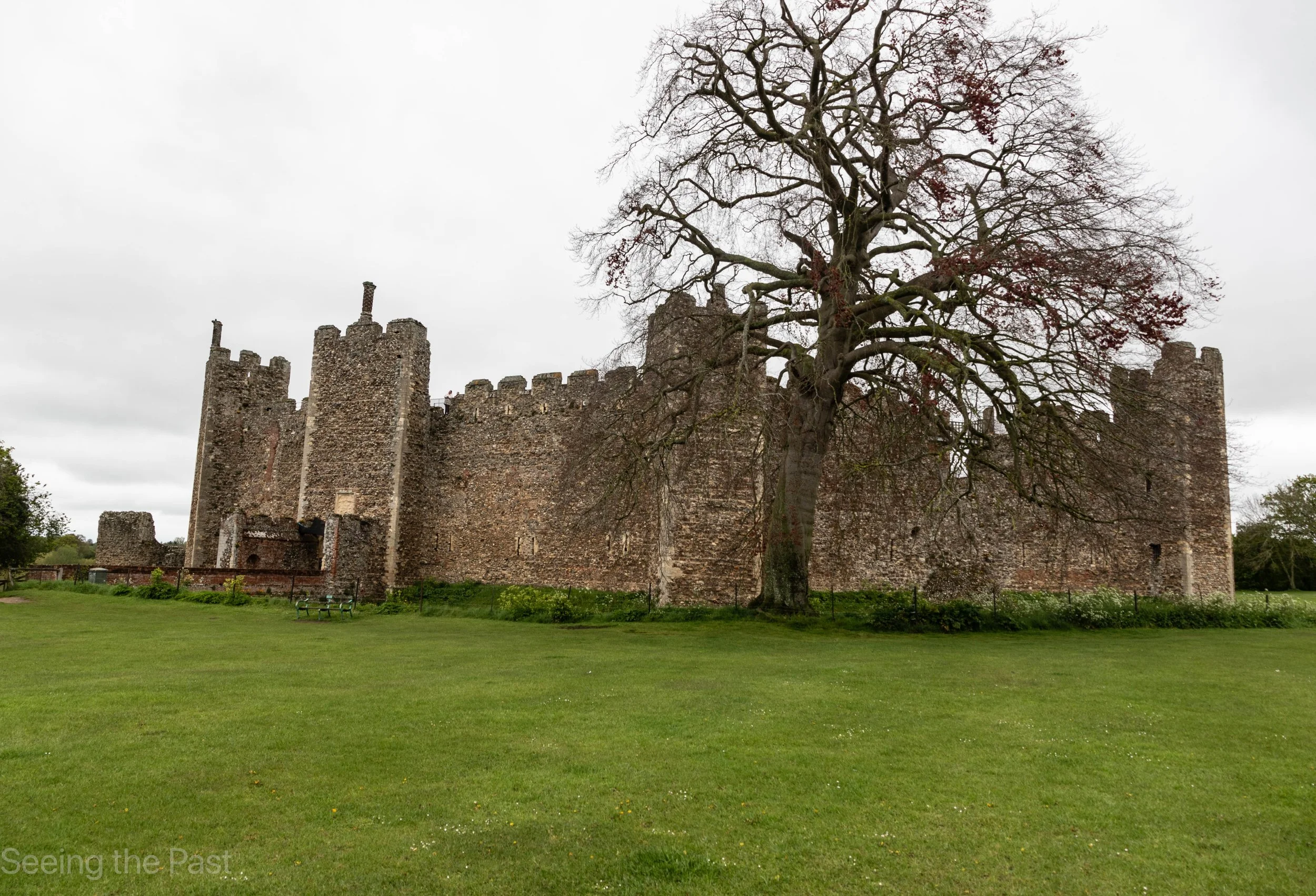
Framlingham is a great castle to discover and has a fantastic story to tell as well as having a song written about it by Ed Sheeran in 2017 featuring its part in his upbringing. It was successfully besieged by King John and was Mary Tudor's refuge in the succession crisis. It is surrounded by beautiful parkland that was once the hunting ground of the dukes of Norfolk and has a great wall walk that enables visitors to wander three quarters of the length of the surrounding walls in safety. It has a small informative museum and a cafe which offers a good range of hot and cold seasonal meals, baguettes as well as choice of delicious cakes, snacks and offers a good quality coffee.

Durham Cathedral is a very special building for a number of reasons to the extent that the author, Bill Bryson wrote it was “the best cathedral on Planet Earth.” Building began in 1093 and was to take 40 years to complete. If you are in the North-East of England, it should be number one on your list of places to visit. It is a good example of Romanesque architecture with its rounded or semi-circular arches, typical of architecture under the Normans (Norman castles have these arches too). When built it was Britain’s tallest building and must have amazed onlookers at a time when buildings were mainly made out of wood with wattle and daub walls and a thatched roof. It is home to the shrine of St Cuthbert, on of England's most important saints and the Venerable Bede.

It is debatable which is the best doom painting in Britain but it is not debatable that the doom painting at Holy Trinity Church Coventry is one of the best. The Art Historian and documentary maker, Graham Andrew Dixon wrote on his website, “The picture must be counted one of the most important discoveries to have been made in the field of medieval art.” He adds, “it is a vigorously scary depiction of the moment when the Last Trump shall sound, painted in a crude but bold style and teeming with fascinating and unusual detail. It is hard to think of a more potent relic of English fifteenth-century dread.”

The old phrase “A picture is worth a thousand words” is very appropriate when looking at the magnificent Wenhaston doom painting. In the medieval world where few people could read, a painting of the events of the “Last Judgement” would carefully show what was going to happen to souls when the world would come to an end. This would guide people to manage their lives to ensure a wonderful future. The picture of Hell left no one in doubt that sinners would have a horrible future. The doom painting at Wenhaston is in remarkable condition with very little missing or incomprehensible.

St Mary’s Church North Leigh, on the outskirts of the Cotswolds and north-west of Oxford, is a fascinating place to visit. To me, the star of the show is a wonderful doom painting which, unlike many, is in good condition. Medieval parishioners participating in services would have no doubt what awaited them when the inevitable happened and they died. The three panels of their doom painting left it very clear. Only a 10 minute drive away is another incredible doom painting at South Leigh. St Mary’s can also boast of a chantry chapel with fan vaulting, a knight’s effigy with links to the Lancastrian side in the Wars of the Roses and a Saxon tower.

South Leigh doom painting north west of Oxford is a great example of what medieval people were expected to believe. Unlike some paintings with large areas lost, this doom painting is clear and easy to understand. At the Last Judgement, souls are summons from graves and decision are made as to their future. Heaven, on the left as the observer sees it, welcomes all sorts but likewise Hell on the right, also welcomes kings, queens, bishops and a whole variety of sinners. The devils surrounding Hell look gruesome as does a monster with a large, gaping mouth coming out of Hell to catch them. Allied to the doom painting is a medieval wall painting of St Michael weighing souls to see who goes to heaven and who has sinned so much that they will end up in Hell. Again, various Devils are in the painting and in this case trying to influence the decision. Also at South Leigh is a wall painting of St Clement and a painting of the “Seven Deadly Sins”.

Life in medieval times in the north-east of England was one full of danger with a constant threat of war. Viking raids, as well as raids from Scotland, were a regular problem and from time to time kings of England came to this area to consolidate their power. Warkworth was owned by the powerful Percy family for over 600 years who preferred it to the much larger Alnwick castle. The Percy’s were renowned for taking some poor decisions in dynastic wars and losing their lives as well as their properties and titles. One Percy known as “Harry Hotspur” became a popular knight and has been remembered over the years for featuring in Shakespeare’s Henry IV part one.

Begun in 1096, Norwich Cathedral has become a wonderful example of Romanesque architecture with its huge semi circular Norman arches. Looking upwards reveals one of its amazing gems, the highly coloured 700 roof bosses telling the Biblical story from the “Creation” to the “Last Judgement” and greatly outnumbering all other cathedrals in the country. Norwich has the second largest cloisters in England but again looking up reveals more gems, this time, a brilliant collection of green men including the famous gold leaved one in the photo above. Looking down in the choir, on the other hand, gives you a chance to see some great misericords. It is also the place where two fascinating people, Julian of Norwich and Edith Cavell, are commemorated.

If you are into stunning architecture, this place fits the bill. It is often quoted that King’s College Chapel “is one of the finest examples of late perpendicular gothic English architecture”. Although begun by Henry VI, as you walk to the entrance, you will see the Tudor stamp and two steps inside, you will be bowled over by, what one of the guides described as, “Tudor Bling”! Look closely at the rood screen and you will see intertwined H and A standing for Henry VIII and his second wife, Anne Boleyn. Added to this are 25 beautiful Tudor stained glass windows created by the finest Flemish craftsmen of the day. At the end of this blog you will see some excellent examples of green men, something we always look for in churches and cathedrals.

Okehampton Castle s a romantic medieval ruin set in the beautiful Devon countryside with some fascinating former owners with stories to tell. Exploring the castle is an engaging experience. Built, soon after the Battle of Hastings and as part of the Norman Conquest, the castle had a vital role to play in consolidating William the Conqueror’s control of the rebellious South-West of England. Built on a natural spur of high land above the valley of the River Okement, its location was carefully chosen to dominate the area and be very difficult to successfully attack. Having seen little action in its early years, it became a hunting lodge for its owners to carry out their favourite pastime and entertain as well as impress, its illustrious guests. It was eventually owned by the Courtenay family who became involved in national politics and suffered some great setbacks with Thomas Courtenay, in 1461 and Henry Courtenay, in 1538, paying the ultimate price of beheading.

Lincoln Castle is an amazing place to visit with its complete circular wall that can be walked with great views of the nearby cathedral. It is rather unusual with two Norman mottes and its history of numerous medieval sieges. All the medieval sieges were of national importance and featured King Stephen, King Richard, King John and the nine year old King Henry III. In 1217, the castle was pounded by boulders fired from massive catapults known as trebuchets as part of the Battle of Lincoln. Victory of Henry III’s army led by the heroic, William Marshall, just outside the castle walls put an end to English rebels and French troops claiming the English crown for Prince Louis of France. Lincoln Castle, has its own copy of the original Magna Carta on display, an audio visual display explaining this highly important document and a small but fascinating museum. The castle grounds also house a Georgean and Victorian prison where original cells can be visited. Lastly, it even has its own resident dragon!
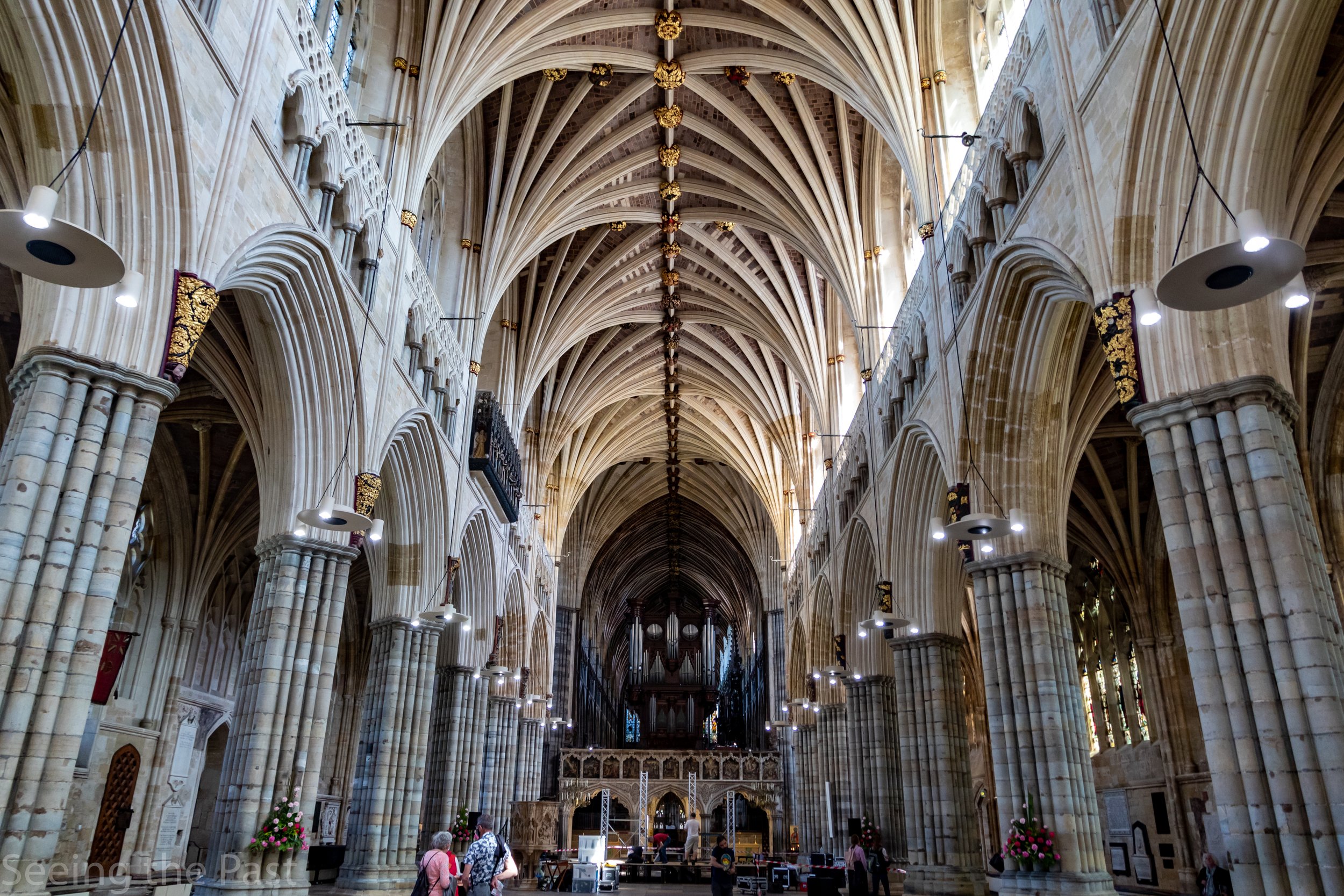
When you enter Exeter Cathedral it is easy too see why thousands of people visit it every year. In front of you runs the longest, continuous medieval stone vault in the world, which, can only be described as awesome. Where each rib of the tierceron vaulting meets, there is a beautifully carved boss. Many of the bosses are of a bright gold colour and most of the bosses are highly coloured, illustrating that medieval churches were once dominated by vibrant colours. Gothic architecture was devised to allow in as much light as possible and this cathedral certainly meets that goal. Beautiful, gothic windows adorn the building and there are many fascinating features to search for such as misericords, green men and an early 15th century medieval clock.
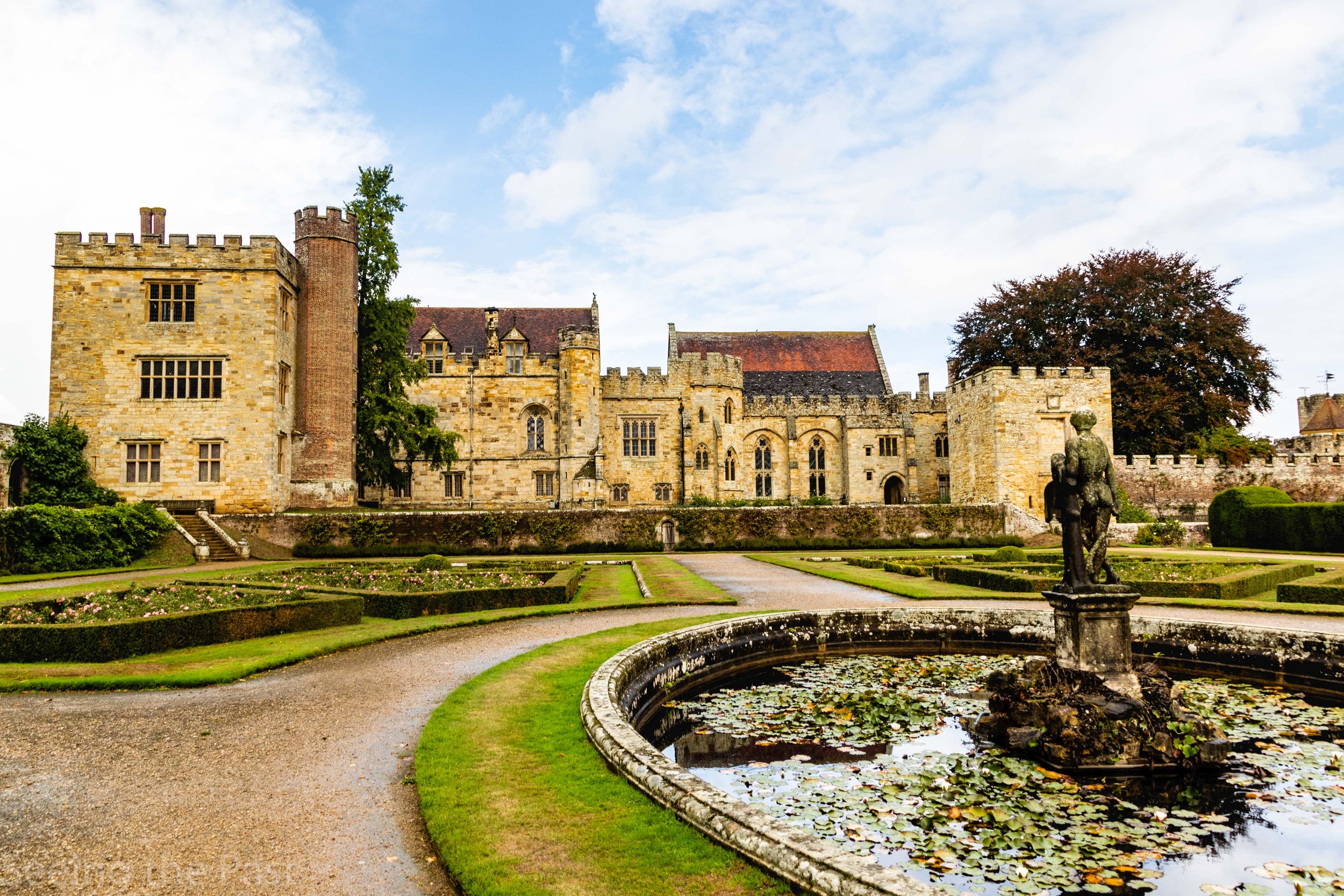
Penshurst Place is a beautiful house and gardens which date back to the mid 14th century. It is the place acquired by Henry VIII to be able to flirt with Anne Boleyn and possibly Mary Boleyn who lived at nearby Hever Castle. It has had some fascinating owners including the second Duke of Buckingham who was closely involved with Richard III’s takeover of power and possible the assassination of the “Princes in the Tower. His successor, the third Duke of Buckingham, put on an extravagant feast to impress Henry VIII in 1519 at Penshurst, only to be executed two years later for treason! Among its many rooms is the stunning Barons’ Hall, a great hall that has been featured in numerous documentaries about Medieval and Tudor history and is one of the best examples of a great hall in the country.
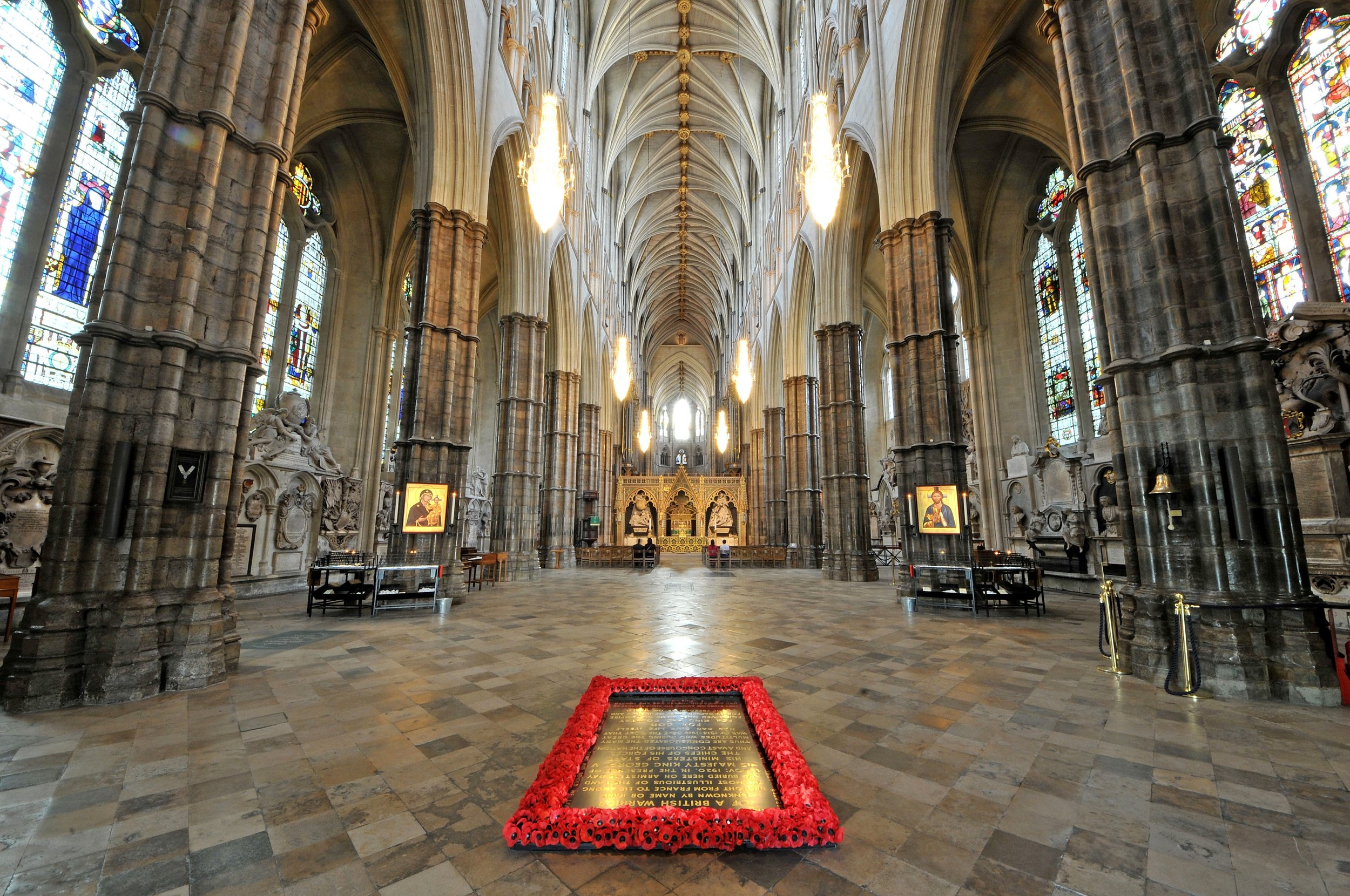
Westminster Abbey, an awesome building for royal funerals, royal tombs, marriages and coronations plus a magnificent place to host Poets' Corner. The Abbey is the burial place for 3,300 people including; Edward I and his wife; Eleanor of Castile; Edward III and his wife, Philippa of Hainault; Henry V, sometimes seen as the greatest ever King of England; Queen Elizabeth I and Mary Queen of Scots. In total, 17 monarchs are buried in Westminster Abbey. Added to that there are 600 memorials including for such geniuses as William Shakespeare and Charles Darwin.I rarely use the word awesome in my blog but in this case it is highly appropriate. It was constructed to be awesome and inside it is guaranteed to take your breath away. Although, linked to Edward the Confessor in the 11th century, the church you see today replaced Edward’s impressive building beginning in 1245 and was largely constructed by Henry III and later kings.
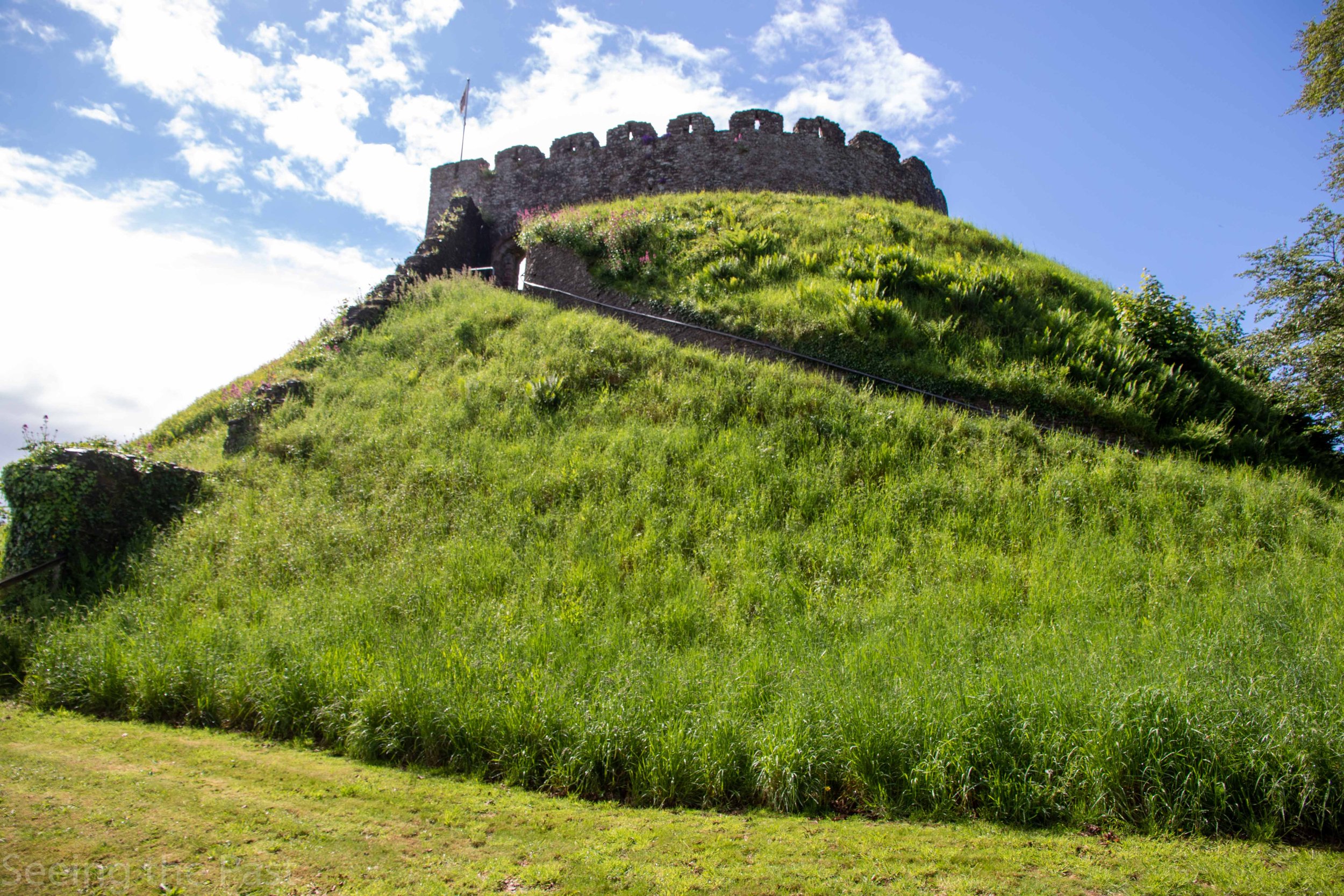
Totnes is a beautiful example of an early, motte and bailey castle that, by the end of the 13th century, morphed into a shell keep castle. It was a vital part of the Norman policy of controlling the troublesome English people, especially people living in the South-West. Totnes was one of the earliest types of castle and was built at speed in 1068 being part of William the Conqueror’ plans to suppress rebellious Anglo-saxons. It is a good example of a shell keep and, with visits to other types of castles, will create a great timeline of the development of castles culminating in Caernarvon Castle, Beaumaris Castle and Tudor castles such as at Pendennis and Southsea. Standing on top of the shell keep, gives fantastic 360 degree views of the surrounding area and therefore reasons for its location. Walking around the bailey makes it easy to see the development of the dry moat and ditches as the first form of defence.
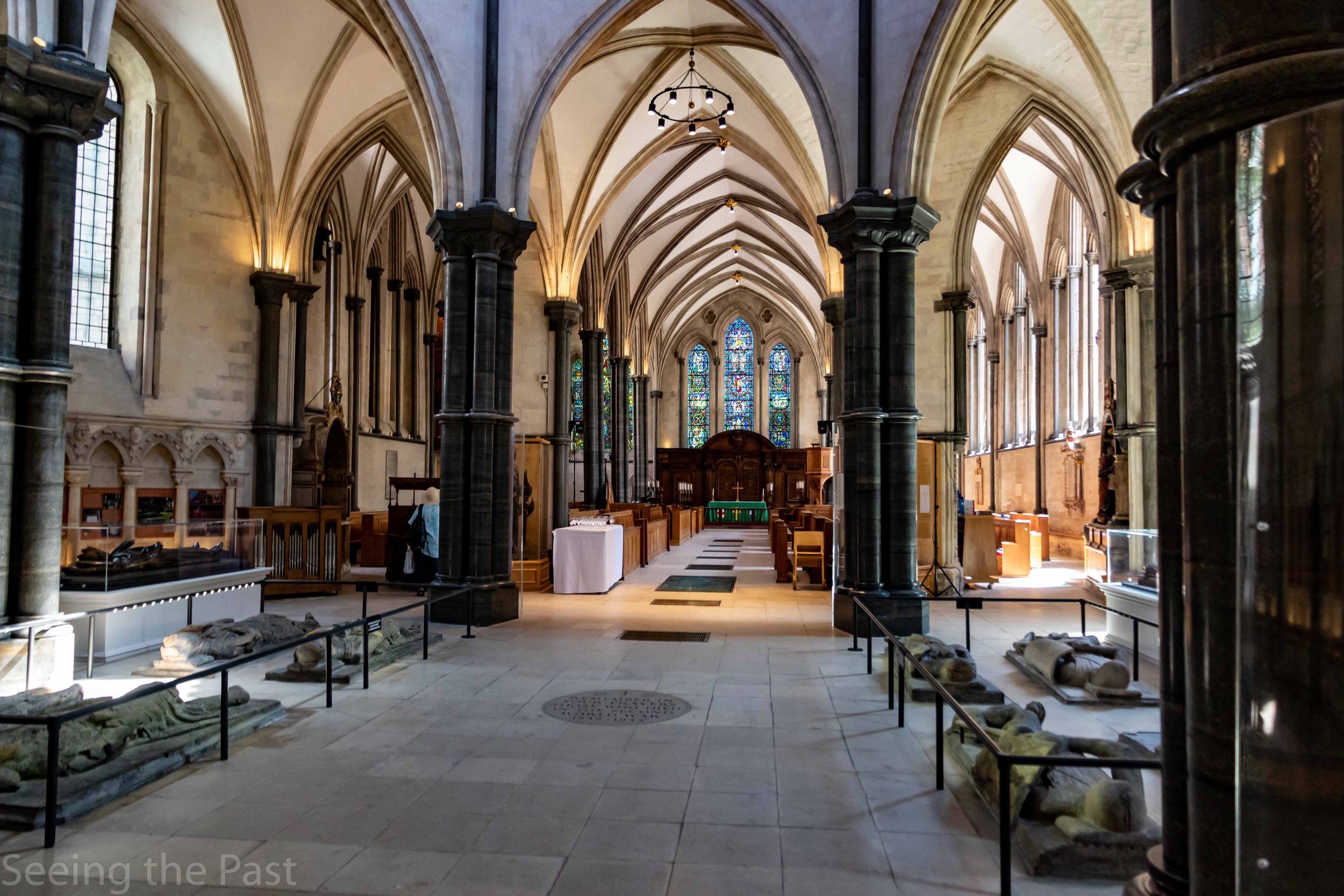
The Temple Church was the headquarters of the Knights Templar in London. The Templars have a fascinating history, have been linked to the “Holy Grail” and in modern times have featured in Dan Brown’s Da Vinci Code. In the film of book of his book, the key characters visit the temple in their quest to find the grail. In 1215 AD, it was the place that key negotiations for Magna Carta took place in the reign of King John. On stepping inside the Temple Church, eight effigies can be observed , one of which is William Marshall, known as “the greatest ever knight”.

In the in his biography of William Marshal, Thomas Asbridge wrote:“William also possessed innate qualities and acquired skills that set him apart. Marshal’s raw physicality allowed him to absorb battering blows that might fell others, while his strength lent jarring force to the attacks he delivered with either lance or sword. Few could match the assured agility of his horsemanship and a canny, guileful strategic awareness meant that he was able to outthink opponents.” He was not only a very skilful knight, from relatively humble beginnings being the son of a minor lord, he rose to the importance of being regent to the young Henry III and saving England from having a French monarch. He worked for five kings from Henry II to Henry III, as well as Henry II’s eldest son, Henry, who died before his father. In the reign of King John, the barons rebelled against their monarch and it was Marshall who played a key part in advising the king to sign Magna Carta and gain peace at least for a short time. John soon renaged on the Charter but soon after his death, William sealed the charter in the name of John’s young successor, Henry III and people’s rights in England were guaranteed forever.(see the next section for details).

Magna Carta is seen by many historians as one of the most important documents in history because it established first in 1215, the principle that everyone is subject to the law, even kings and queens and it guarantees the rights of individuals, the right to justice and the right to a fair trial. It is significant because it put England on the way to democracy. Over time the powers of English kings were curtailed especially in the 17th Century. Furthermore, Magna Carta is often cited as having strongly influenced the American Bill of Rights in 1791 and the Universal Declaration of Human Rightist 1948. You can see it at Salisbury Cathedral, Lincoln Castle and the British Library London.
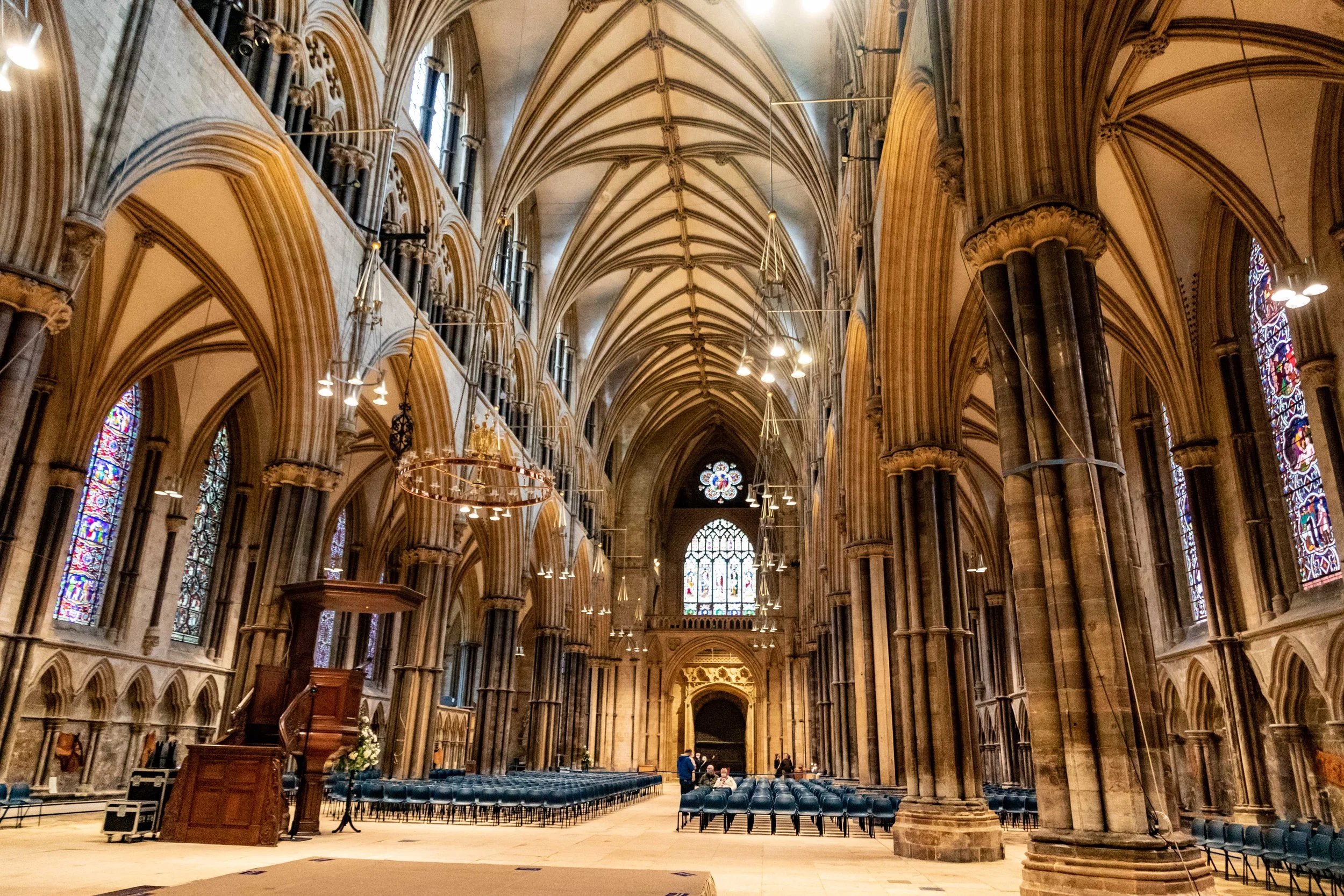
Construction of this magnificent cathedral you see above began in 1192, with its stunning rib vaulting as well as pointed arches and beautiful stained glass windows. To contrast with this, the amazing chapter house has fan vaulting and, coincidentally, was where some scenes of the film, the De Vinci Code were shot. Look closely and you will find beautifully carved misericords and if you are eagle eyed you will find some “Green Men” as well as a little creature known as the “Imp”. In the nave at the opposite end to the entrance is the tomb for the entrails of Queen Eleanor of Castile, wife of King Edward I. (her heart was buried in Blackfriars in Lincoln and the rest of her body, in Westminster Abbey). In the choir area, is the tomb of Katherine Swynford, the mistress and third wife of John of Gaunt whose family line ended with Henry VII claiming the throne in 1485.
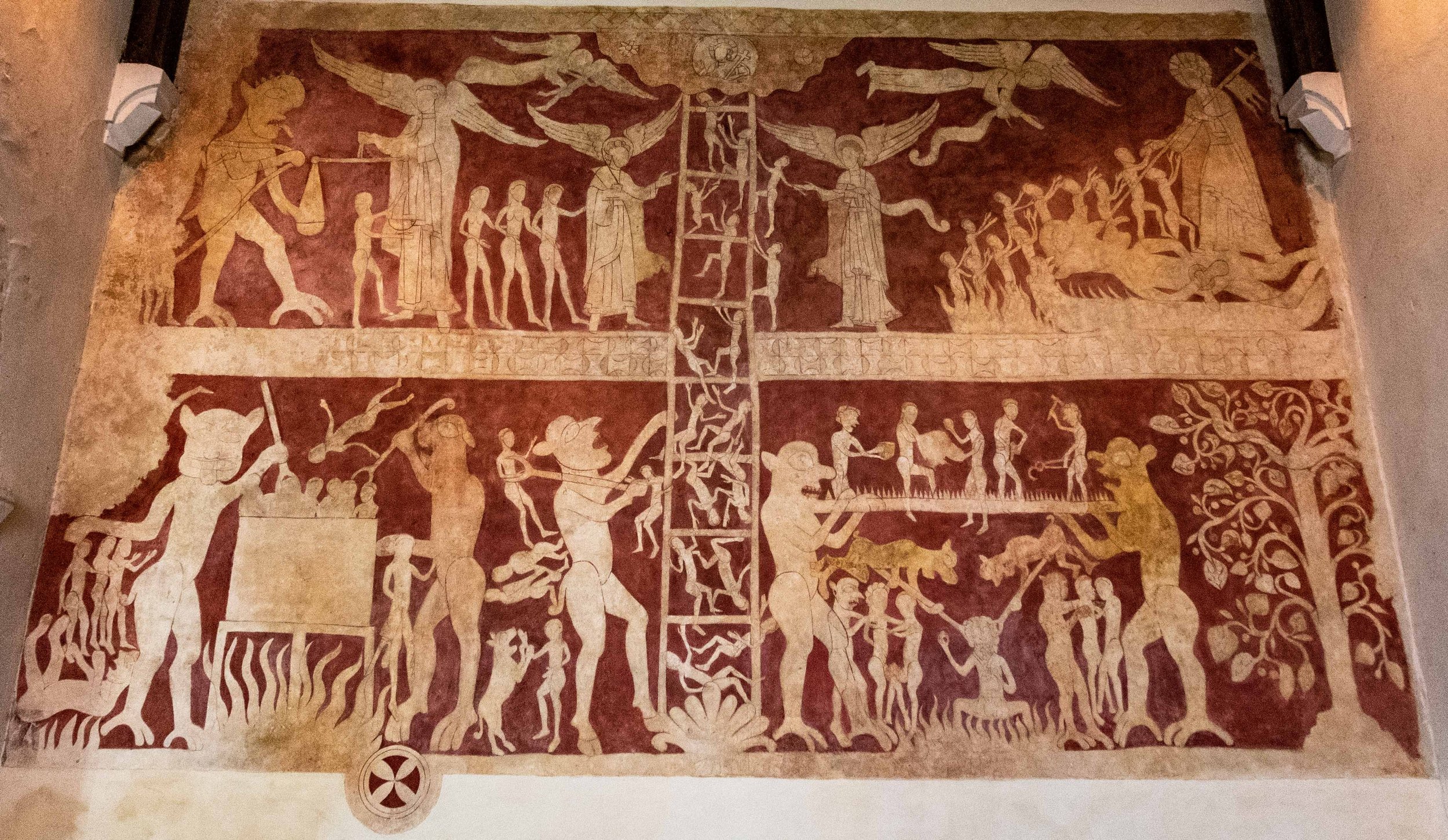
Chaldon “Doom Painting” has been featured in loads of books, especially chiIdren’s medieval history books and is stunning when you walk into the church and see it for the first time. It is possibly the oldest Doom painting in the UK, painted sometime around 1200 AD. It is unique, there is nothing to compare it with. Some people have suggested that it is part of the original mural but no-one has found any evidence to support this theory and looking around with my amateur eye, I couldn’t see anything that could be interpreted as being even a small bump in the white paintwork that could be concealing a fragment of another painting. The painting is believed to have been produced by an unnamed travelling monk who went from church to church. The painting is over 17 feet wide and 11 feet high. Only red and yellow ochre paints were used in the painting which again, makes it unusual. It is said to have been whitewashed when Cromwell and the puritans were in power and rediscovered in 1869.

A visit to the Richard III Visitor Centre is a must for any medieval history fan. It tells the story of the Wars of the Roses using some amazing graphics and how Richard came to rule England. You are then taken on a path to discover what happened to Richard’s body having lost the Battle of Bosworth Field to Henry Tudor. The great mystery was only recently solved but then the task was to exactly locate the skeletal remains. This was not easy because several misleading sources suggested that either his bones had been removed and buried next to a river or actually thrown in that river. This was not the end of the story because the next step was the monumental task of proving that the remains found were actually Richard III. Historian’s judgements would not be sufficient, it had to be proven by mitochondrial DNA. Finally, you can actually see Richard’s open grave!
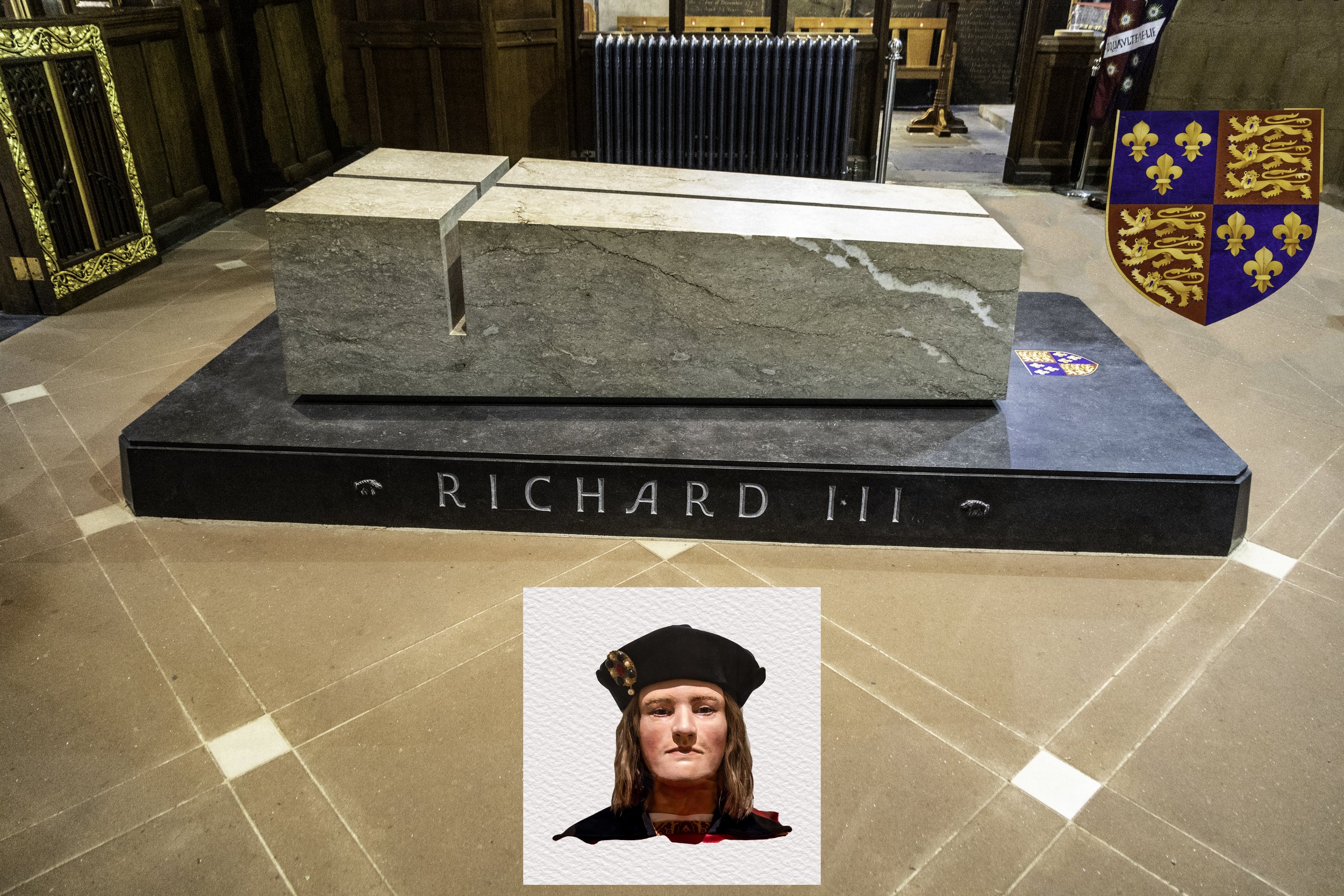
The king in the car park, part 1, is about Leicester Cathedral, Richard III's final resting place. In August 2012 there was a media frenzy taking place near an old car park in the city of Leicester. What was going on? The world’s media had just been informed that archaeologists had found skeletal remains which were possibly those of King Richard III of England. Back in August 1485, Richard III had been killed in the Battle of Bosworth Field by the army of Henry Tudor, soon to become Henry VII but there was a mystery about what happened to his body. Leicester Cathedral has become his final resting place. There you can see his amazing tomb, two beautiful stained glass windows commissioned to go with the tomb and the beautiful cloth (pall) that covered his coffin in his funeral. It is also next door to the Richard III Visitor Centre, specially created with audio visual facilities to tell the story of Richard’s life, how his body was discovered and give you a good view of his excavated grave.

Remember the Netflix movie “The Dig” ? Well, Sutton Hoo is hitting the headlines again. An article soon to be published in the journal Antiquity by Gjermund Kolltveit, suggests that a lyre found in Dzhetyasar, Kazakhstan, dating from the 4th century AD is very similar to one found in the Sutton Hoo ship burial from the 7th century AD. Norwegian, Gjermund Kolltveit states in the journal that the lyre found in Kazakhstan is “barely distinguishable” from the Sutton Hoo lyre. In 2019, Kollveit attended a conference on music archaeology and came across a photo of the Dzhetyasar lyre and it immediately rang bells suggesting similarities with lyres in Germany and Sutton Hoo. “I recognized from the picture immediately, ‘wow, this is very, very similar to the lyres found in Germany and the UK,’ he said.
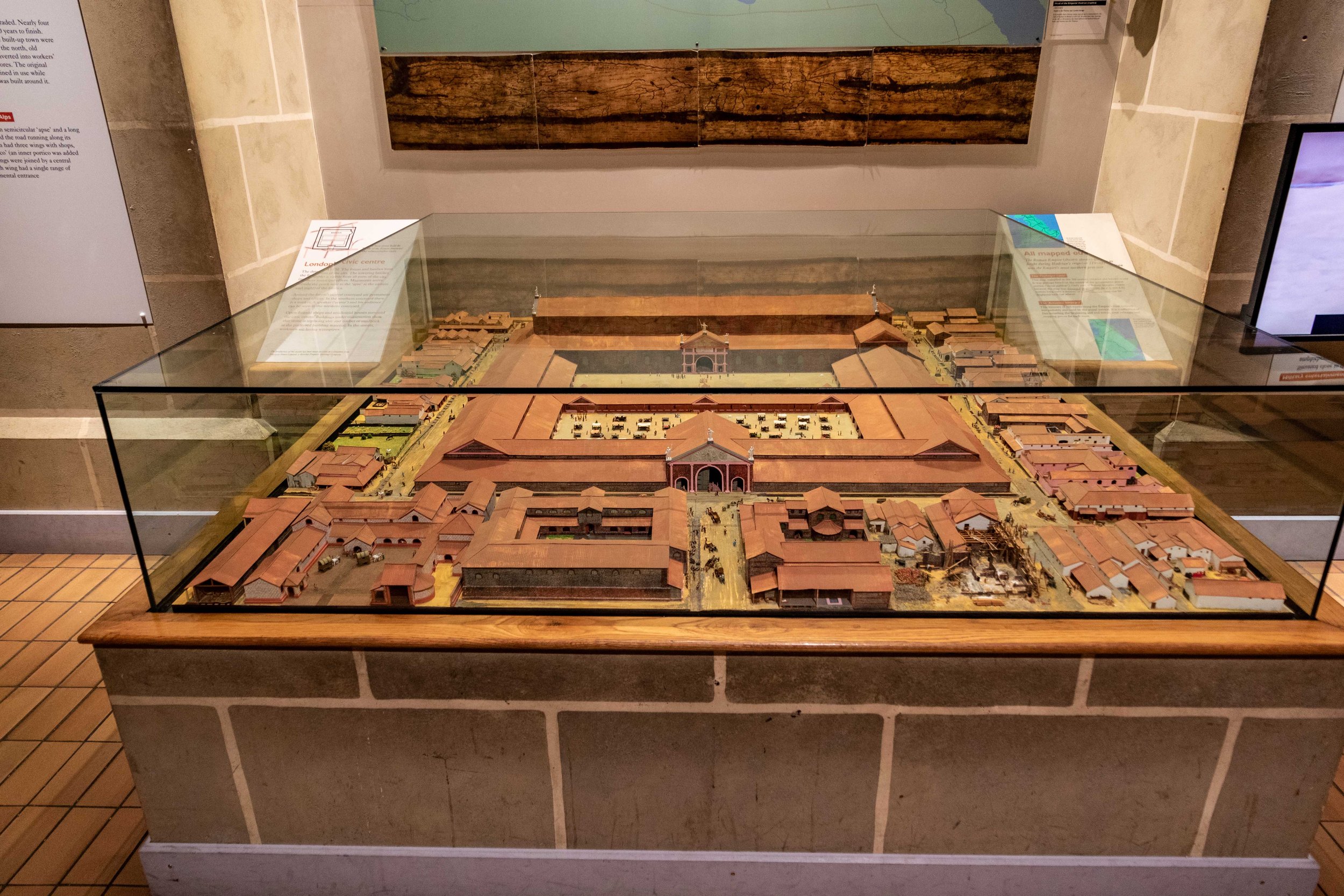
Visiting London? The Museum of London, is one of the best museums in the UK and is free. You can see amazing objects from thousands of years of life in London, from a Mammoth tusk to a pilgrims badge representing a visit to St Thomas Becket’s tomb. You can get up close to those objects and see their little details. The displays are bright and informative. There are rooms set out as though they were from a Roman villa placing Roman finds in context. Several models are on display such as London’s Roman forum and Basilica as well as the original gothic St Paul’s Cathedral

Restormel Castle is situated in beautiful Cornish countryside and is seen as, "one of the most remarkable castles in Britain", according to English Heritage. It is virtually unique in its design and therefore is rather special in my opinion. There aren’t many shell keeps around and this is one of the best. It is very different from the magnificent castles of North Wales, the amazing Warwick Castle, Dover castle and the beautiful Bodiam Castle.Standing on the wall walk you can see the wonderful curved wall in front and behind you. The skill of the builders to create such curves is impressive. It is quietly tucked away in the glorious Cornish countryside with wonderful views in all directions. Standing on the wall walk you can see the wonderful curved wall in front and behind you. The skill of the builders to create such curves is impressive.
It is quietly tucked away in the glorious Cornish countryside with wonderful views in all directions.
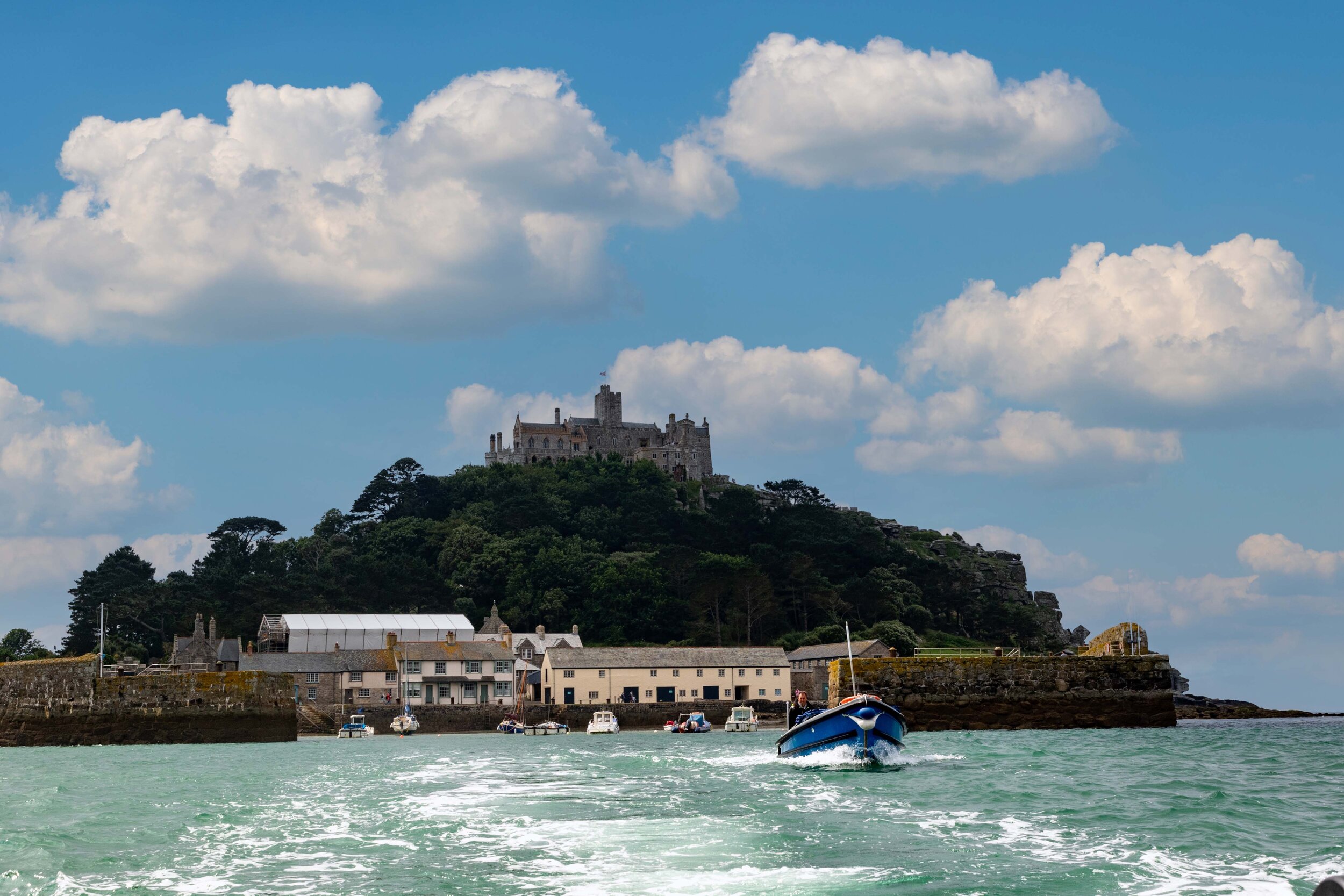
Why visit St Michael’s Mount? Getting there is an adventure. You can walk at low tide across a causeway or go on a short boat trip. On landing, you then have the challenge of getting to the top. From the mainland it cries out to be visited and from the top you get some great views. Pilgrims have visited it for centuries. It has survived a variety of historic events such as the Wars of the Roses, Spanish Armada and the Napoleonic Wars. It has been altered so many times over the years that each room in the mix takes you to a new part of its history. It has a unique and fascinating collection of artefacts. There is no guessing what you will see in the next room.

This blog will unravel the mysteries of the stories of King Arthur and Tintagel. It describes and explains how the story grew over time and sheds light on the truth about King Arthur. It suggests why you should visit Tintagel Castle. It is the mythical birthplace and home of King Arthur, allegedly the greatest King of Britain. There are an awful lot of legends associated with this place that are outlined below. It is a fascinating ruined to explore. It has beautiful views of the rocky coastline. It is in English Heritage’s top five of most visited places.

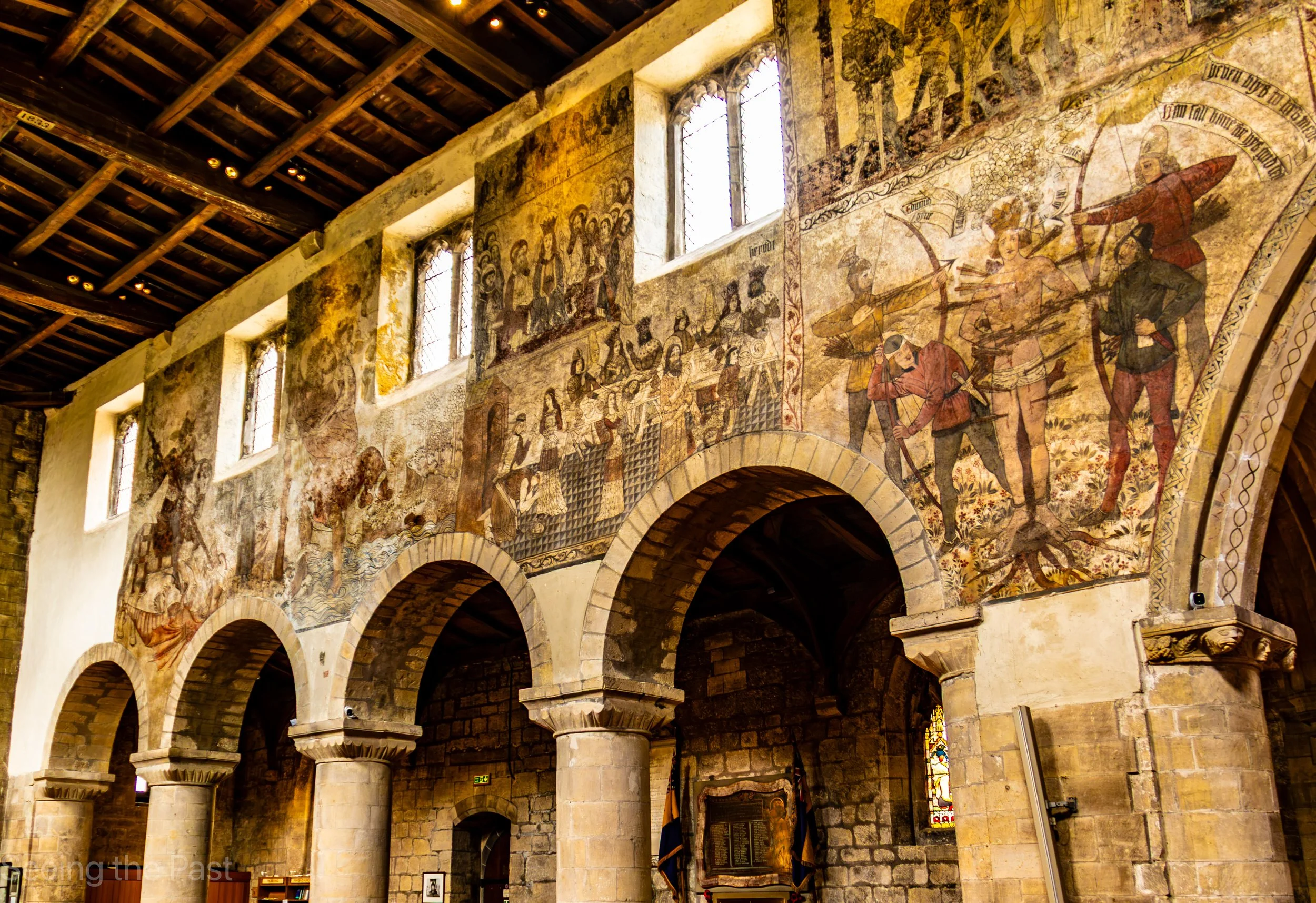
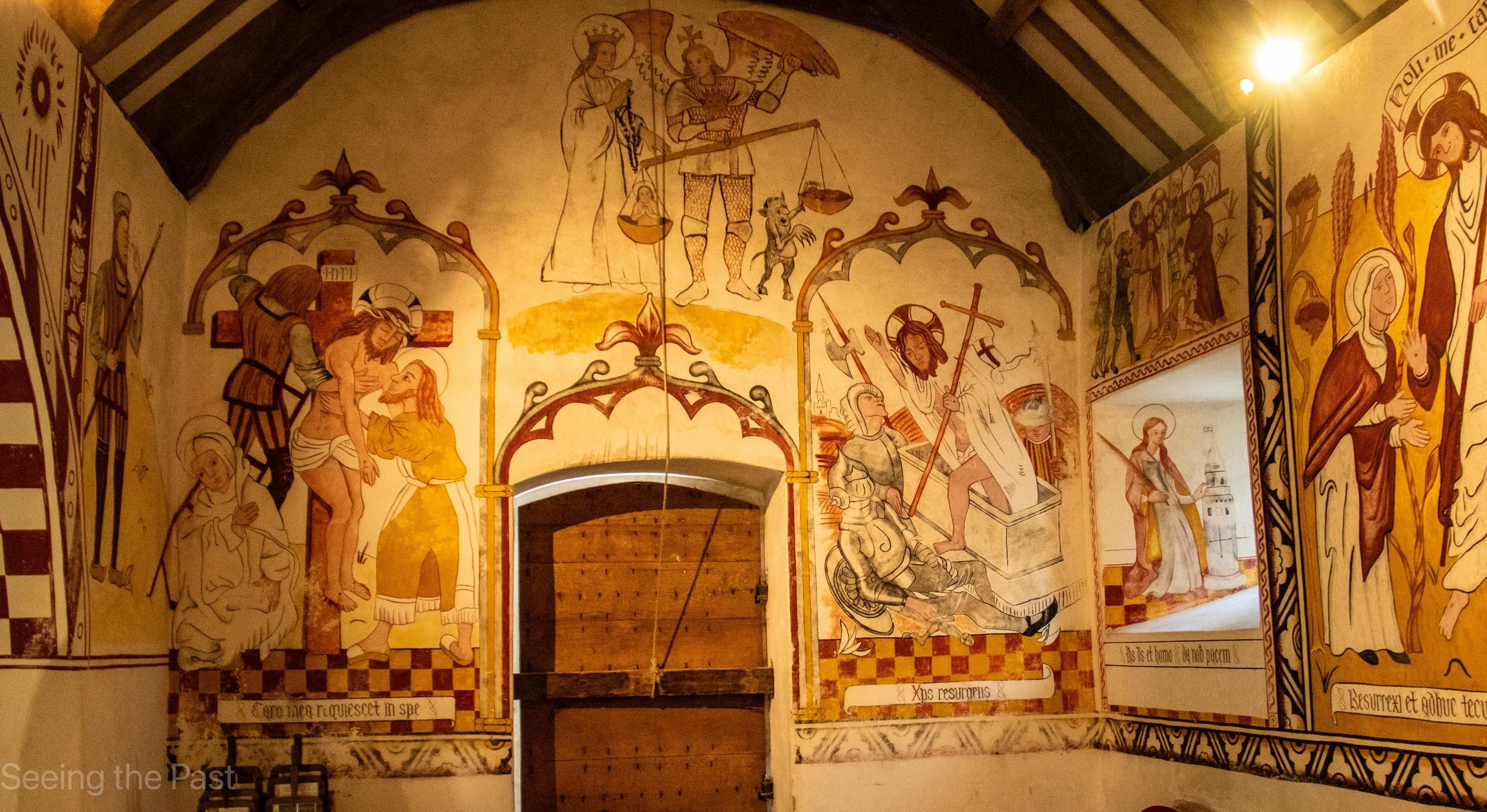

St Teilo’s Church, now lovingly re-erected within the open-air precinct of St Fagan’s Museum of Welsh Life, is a remarkable testament to Wales’s medieval and 16th century heritage. Originally constructed in the early 16th century, this humble parish church was painstakingly dismantled, transported, and restored to its former glory — not least its dazzling wall paintings, which have been carefully recreated with scholarly precision. These vivid murals, brought back to life through meticulous craftsmanship, offer visitors a rare window into the devotional art and storytelling of the late medieval period. Stepping inside St Teilo’s, you’re transported back half a millennium, immersed in a world where faith, community, and artistic expression converged on plastered walls that still speak with vibrant colour and enduring power.