
I love finding out about Henry VIII and Queen Elizabeth Ist but where can I explore the Tudor world?
Well, a good place to immerse yourself in the Tudor world would be Hampton Court Palace.
This stunning palace was built by Henry’s chief minister, Cardinal Wolsey the man failed to solve Henry’s marital problems and therefore had to pass this huge building over to the King. At various points in his reign, Henry brought all six wives to Hampton Court. Henry used the palace show off his power and wealth to both foreign and English visitors. He would entertain up to 800 guests with extremely lavish banquets and loved to impress with his extravagant furnishings including huge tapestries.
Hampton Court kitchens takes you to world without modern gadgets
You can visit the royal kitchens that employed 200 cooks and try your hand at roasting meat. Imagine a world without electric or gas cookers! Here they burned 1.3 million logs to boil cauldrons and roast meat on continuously turned spits to cook the huge feasts that Henry ordered.
Henry VIII’s great hall will take your breath away and deliver you to the world of the Tudors.
This was designed to show that Henry was one of the greatest ever kings of England and far greater than his rivals in France and Spain.
Look out for the Hampton Court ghosts
Two of Henry’s wives apparently haunt the palace. Henry’s third wife, Jane Seymour, died soon after giving birth to his only son, Edward, and subsequently roams the stairs leading to the room where she gave birth. The 19 year old Catherine Howard, his fifth wife who was executed for adultery (a crime treason because it was against the king!) roams the haunted gallery screaming out for mercy!
Experience open air Elizabethan theatre at the Globe on the south bank the River Thames of the original Globe
This authentic reconstruction of Shakespeare’s Globe Theatre gives you the opportunity to enjoy, for as little as £6, a Shakespeare play in an environment that would be familiar to the great playwright himself. Plays go ahead in all weather, just like they would have done in the 16th century and be prepared for a fair amount audience participation.If a play is not for you, take a fascinating backstage tour. This visit can incorporate a beautiful stroll along the bank of the Thames, a visit to a reconstruction of Sir Francis Drake’s ship, the Golden Hind, a visit to St Paul”s Cathedral on the other side of the Thames via the millennium Bridge, for modern art fans, a trip to the Tate Modern and for Street food lovers, a trip to nearby Borough Market.

Shakespeare’s globe

Just before an evening performance at shakespeare’s globe
More posts on the Tudors

Lincoln Castle is an amazing place to visit with its complete circular wall that can be walked with great views of the nearby cathedral. It is rather unusual with two Norman mottes and its history of numerous medieval sieges. All the medieval sieges were of national importance and featured King Stephen, King Richard, King John and the nine year old King Henry III. In 1217, the castle was pounded by boulders fired from massive catapults known as trebuchets as part of the Battle of Lincoln. Victory of Henry III’s army led by the heroic, William Marshall, just outside the castle walls put an end to English rebels and French troops claiming the English crown for Prince Louis of France. Lincoln Castle, has its own copy of the original Magna Carta on display, an audio visual display explaining this highly important document and a small but fascinating museum. The castle grounds also house a Georgean and Victorian prison where original cells can be visited. Lastly, it even has its own resident dragon!
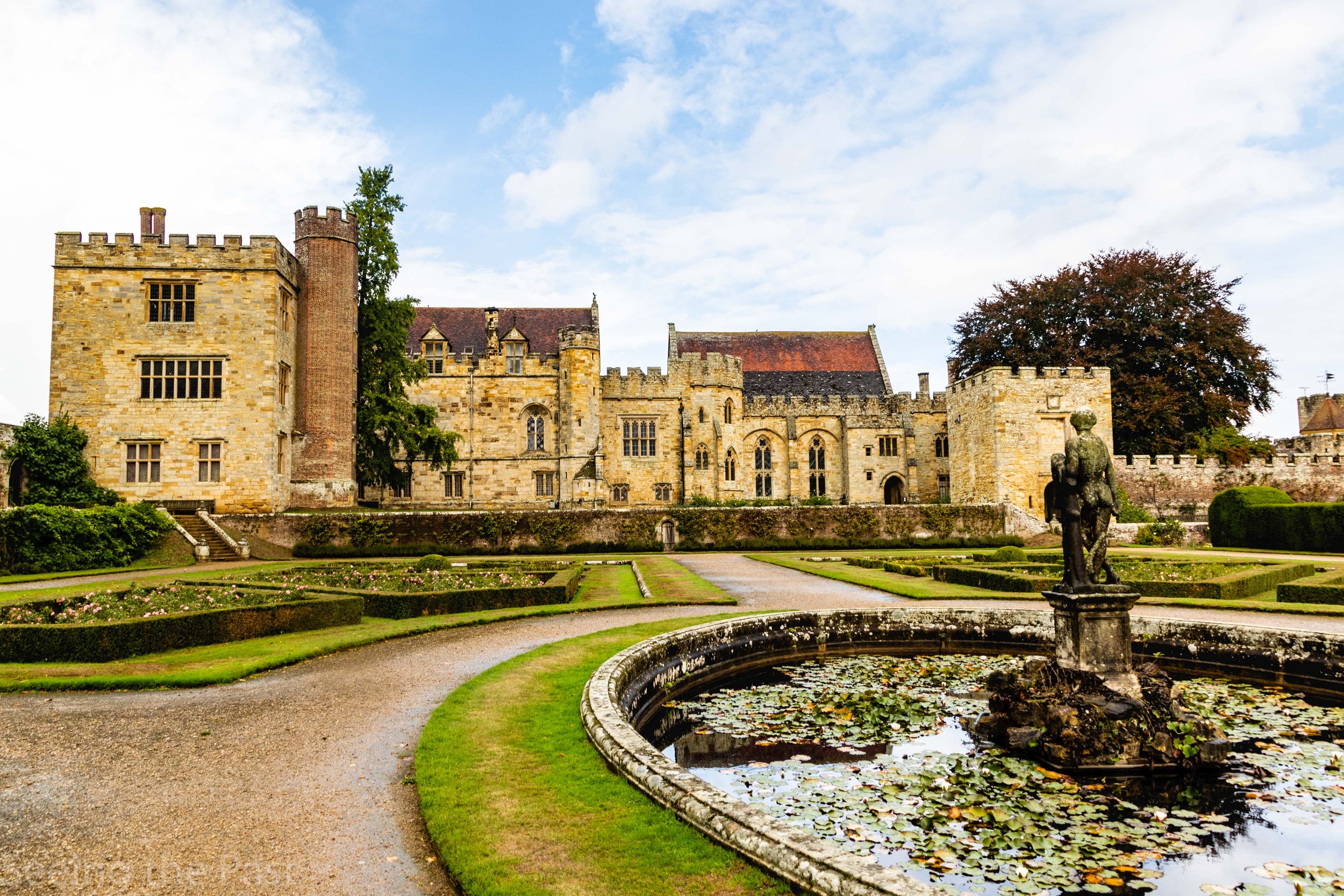
Penshurst Place is a beautiful house and gardens which date back to the mid 14th century. It is the place acquired by Henry VIII to be able to flirt with Anne Boleyn and possibly Mary Boleyn who lived at nearby Hever Castle. It has had some fascinating owners including the second Duke of Buckingham who was closely involved with Richard III’s takeover of power and possible the assassination of the “Princes in the Tower. His successor, the third Duke of Buckingham, put on an extravagant feast to impress Henry VIII in 1519 at Penshurst, only to be executed two years later for treason! Among its many rooms is the stunning Barons’ Hall, a great hall that has been featured in numerous documentaries about Medieval and Tudor history and is one of the best examples of a great hall in the country.
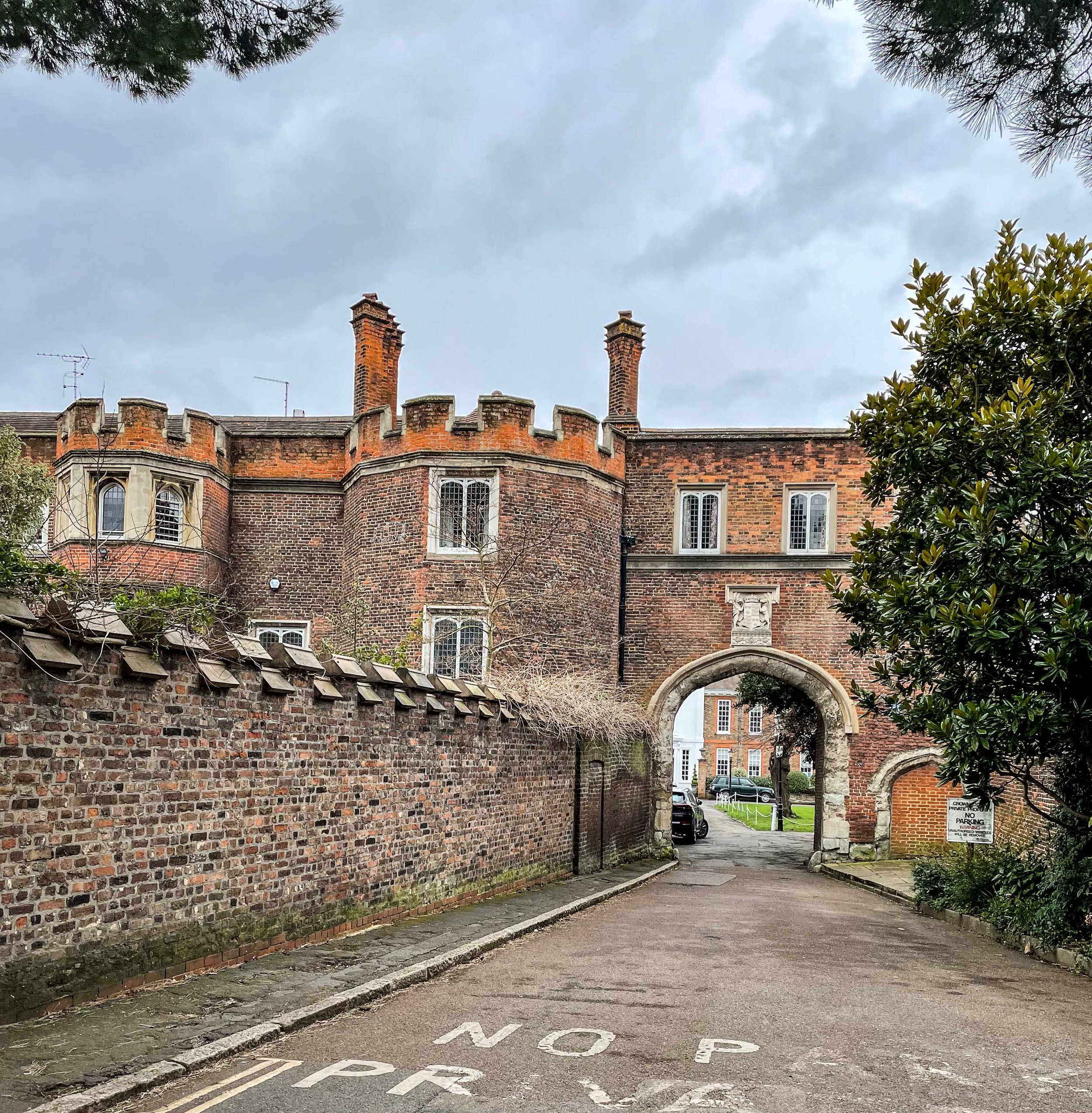
Richmond Palace, much loved home to the Tudors and once a stunning grand palace but sadly only a gatehouse remains today. You can walk up to this impressive Tudor gatehouse built in 1501 by Henry VII. It started off as a substantial manor house in 1125 and became a royal manor house in 1327. Important events involving key Tudors took place at Richmond Palace. Henry VII died here and in 1603, so did his granddaughter, Elizabeth I. Prince Henry, later Henry VIII nearly lost his life here and his eldest daugther, Mary, spent her honeymoon within its walls.

A visit to the Richard III Visitor Centre is a must for any medieval history fan. It tells the story of the Wars of the Roses using some amazing graphics and how Richard came to rule England. You are then taken on a path to discover what happened to Richard’s body having lost the Battle of Bosworth Field to Henry Tudor. The great mystery was only recently solved but then the task was to exactly locate the skeletal remains. This was not easy because several misleading sources suggested that either his bones had been removed and buried next to a river or actually thrown in that river. This was not the end of the story because the next step was the monumental task of proving that the remains found were actually Richard III. Historian’s judgements would not be sufficient, it had to be proven by mitochondrial DNA. Finally, you can actually see Richard’s open grave!
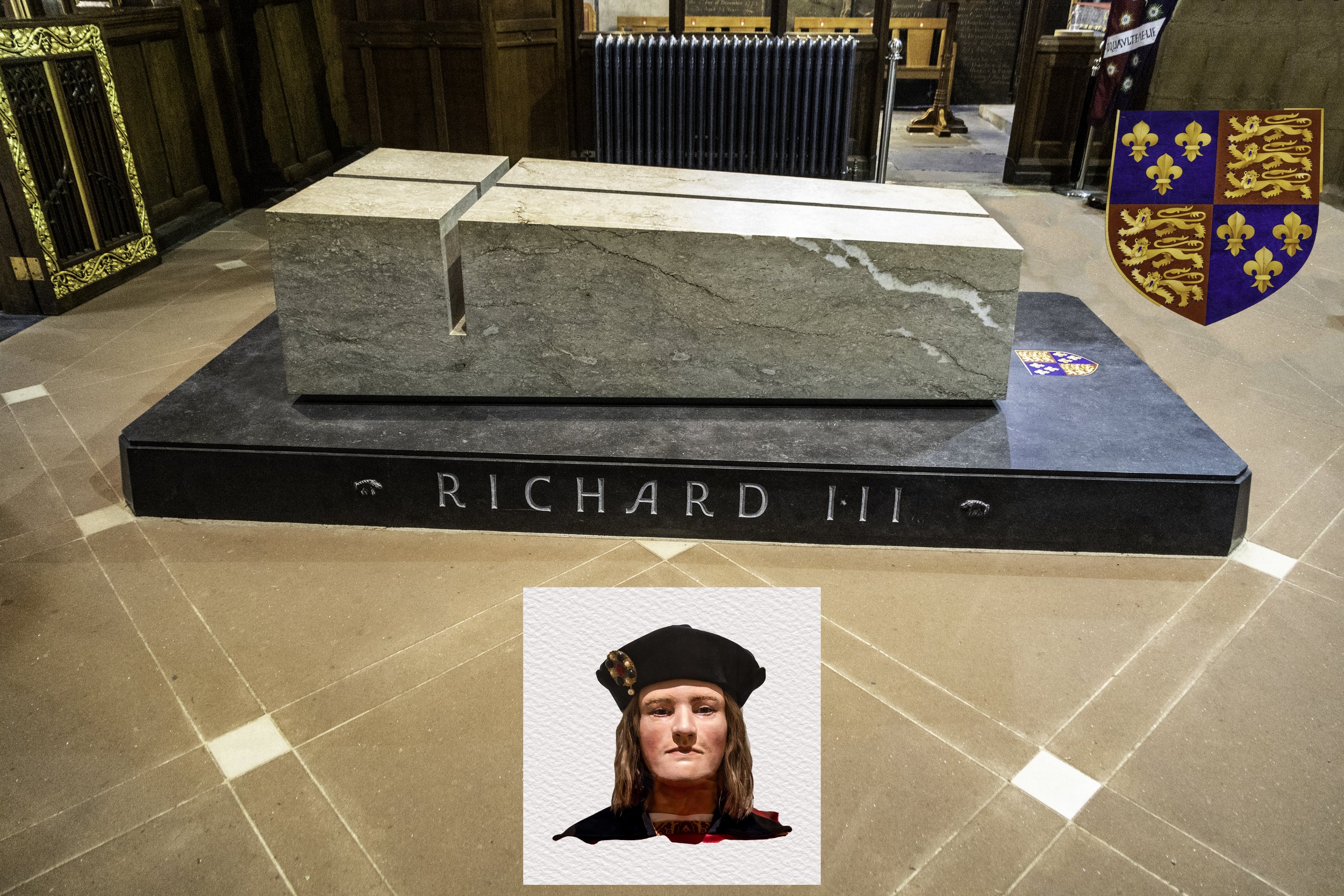
The king in the car park, part 1, is about Leicester Cathedral, Richard III's final resting place. In August 2012 there was a media frenzy taking place near an old car park in the city of Leicester. What was going on? The world’s media had just been informed that archaeologists had found skeletal remains which were possibly those of King Richard III of England. Back in August 1485, Richard III had been killed in the Battle of Bosworth Field by the army of Henry Tudor, soon to become Henry VII but there was a mystery about what happened to his body. Leicester Cathedral has become his final resting place. There you can see his amazing tomb, two beautiful stained glass windows commissioned to go with the tomb and the beautiful cloth (pall) that covered his coffin in his funeral. It is also next door to the Richard III Visitor Centre, specially created with audio visual facilities to tell the story of Richard’s life, how his body was discovered and give you a good view of his excavated grave.
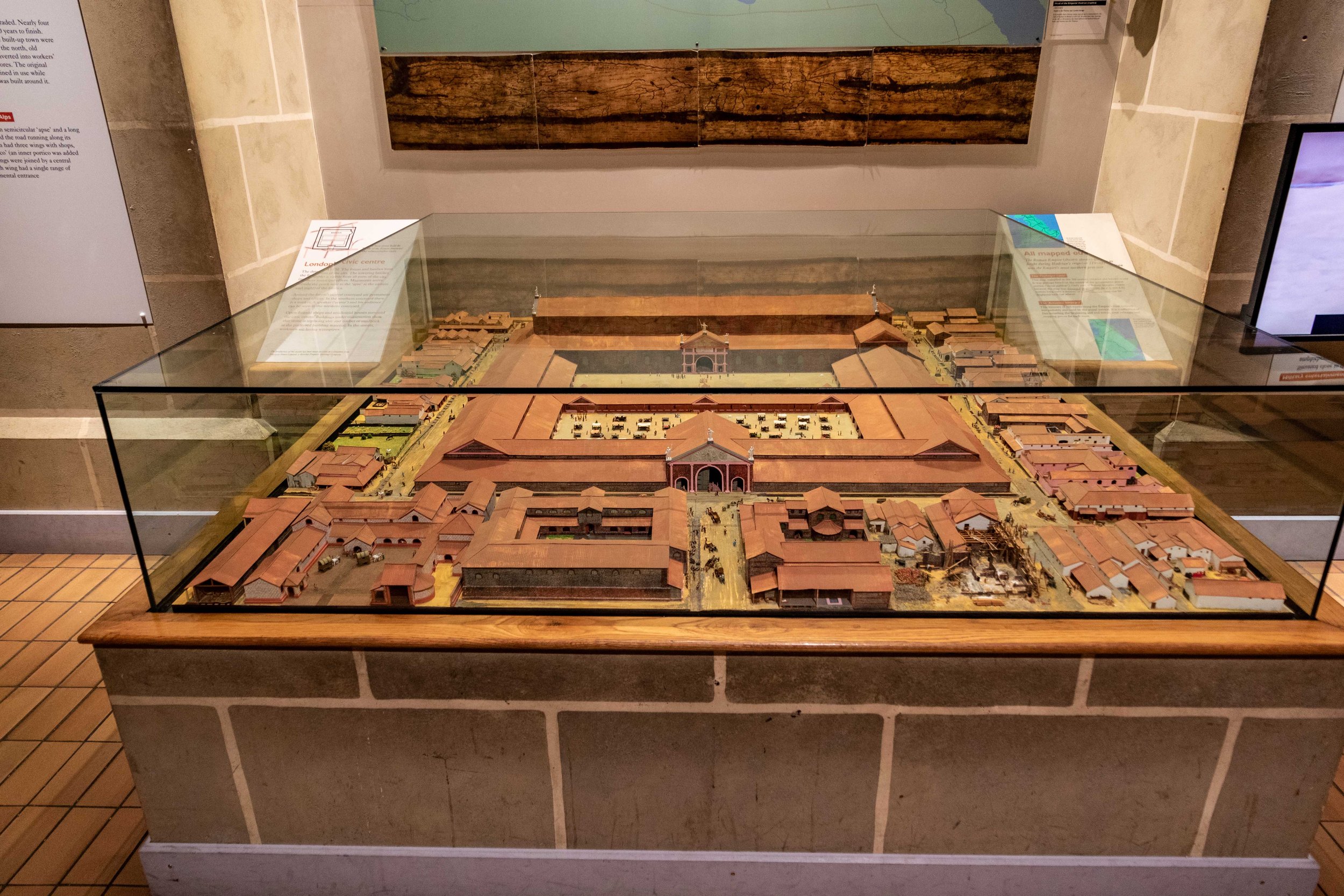
Visiting London? The Museum of London, is one of the best museums in the UK and is free. You can see amazing objects from thousands of years of life in London, from a Mammoth tusk to a pilgrims badge representing a visit to St Thomas Becket’s tomb. You can get up close to those objects and see their little details. The displays are bright and informative. There are rooms set out as though they were from a Roman villa placing Roman finds in context. Several models are on display such as London’s Roman forum and Basilica as well as the original gothic St Paul’s Cathedral

This blog will unravel the mysteries of the stories of King Arthur and Tintagel. It describes and explains how the story grew over time and sheds light on the truth about King Arthur. It suggests why you should visit Tintagel Castle. It is the mythical birthplace and home of King Arthur, allegedly the greatest King of Britain. There are an awful lot of legends associated with this place that are outlined below. It is a fascinating ruined to explore. It has beautiful views of the rocky coastline. It is in English Heritage’s top five of most visited places.
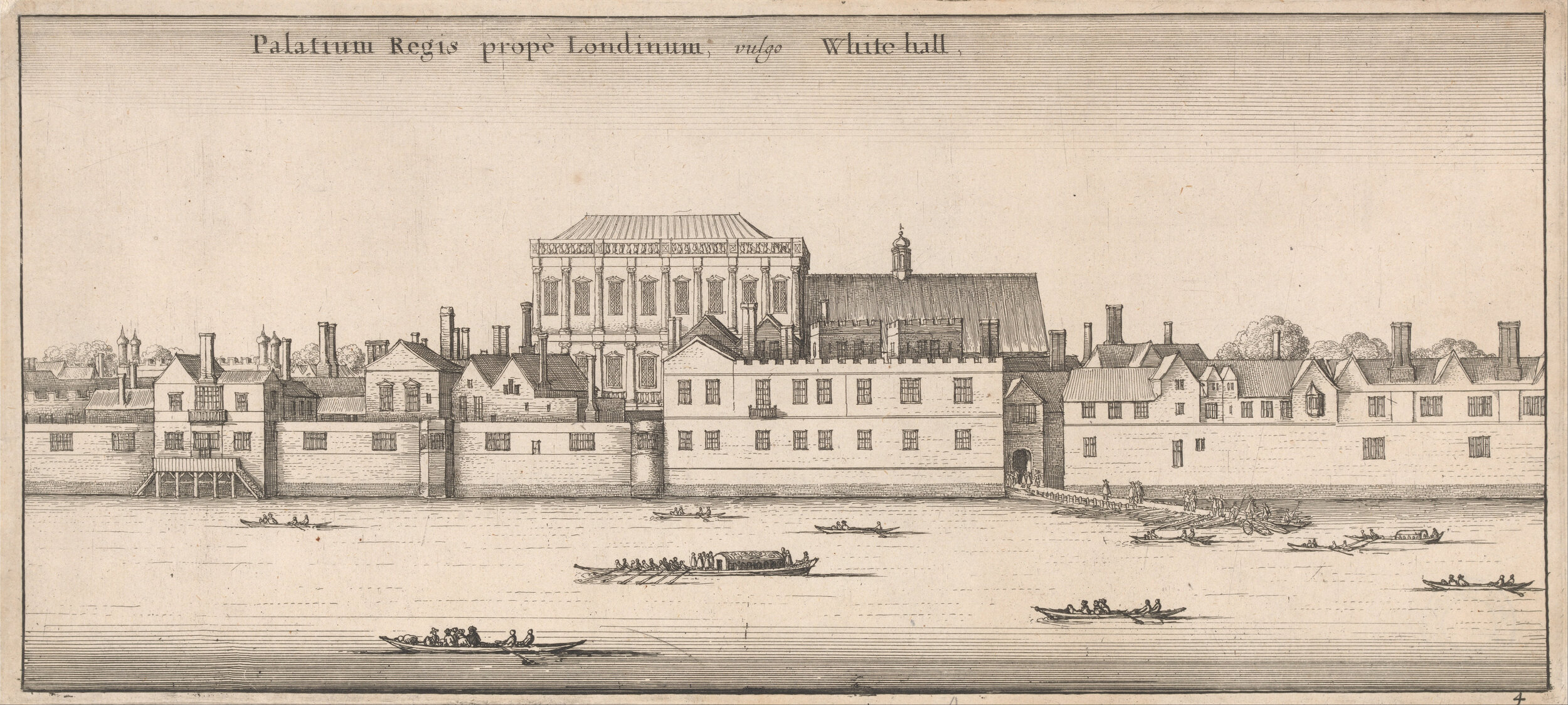
Henry VIII loved building and designing palaces to the extent that when he died in 1547, he left 55 palaces that he could call his own. The biggest was Whitehall Palace but surprisingly, very little is left to see of the magnificent palace and you have to be a spy of some sort to see it because the only remains are underneath the Ministry of Defence! Photographs of Henry VIII’s wine cellar look impressive but it is hardly representative of what used to be above ground.
This is rather surprising considering its enormous size. The mighty Hampton Court occupies 6 acres of land, however, in comparison, Whitehall Palace is nearly four times as large, occupying 23 acres! Hovering over it today with a drone would show an area from Trafalgar Square to almost Big Ben. Under Henry, it was to contain 1500 rooms and physically portrays the might of the Tudors. No castle or manor house came anywhere near it for size, setting Henry VIII way above any potential rival. Henry married two of his wives at the palace, Anne Boleyn and Jane Seymour and in 1547 he even died there! From 1532 onwards, Whitehall became Henry’s most visited residence although he preferred to celebrate the great feasts of the year such as Christmas at one of his other palaces such as Greenwich or Hampton Court.

Why was Henry VIII’s England in peril? The short answer to this is that in Henry’s desperate bid to get a son, he made three big enemies, France, Spain and the Pope. In 1538 they all ganged up against him.Henry’s response was a plan known as the “Device of the King”, which proposed to build castles, forts, defence embankments etc to protect the south coast of England. One of those castles was Pendennis Castle in Cornwall. Potential landing points and vulnerable ports were to be protected against any French and/or Spanish attack. These were the last castles built in England except for “mock” castles harking back to the past but were still part of Britain’s defences in World War two. Henry’s daughter, Queen Elizabeth I was able to use this line of defences at the time of the Spanish Armada in 1588. and for two subsequent but smaller armadas in 1596 and 1597.

Why visit Hever Castle? You can walk around and go inside a beautiful medieval castle built in 1271. See the childhood home of Anne Boleyn, Henry VIII’s second wife and queen for only 1000 days. Visit the place where Henry VIII made frequent visits, at first to see his mistress, Mary, Anne’s sister and later to “court” Anne herself. Wander through rooms that would have been familiar to Anne as well as restored rooms that have been furnished sympathetically according to the wishes of the Aster family from America. Marvel at one of the best collections of Tudor Portraits in the country after the National Portrait Gallery according to the renowned historian, Dr David Starkey.

The Vyne, originally a Tudor mansion but now showing 500 years of development and set in 13 acres of beautiful gardens. On a typical wet winter’s day, the walk from the car park to the mansion is still beautiful. Inside, are a whole variety of fascinating objects to observe in a series of rooms from various periods. We particularly liked the Tudor sections and discovering references to Henry VIII and his first wife Katherine of Aragon. What is ironic is that the house has numerous emblems of Catherine of Aragon in the “Long Gallery” and in the chapel and yet Anne Boleyn visited it twice and must have seen them! In the Long Gallery, you will see emblems or heraldry of numerous Tudor notables and it is fun discovering and recognising as many as you can. Another high point of the Vyne is the beautiful chapel and its stained glass windows.

Why did Henry VIII build Southsea Castle and what has it to do with his wives and the Mary Rose? All these questions and more are answered in this blog. Henry’s divorce from Catherine of Aragon caused him grave problems with the Pope and Kings of France and Spain. To save his throne from disaster, he built Southsea Castle to a new revolutionary design. Only a year after it was completed, a French fleet was present in the solent ready to attack and disaster struck. Henry based at Southsea Castle saw his premier ship, the Mar Rose, sink in front of his eyes without a shot being fired. Post Tudor history of Southsea Castle is also covered along with information and photos of what visitors to Southsea Castle can expect to see on a visit.

Hampton Court Palace is the most awesome Tudor palace that you will be able to see (many of Henry’s palaces have been partly or totally destroyed). The preservation of the building is remarkable. Unlike many well known places, Hampton Court Palace is not a romantic ruin! It has been described as history in colour. The Great Hall and Chapel Royal will take your breath away. There are many things stand out and are simply stunning. Hampton Court is the centre of a fantastic period of history with fascinating characters like Thomas Wolsey, Anne Boleyn and of course Henry VIII. Most people know a few things about Henry and his six wives and here is the place where a lot of it took place.There are so many badges, emblems and physical references to Henry VIII’s life story that it would take a day to search them all out!

Seeingthepast.com gives you tons of information to help you plan a very successful visit to the Weald and Downland Living Museum. The museum is large and spread out and so planning your visit will improve your day. At the museum you can discover numerous historic buildings set in forty acres of the beautiful South Down’s National Park surroundings. Explore a collection of over 50 restored and replica buildings from a time period stretching from Anglo-Saxon to Edwardian times (approximately 950 AD to 1910 AD). Visitors can have a friendly and informative chat to numerous guides waiting to enthral you with the stories of these incredible structures. You can go inside and see the different kitchens, bedrooms and heating arrangements. Watch various demonstrations taking place and discuss with some highly skilled craftsmen and women what they are doing.

The guidebook states “Knole was built to impress” and it still has the ‘wow factor today. Driving through the beautiful estate to get to the carpark heightens expectation of what you will see when the immense house comes into view. Seeing this majestic residence for the first time will, to use an overworked phrase, “blow your mind”. It is simply stunning. Looking at the surrounding countryside you will see an amazing setting and immediately want to see the whole package, the house and the park. It is one of the largest country houses in England and it sits amidst one of the last remaining deer parks in Kent.Reading this blog, you will come across famous historical figures such as Henry VIII, Elizabeth I and her “favourite”, the Earl of Leicester, Nell Gwynn and the authors, Vita Sackville West and her lover, Virginia Woolf.

The story of Lavenham , is the story of a very prosperous and thriving medieval town that peaked in the 1520s and then suffered a major economic decline, arresting virtually all building development and modernisation. This left numerous stunning, but unaltered, medieval timber framed houses for us to enjoy during a gentle stroll through the village. Houses in Lavenham could adorn a countless boxes of chocolate and calendars.

This is the largest Norman Keep in Europe built on top of the remains of the great temple of Claudius the conquering Roman Empire. Objects from over 2000 years including the Iron Age, Boudicca’s uprising, the finest display of Roman glassware rivalling that of the British Museum, are here along a gruesome dungeon section focusing on the BloodY Mary burning people at the stake, Matthew Hopkin’s witchfinding, There are countless invitations to touch objects and children’s activities include a roman chariot race simulation, 4 dressing up stations, use of tablets to compete an electronic quiz and creation of a mosaic.

A visit to the beautiful Ightham Mote will take you on a journey back to the 14th century. Various rooms and details result in you being taken along a timeline of discovery and evoking a deep sense of history. It was built by medieval knights, taken on by tudor courtiers desperate to gain favour with Henry VIII and on through high society Victorians before ending up in the hands of a very generous American benefactor who passed it on to the National Trust. It has many rooms to marvel at, from the medieval “Great Hall” and Crypt”, to Catherine of Aragon’s pomegranite emblem on the chapel ceiling and ending up in the impressive Victorian billiard room.

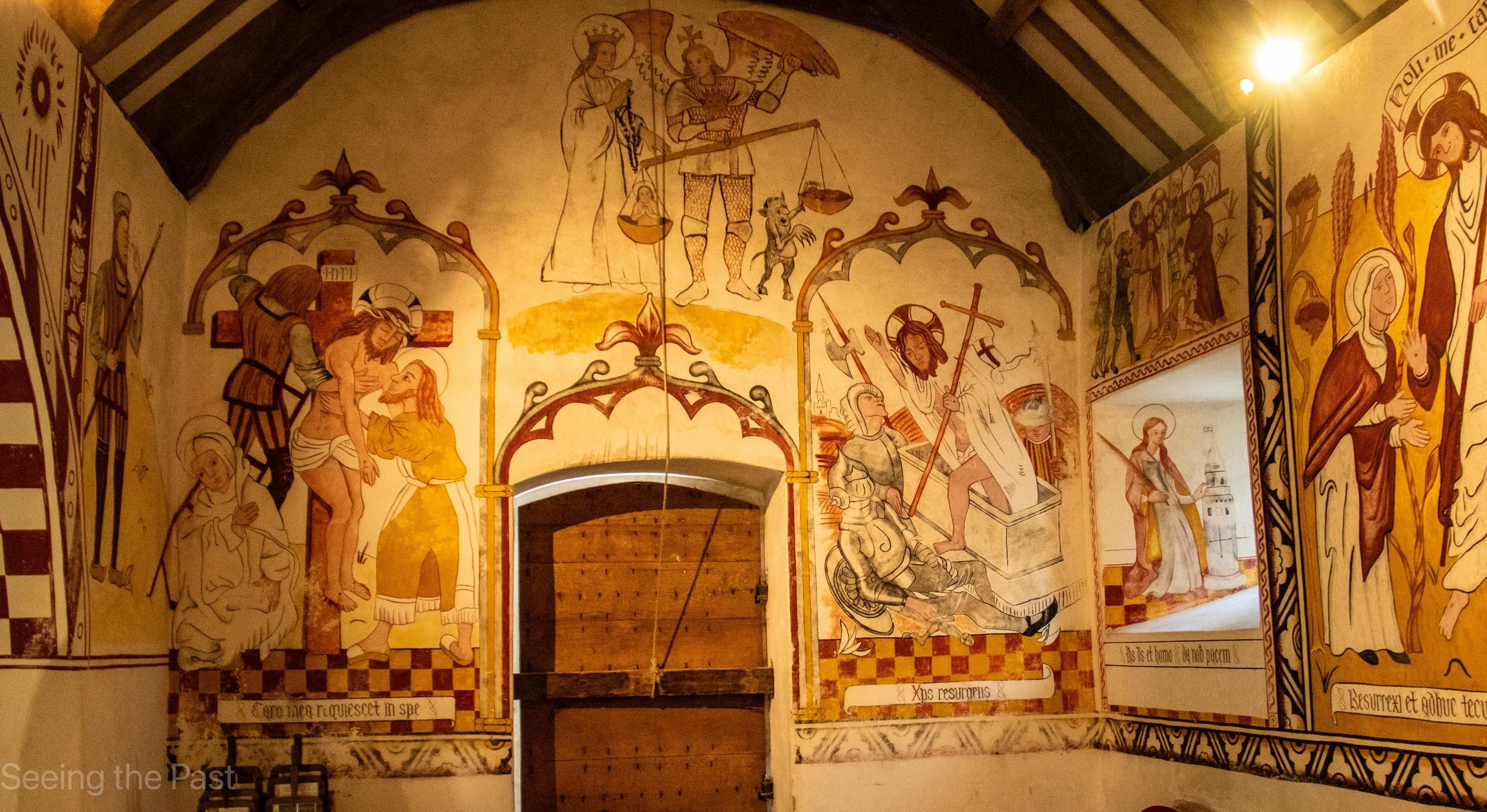


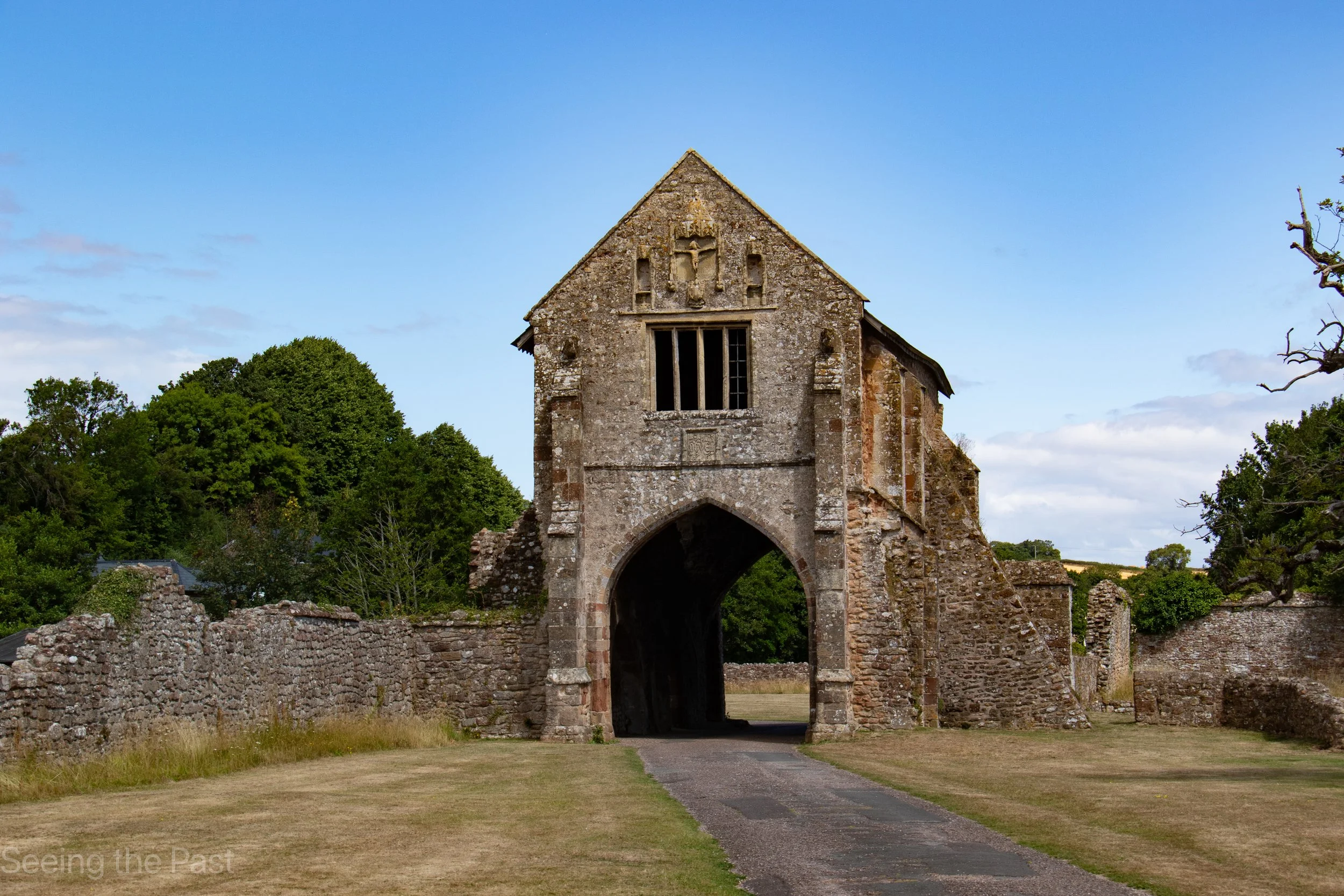



Framlingham is a great castle to discover and has a fantastic story to tell as well as having a song written about it by Ed Sheeran in 2017 featuring its part in his upbringing. It was successfully besieged by King John and was Mary Tudor's refuge in the succession crisis. It is surrounded by beautiful parkland that was once the hunting ground of the dukes of Norfolk and has a great wall walk that enables visitors to wander three quarters of the length of the surrounding walls in safety. It has a small informative museum and a cafe which offers a good range of hot and cold seasonal meals, baguettes as well as choice of delicious cakes, snacks and offers a good quality coffee.