
Carved in Memory: Discovering the Thiepval Memorial to the Missing
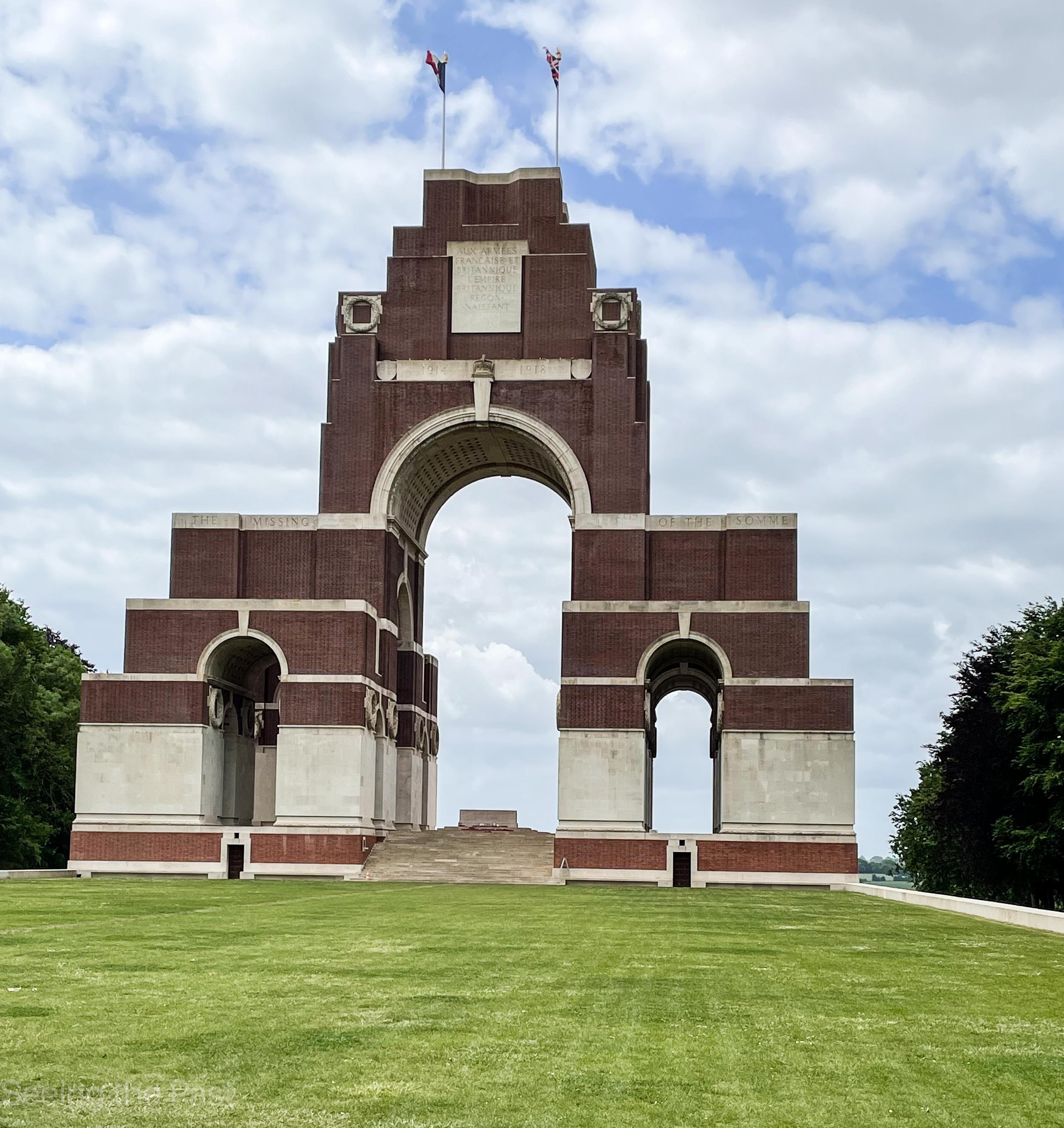
/Rising from the quiet countryside of the Somme, the Thiepval Memorial stands as one of the most powerful reminders of the First World War. Built to honour more than 72,000 British and South African soldiers who died in the Battle of the Somme and have no known grave. Designed by Sir Edwin Lutyens, the memorial is not just a monument of stone, but a symbol of absence, loss, and remembrance. Its vast arches and engraved names speak for those whose bodies were never recovered, giving them a place in history and in memory. Construction took place between 1928 and 1932 and became the largest Commonwealth Memorial to the Missing in the world. This blog explores the Memorial and its visitor centre, as well as what it continues to represent more than a century after the guns fell silent.
Below: a view of the memorial from the other side. Here are 300 French and 300 British graves, symbolising unity.
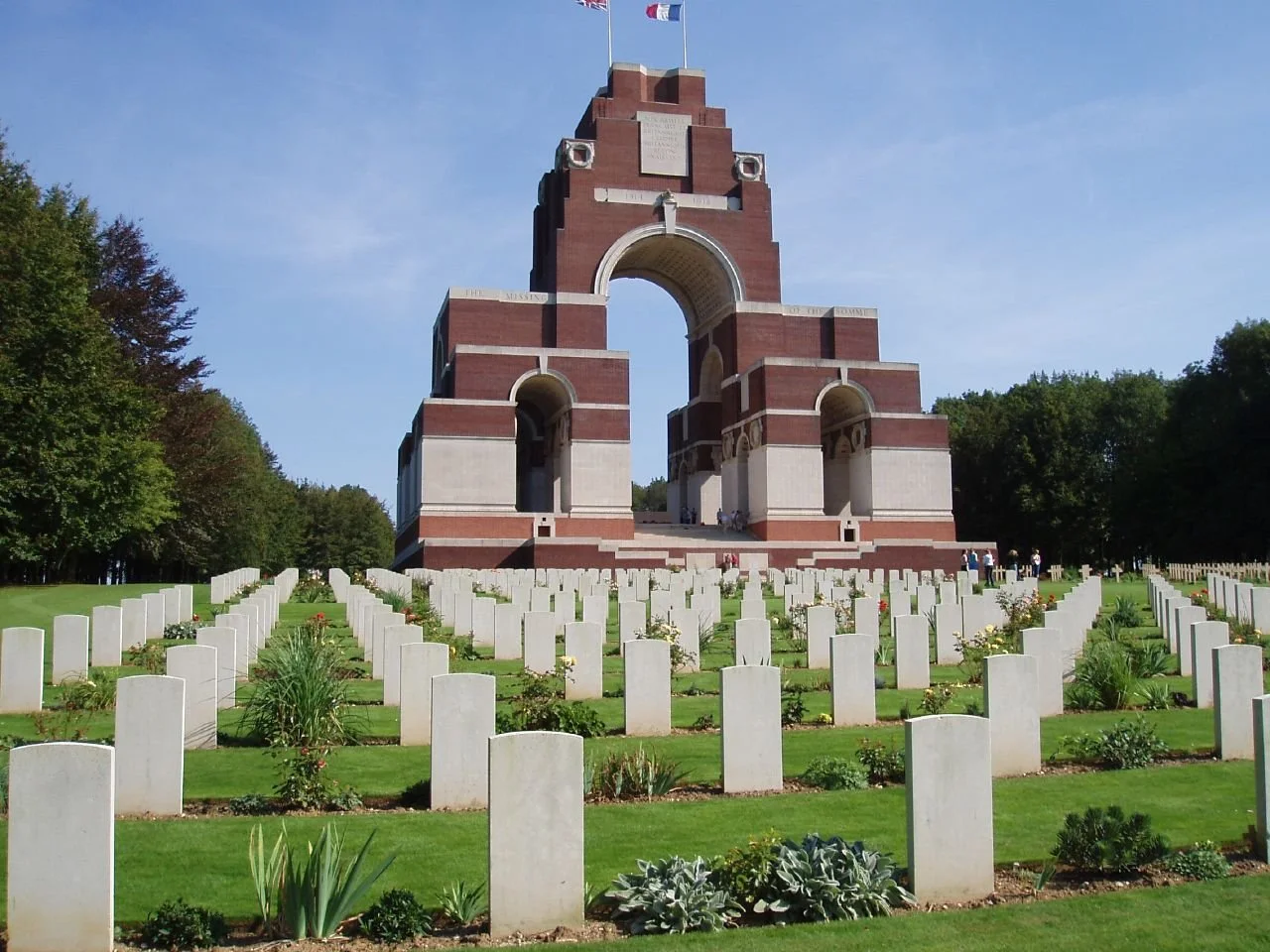
https://creativecommons.org/licenses/by-sa/2.0/deed.en. Author Amanda Slater.
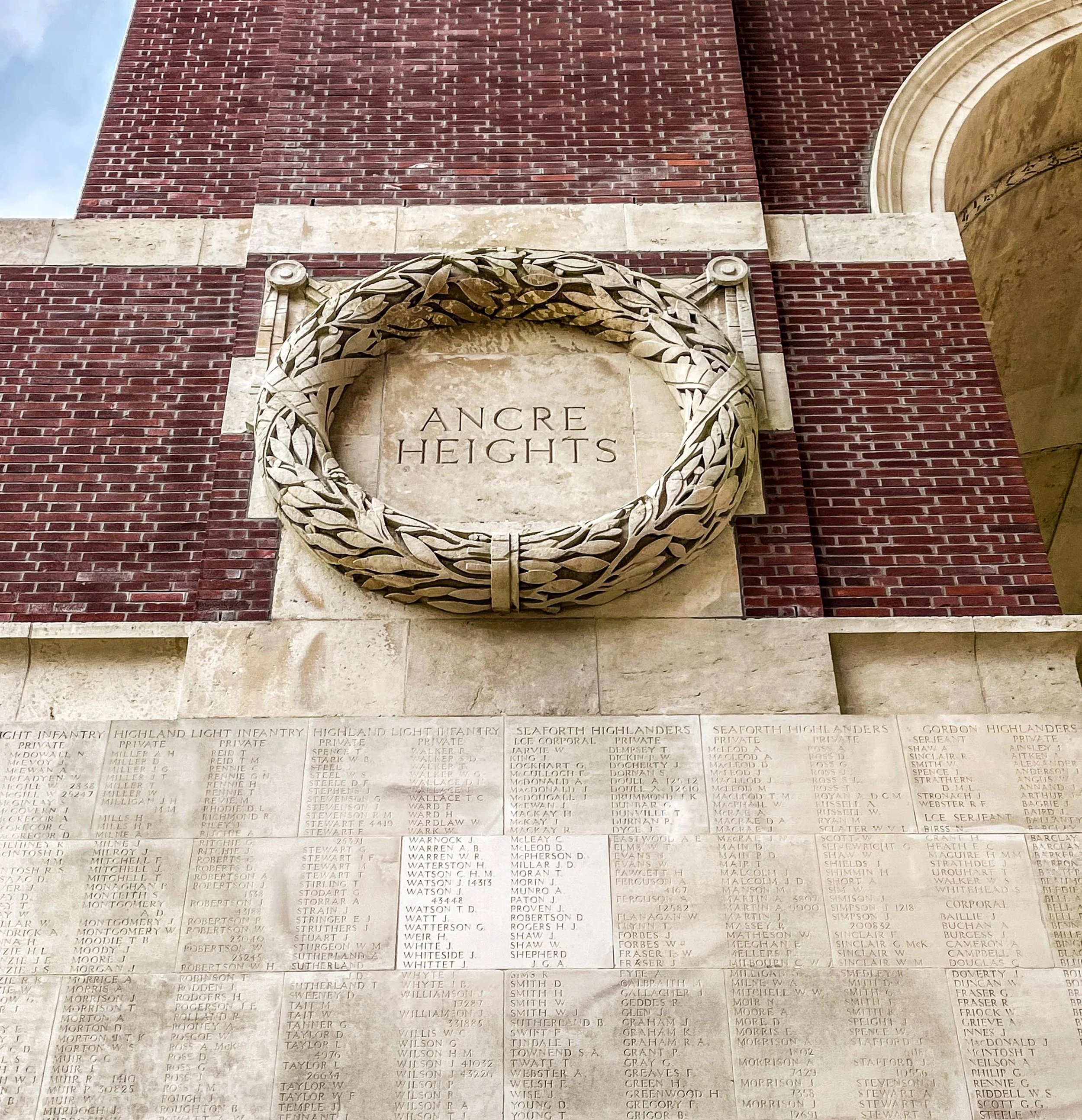
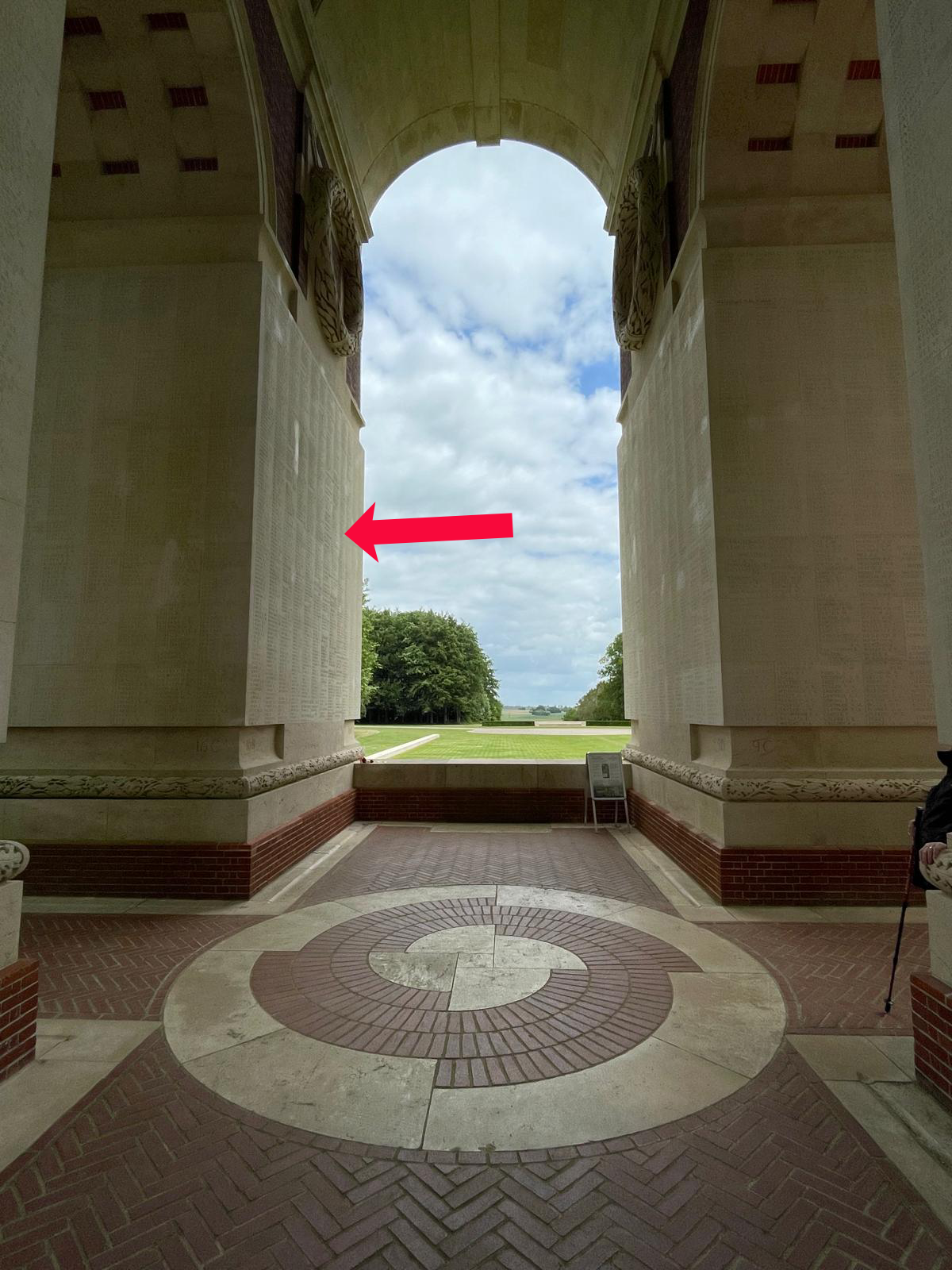
Below:one of the piers covered with names of the missing. The monument consists of 16 piers with 64 panelled sides of which 42 are engraved. If a body is found and identified, sometimes the engraved name is filled in with a little concrete. Where names have had to be added, it is found on the “Addenda Panels”. Why was it recently added years after the end of the war? It may not have been recorded correctly in the written records or perhaps the records may have been lost until a relative tried to find where the body was buried.
Above the panel is a wreath with the engraved name of a “sub battle” which formed part of the overall somme offensive/battle. In this example it is Ancre Heights.
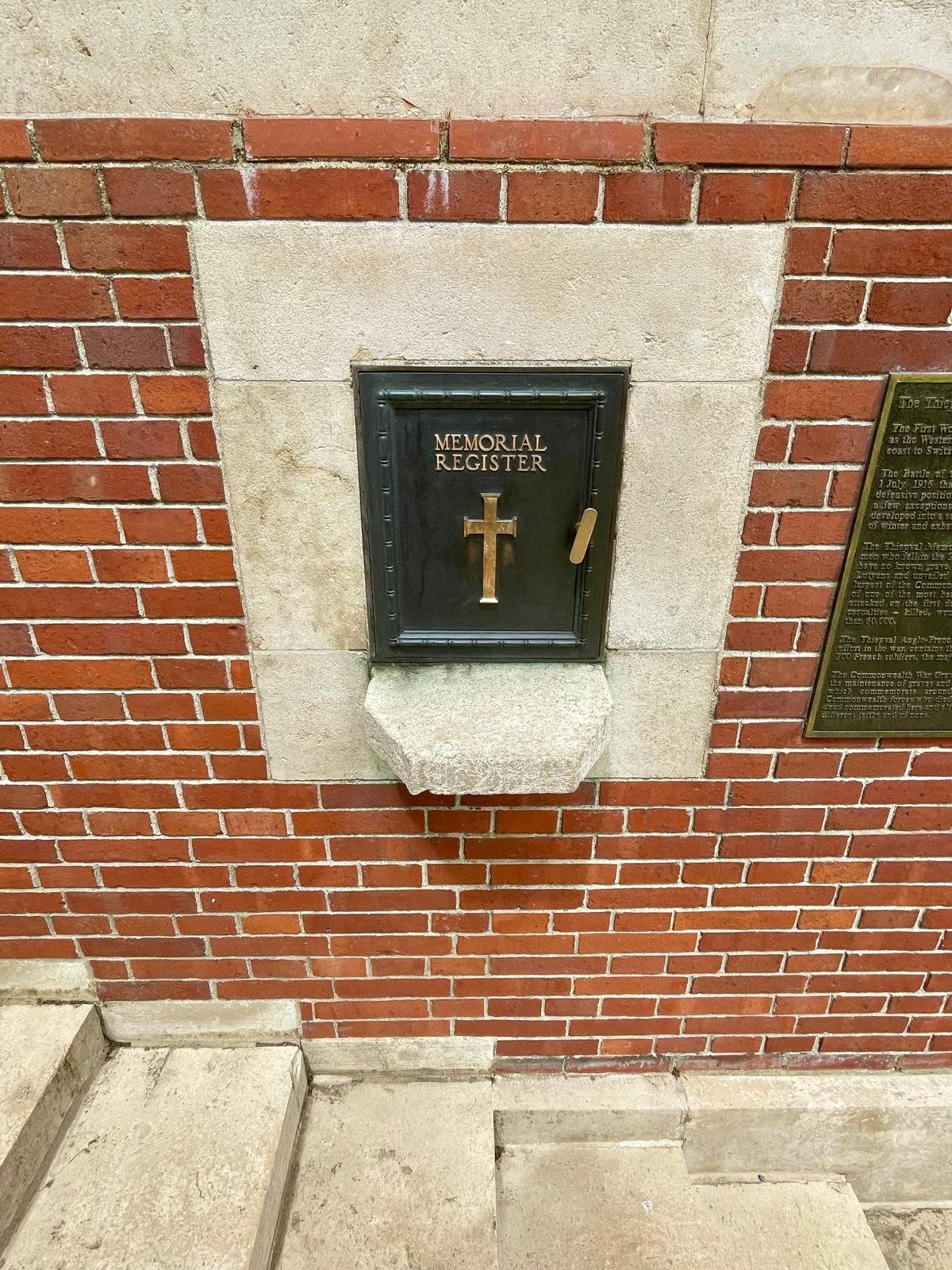
Below; at all Commonwealth War Grave memorials there is always a little cupboard that contains booklets with the location of the person you are looking for. You can also find them at cemeteries as well.
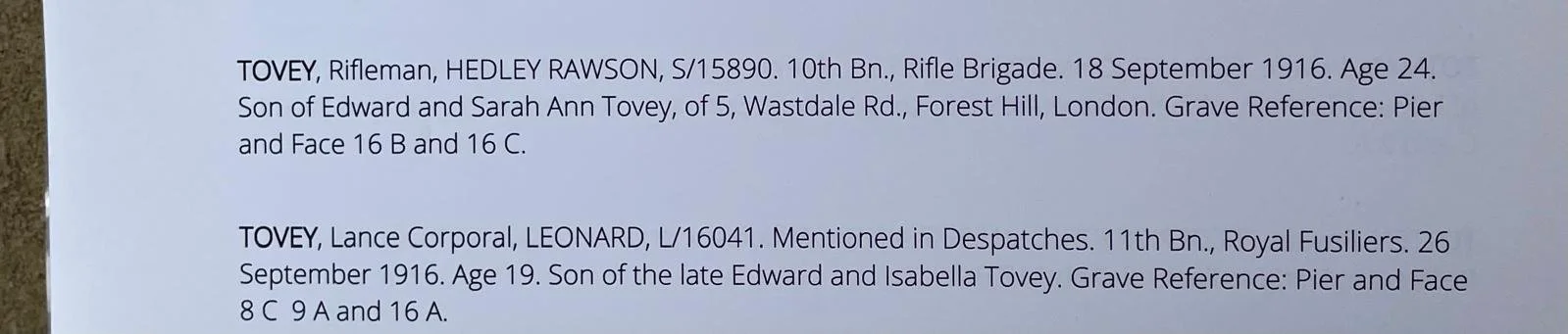
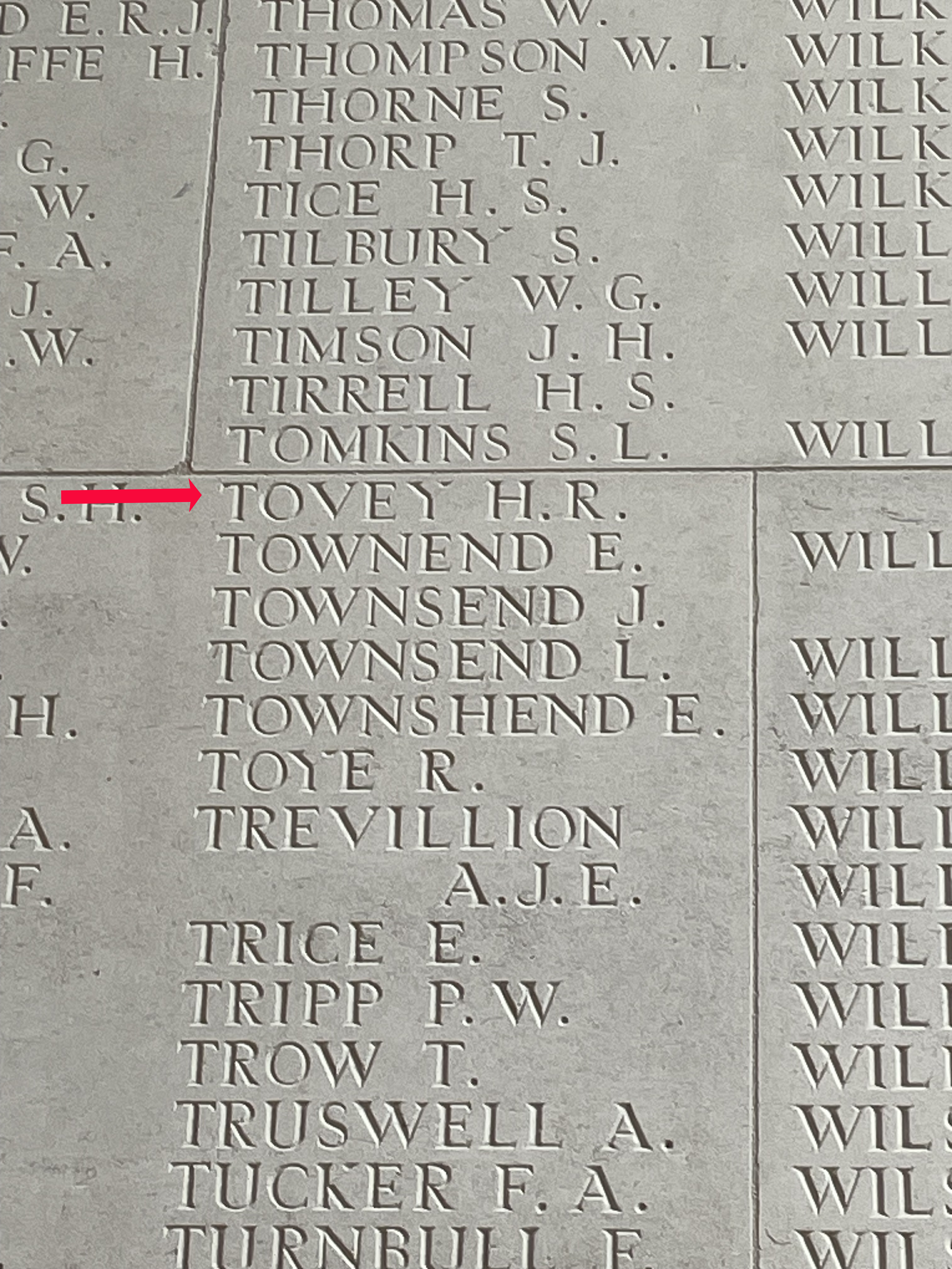
Below:We were looking for Loretta’s great uncle, Hedley Tovey and here is what we discovered. Her family had long since talked about Hedley and it was poignant to see his name.
Below: the name of Hedley Rawson Tovey of the London Rifle Brigade, Loretta’s great uncle.
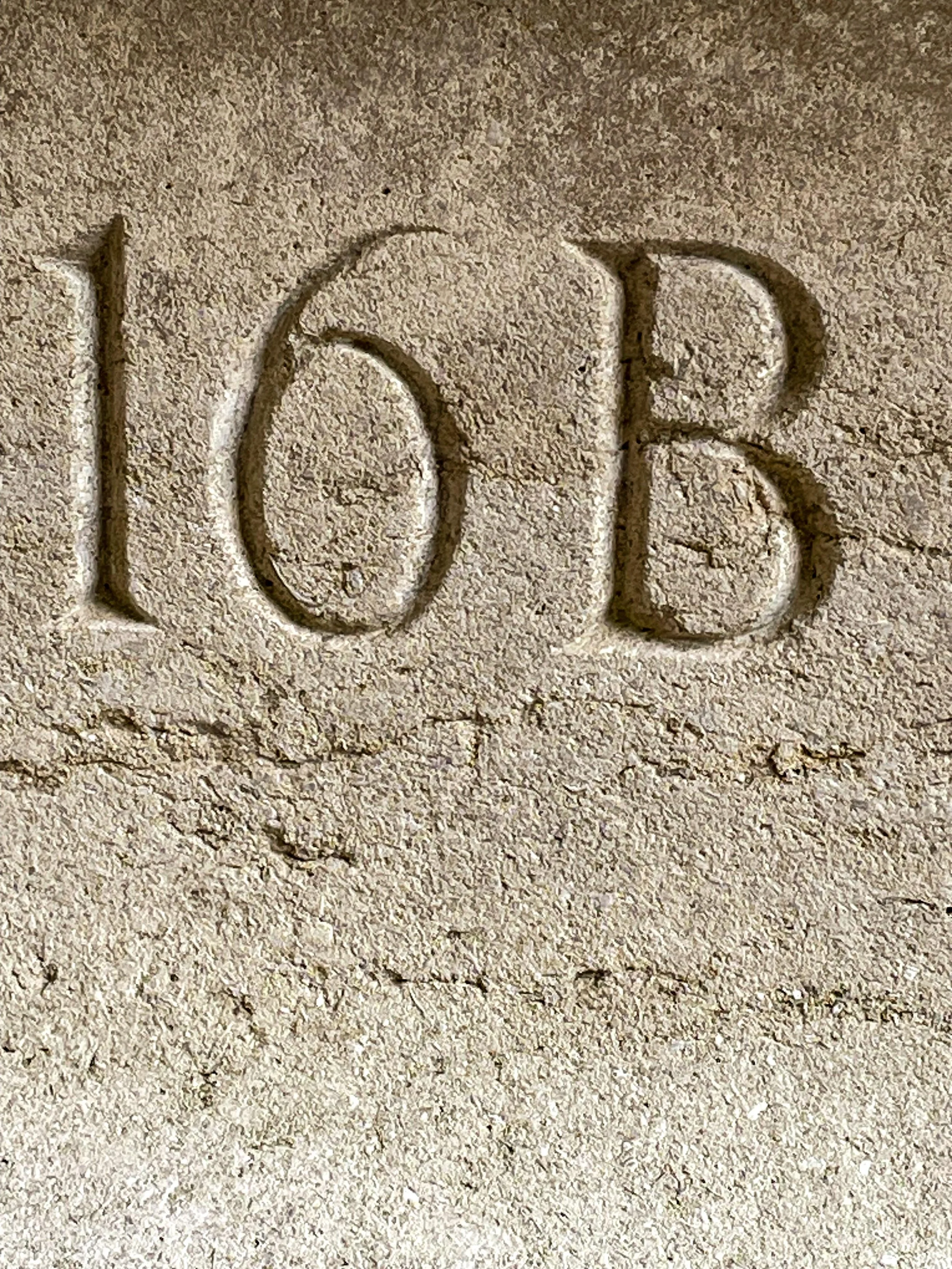
Below: a screenshot of the entry for Hedley Rawson Tovey on the Commonwealth War Graves website. It told us that Hedly was on pier 16B and C

Below: The panel number where Hedley’s name was located.
Did any of the missing named on the Memorial receive a VC (The Victoria Cross medal for immense bravery)
Yes, the following were awarded the VC;
Eric Bell for fighting at Thiepval 1st July 1916.Panel: 4 D
The London Gazette 26th September 1916 printed’
“For most conspicuous bravery. He was in command of a Trench Mortar Battery, and advanced with the Infantry in the attack. When our front line was hung up by enfilading machine gun fire Captain Bell crept forward and shot the machine gunner. Later, on no less than three occasions, when our bombing parties, which were clearing the enemy’s trenches, were unable to advance, he went forward alone and threw Trench Mortar bombs among the enemy. When he had no more bombs available he stood on the parapet, under intense fire, and used a rifle with great coolness and effect on the enemy advancing to counter-attack. Finally he was killed rallying and reorganising infantry parties which had lost their officers. All this was outside the scope of his normal duties with his battery. He gave his life in his supreme devotion to duty”.
William Buckingham at Neuve Chapelle March 1915 but died 15th September 1916 at Thiepval.
Geoffrey St George Shillington Cather at Beaumont Hamel, 1st July 1916 but died the next day. Panel: 15A The London Gazette8th September 1916 printed,
“For most conspicuous bravery. From 7 pm till midnight he searched ‘No Man’s Land’, and brought in three wounded men. Next morning at 8 am he continued his search, brought in another wounded man, and gave water to others, arranging for their rescue later. Finally, at 10.30 am, he took out water to another man, and was proceeding further on when he was himself killed. All this was carried out in full view of the enemy, and under direct machine gun fire and intermittent artillery fire. He set a splendid example of courage and self sacrifice.”
William Frederick McFadzean at Thiepval, 1st July 1916. Panel: 15A The London Gazette 8th September 1916 printed,
“For most conspicuous bravery. While in a concentration trench and opening a box of bombs for distribution prior to an attack, the box slipped down into the trench, which was crowded with men, and two of the safety pins fell out.
Private McFadzean, instantly realising the danger to his comrades, with heroic courage threw himself on the top of the bombs. The bombs exploded blowing him to pieces, but only one other man was injured. He well knew his danger, being himself a bomber, but without a moment’s hesitation he gave his life for his comrades.”
William Mariner at Cambrai, 22nd May 1915 but died 1st July 1916 at Loos.
Thomas Orde Lauder Wilkinson at La Boiselle, 5 July 1916.
Alexander Young, in the 2nd Boer War South Africa, 13th August 1901 but died at the Somme 19 October 1916.
What can you see in the visitors’ centre?
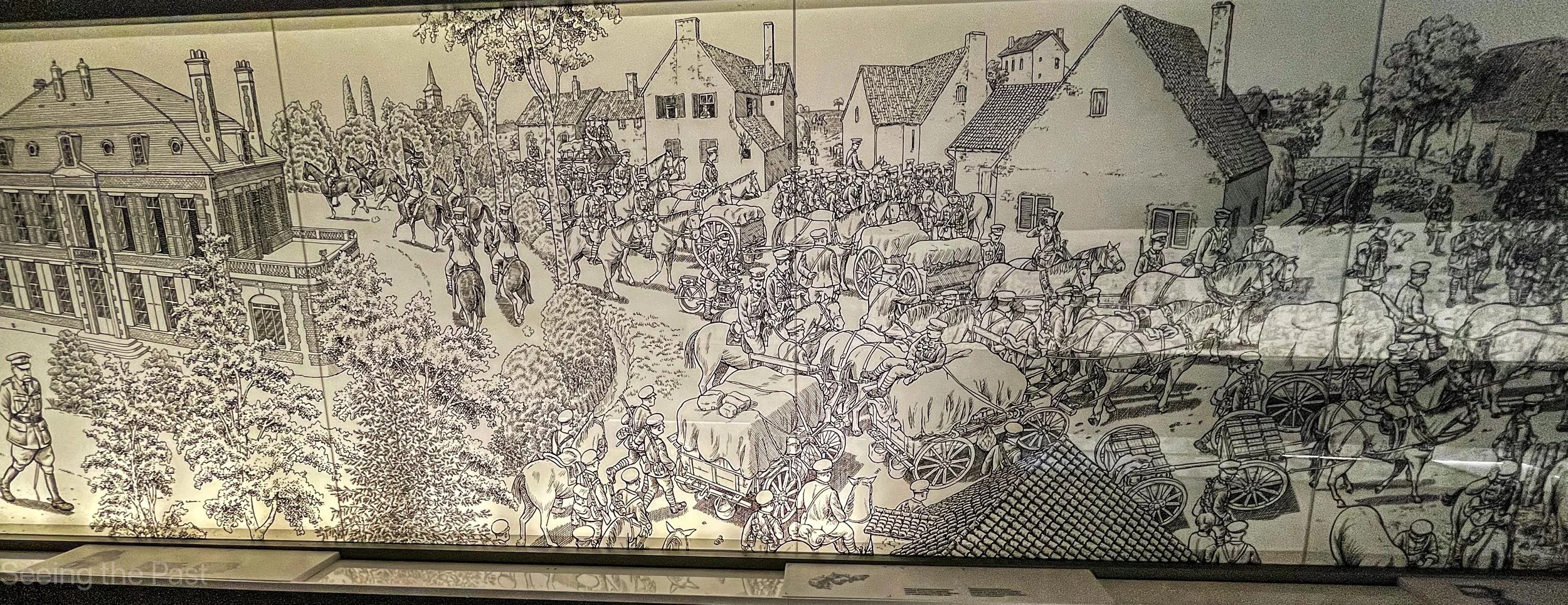
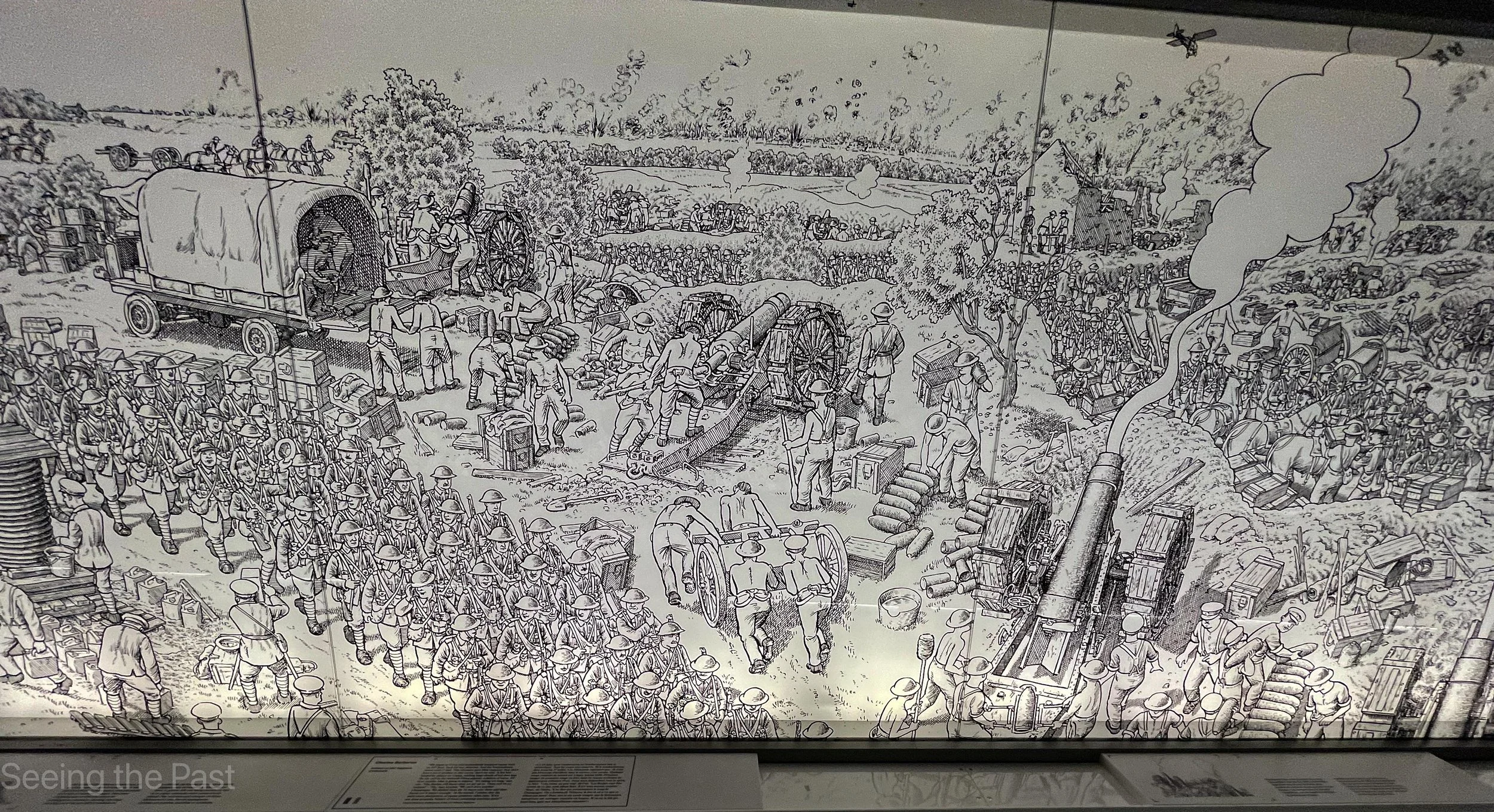
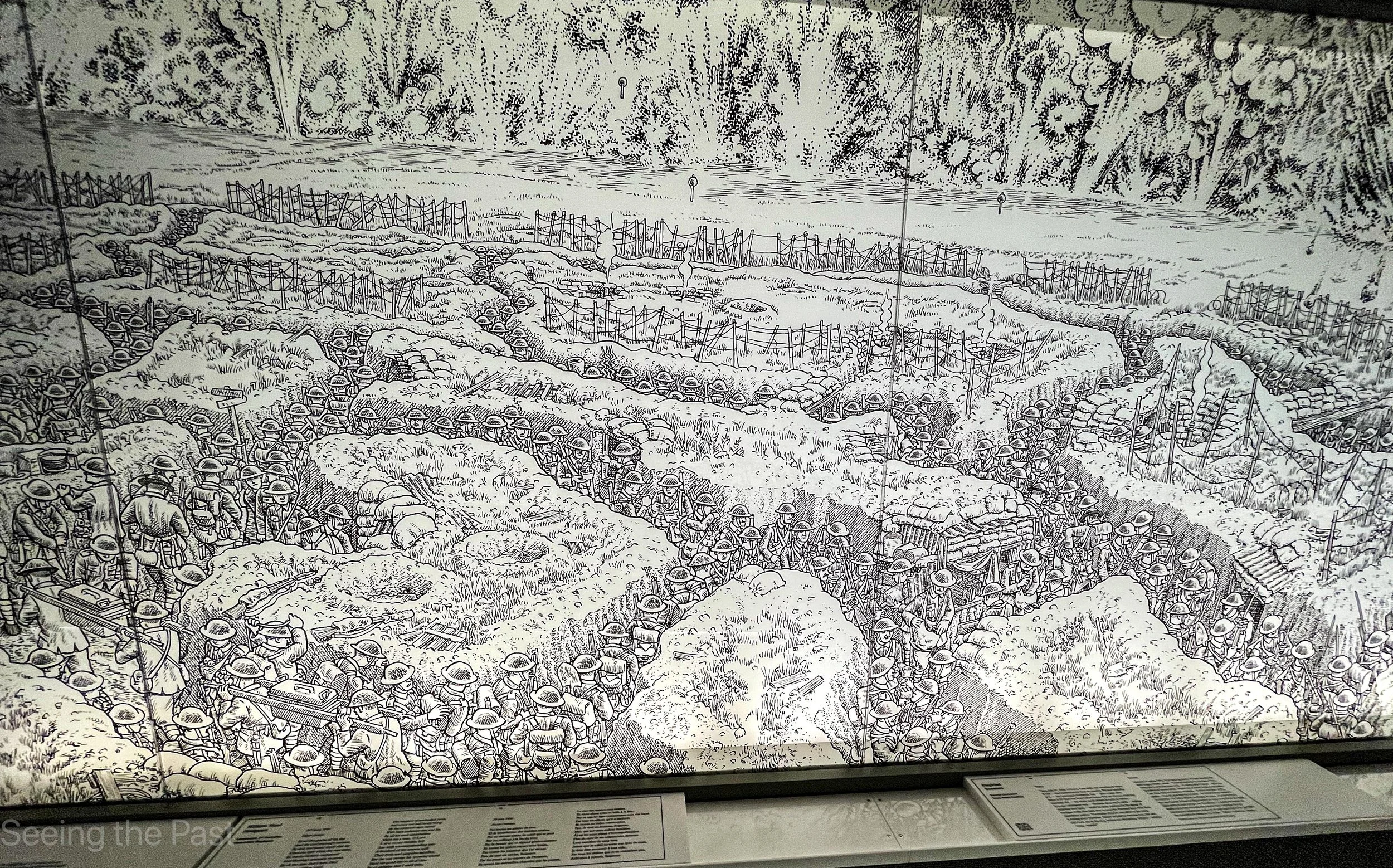
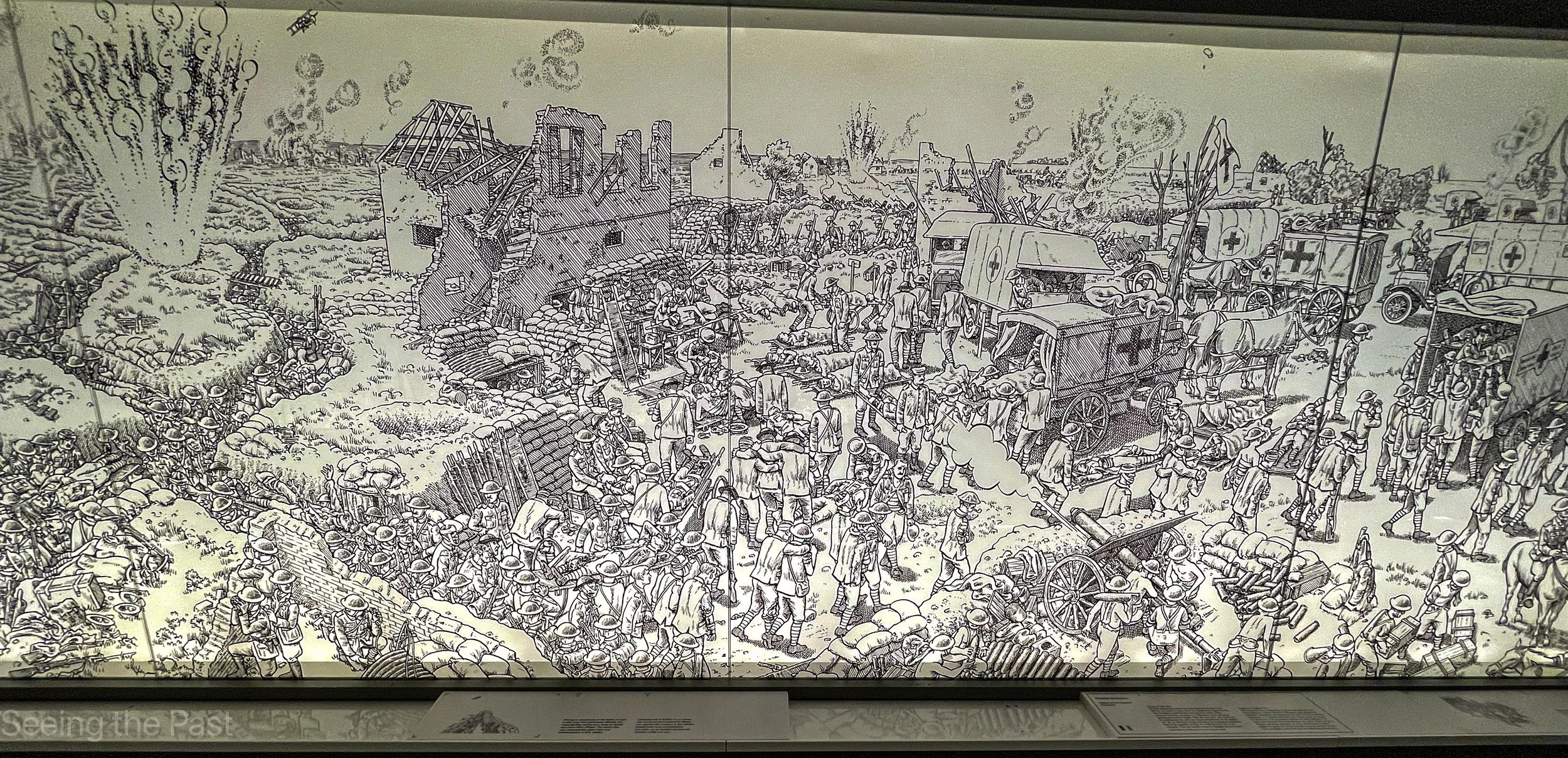
If you visit the Thiepval Memorial, it is worth allowing an hour for a visit to the visitor centre. It introduces visitors to the scale and human impact of the Battle of the Somme through its striking “monumental cartoon,” a panoramic fresco by artist Joe Sacco. Stretching 60 metres in length and dramatically backlit, this powerful artwork draws inspiration from the Bayeux Tapestry and the visual language of comic books. I have visited both the Bayeux Tapestry and the amazing D Day Tapestry and this cartoon should sit along side them in a “must visit list’. Through meticulous detail, it unfolds an hour-by-hour narrative of the first day of the battle on 1 July 1916, guiding visitors through the unfolding events while emphasizing the lived experiences of the soldiers. As both an artwork and a historical account, it sets a reflective and informative tone for understanding one of the most significant and tragic moments of the First World War.
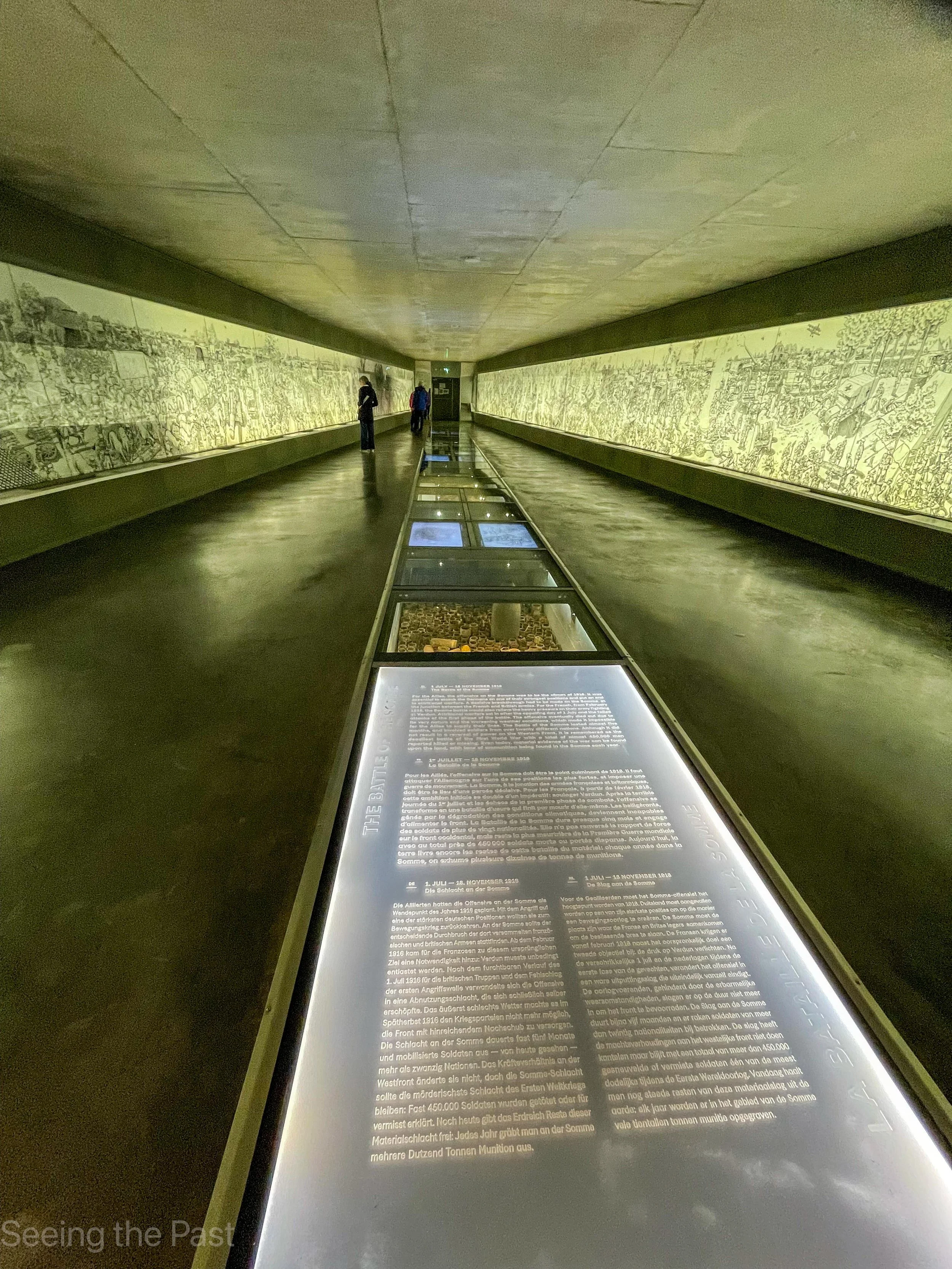
Below:the opening scenes of the cartoon. On the left is a beautiful peaceful chateau and possibly Field Marshall Haig going for a peaceful stroll. Many people have stated that the generals “had it easy” and did not understand life in the trenches, spending most of their time in luxury. It also shows the extent of the preparations before the battle
Below; the plan was that victory would be through widespread use of Howitzers providing a week long shell barrage on the German trenches. It was hoped that nothing would survive this tremendous onslaught. German soldiers would be dead, their trenches destroyed and their impregnable barbed wire barriers would be blown to smithereens! The British soldiers would be able to stroll across no mans’ land. The information below this section of the cartoons informs the visitor that “the concentration of fire was insufficient“ ie, they did not have enough howitzers and other big guns for large area of land that they were attacking! It also states that the ammunition ie shells, “were made in haste!” This refer to the fact that 1.5 million shells were fired but at least 0.5 million failed to explode! Consequently, the trenches were not destroyed and the barbed wire was in tact.
Below: the trenches, including the front line and the support trenches showing men trying to move up to the front line. If you have time, a visit to Newfoundland Memorial Park relatively nearby, will give you an impression of the trench layout.
Below: the chaos of “No Mans’ Land”. From their secure trenches, the Germans strafed the area with rapid machine gun fire and blasted charging troops with shell fire. (unfortunately for the British and the French, their shells did work) Sadly, thousands of men died within a few seconds of getting out of their trenches.
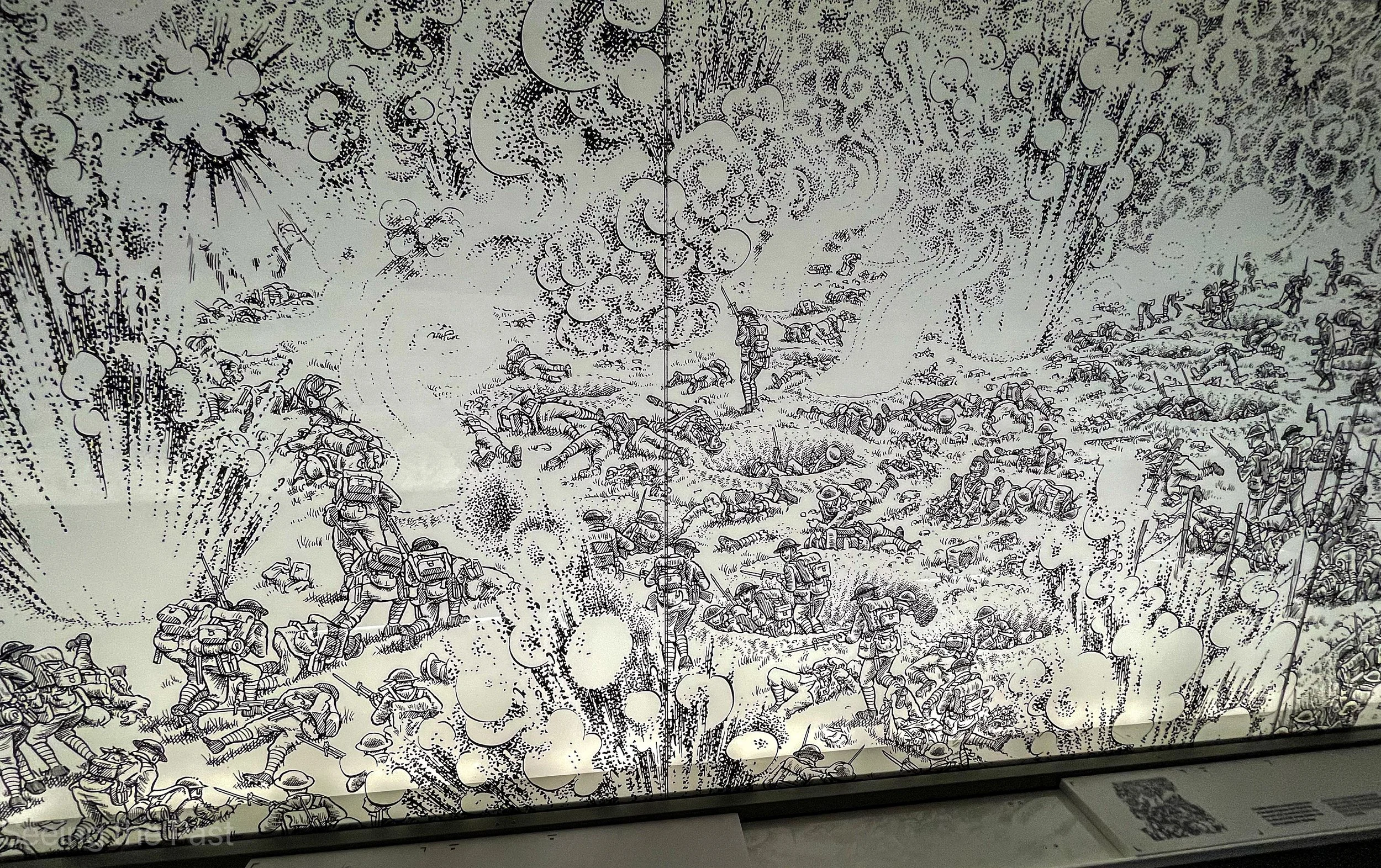
Below; Sacco’s version of the casualties and medics in action.
In between both sides of the long cartoon are some display cases with numerous artefacts from the fighting in the area.
Below; In the museum section you will able to see several cases with fascinating artefacts.
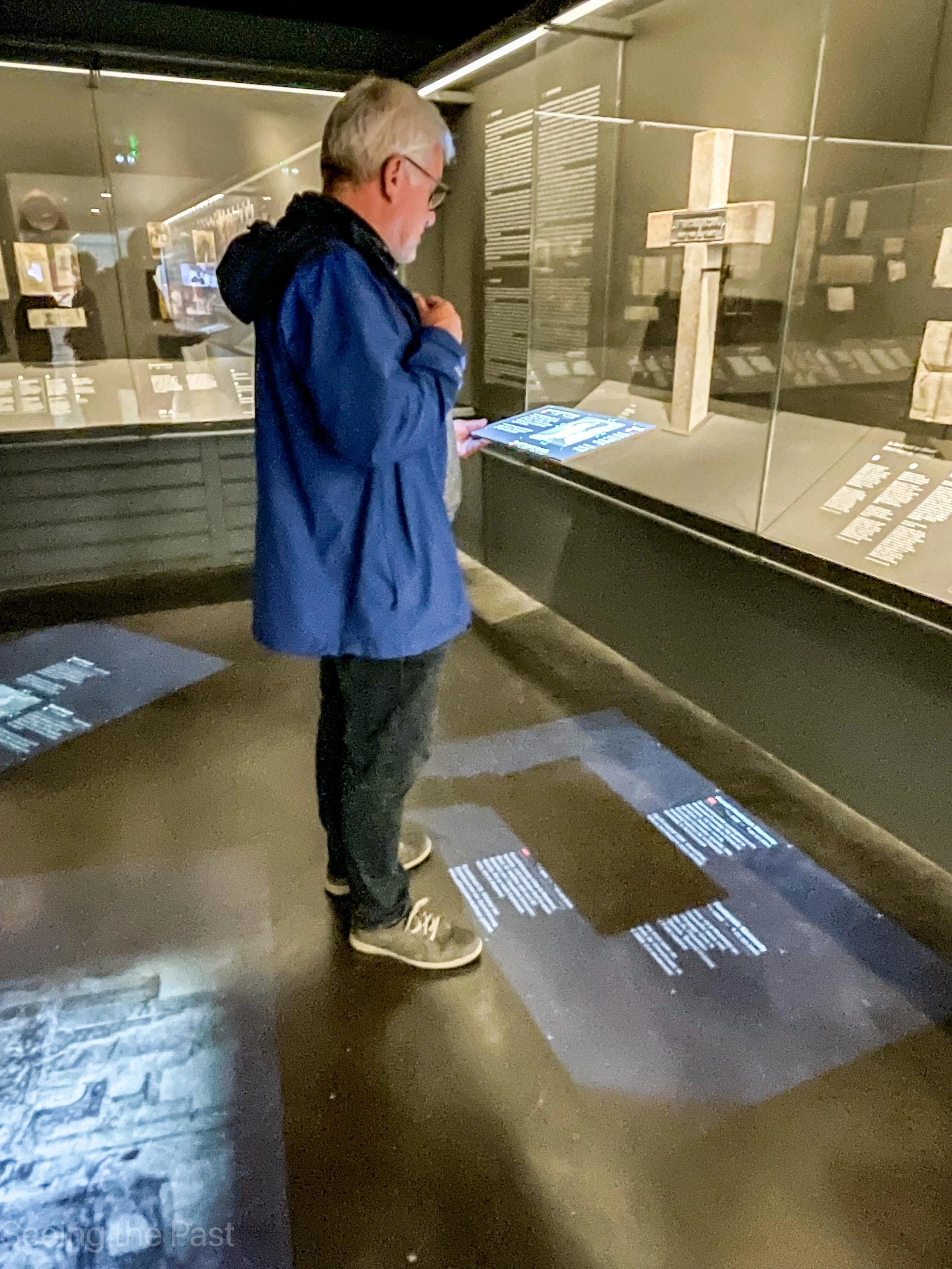
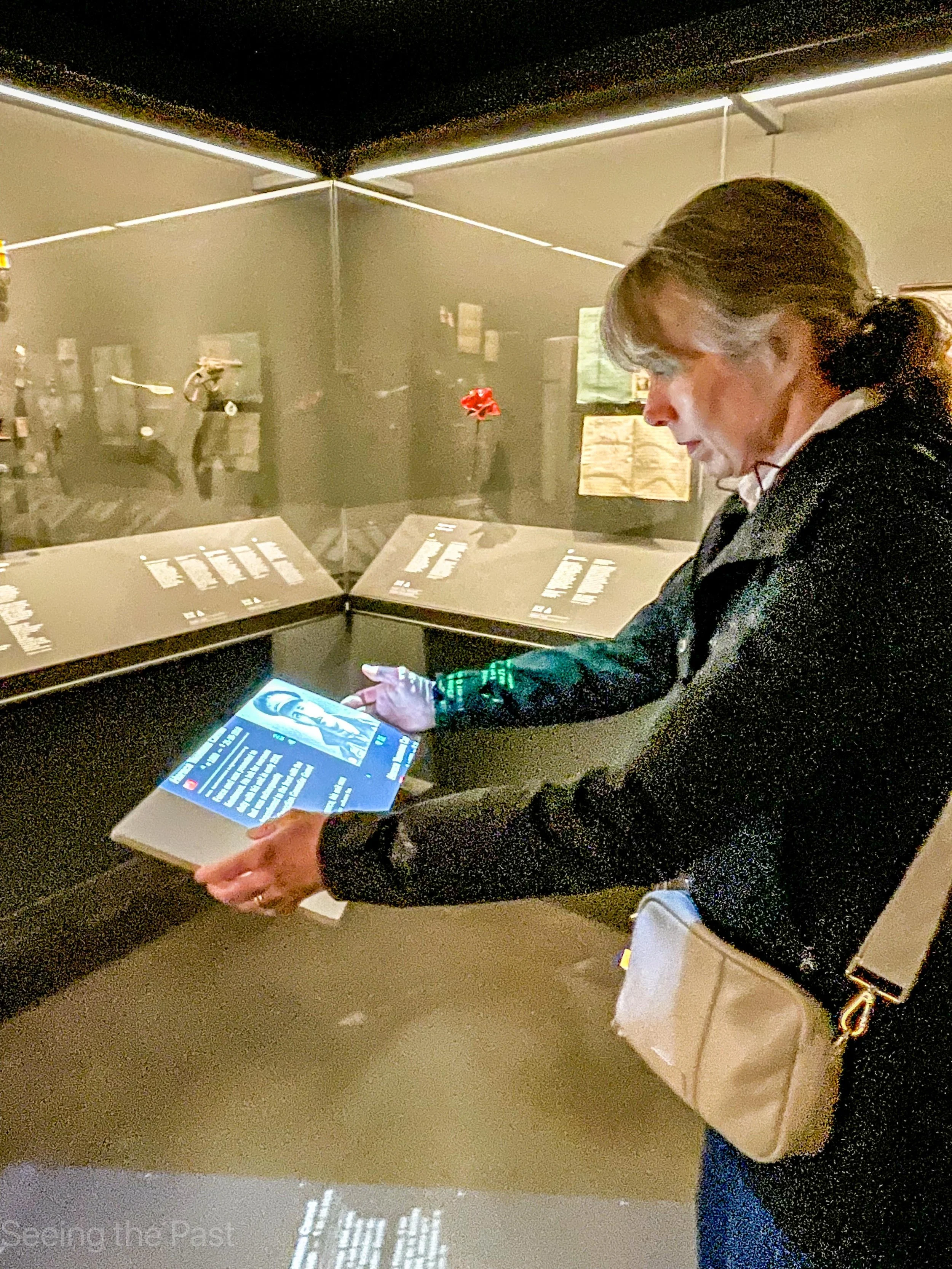
Below: information is displayed in various ways.
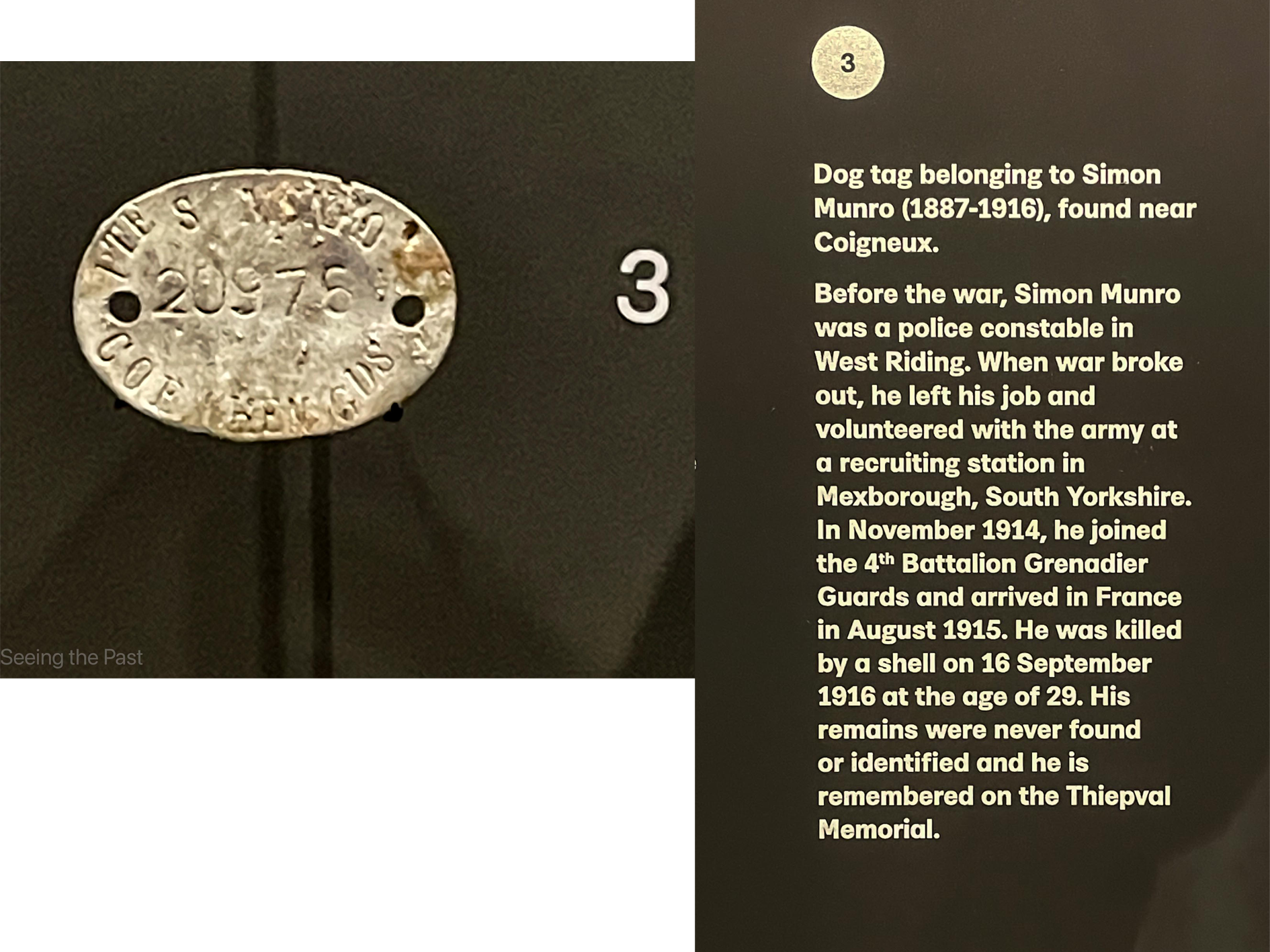
Below is a dog tag belonging to Simon Munro whose remains were never found.
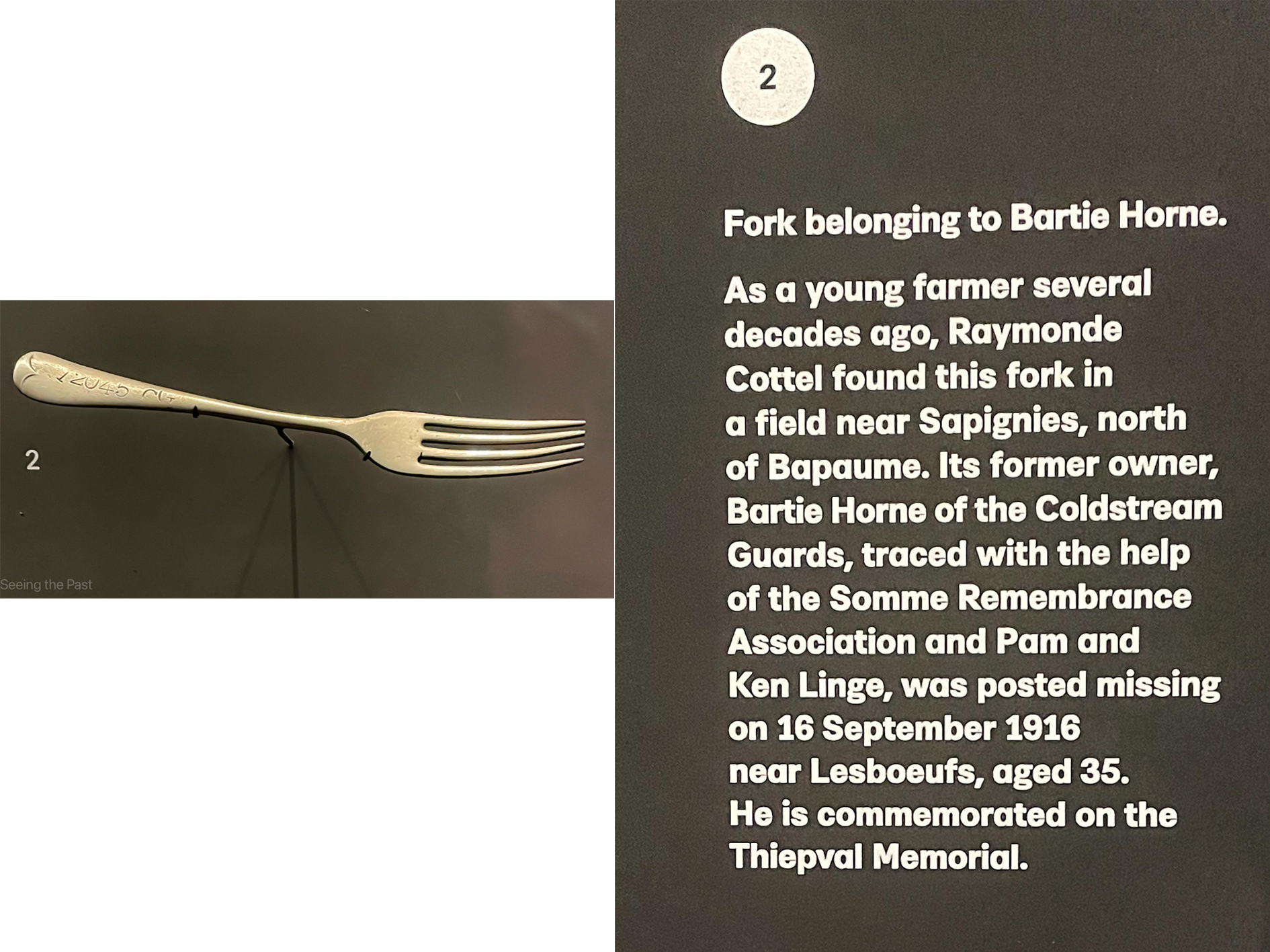
Below is a fork belonging to Bartie Horne. It has his number at the top of the handle and therefore could be traced back to him.
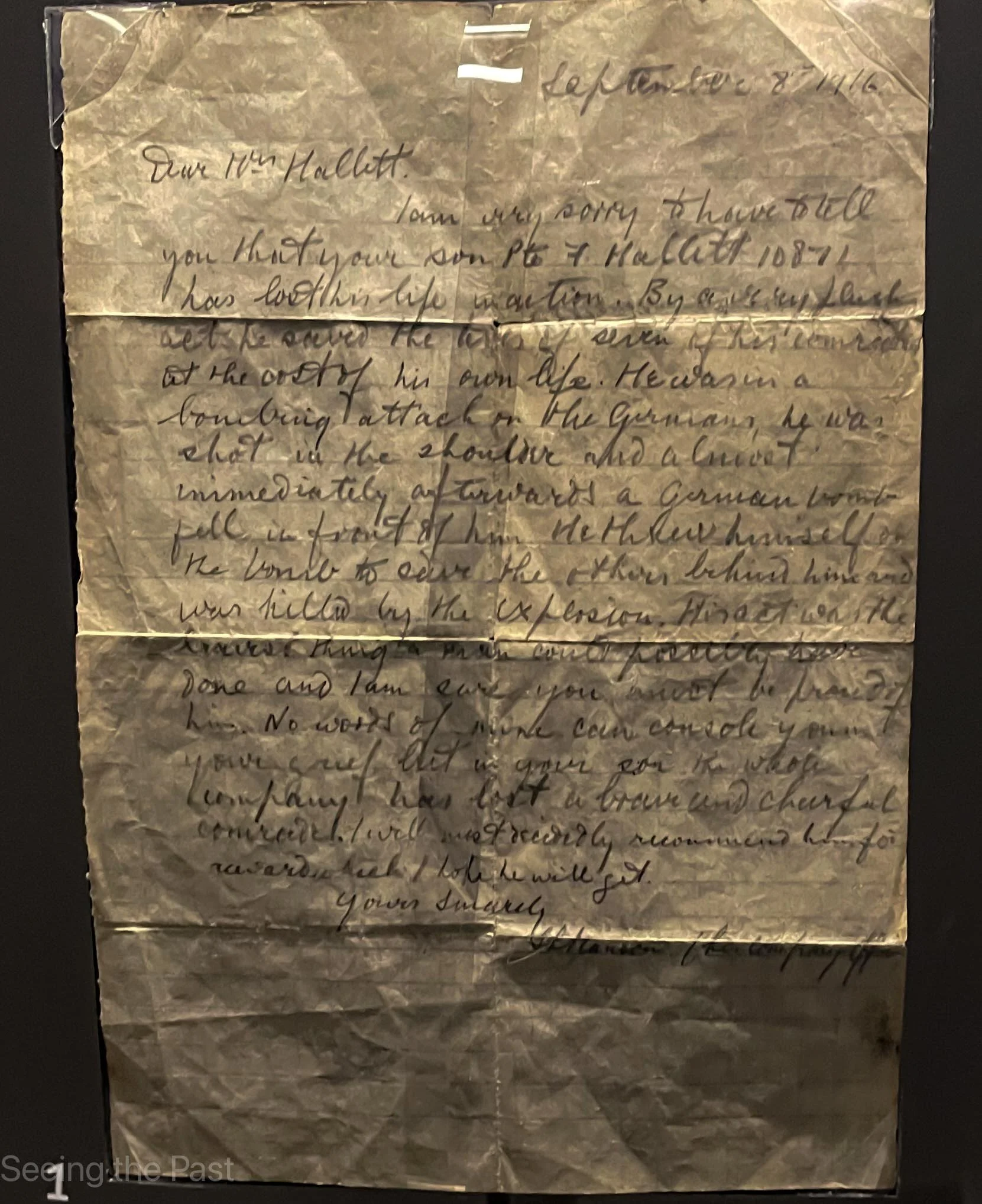
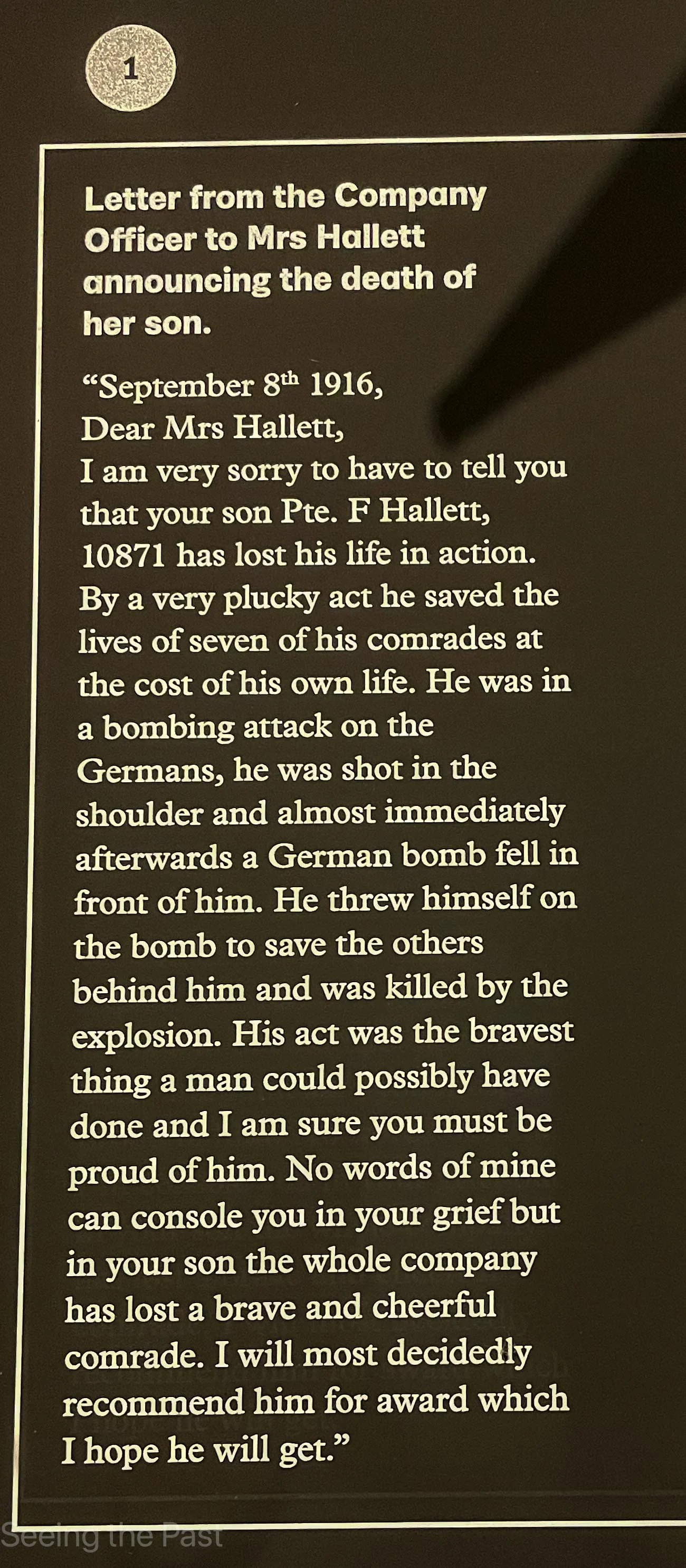
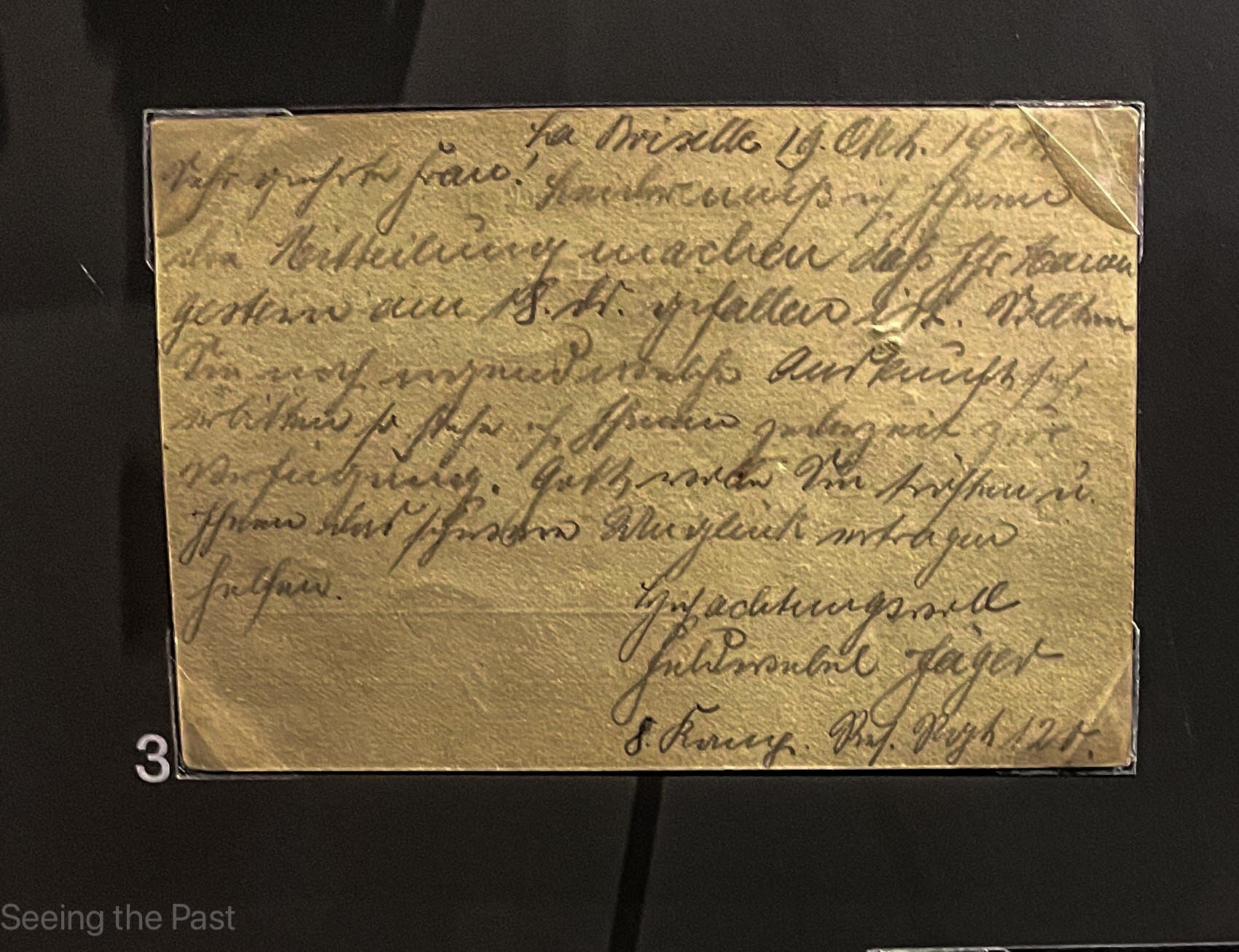
Above a letter sadly informing a mother of the dead of her son.
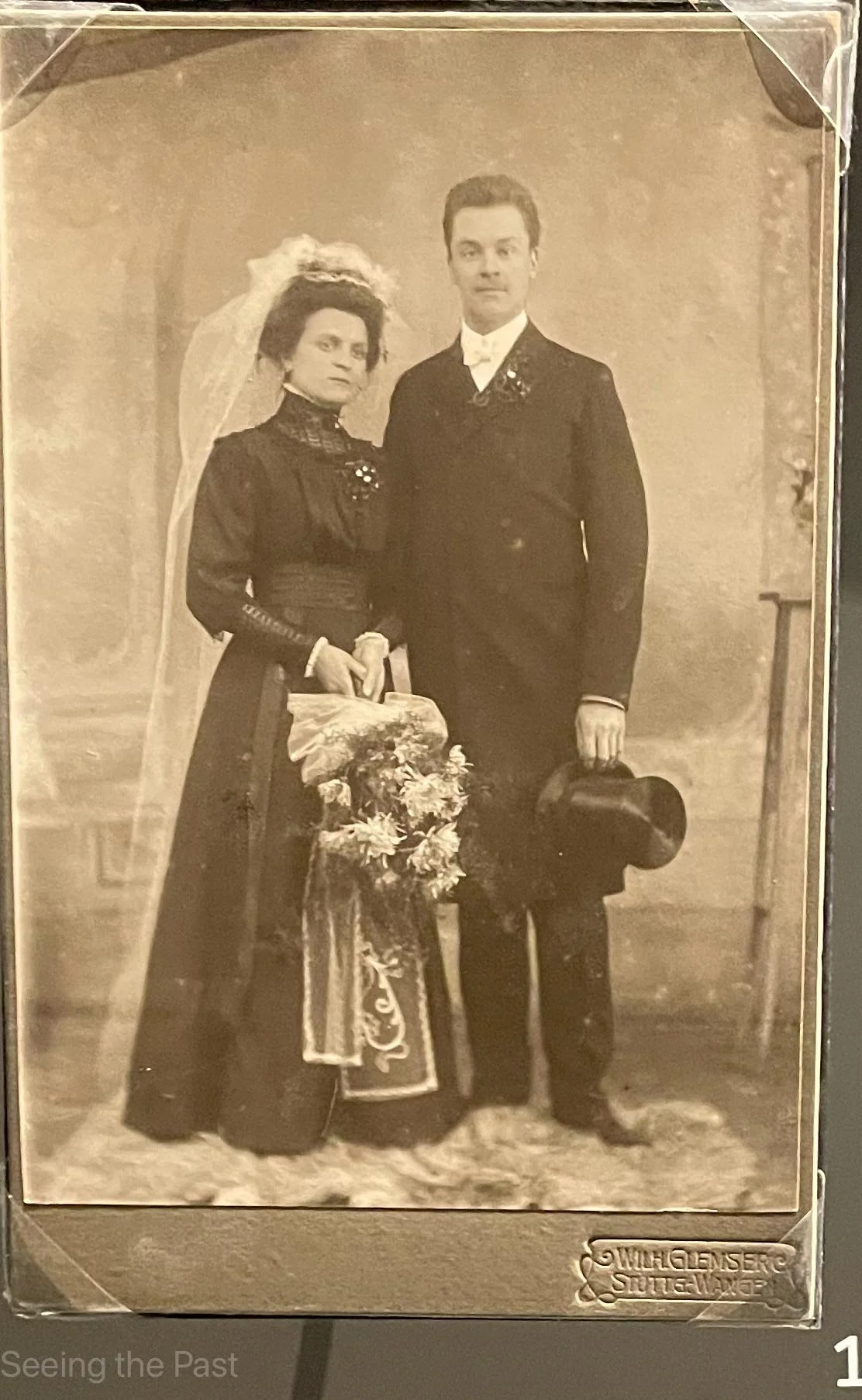
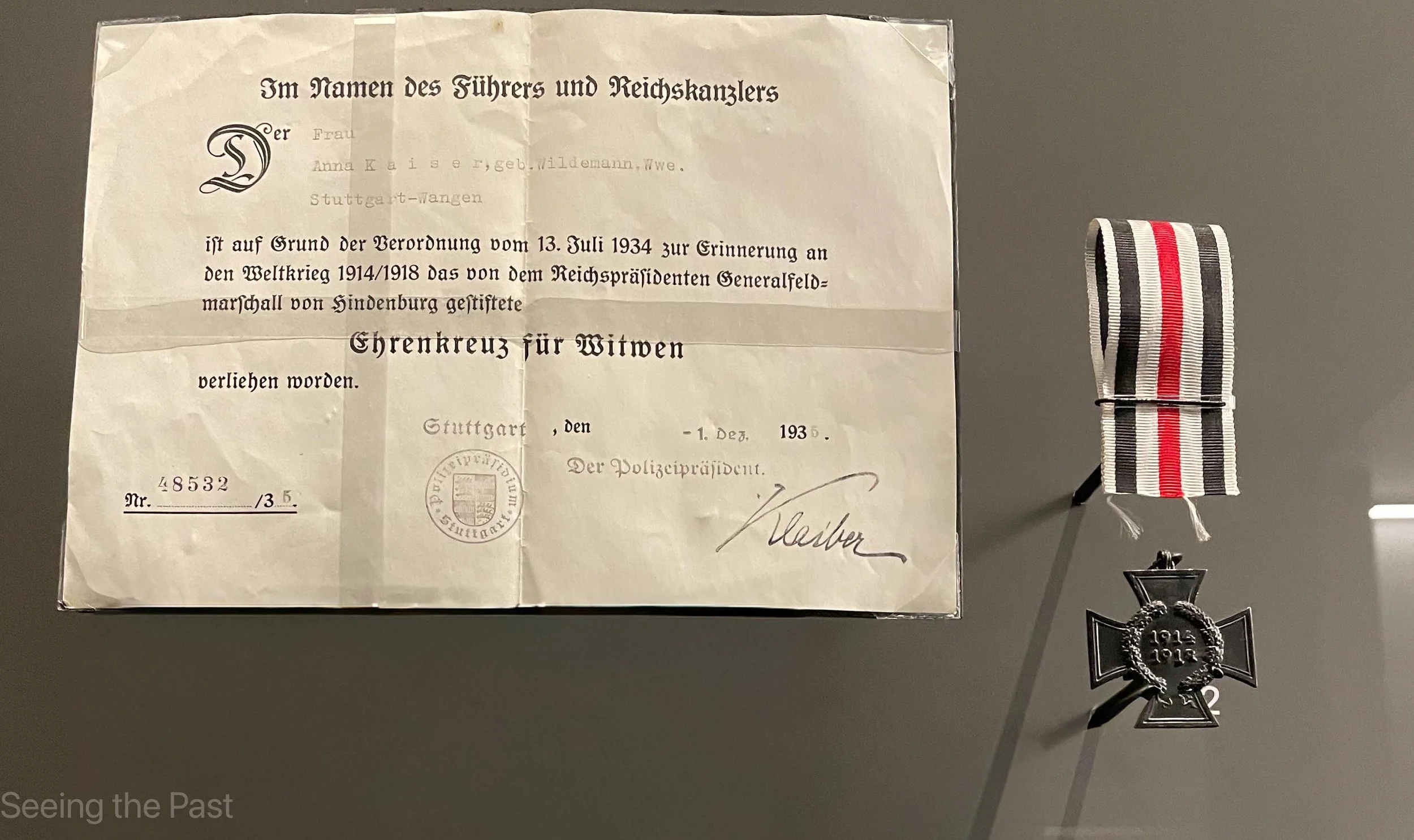
Below; information about Gustav Kaiser which refer to two the three photos that follow on.
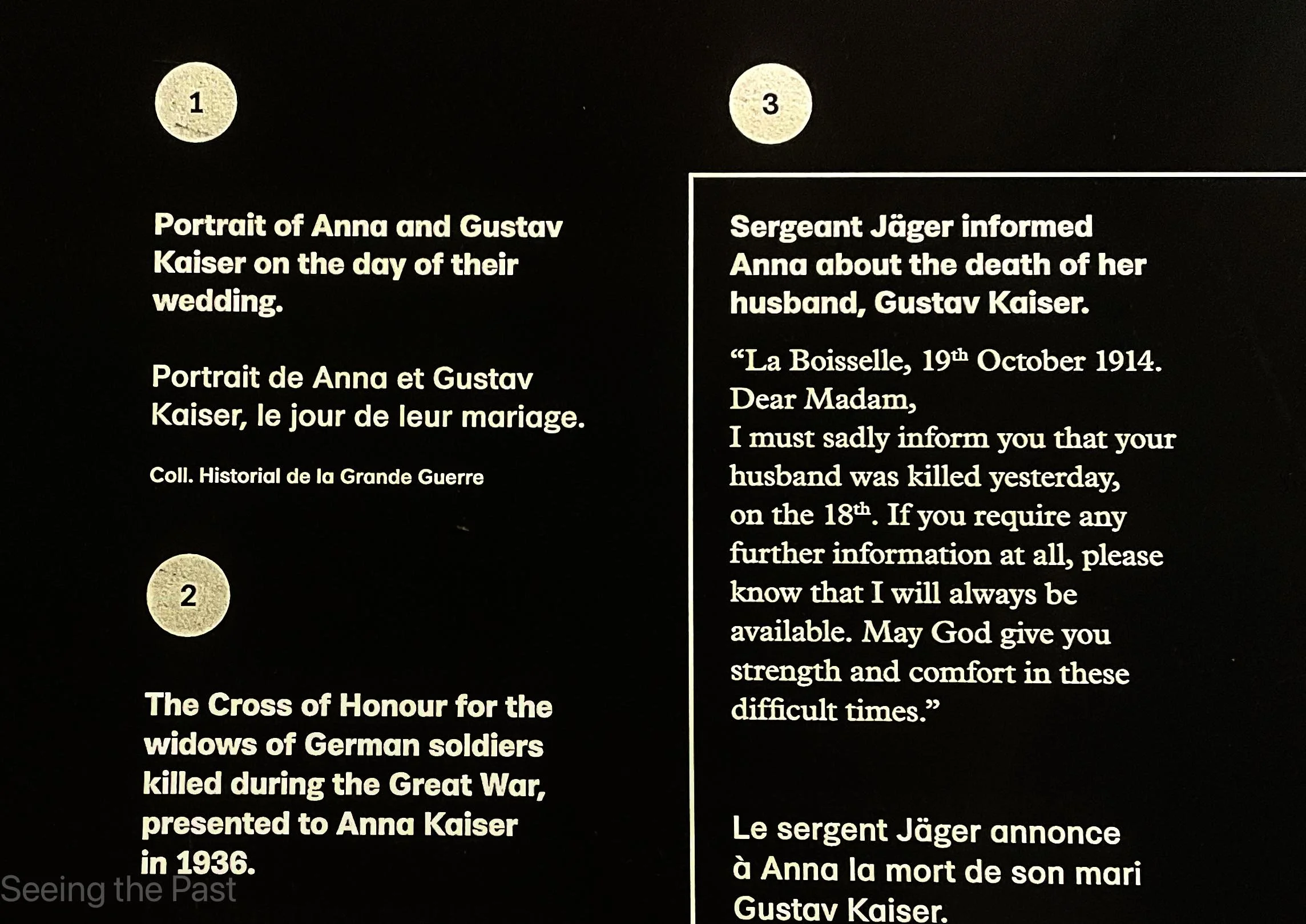
Below: Number 1 Gustav’s wedding photo.
Below: Number 2, Anna’s Cross of Honour.
Below: letter informing Anna of Gustav’s death.
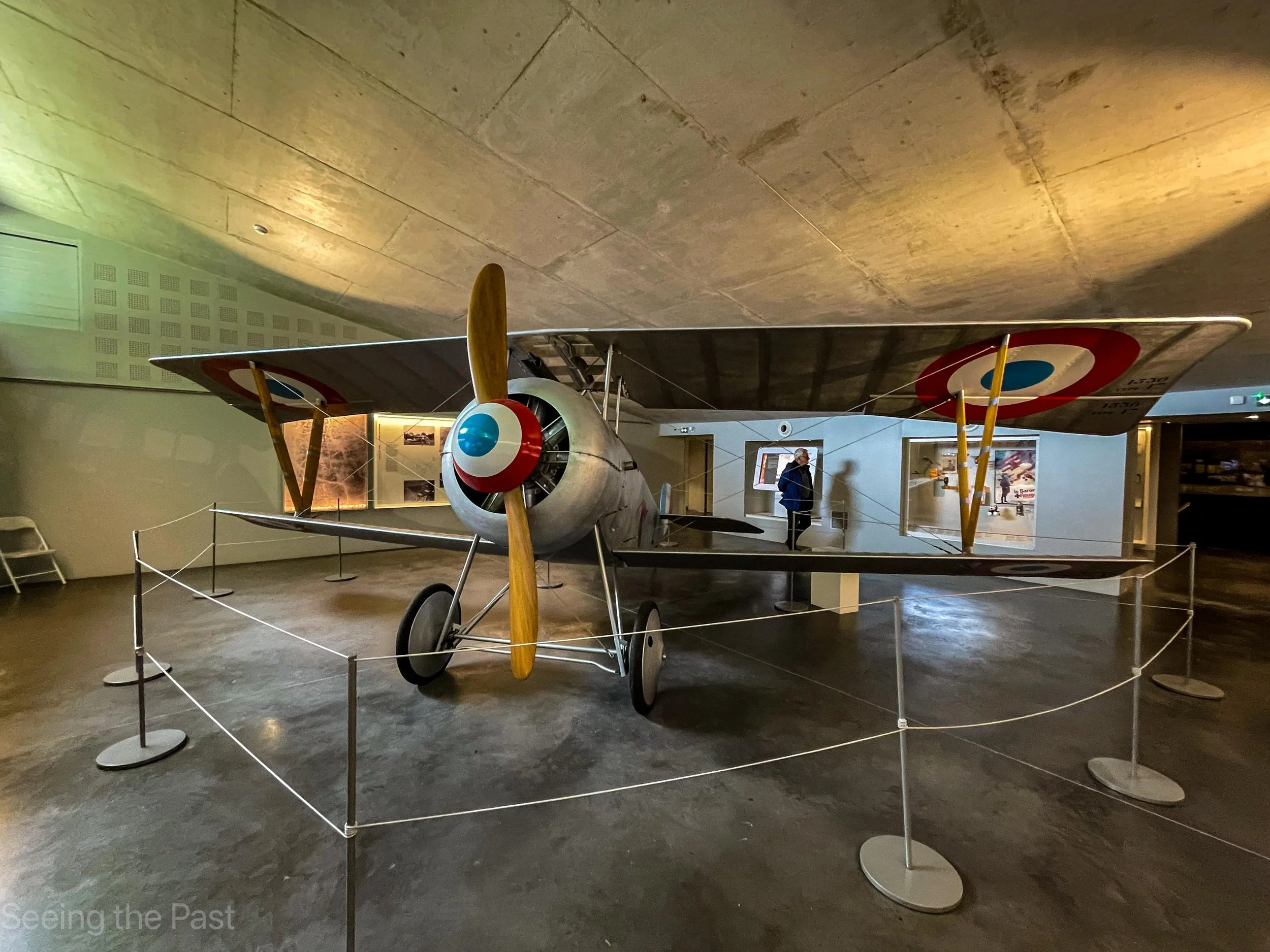
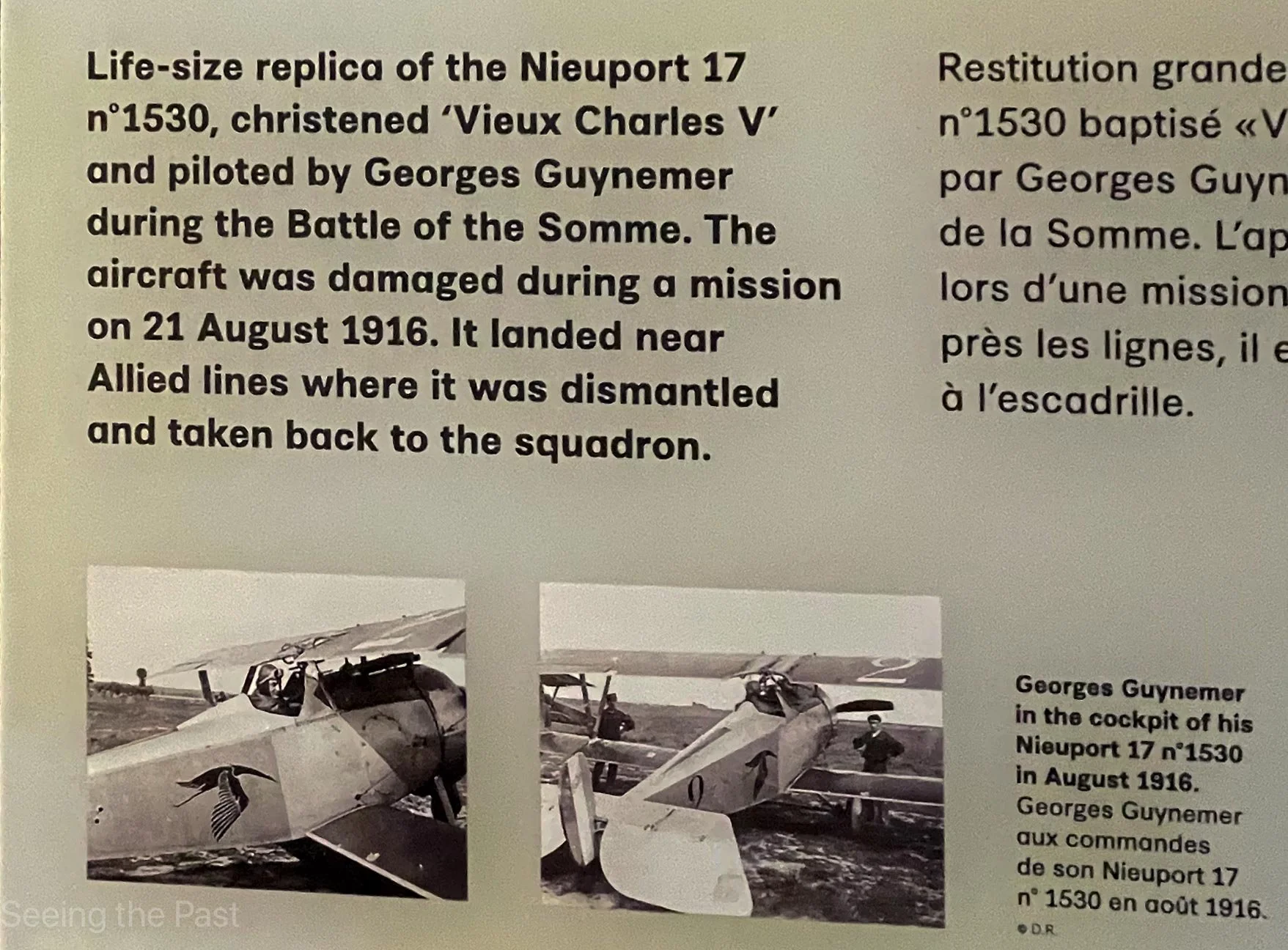
Below; a photo of a life sized replica of a plane used at the Somme and below it is the information the museum displayed on the plane.
Essential information.
LOCATION INFORMATION
The Thiepval Memorial is just off the D151, close to the main crossroads with the D73 in the village of Thiepval. The D73 runs from Poizieres on the main Bapaume to Albert road (D929) to the D50 close to Beaumont-Hamel. Please note to access this site you should follow Rue de L'Ancre from Thiepval village. You should not attempt to enter this site by any other route. Thank you.
Click here for opening times, facilities, parking and visitor centre information.
Articles that may be of interest to you.

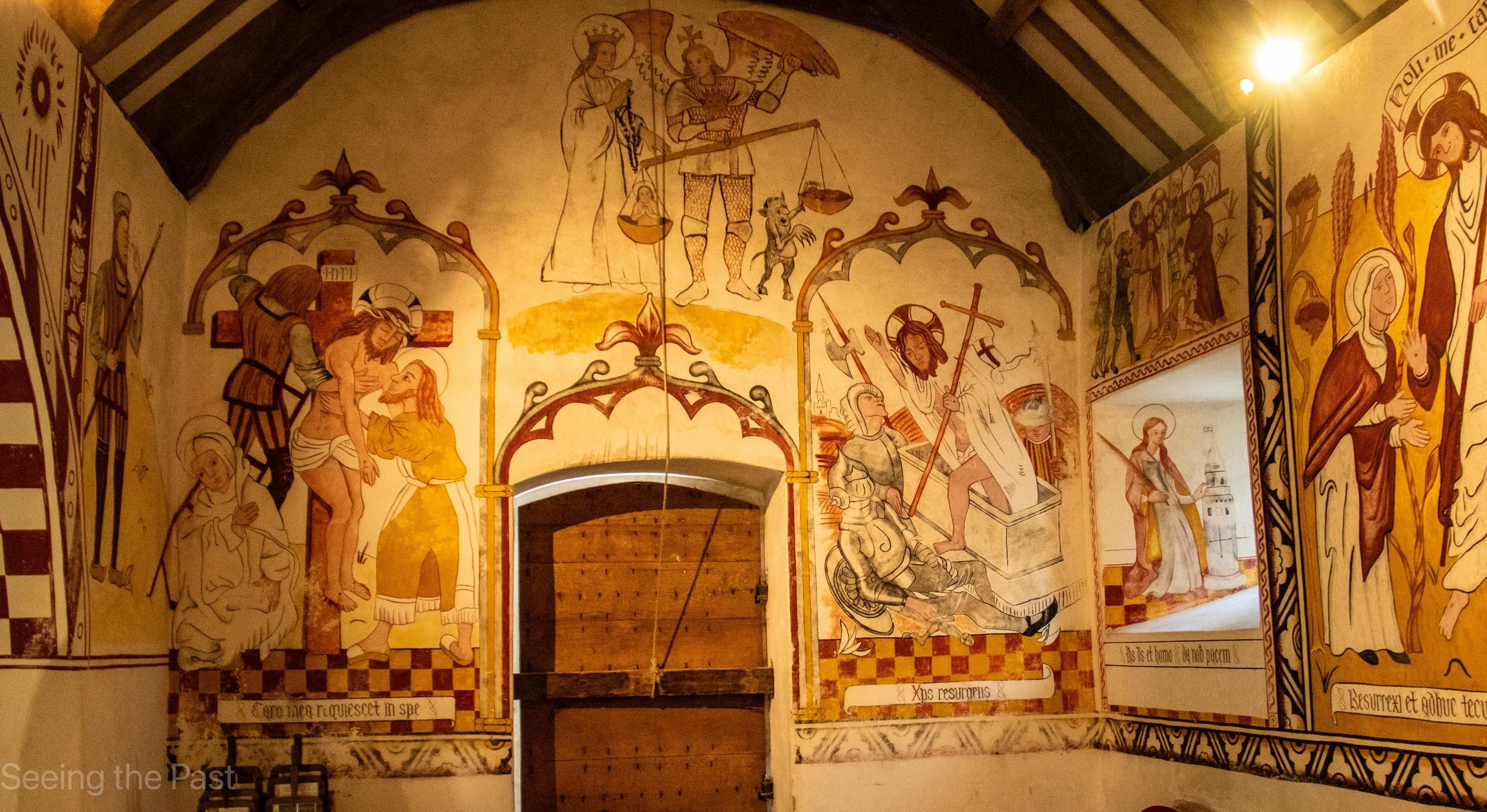



St Teilo’s Church, now lovingly re-erected within the open-air precinct of St Fagan’s Museum of Welsh Life, is a remarkable testament to Wales’s medieval and 16th century heritage. Originally constructed in the early 16th century, this humble parish church was painstakingly dismantled, transported, and restored to its former glory — not least its dazzling wall paintings, which have been carefully recreated with scholarly precision. These vivid murals, brought back to life through meticulous craftsmanship, offer visitors a rare window into the devotional art and storytelling of the late medieval period. Stepping inside St Teilo’s, you’re transported back half a millennium, immersed in a world where faith, community, and artistic expression converged on plastered walls that still speak with vibrant colour and enduring power.