
Walking the Scars of the Somme: A Visit to the Preserved Trenches of Beaumont-Hamel where ninety percent of the Newfoundland Regiment were casualties on day one of the Battle of the Somme.
/
Situated above the rolling fields of northern France, the Newfoundland Memorial Park invites visitors to step into a place of quiet remembrance and lasting meaning. It was here that the Battle of the Somme began on July 1st, 1916, marking a defining and tragic moment in history. Walking the preserved trenches and grounds offers a powerful opportunity to reflect on courage, sacrifice, and the enduring impact of those who served. If you can organise a trip in the summer months, a member of the “Student Guide Program”, from Canada will take you to the key features and enrich your tour.
Why did the Battle of the Somme take place?
By the end of 1915, there was a a continuous line of trenches from the North Sea to Switzerland with neither side gaining or losing territory. In other words , despite their best efforts, there was “stalemate”. In March 1915, the British attacked Neuve-Chappelle and despite capturing it, did not make any further advances. In April 1915, the Germans attacked at Ypres in Belgium using poison gas but their gains did not last long. The British and French launched battles of Festubert, Aubers Ridge and Loos but again no substantial breakthroughs were made.
A new front was opened up against the Ottoman Empire, allies of Germany and Austria. What became known as the “Gallipoli Campaign” fought by British, Australian and New Zealand troops against Turkish troops (Ottomans) ended up in a complete allied disaster with 189,000 men dead, wounded, missing and captured.
However, a high level meeting at the end of the year resulted in plans for a fresh start by fighting a massive battle consisting of British, Empire and French troops across a large front. For co-ordination of the allies, the area to be attacked was to be the River Somme, the place where the allied armies were adjacent to each other ie the British and Empire troops were to the west and north, whilst the French to the east and south.
Unfortunately, the Germans were also planning for advances in 1916 but, in their case, it was to concentrate huge forces at Verdun and its historic fortress. Their idea was that the French would be so desperate to stop the Germans capturing the area that they would keep defending it, no matter how many lives were lost. With the French severely weakened, the Germans could then switch focus to beating the British, British Empire and Belgian armies. These included …..
The Battle of Verdun began at the end of February and soon began to be catastrophic for the French. As a consequence, the French part of the plan for the Somme was dramatically reduced. The British and Empire troops now had to attack so successfully that the Germans would have to remove troops from Verdun to prevent a British breakthrough. This would relieve the French at Verdun. An Allied victory was essential to prevent a German breakthrough into open country and the disastrous consequences associated with it.
What can be seen here?
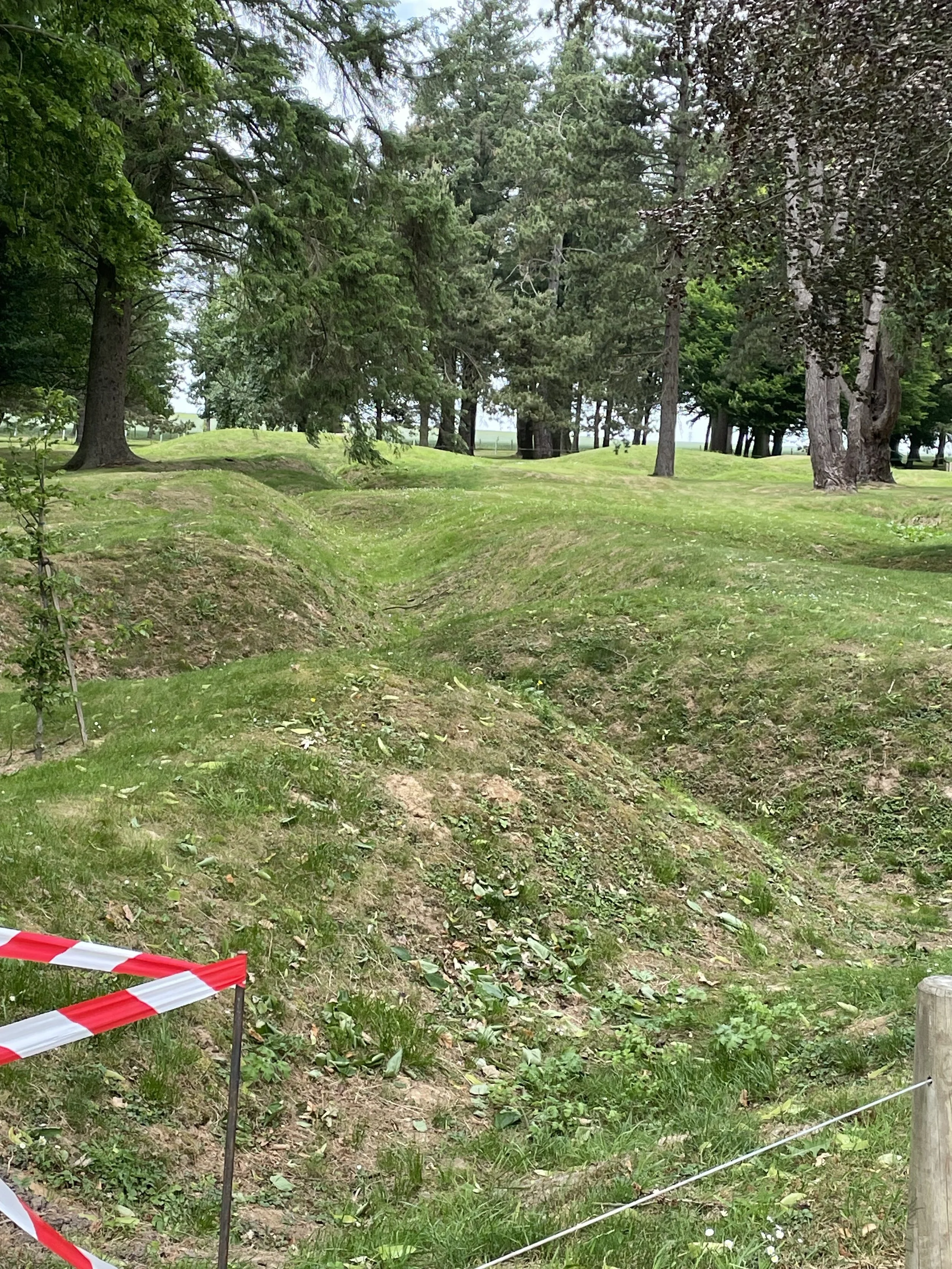
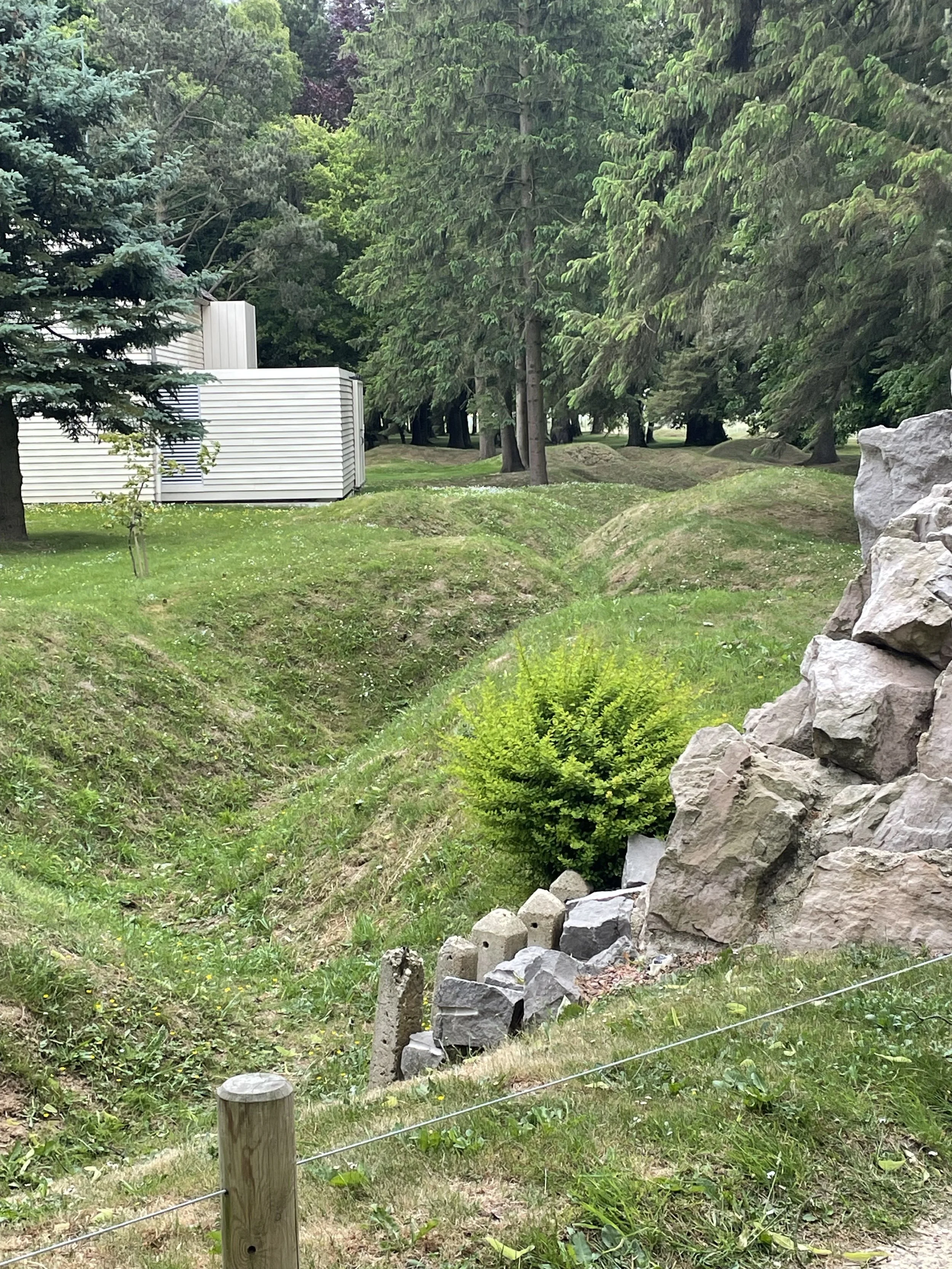
As you enter the park, from St John’s Road, to your left and right are the third line of trenches known as the “Reserve trenches”. In all, there were, three lines of trenches beginning with the front line trenches which were next to “No Man’s Land” and opposite the German trenches in the distance. Secondly, was the “Support trench” which was for the follow up troops after the initial attack and lastly, the reserve trench. This was for the last line of troops to be used if the attacks had not gone as planned. Linking the trenches were communication trenches that enabled, in theory, soldiers to move from trench to trench to get to the front line before “going over the top.
On the left, in the reserve trench, was the Newfoundland Regiment (one of the Empire regiments) and on the right was the 1st Battalion of the Essex Regiment. Note, the trenches are never in straight lines. This was to limit the effect of a shell bursting in the trench and killing all the troops in a straight line. Zig Zag trenches would contain the effect of a blast to a smaller area.
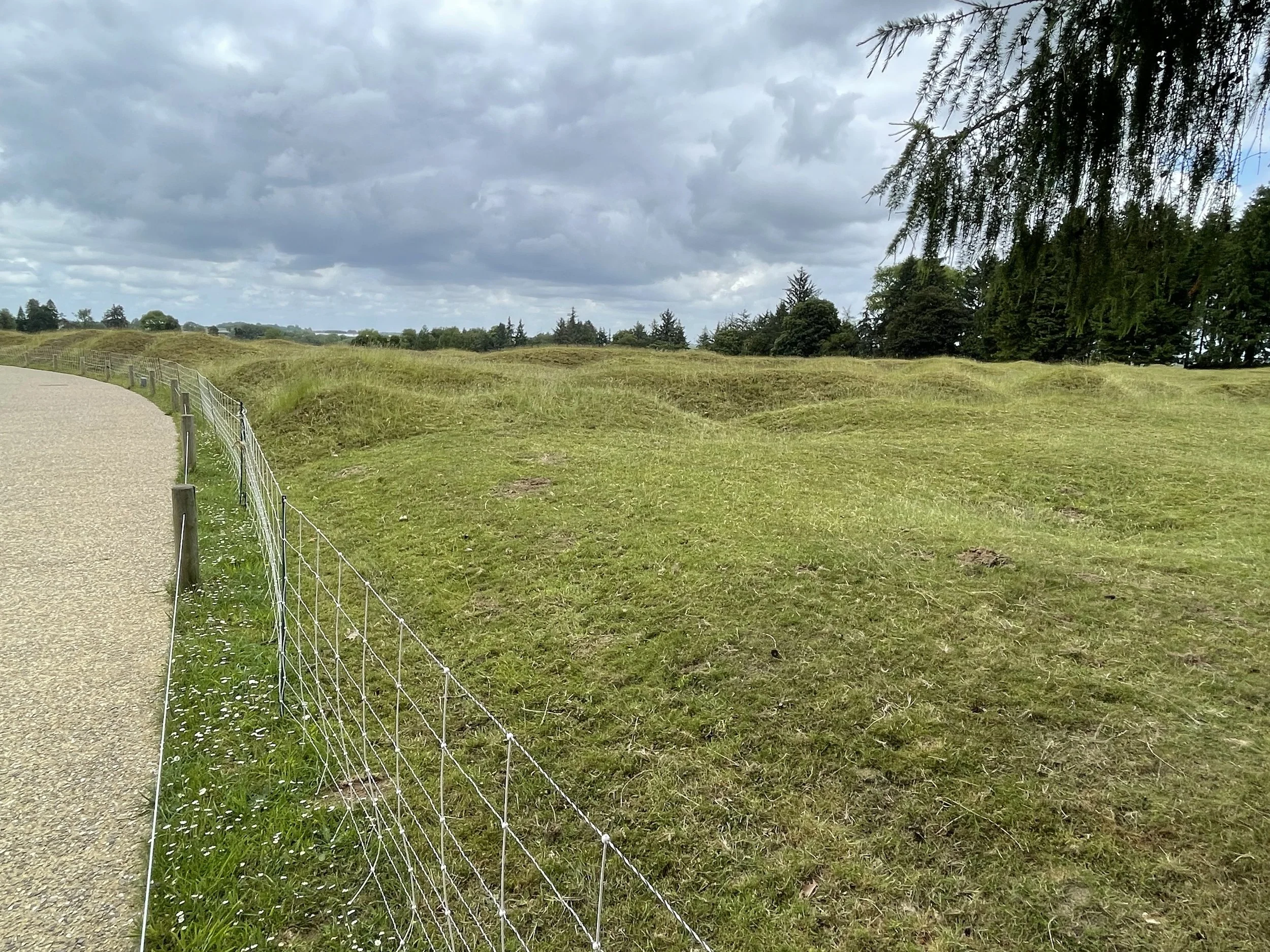
Below:lots of craters caused by German artillery. It is impossible to imagine just how scary it must have been, standing in a muddy trench with explosions all around throughout the day.
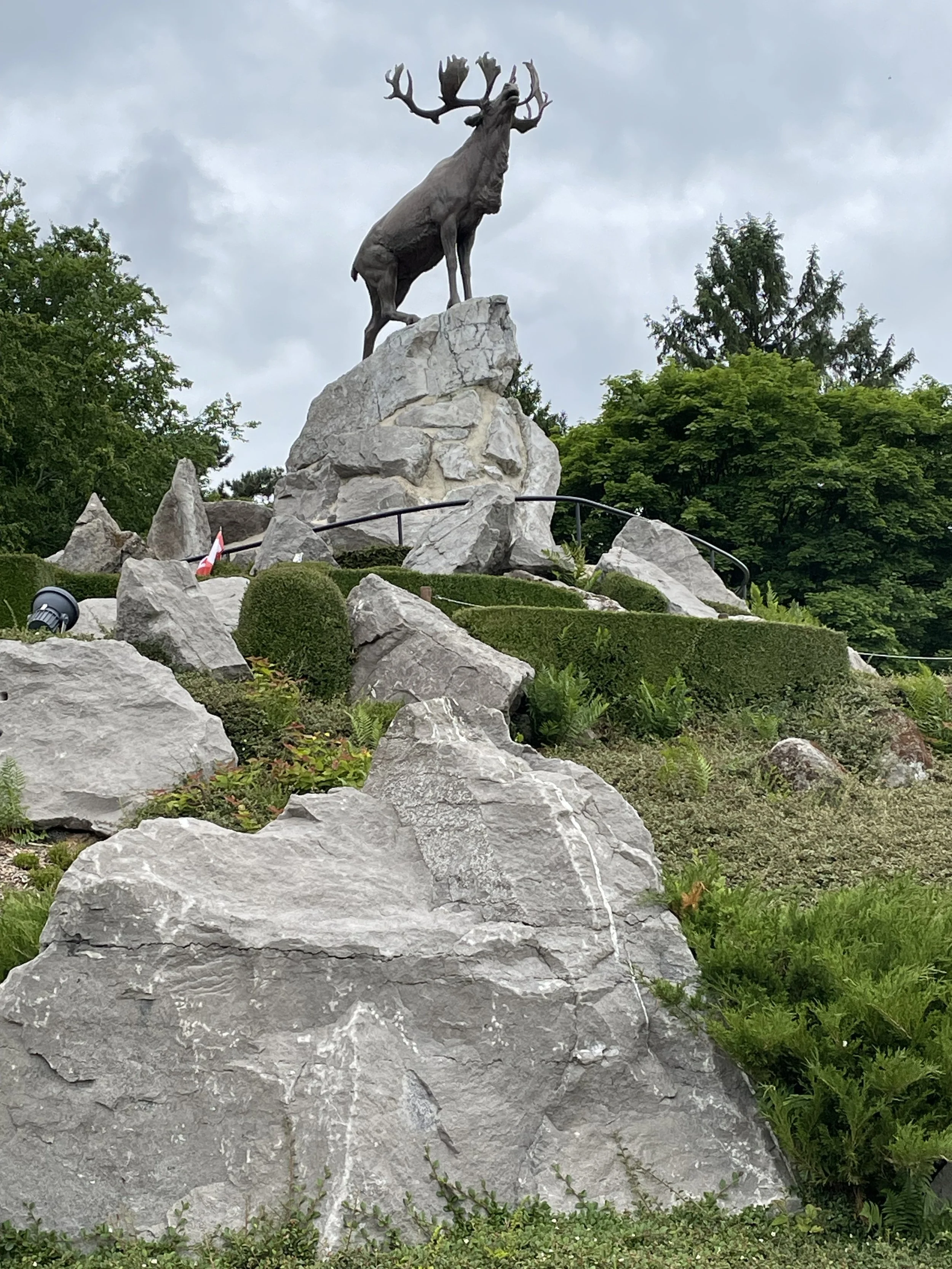
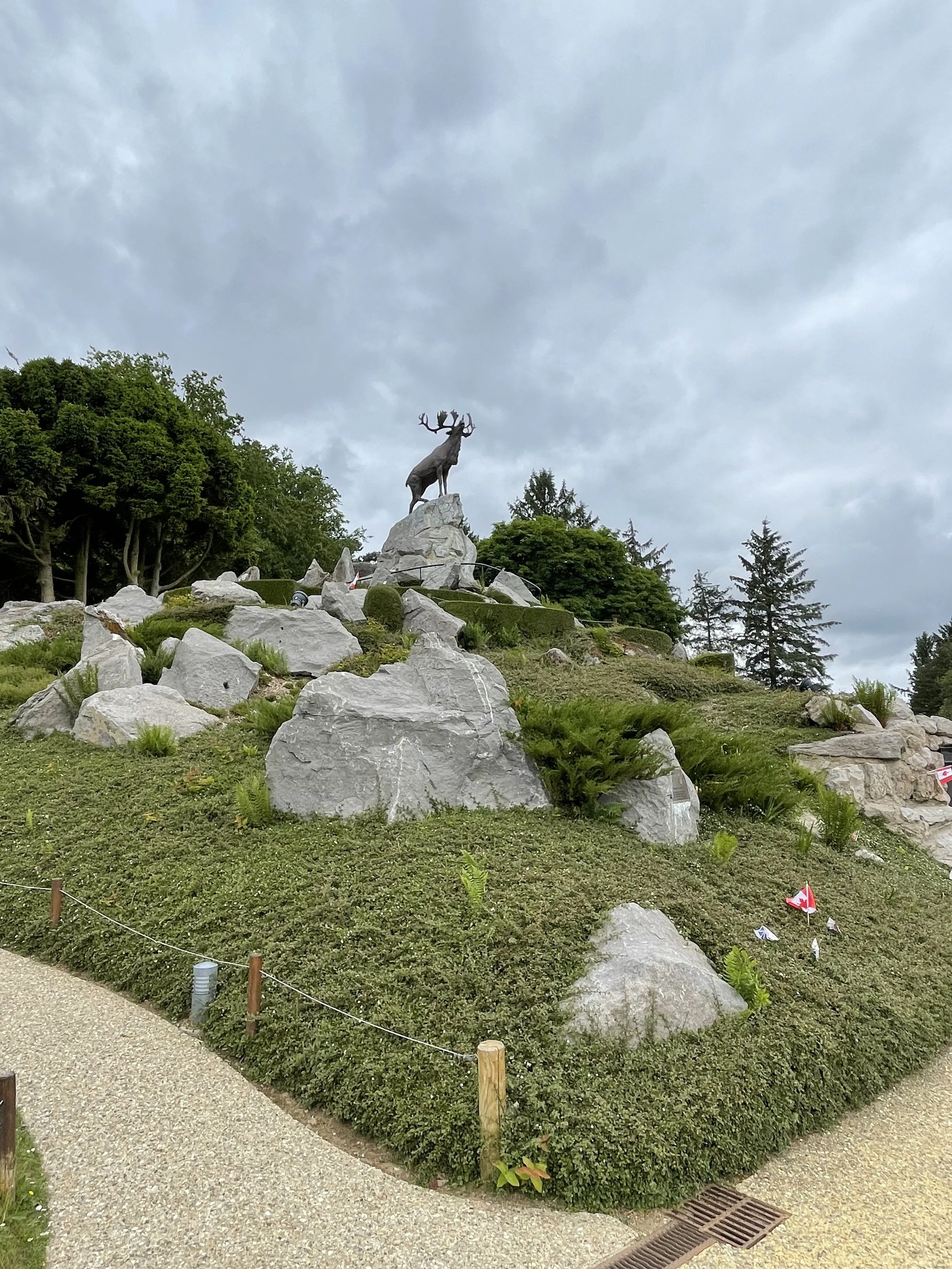
Below: a Caribou looking across the battlefield. The Caribou was a native animal of Newfoundland and was on their cap badges. Before the war, Newfoundland was not part of Canada and so provided money and men that was separate from Canada.
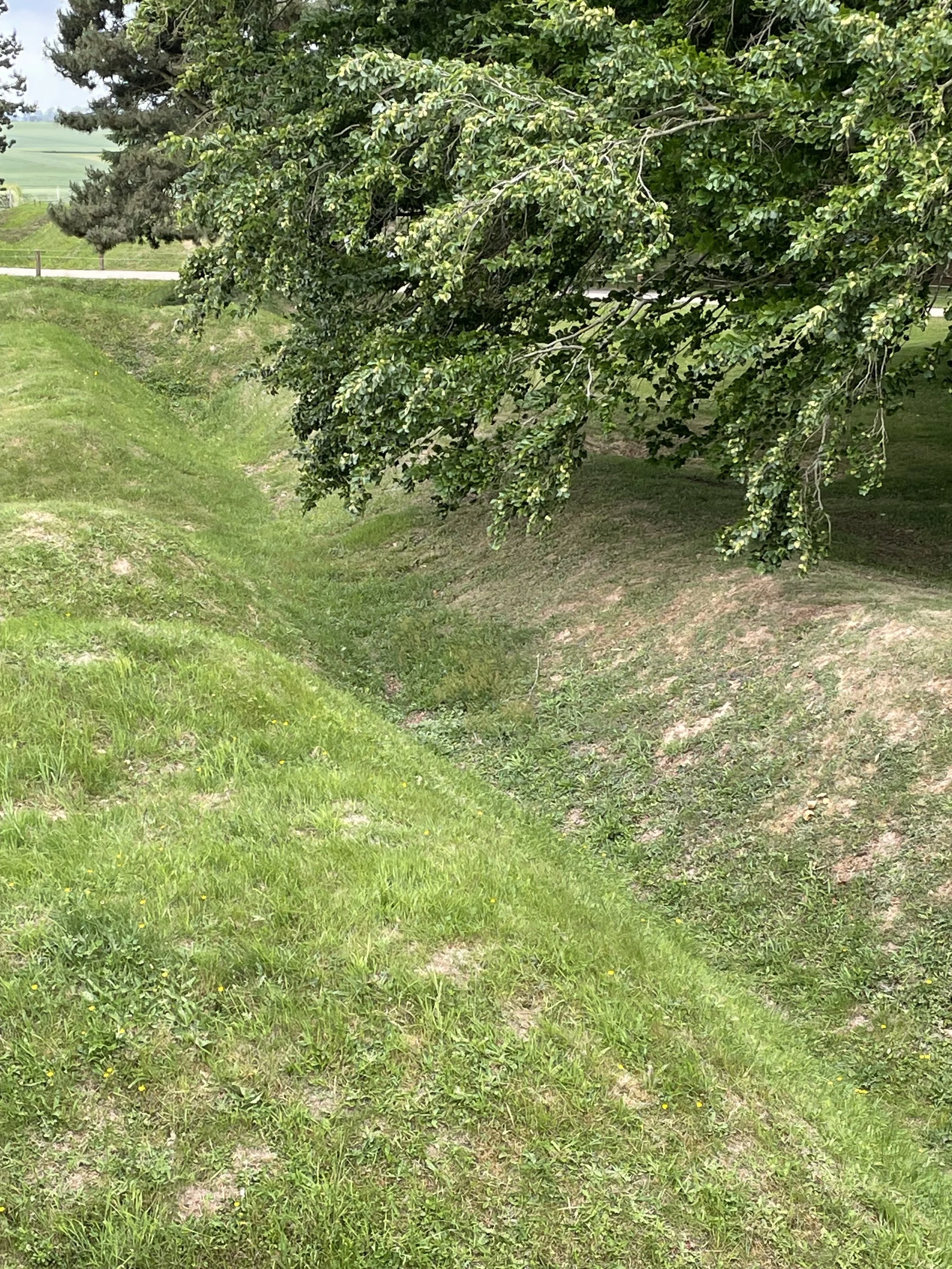
Below; a communication trench. Over the years since WW1, soil has gradually filled the trench and so it was a lot deeper when it was used in 1916.
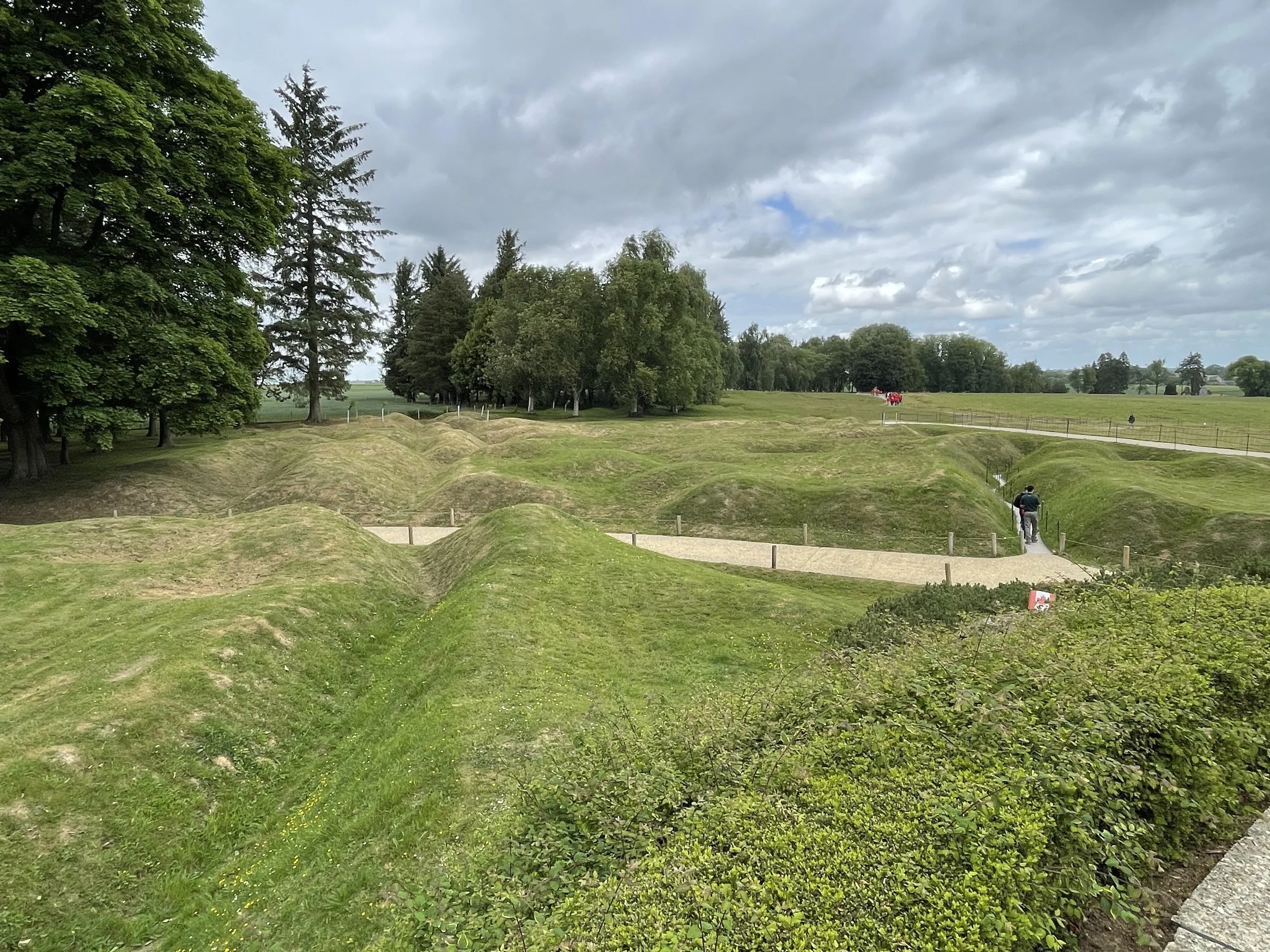
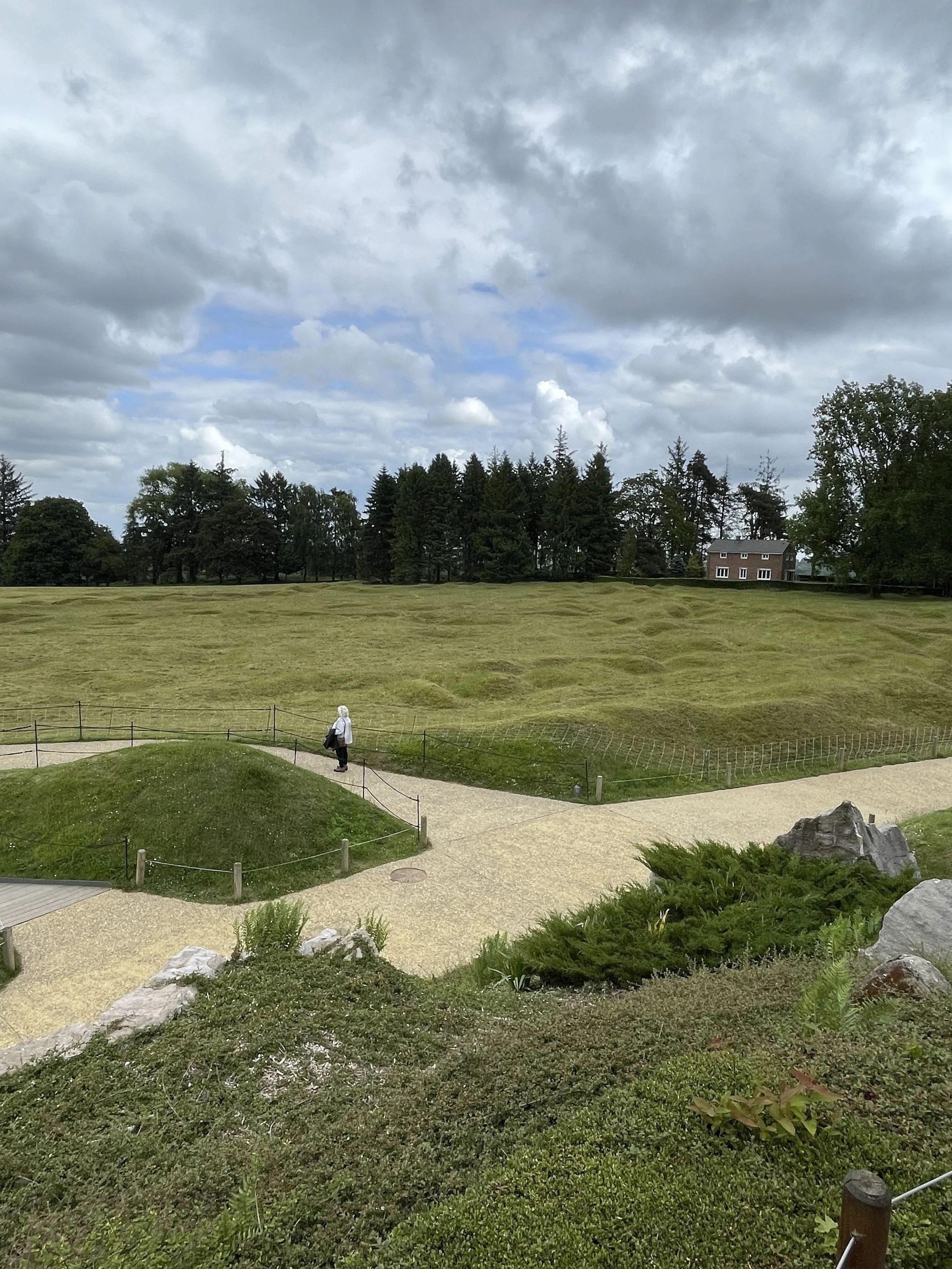
Below; the view from the top of the Caribou monument.
Below: the support trench where the Ist Battalion the Border Regiment were situated ready to go. Once an attack had taken place from the front line, which is to the right of this trench in the photo of this trench, soldiers would move up to the front line trench ready to support those already in action. In the front line trench were the 2nd Battalion South Wales Borderers. Sadly, the South Wales Borderers casualties were so high that the soldiers in the support trench in the photo were moving to the front within half an hour of the attack starting. The soldiers in the initial attack, were mown down with machine gun fire within minutes of stepping onto “No Man’s Land”. More detail of what happened to follow in the last section of this blog.
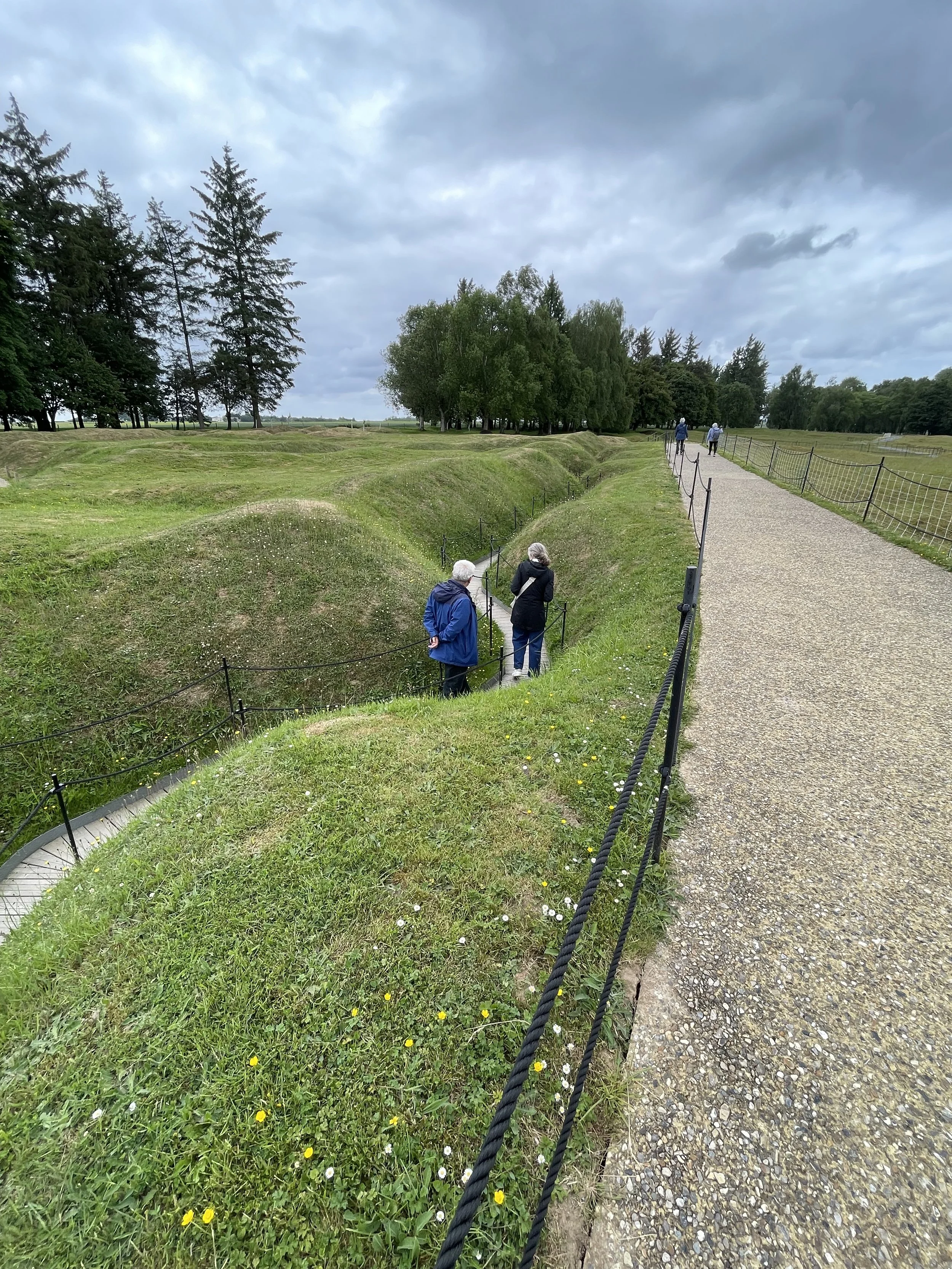
Below; Looking back over the support trench to the Caribou Memorial.
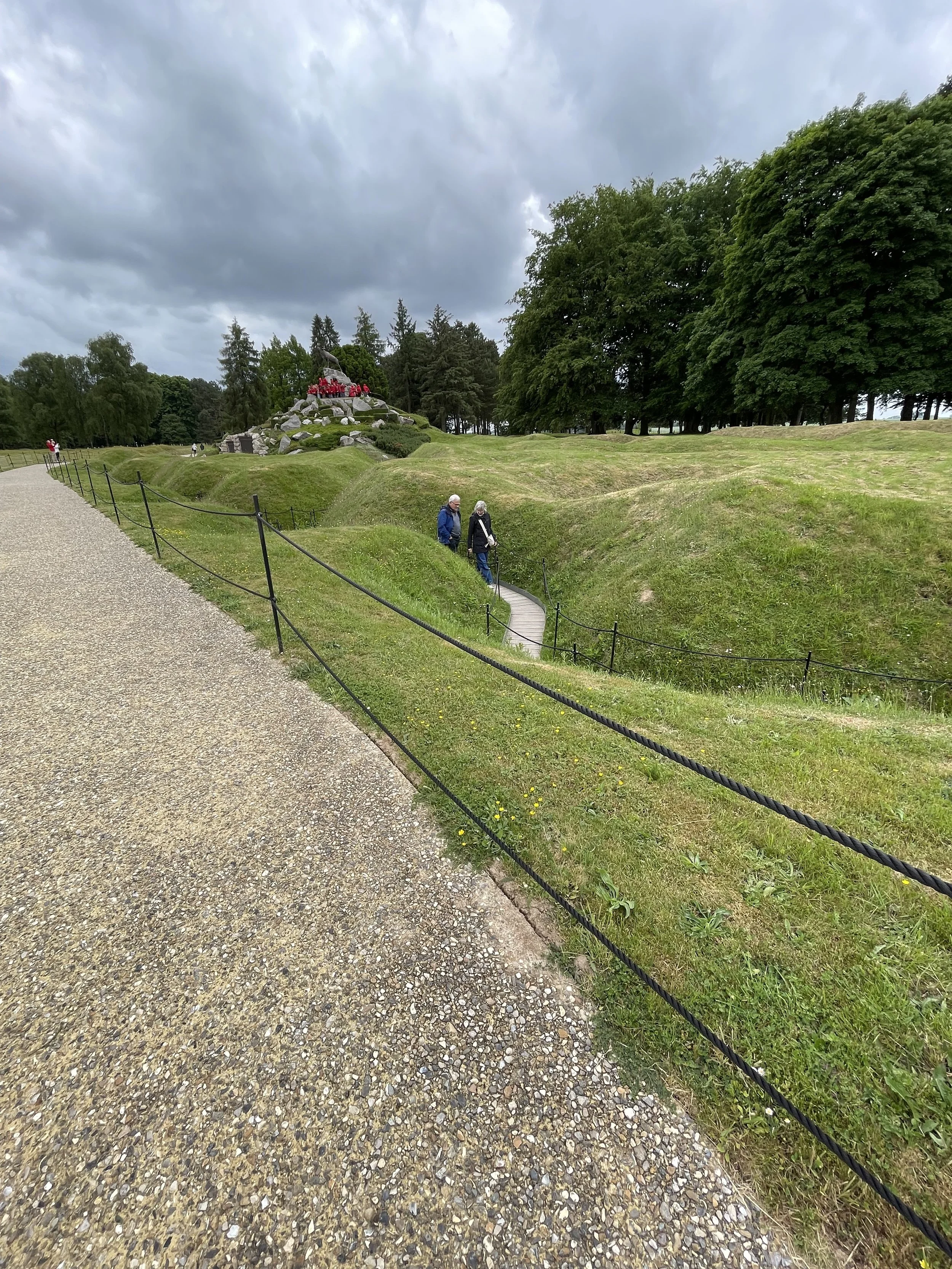
Below; walking along a path across No Man’s Land. Although, the initial attacks failed on July 1st 1916, eventually, by November, the German trenches were captured and in the intervening time, various trenches were dug across towards the Germans.
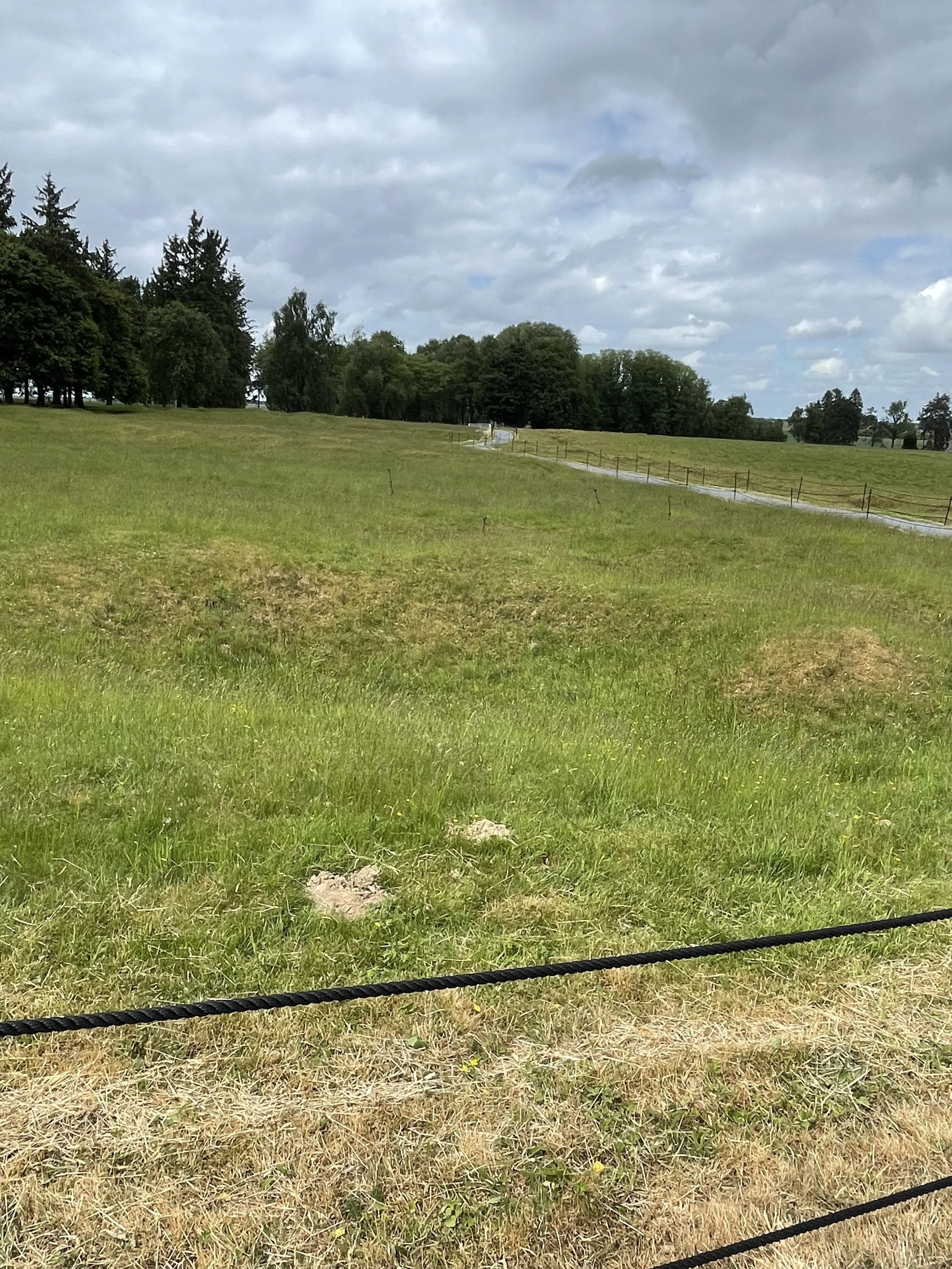
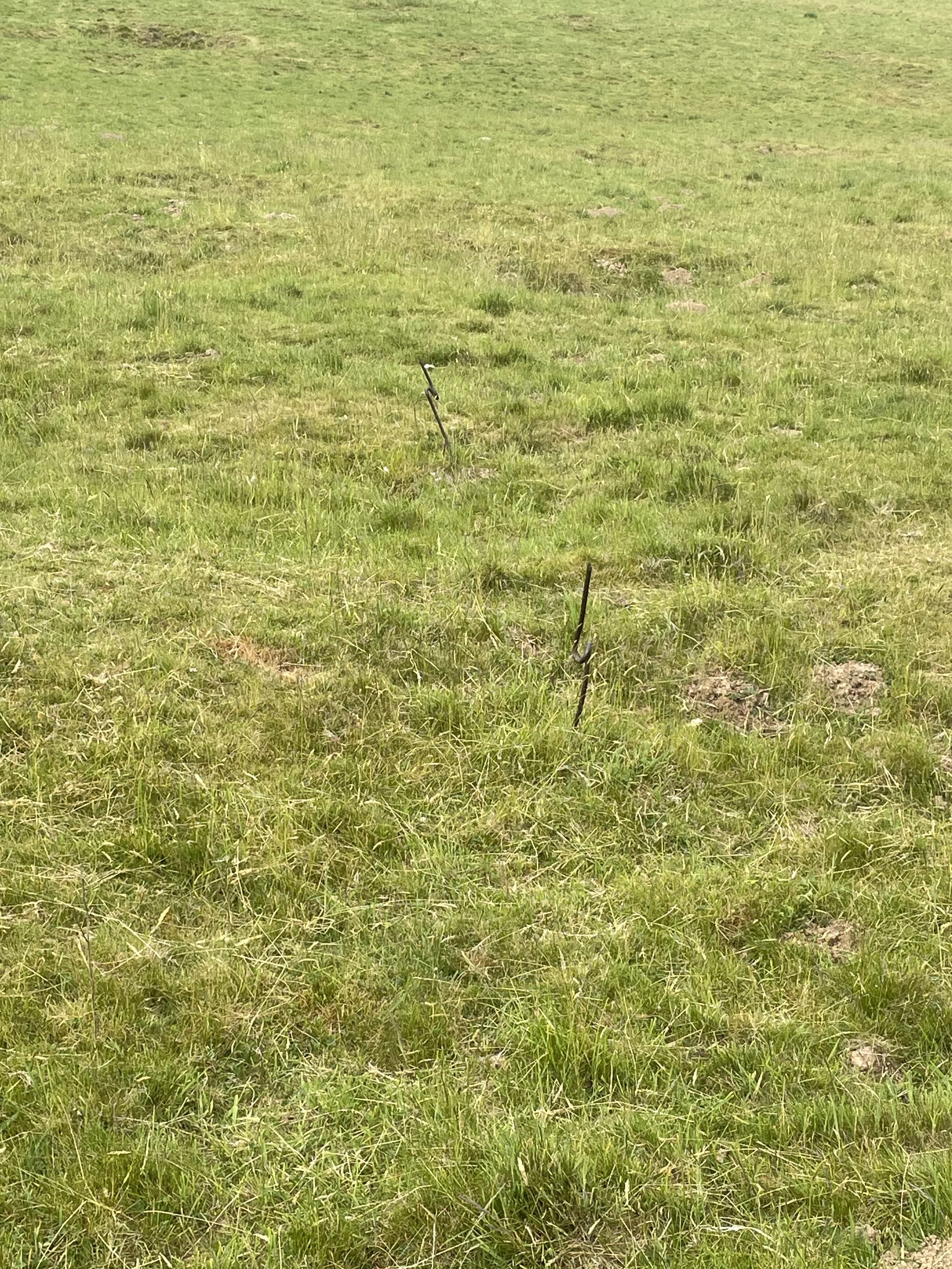
Below: these iron bars would have held up barbed wire to prevent easy entry into the trenches.
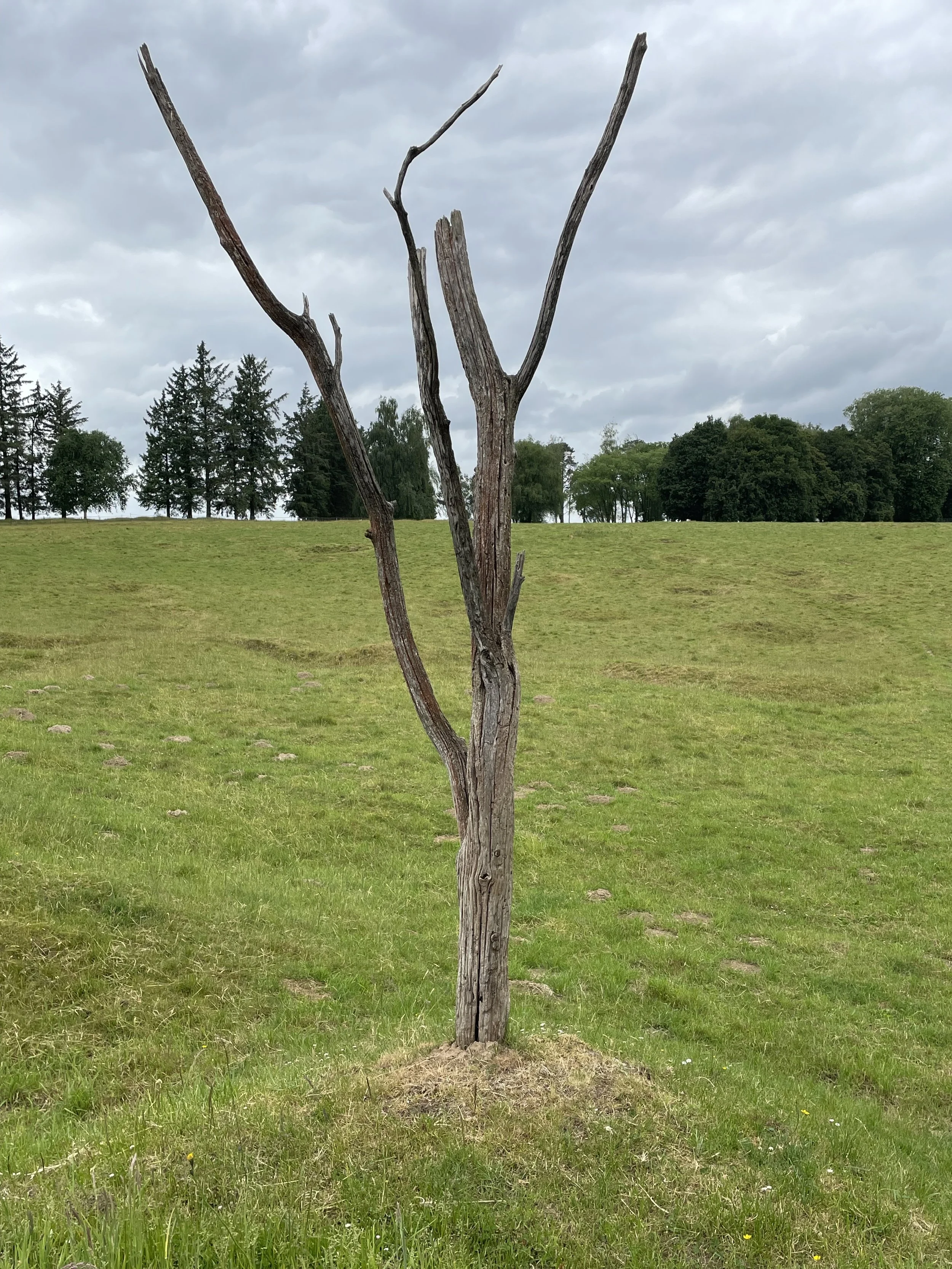
Below: the “Danger Tree”. (probably a replica of the original tree). This was, as the name implies, a very dangerous area half way across no man’s land at a high point compared to the Germans who were down the slope in trenches. The Allied soldiers therefore stood out to be mown down by machine guns! If they managed to move either side of the tree, there was a slight dip or gully in the land that they could dive into but most never made it.
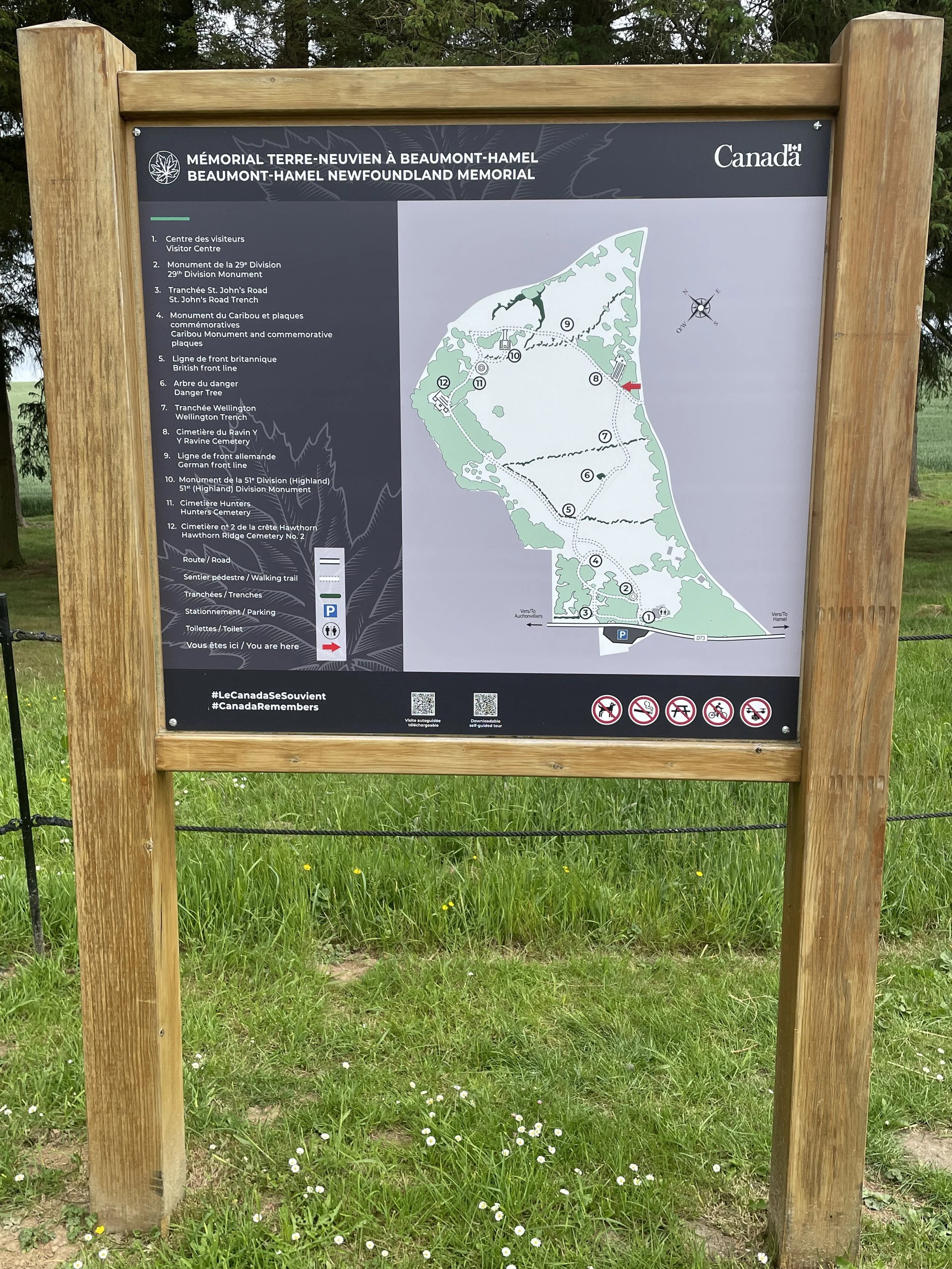
Below; a map to show you where you are and where key features are.
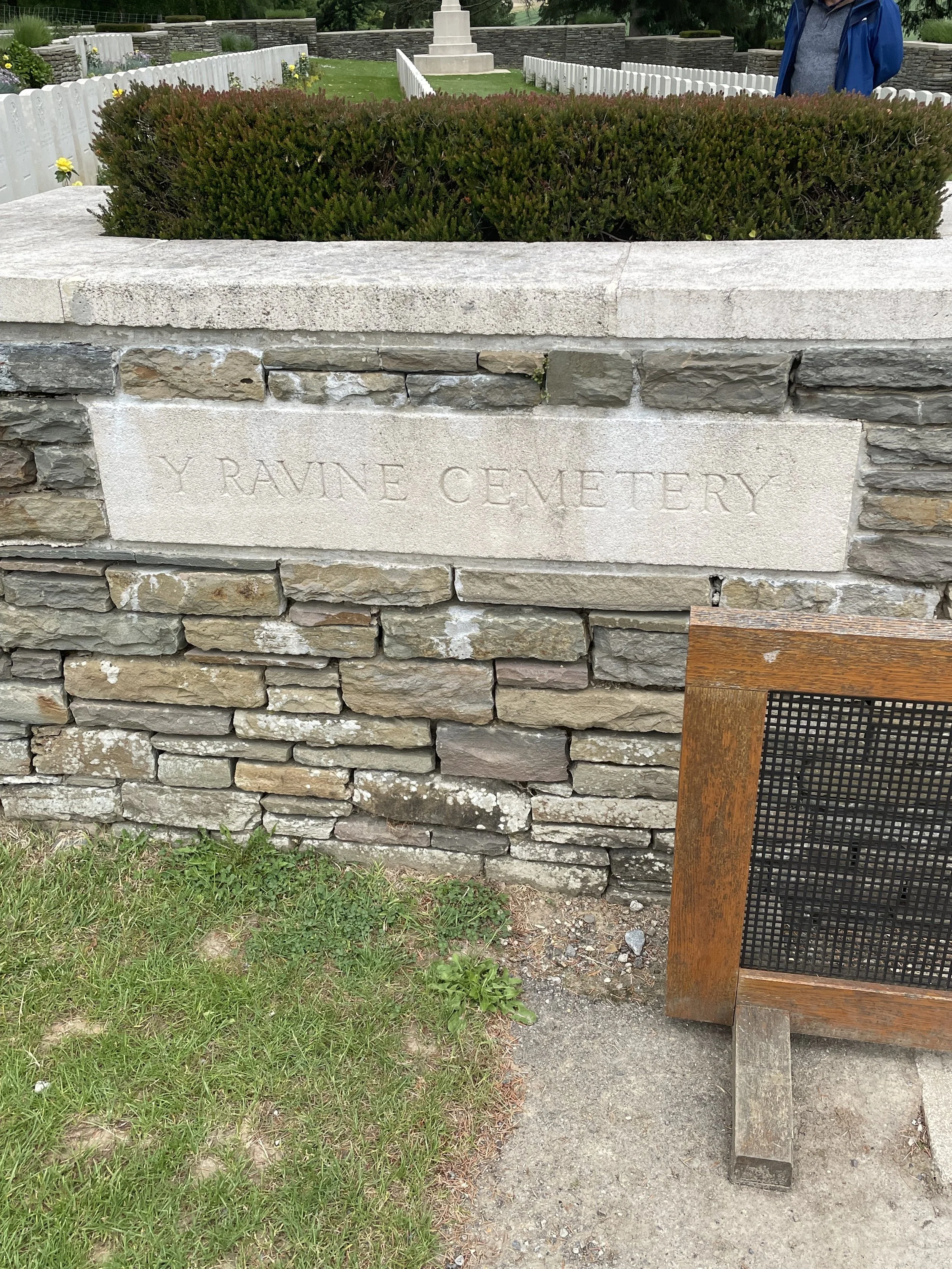
Below; approaching “Y Ravine Cemetery”.
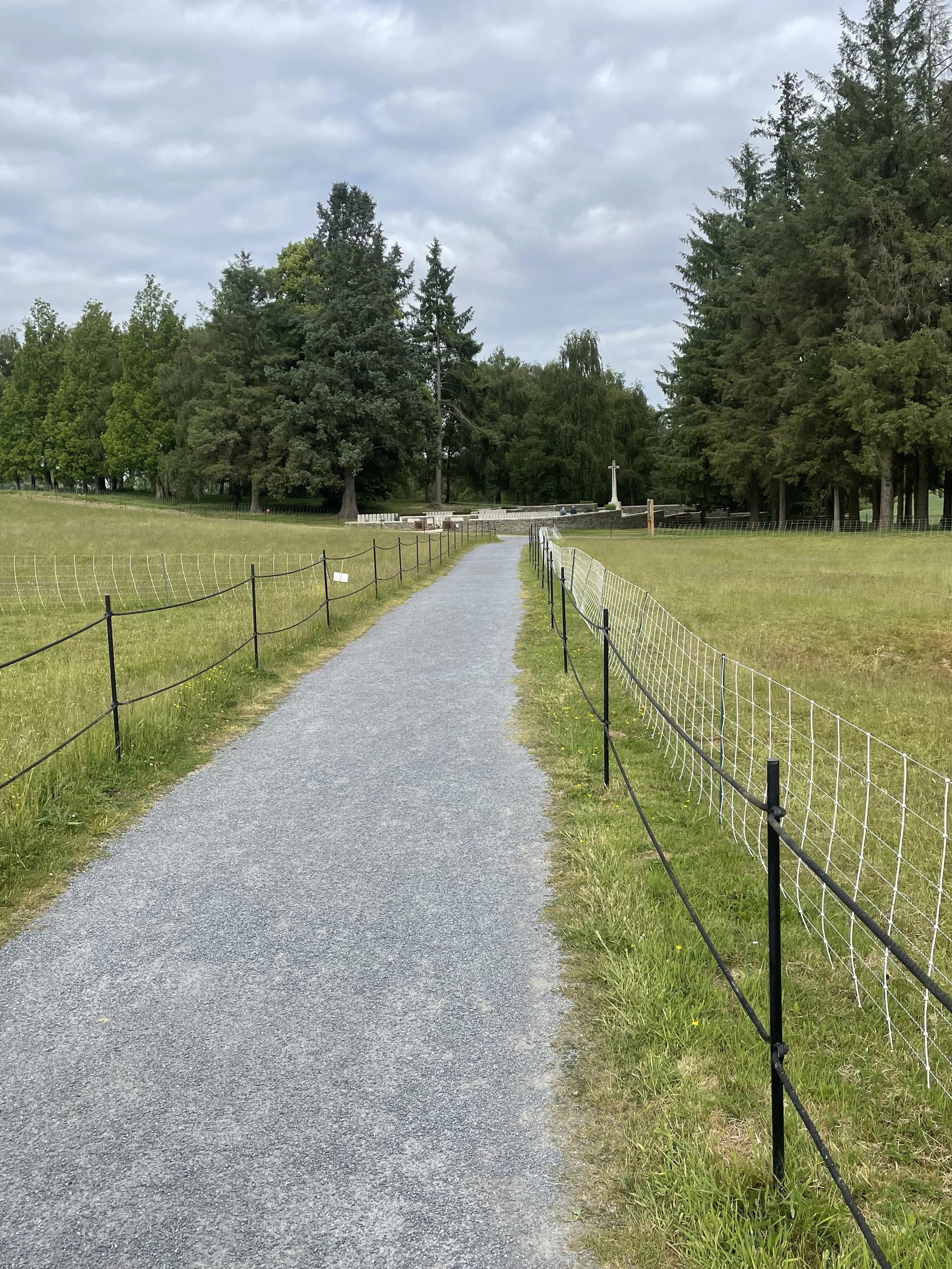
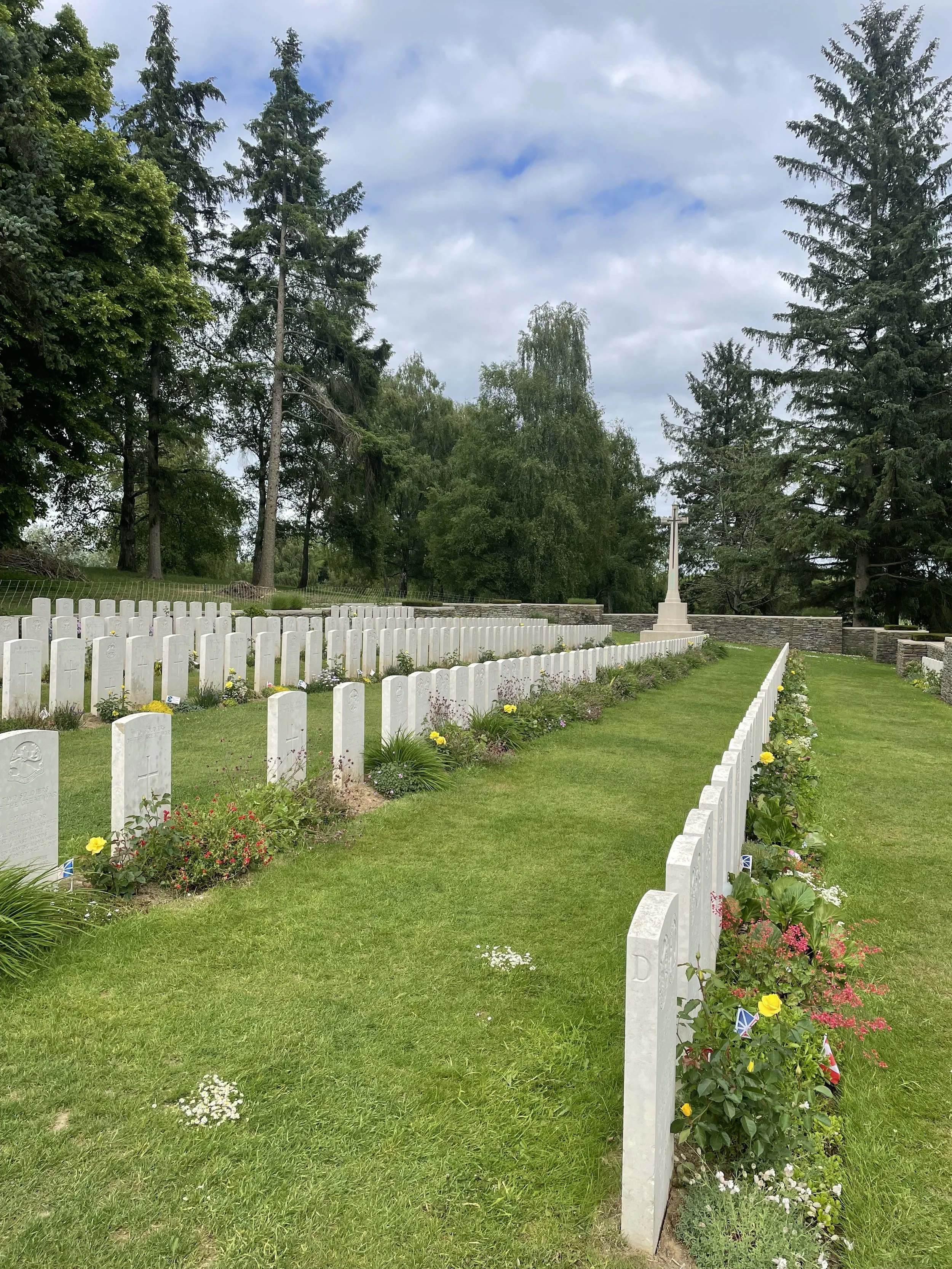
Below: an overview of the peaceful cemetery.
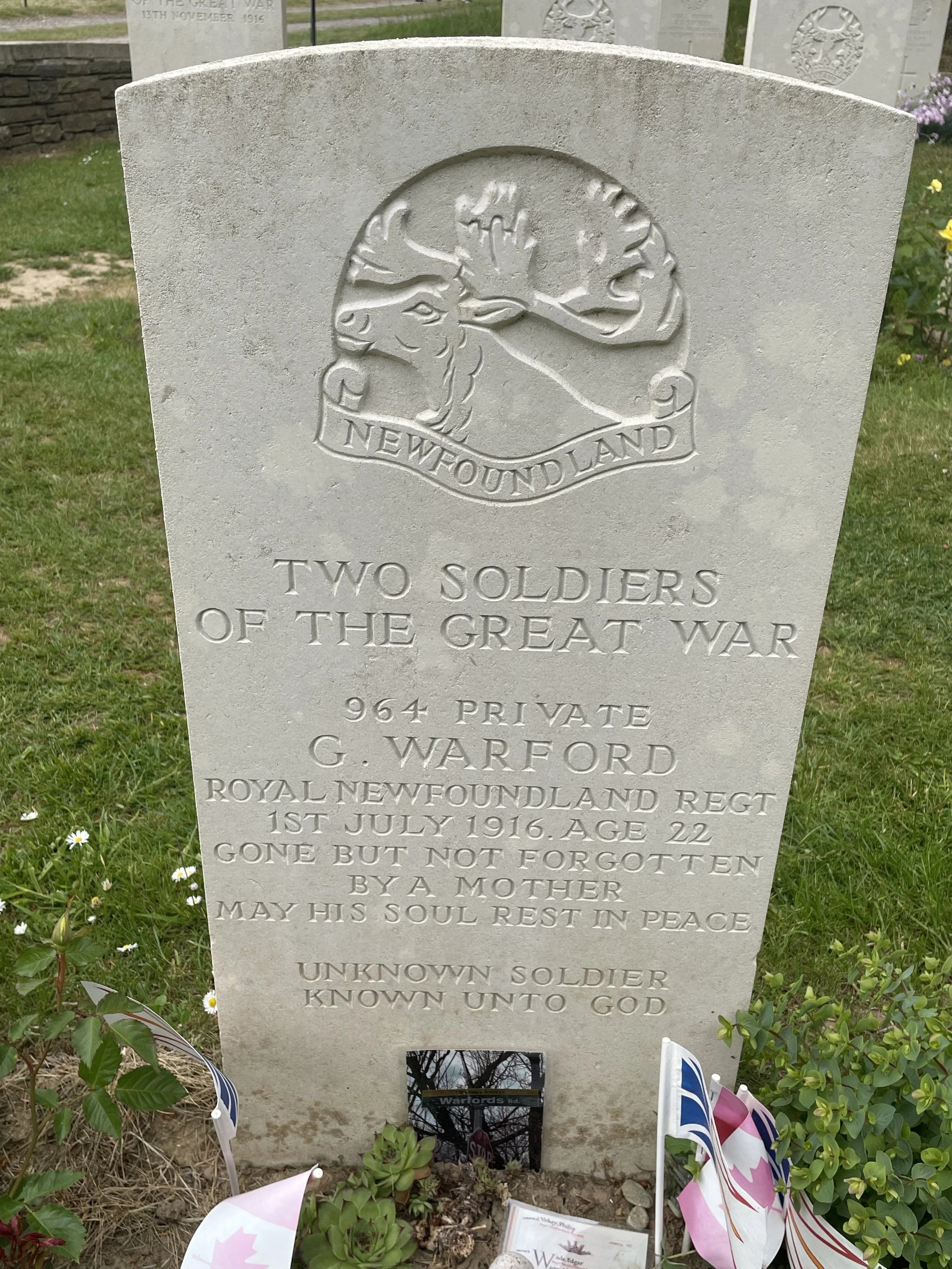
Below: several gravestones of those who fought in the attack. Firstly, some Newfoundlanders who died on that first day, one named and one un-named. Note the impressive Caribou head of the Newfoundland regiment.
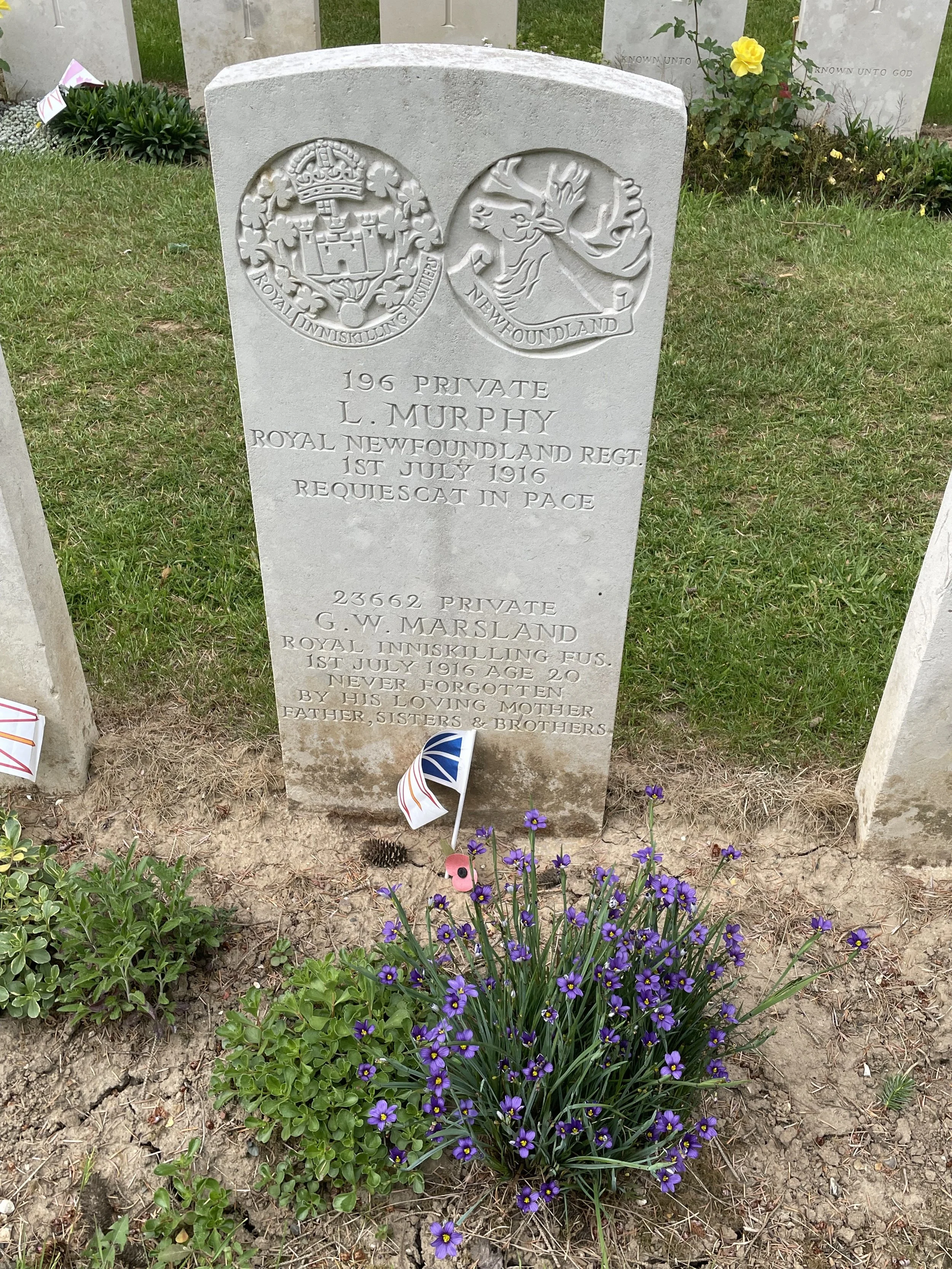
Below: note in this one there are men from different regiments i.e. The Royal Newfoundland Regiment and the Royal Inniskilling Regiment from Ireland.
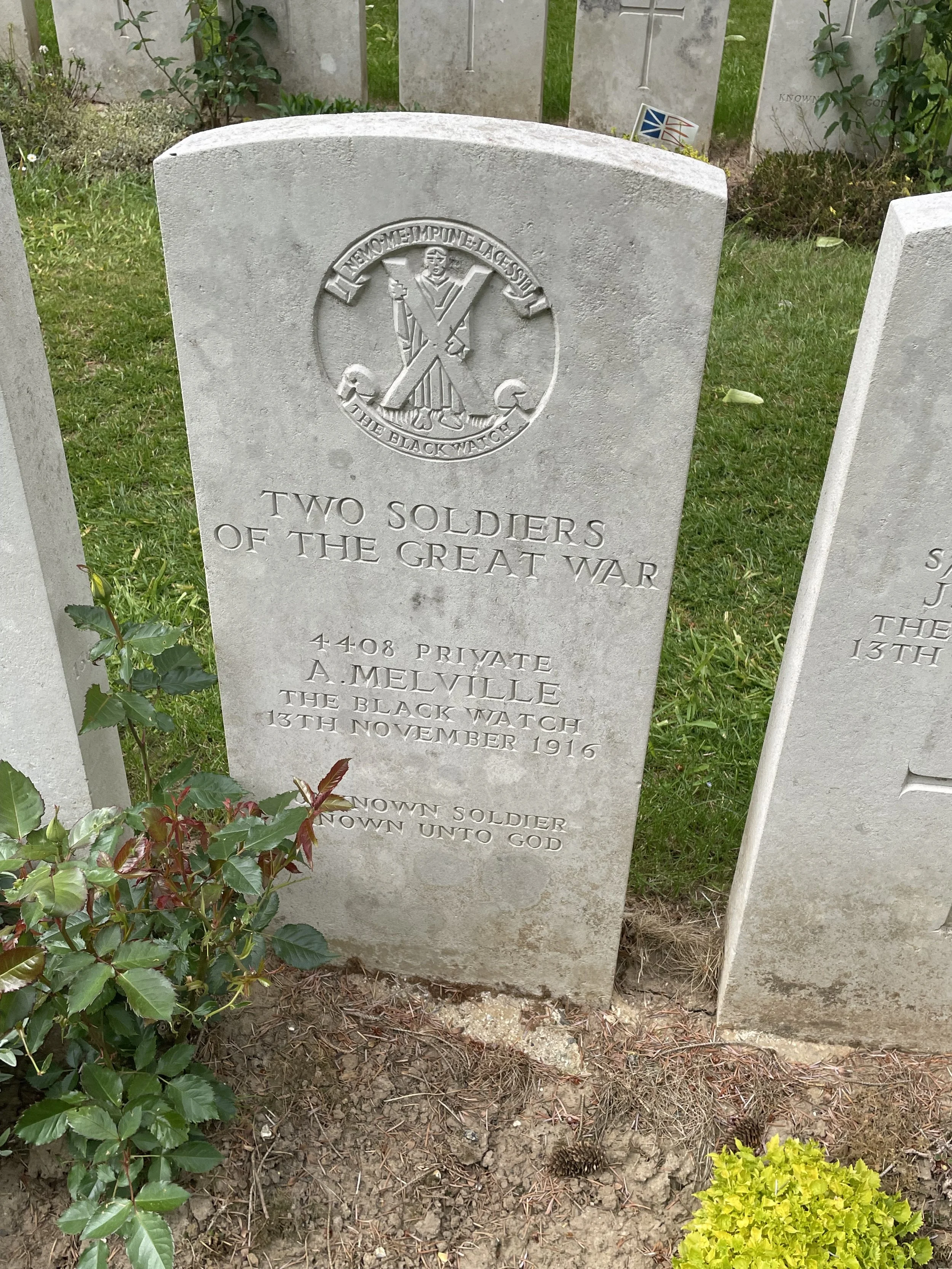
Below: on this stone is Private Melville from the Black Watch, a Scottish regiment that succeeded in November of capturing, at last, the German trenches in November 1916.
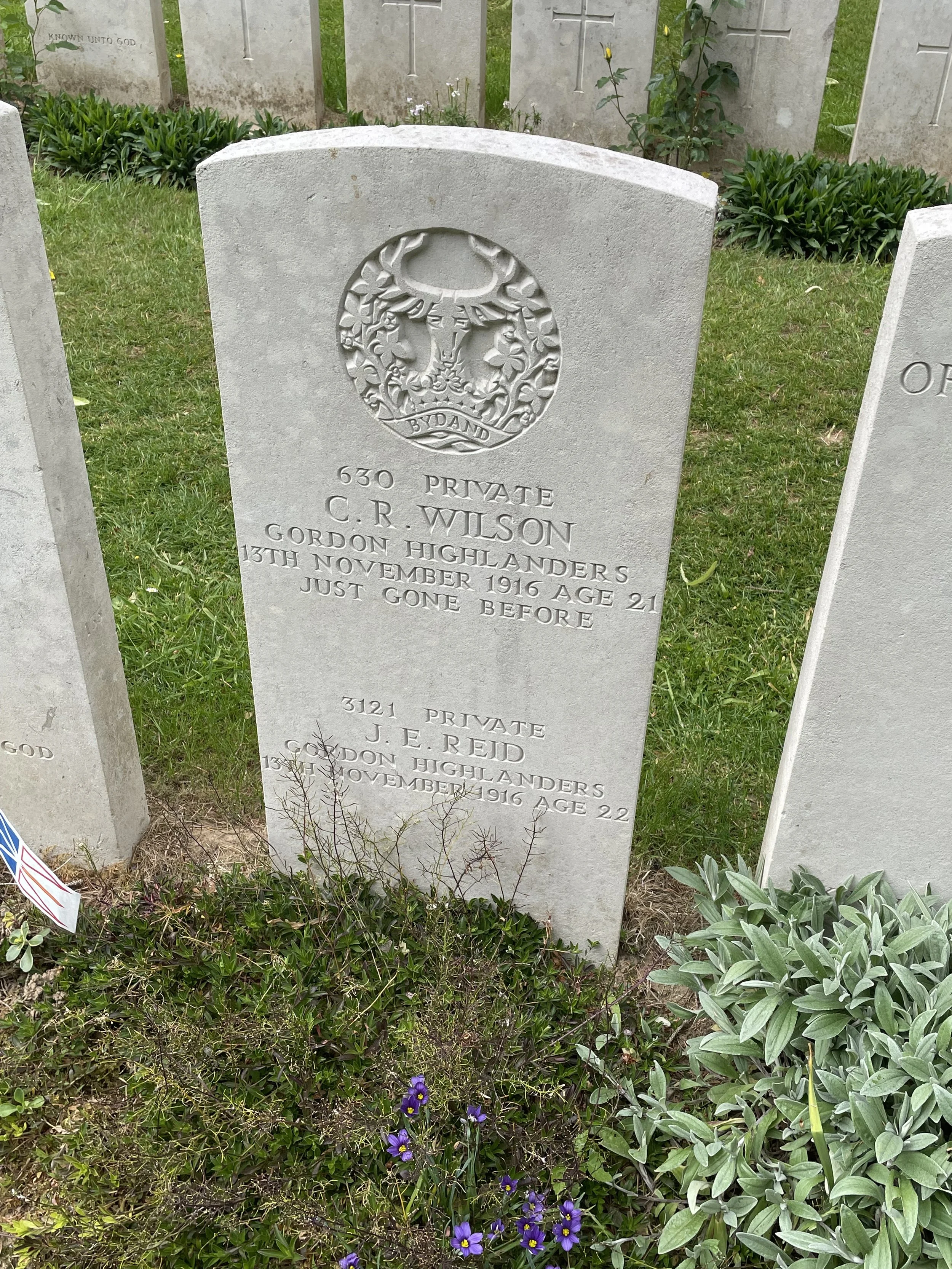
Below: the gravestone of two men from the Scottish, “Gordon Highlanders”, again, from November 1916.
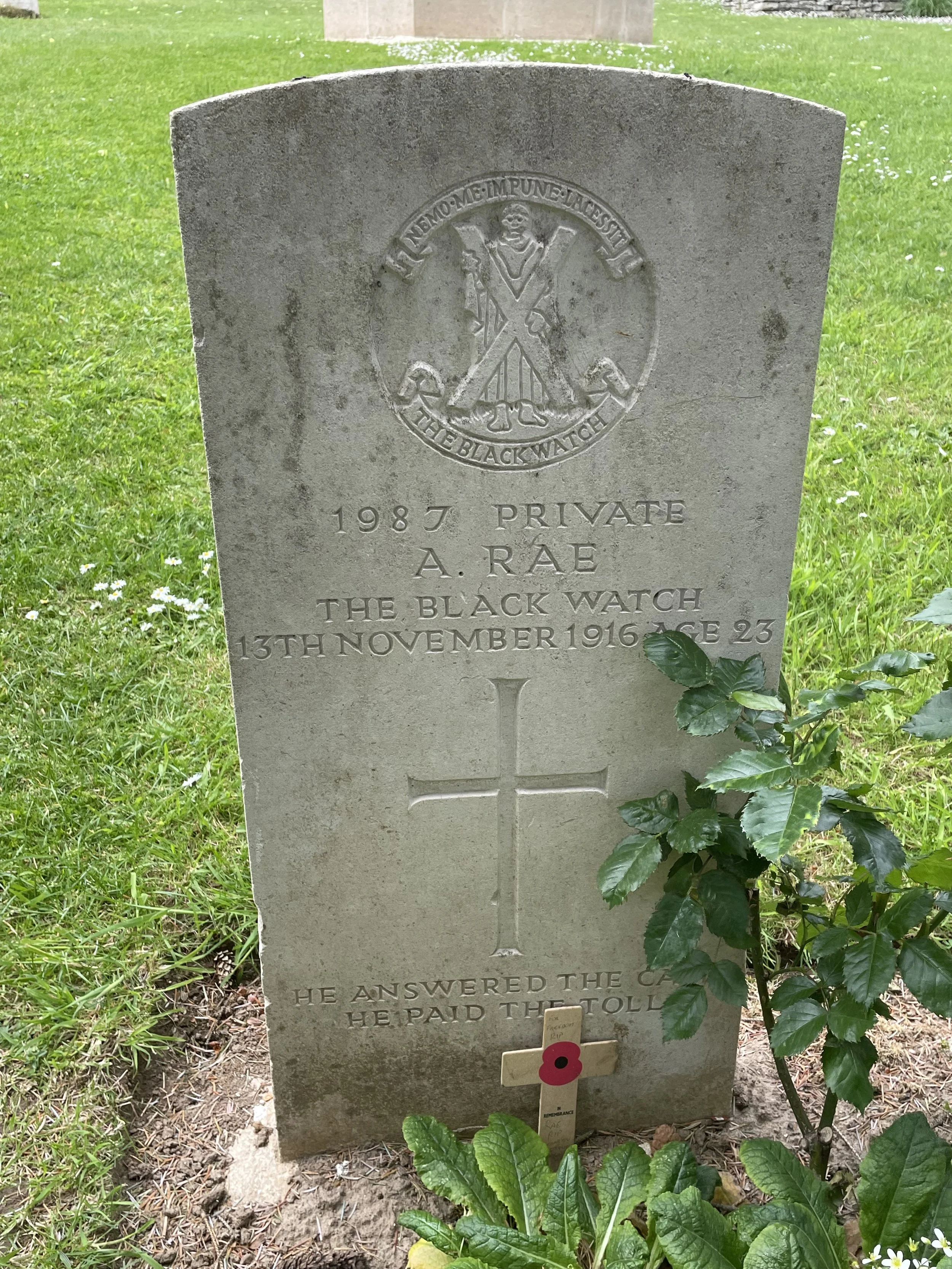
Below: note the words at the bottom of this stone. “He answered the call. He paid the toll”.
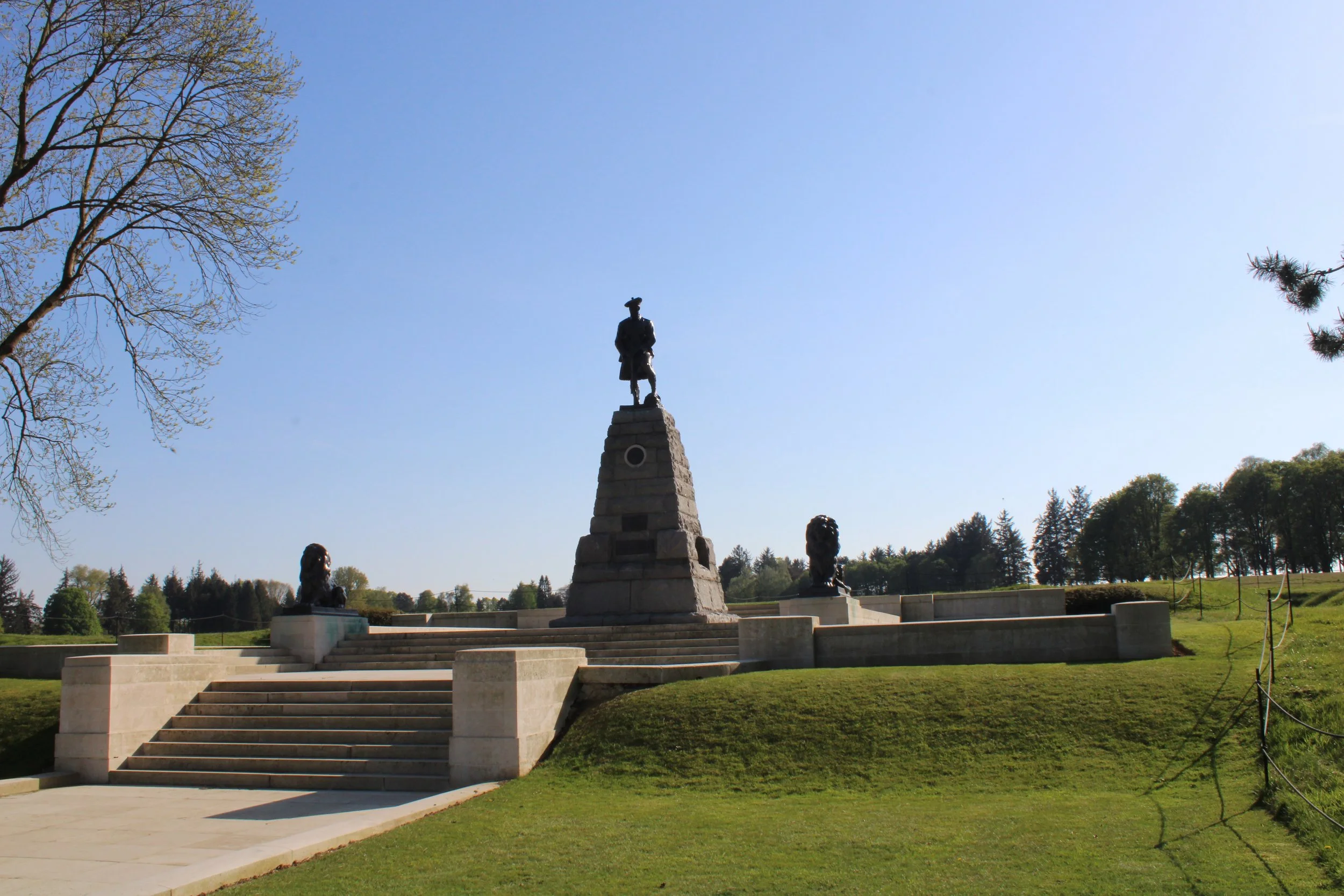
Below: moving to the left along the German front lines, you will come across this memorial to all the Scotsmen who fell trying and succeeding to capture the German trenches. The name given to it is “Joch on the Rock”.
What happened in the Newfoundland Park?
Before, the attack, the, the British had shelled the German defences for over a week. Commanders sincerely believed that nothing could survive such an attack. At 7.20 am on July 1st, a mine at Hawthorne Ridge exploded, 10 minutes before the British attack. Unfortunately, this was the alarm which told the German commanders of the 119th Reserve Infantry Regiment from Stuttgart, that an attack was about to take place.They had been based here since the autumn of 1914 and used the time to prepare for an attack. Their trenches were up to 10 metres deep. This compared to the British trenches of a couple of metres, the logic being that the allies were going to keep moving forward and so there was no point in digging such permanent quarters. The Germans were simply prepared to stay. In such a deep trench, they were safe no matter how much the British launched at them. On my first visit to this area, a guide told me that when the Scottish troops captured the German trenches, they were astonished at how deep the trenches were and how well they were constructed. He also informed me that they found a piano and some ladies underwear! (I do not know if that was true but it made an entertaining story for the guide to tell us)
The Germans had regularly practised rapidly preparing for an attack when warned and so in the 10 minutes before the British moved, they got out of their deep trenches, occupied their front line trenches and put in place all of their machine guns. To make things less dangerous, the British artillery attack now targeted the German support trenches and the area behind them. The British shells would thus miss their own attacking men but they confirmed the German view that the British attack was about to start.
Unfortunately for the British, everything went wrong. The 2nd Battalion South Wales Borderers with the Royal Inniskilling Regiment were slaughtered within 15 minutes of starting their attack. German machine guns continuously sprayed the whole area with so many bullets that they were destined to hit virtually everything that moved in their direction. They were under the incorrect notion that the week’s shelling would have decimated the German defenders and their trenches and thus were told that they could walk across. Listening to their own artillery guns pounding the Germans day and night would have assured them that this assumption was accurate. How could anything survive such a barrage?
Having noticed the failure of the initial attack, the 1st Battalion Border regiment, in the support trench had moved up to the front line and then into No Man’s Land for the second attack. This regiment to quote historian Paul Reed, “ceased to exist by 8.am!” This left the troops in the “Reserve Trench”, the Newfoundland Regiment and the 1st Battalion of the Essex Regiment to attack. Their first task was to move along the communication trench to the front line trench before “going over the top” but this is where they met their first problem. There was no system of two trenches; one for returning casualties and one for troops moving forwards to the front line. This meant the communication trenches were all clogged up with casualties on stretchers trying to get to help beyond the trenches. The forward moving troops were carrying all their gear and so found it incredibly hard to move forward. The answer for the Newfoundlanders was to get out of the communication trench and walk on the top, above it. As they moved to an assembly area near where the Caribou monument is today, the Germans looking through their Zeiss field glasses were able to see them and massacred them before they even got to the front line let alone No man’s Land! If they got to the front line, they had to carefully move through the gaps in the British barbed wire defences and these gaps were also targeted by German machine-gunners. These gaps were also blocked with bodies that slowed advancing troops down and added to their vulnerability! The Germans also used their artillery to aim at these slow moving targets to add to the devastation. Furthermore, many of the officers were dead or wounded and so the soldiers had to move forward with few leaders left. Of the 800 Newfoundlanders who started to move, about 732 were casualties, 266 of whom were killed. A 90% casualty rate has been assigned to the Newfoundlanders attack!
The 1st Battalion of the Essex Regiment who should have attacked with the Newfoundlers had different tactics and with a lower casualty rate. They didn’t go above the communication trench and so were late to attack but also safer. Their commanding officer, divided into two groups and only sent two companies forward and ordered the rest to wait. Recognising the heavy casualty rate, the commanding officer cancelled the attack by the second two companies.
Between July 2nd and November, digging took place out into no mans land linking the front line to shell holes and in the process, moving the front line closer to the German front line. These can be seen as you walk along the path towards Y Ravine cemetery whilst very little fighting took place.In November, fighting began once more and gradual gains were made. Attacks by the 51st Highland division and The royal Navy Division were successful and the German trenches were captured. Lessons had been learned and this time, a creeping barrage of shells was used, constantly moving forward towards the enemy but being just in front of the British troops. This disrupted the German defence but did not affect the British advancing troops.
Furthermore, even more artillery was used to hammer the Germans trenches. Back in July there had been a problem with shells not exploding but this time they were more successful. Why was it that despite shooting 1,500, 000 shells, 500,000 failed to explode? At the start of the war, some experienced shell makers signed up and so fewer shells were made. To solve this situation, non skilled workers had to be recruited and then given rapid training. Needless to say, many mistakes were made in assembling these complicated projectiles and many fuses failed. Even today, many unexploded shells remain buried in the Somme region and around Ypres in Belgian. On several trips that I have led to the trenches I have seen unexploded shells piled at the edges of fields waiting for the army to come along and remove them.
Essential information
Getting there;
Beaumont-Hamel Memorial Park, situated 9 kilometres directly north of the town of Albert..
Using the D919 from Arras to Amiens you will drive through the villages of Bucquoy, Puisieux then Serre Les Puisieux (approximately 20 kilometres south of Arras). On leaving Serre Les Puisieux, 3 kilometres further along the D919, turn left following the signs for Auchonvillers. At the crossroads in the village centre follow the signs for 'Newfoundland Park, Beaumont Hamel'.Address: Beaumont-Hamel Newfoundland Memorial, Rue de l'Église (route D73), 80300 Beaumont-Hamel, France. Easily found on Google maps. In search write “Newfoundland Park Visitor Centre”. ‘
Telephone: +33 (0)3 22 76 70 86
Articles that may be of interest to you.

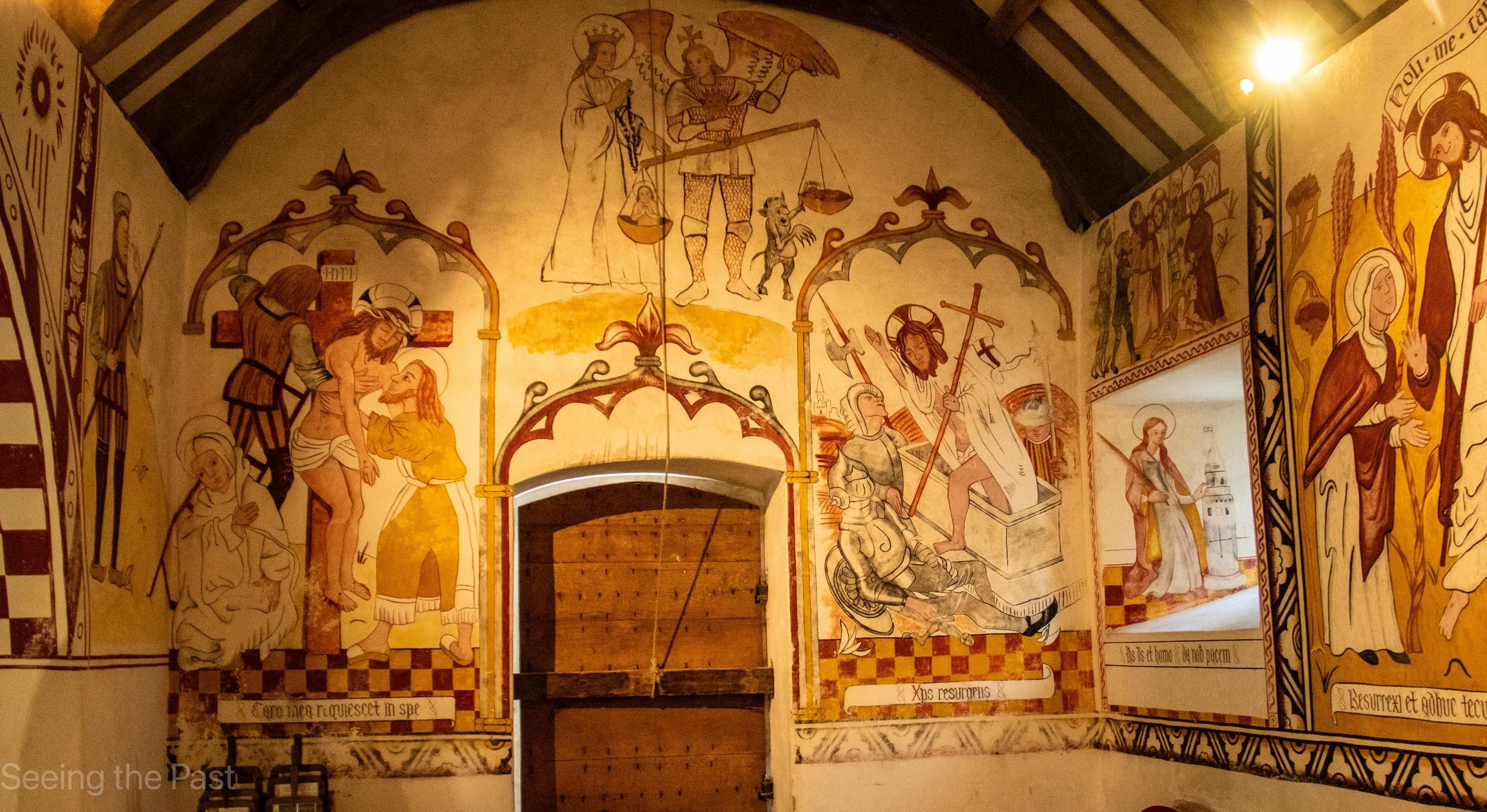




St Teilo’s Church, now lovingly re-erected within the open-air precinct of St Fagan’s Museum of Welsh Life, is a remarkable testament to Wales’s medieval and 16th century heritage. Originally constructed in the early 16th century, this humble parish church was painstakingly dismantled, transported, and restored to its former glory — not least its dazzling wall paintings, which have been carefully recreated with scholarly precision. These vivid murals, brought back to life through meticulous craftsmanship, offer visitors a rare window into the devotional art and storytelling of the late medieval period. Stepping inside St Teilo’s, you’re transported back half a millennium, immersed in a world where faith, community, and artistic expression converged on plastered walls that still speak with vibrant colour and enduring power.