
Visit Castletown D Day Centre with its amazing artefacts , an actual caisson nearby and the area where the D Day landing craft were loaded.
/
Tucked away in Isle of Portland in Dorset, the Castleton D Day Centre offers a powerful and immersive window into one of the most significant moments of the Second World War. Far from being a traditional “look but don’t touch” museum, the centre invites visitors to step closer to history — with a remarkable collection of authentic artefacts that can be touched, held, and even sat on, bringing the realities of the D-Day era vividly to life. Added to this are several friendly volunteers dressed in period outfits who have a vast amount of knowledge of those artefacts and are able to answer questions.
Inside, visitors will find an impressive range of original items from the D-Day period, alongside recreated scenes from wartime life and Castleton during D day. Complementing the exhibits are numerous information boards packed with fascinating details about the people who took part in D-Day, including compelling links to Castleton and the surrounding area — connecting this global historic event to the local community.
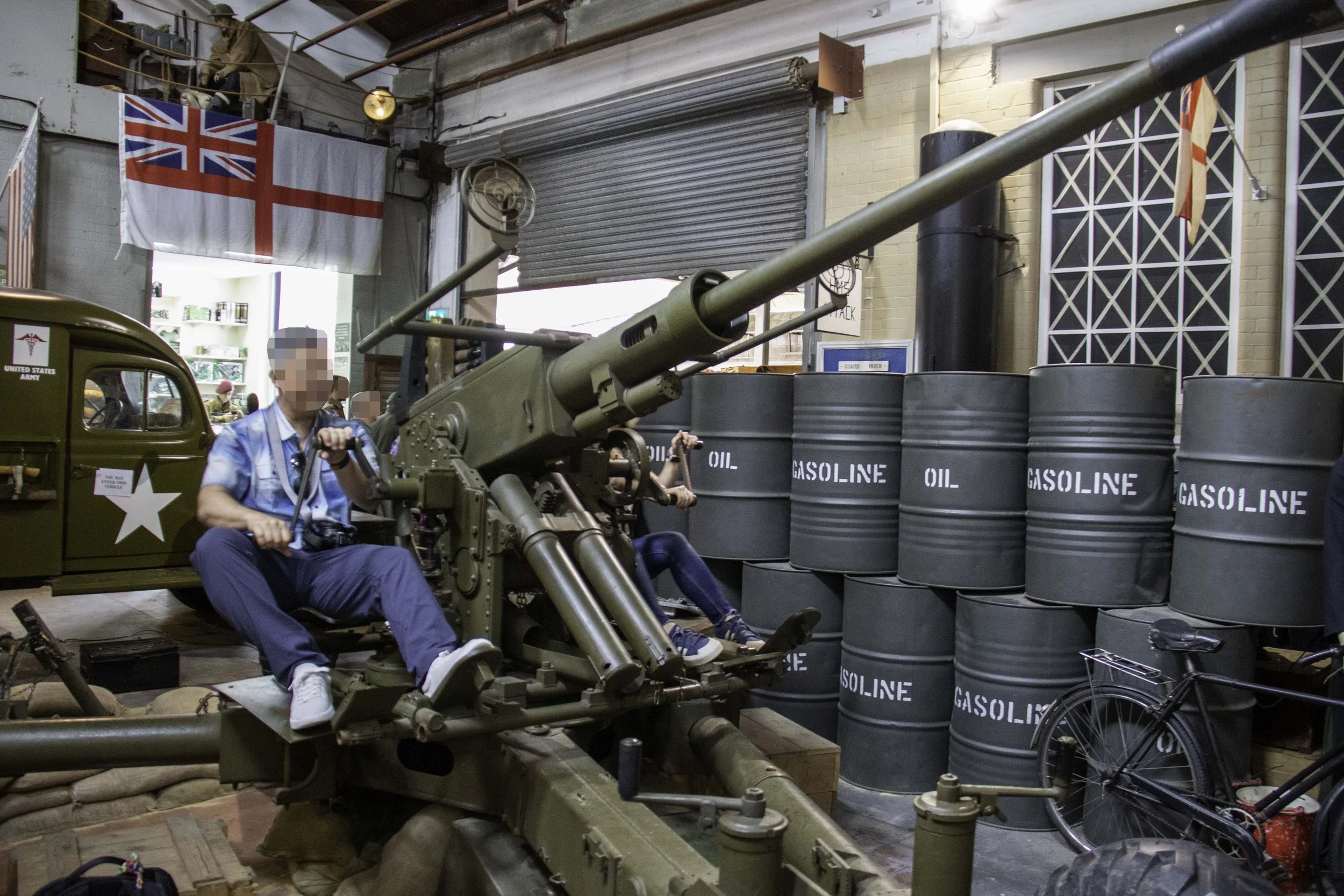
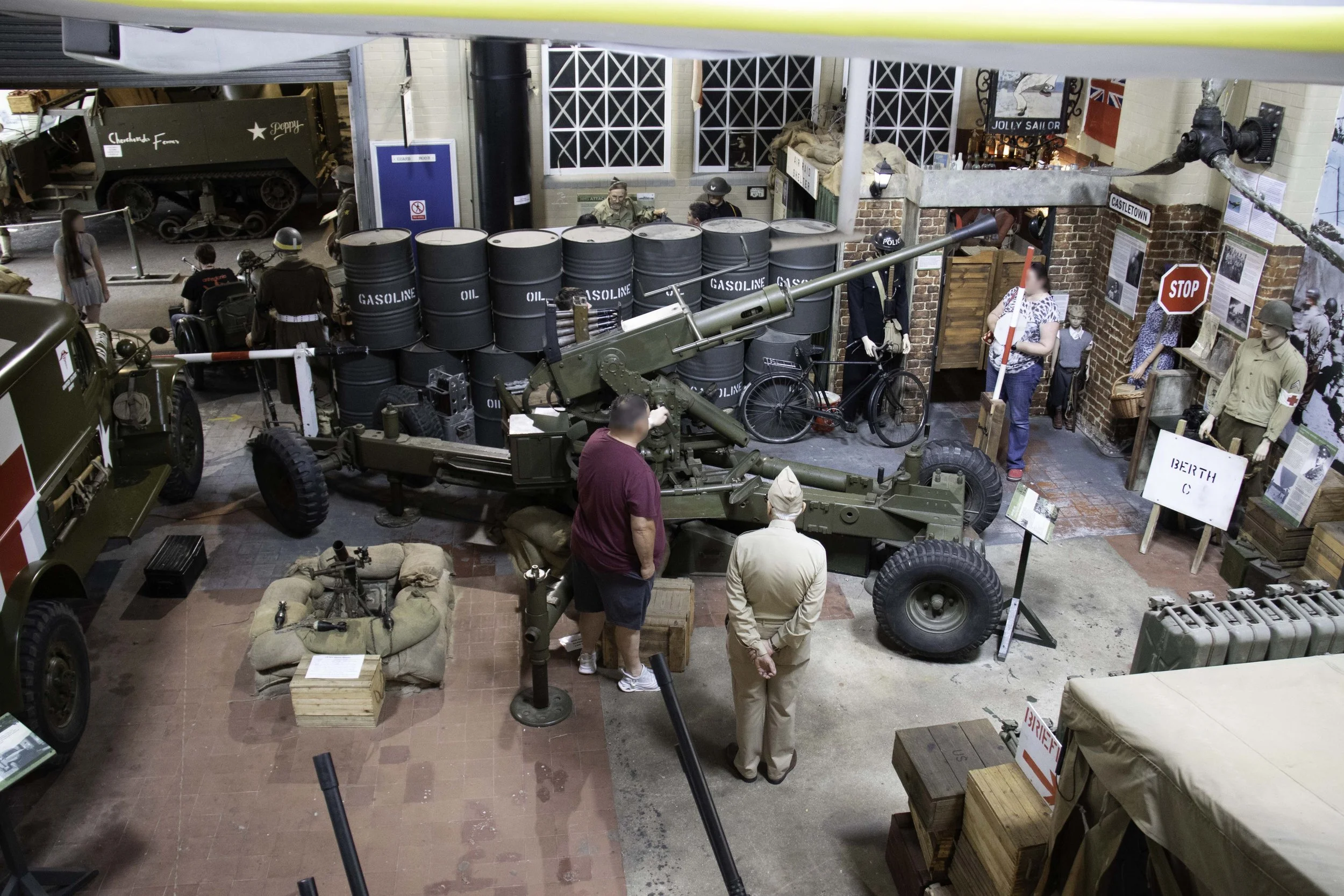
Below; Even adults can sit on an artillery piece and pretend to shoot at the enemy.
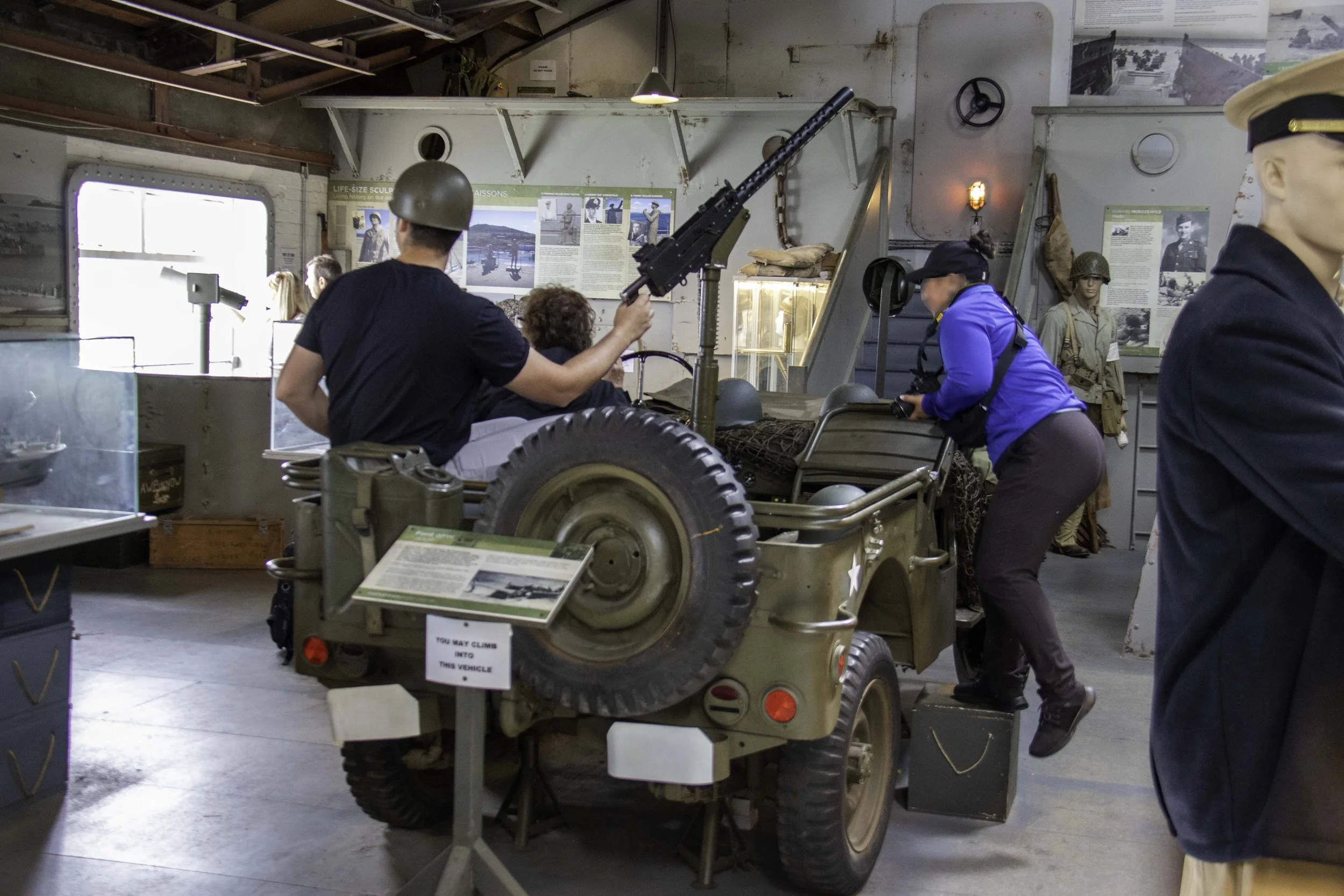
Below; the sign says, “You may climb into the vehicle”, which in this case is a jeep. Willys built 280 000 and For, 280 of them. This one was built in early 1943 and was fitted with a browning.30 calibre machine gun.
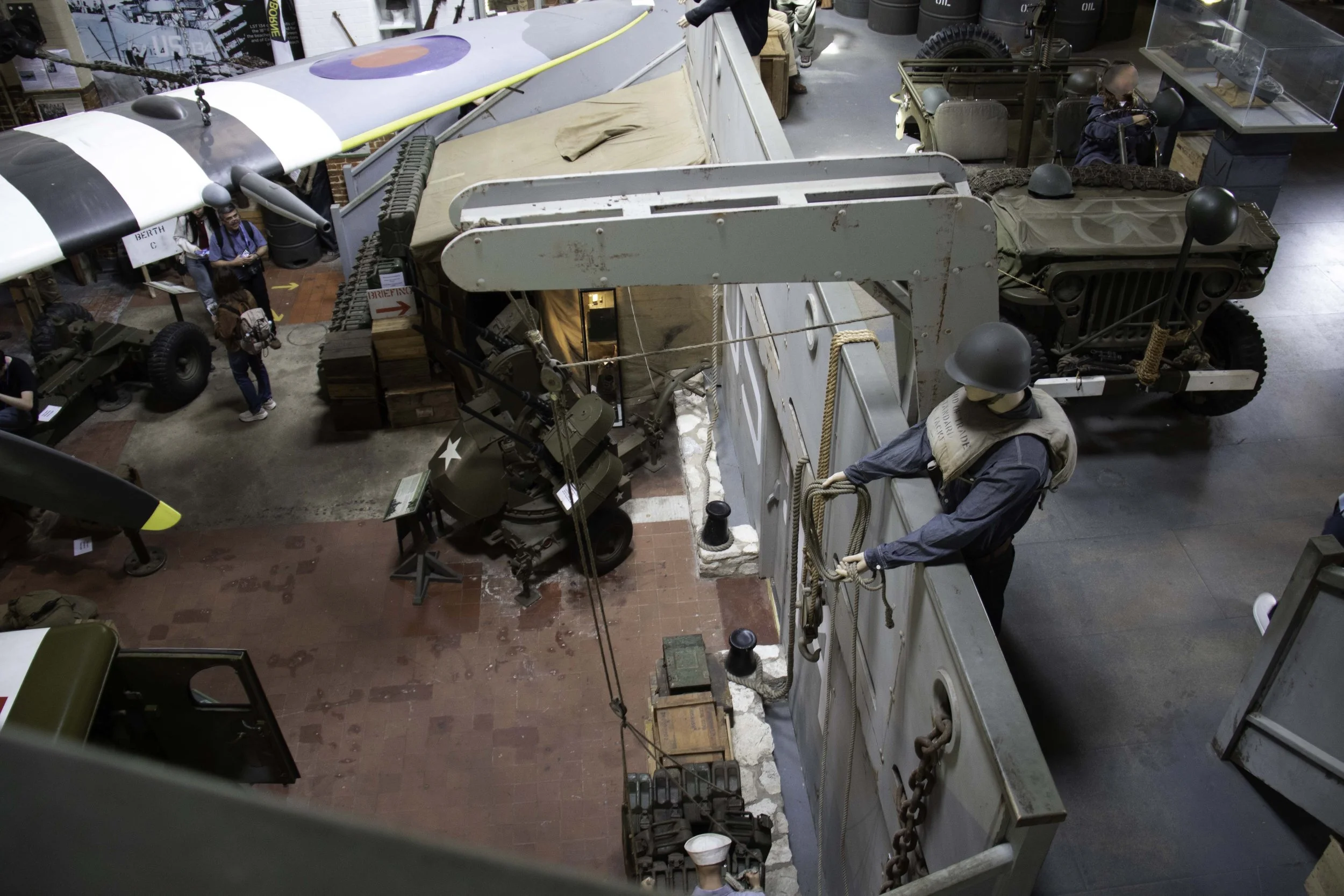
Below: part of a mock up landing craft with another jeep and the wing of a Spitfire.
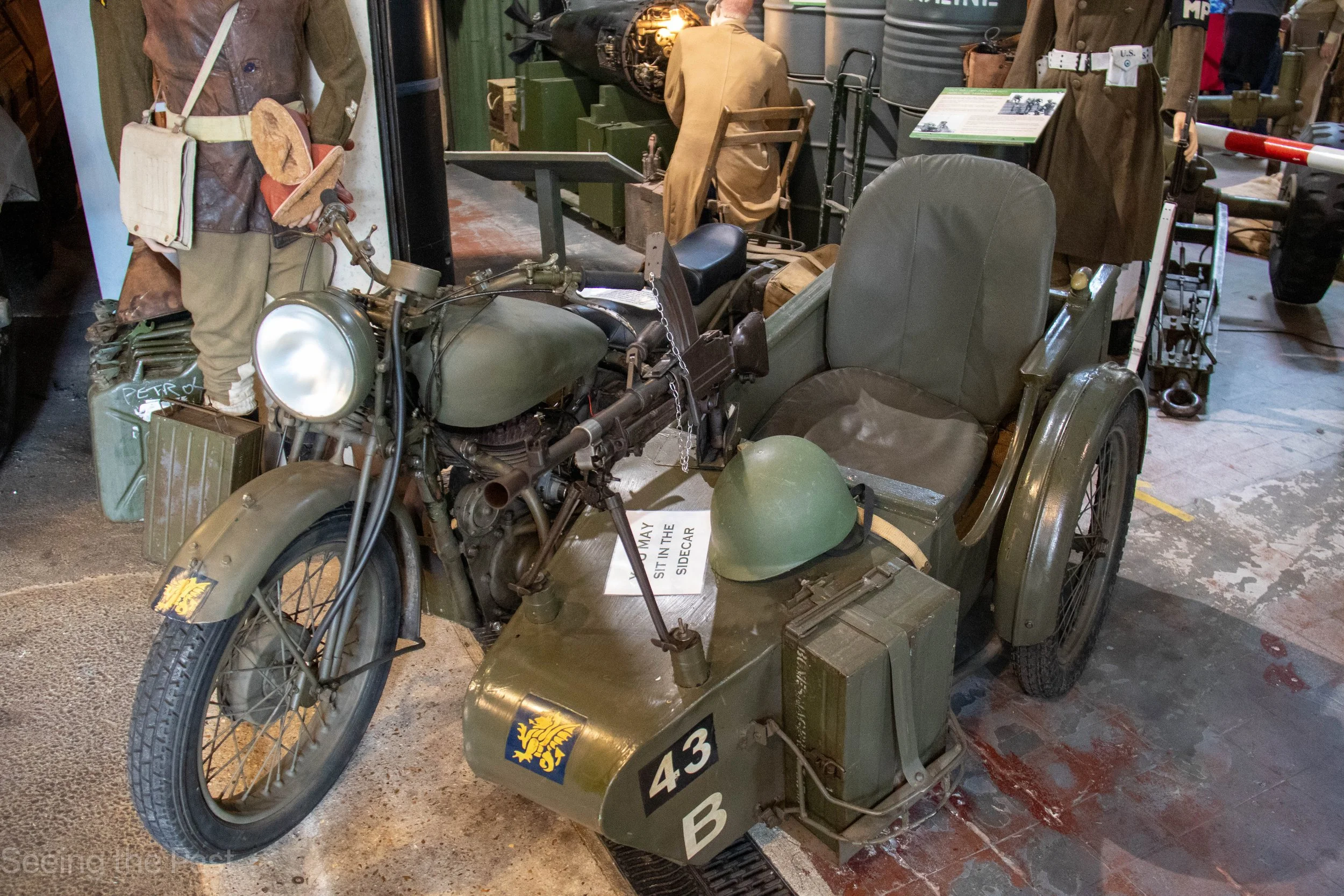
Below: a motorbike with a sidecar that visitors can sit in. The passenger could use the automatic rifle attached to the front to turn this into a lethal piece of equipment and not a simple mode of transport.
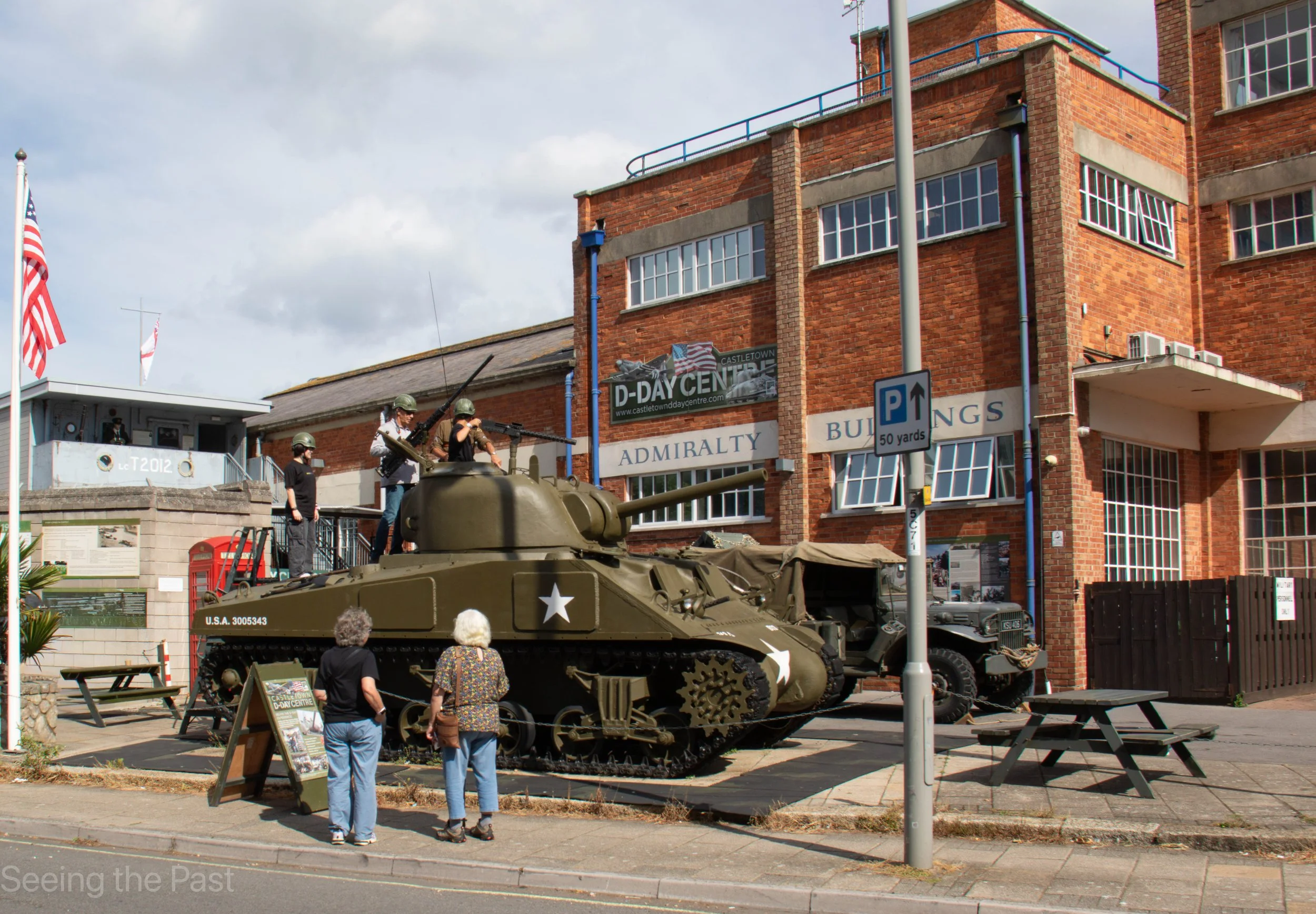
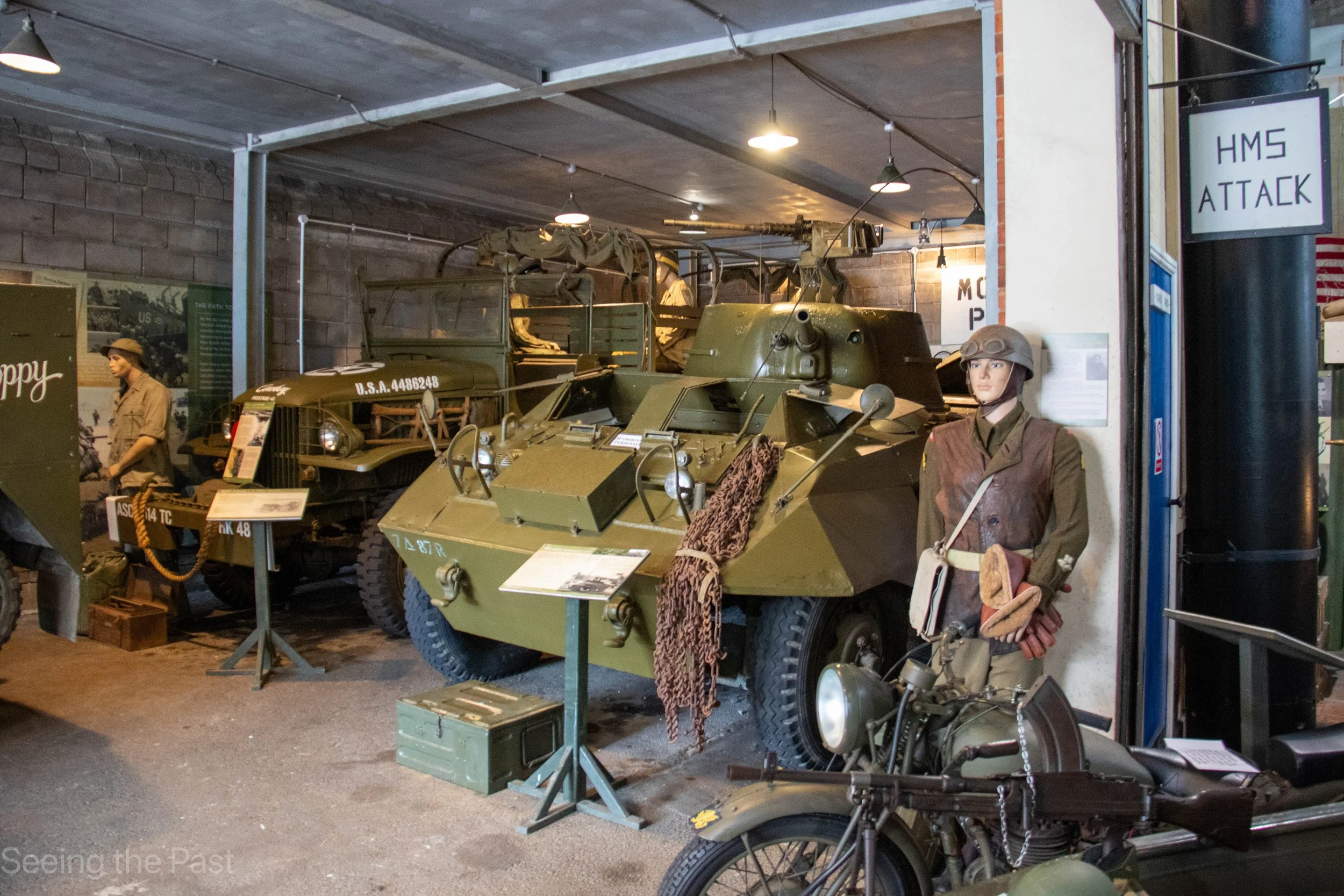
Below: this is what can be seen at the front of the museum.
Below: an artillery piece and on the left a mortar.
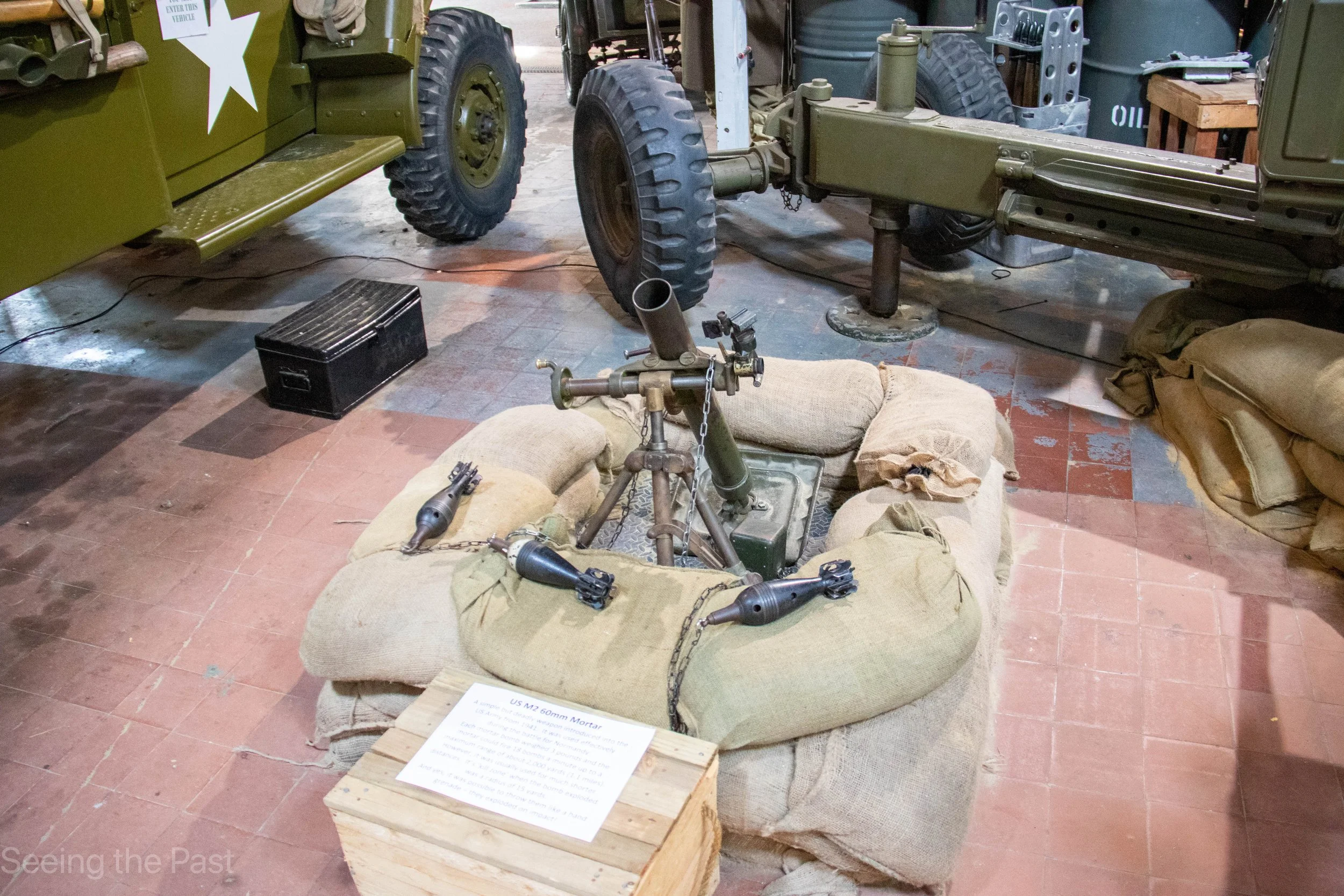
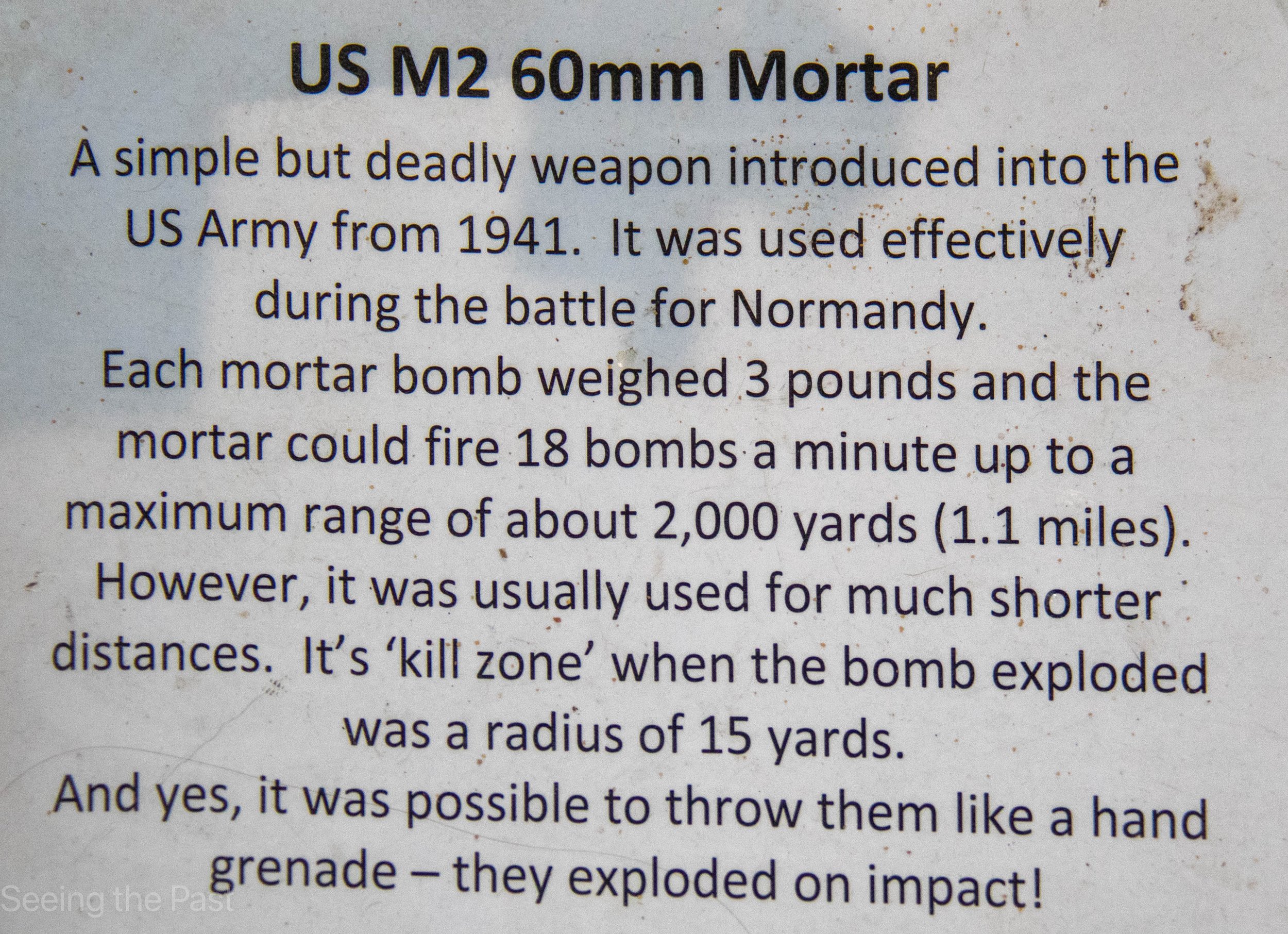
Below a closer look at the US M2 60mm Mortar and below that is information on the Mortar.
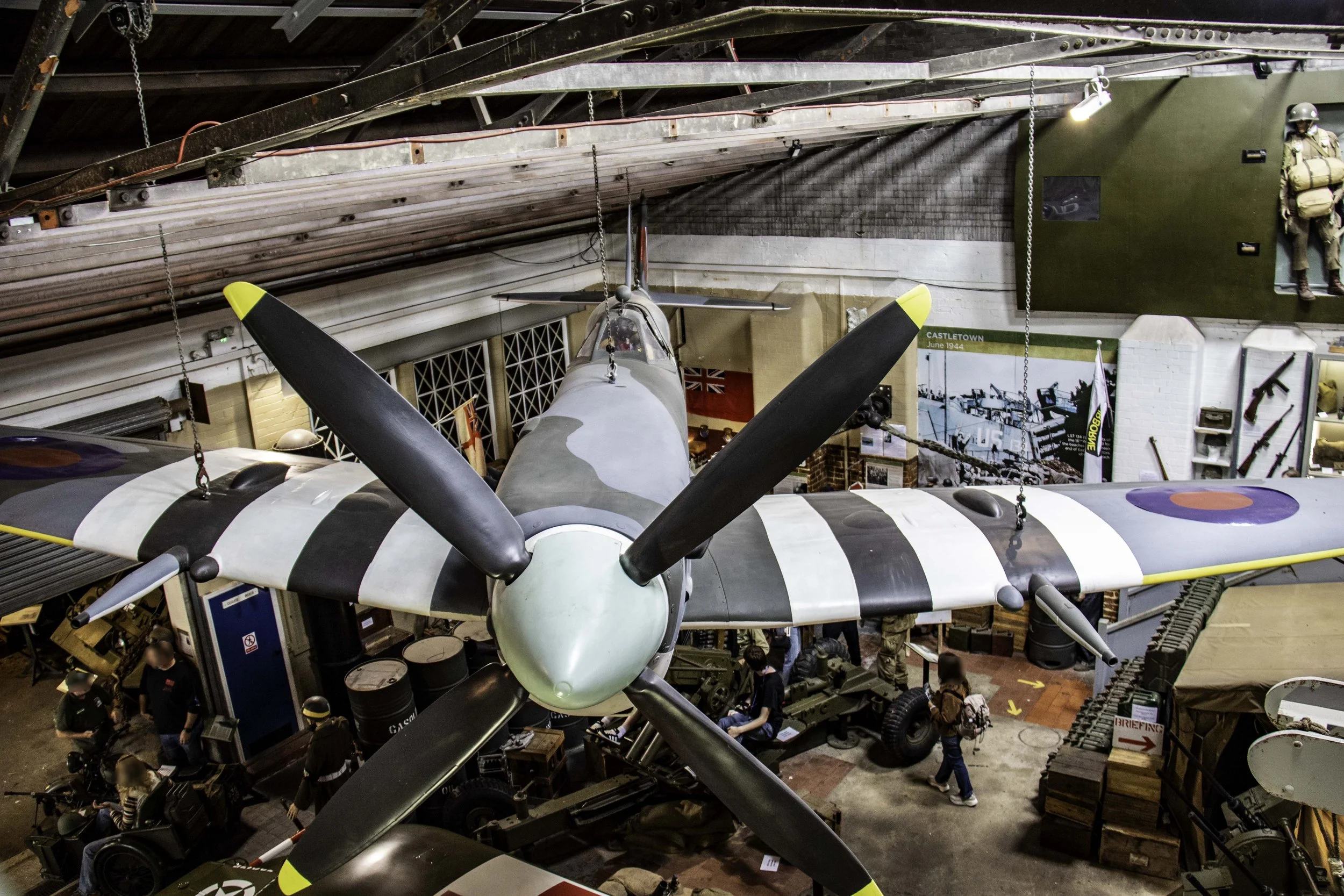
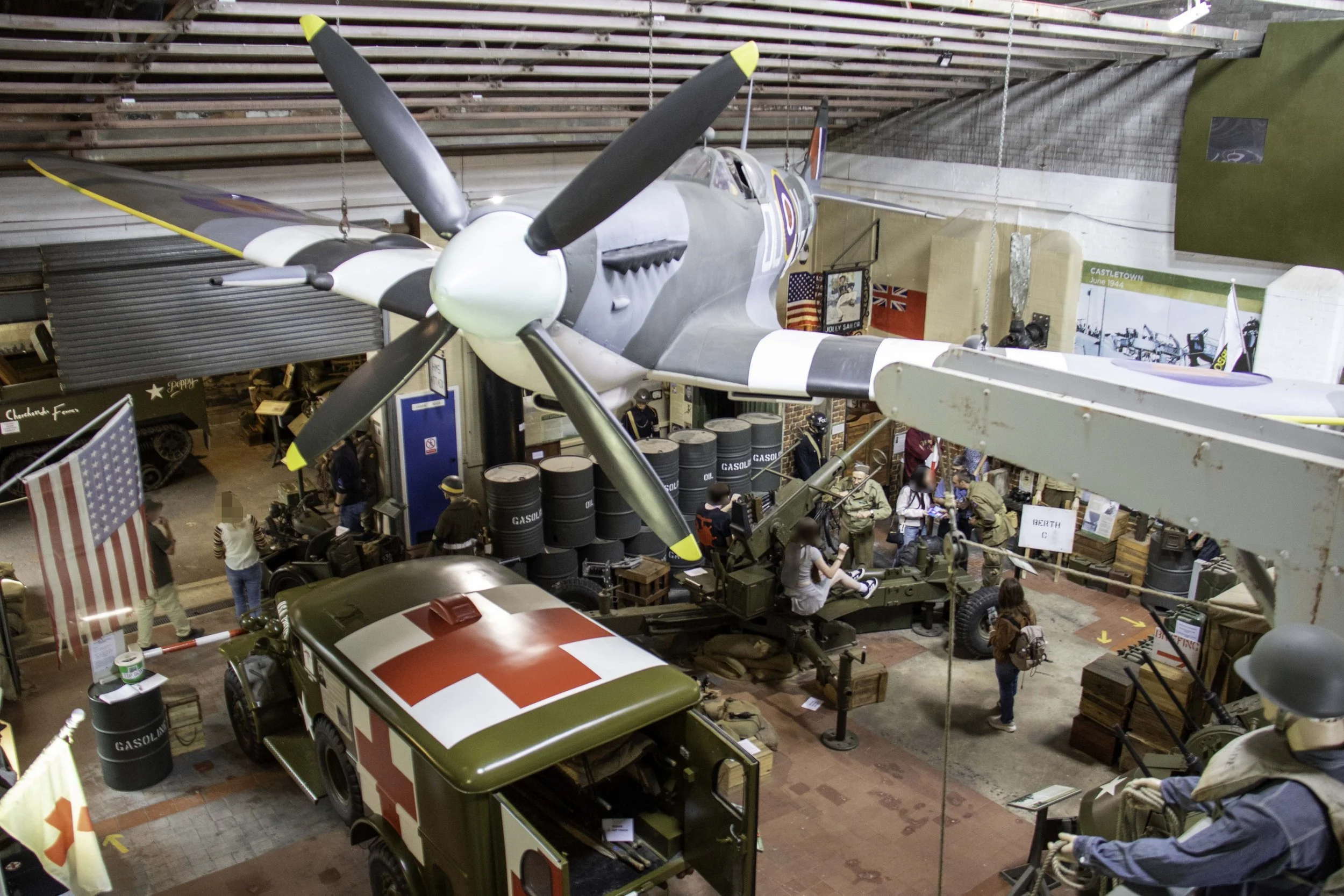
Above and Below: A replica of a Mark 9 Spitfire that was the first to shoot down an enemy aircraft on D Day. It was flown by Flight Lieutenant Johnnie Houlton of 485 Squadron to the Royal New Zealand Airforce and brought down a JU88 just south of Omaha Beach, Normandy. Mark 9s had a top speed of 409 mph and a ceiling of 43 000 feet. On October 8th, a Mark 9 Spitfire (not this one) was the first plane to shoot down an Me 262 jet aircraft!
Note the black and white stripes on the wings to prevent friendly fire from shooting at it, on D Day.
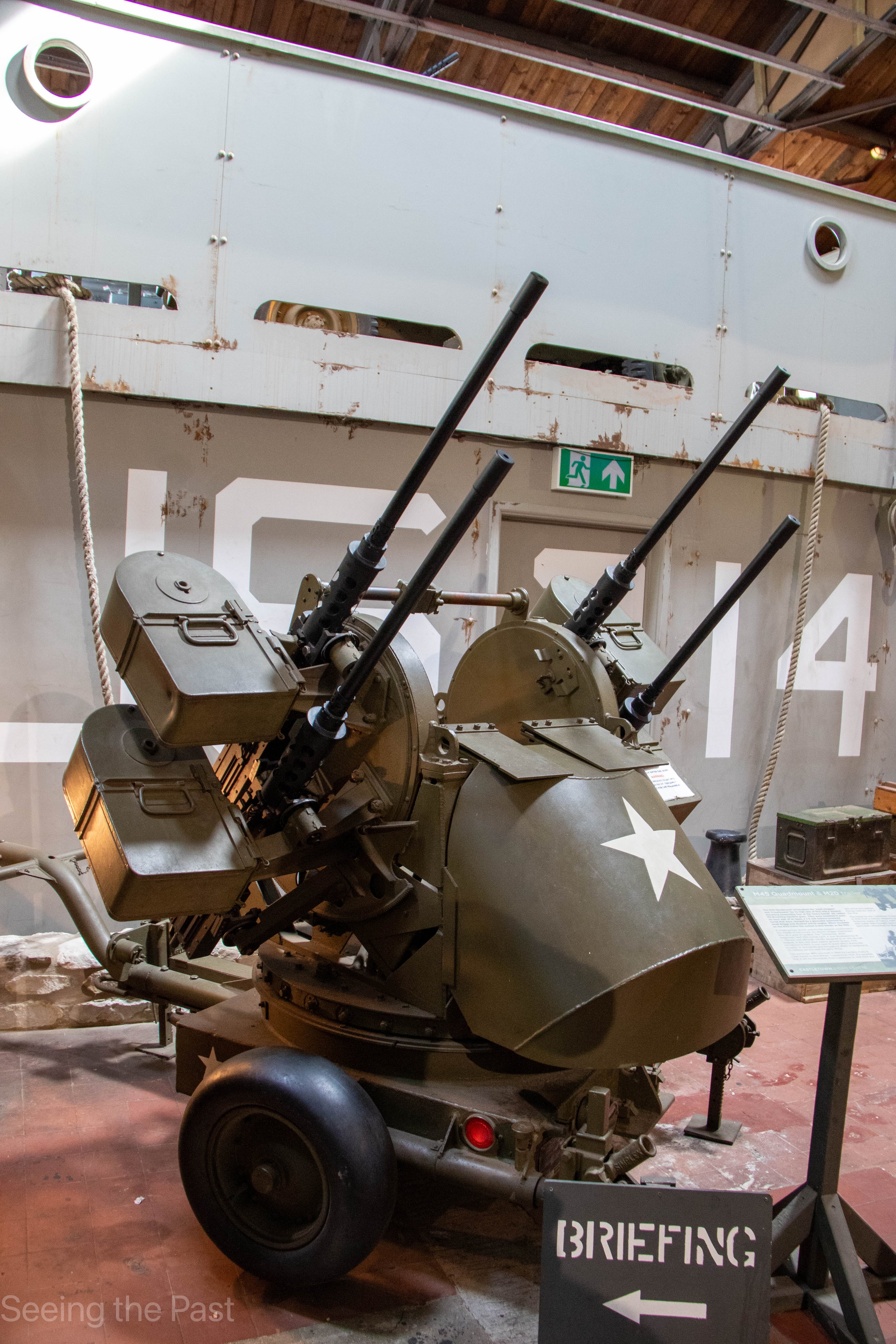
Below: An M45 Quadmount on a M20 trailer, known as the “Meatchopper” for its high rate of fire. It had 4 Browning machine guns with one gunner firing all 4 guns at once. Originally, it was designed to be anti-aircraft but it also had the ability to shoot ground targets and was very effective during the invasion of Normandy.
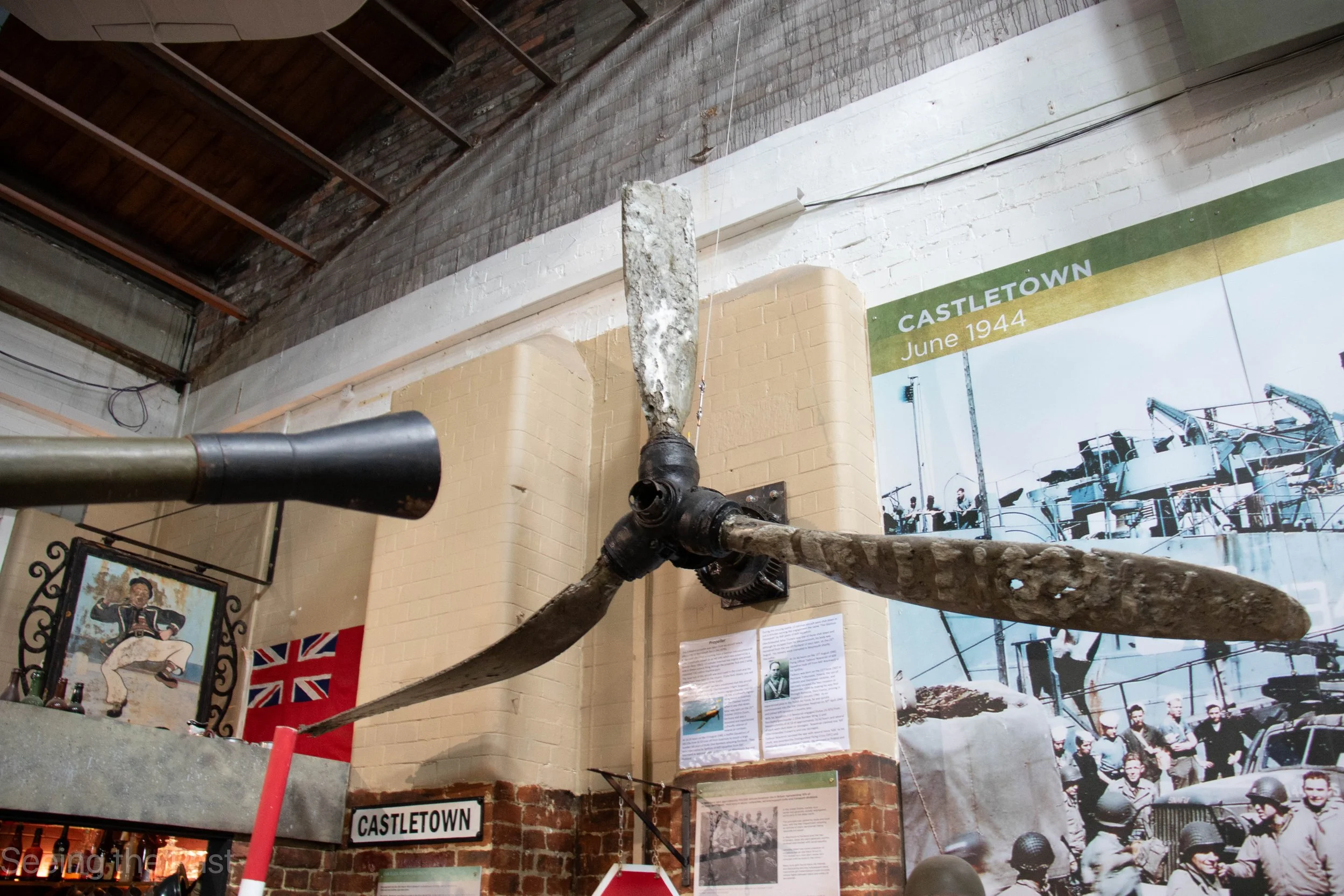
Below: the bent propellor of a Messerschmitt BF109E. Its last day of action began at 16.15 on the 13th of August 1940 when it was part of a fighter escort to 40 Stuka dive bombers that set out to attack Portland. Coming to intercept them were Spitfires of 609 squadron based at RAF Warmwell. They met over Weymouth Bay and Portland resulting in 13 German planes being shot down in 4 minutes! Amongst the RAF pilots was Flying Officer Taduesz Nowierski who claimed “one kill” and one damaged. During this part of “The Battle Of Britain”, the RAF had numerous brave but inexperienced pilots and was losing them on a daily basis. Taduesz was an experienced Polish pilot who managed to escape from the Nazis by flying to Romania, then France and finally Britain. Polish, Czech and Empire pilots made a huge contribution in the Battle of Britain and the rest of the war, saving Britain from the Nazis. For his brave actions he was awarded the DFC (Distinguished Flying Cross) at the end of the war.
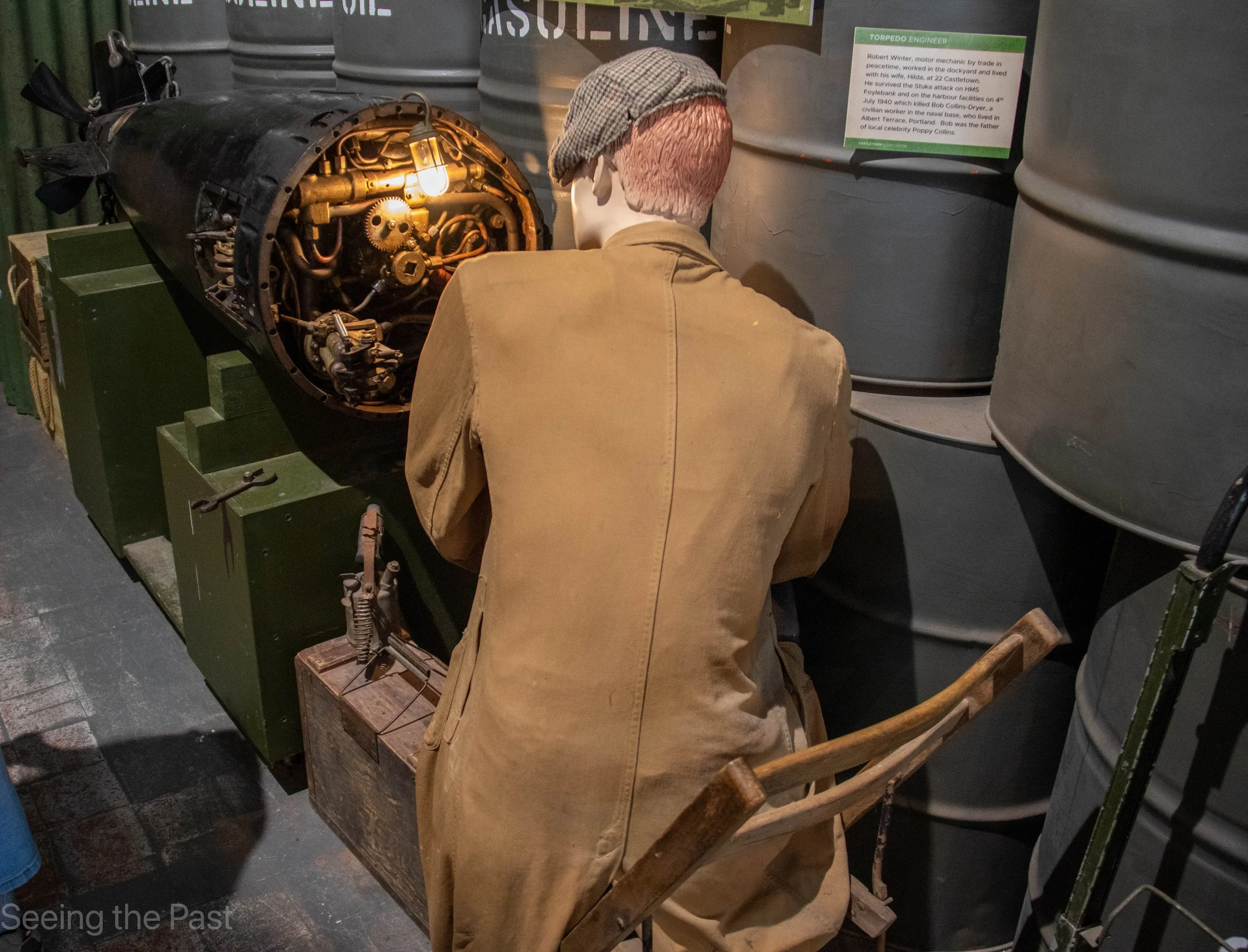
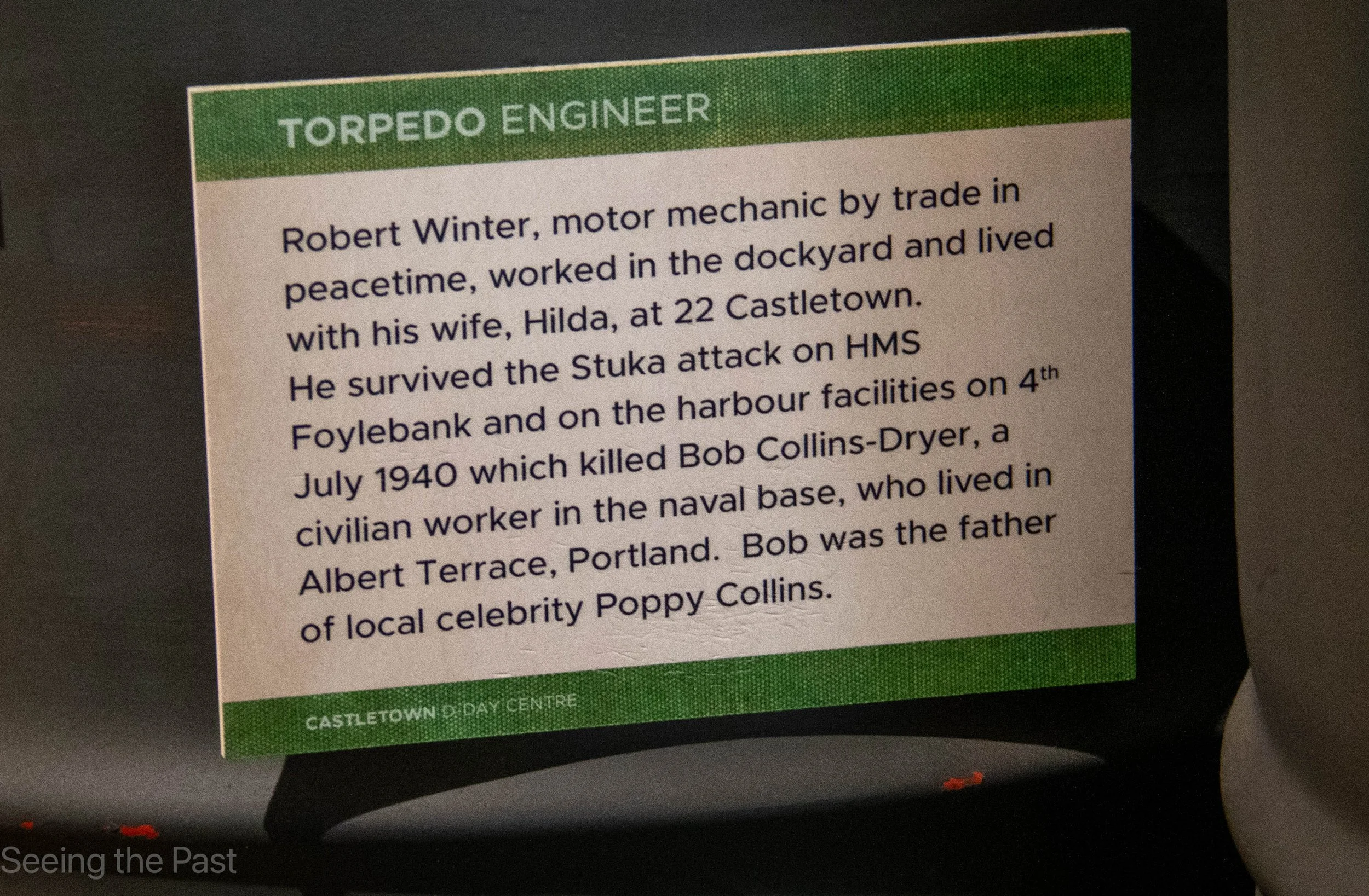
Below; a scene featuring Robert Winter. See the next photo down for his story.
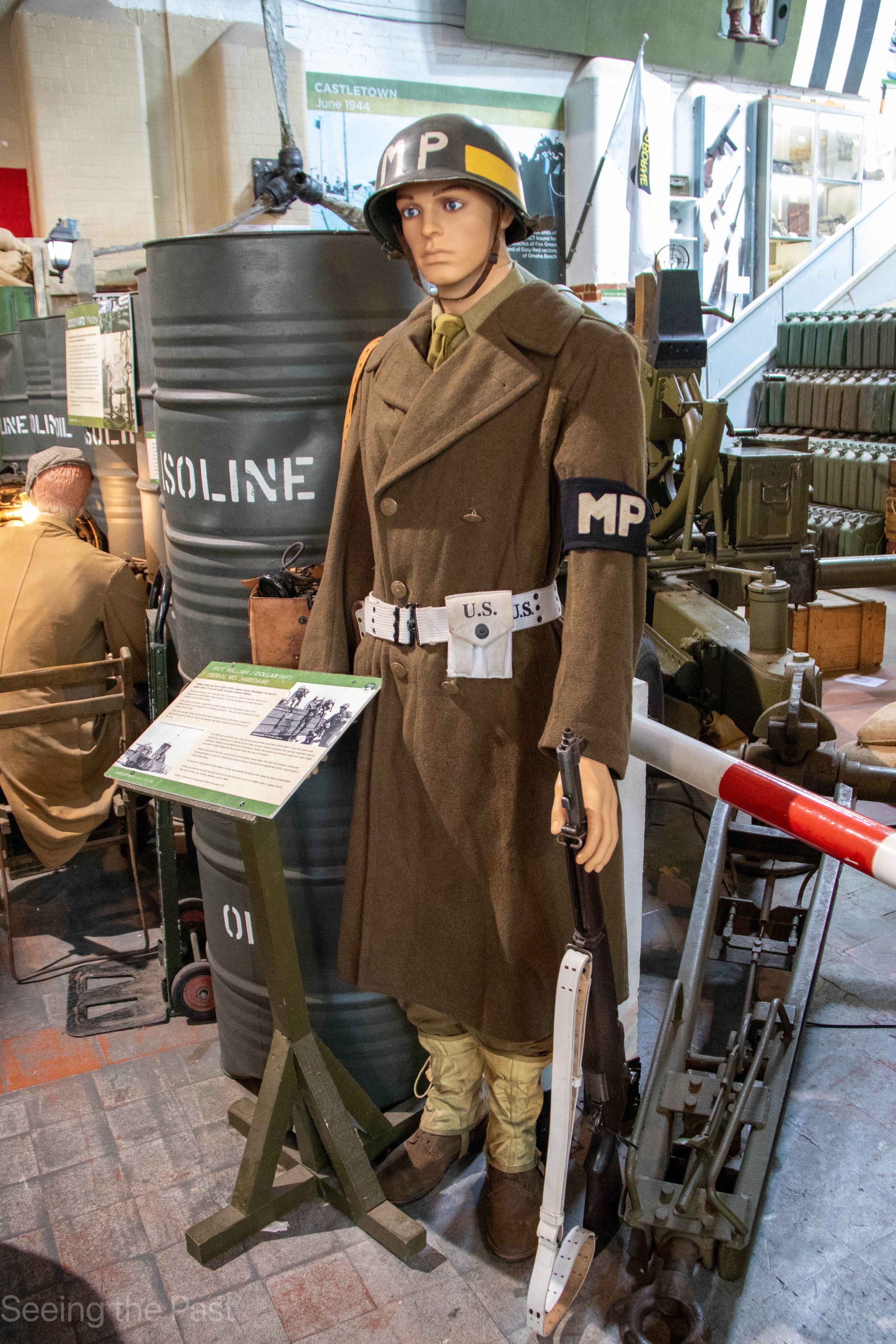
Below: an American Military Policeman.
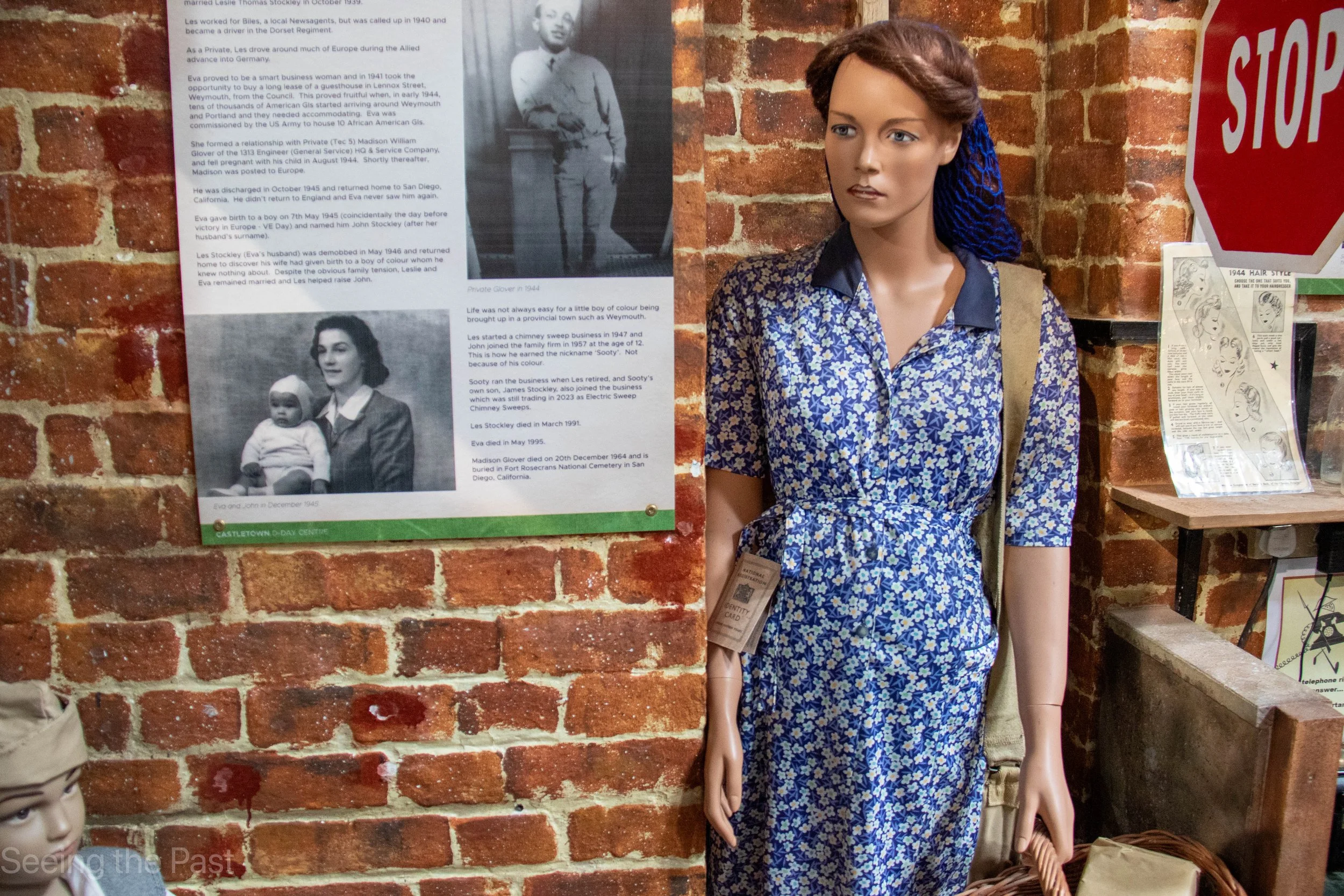
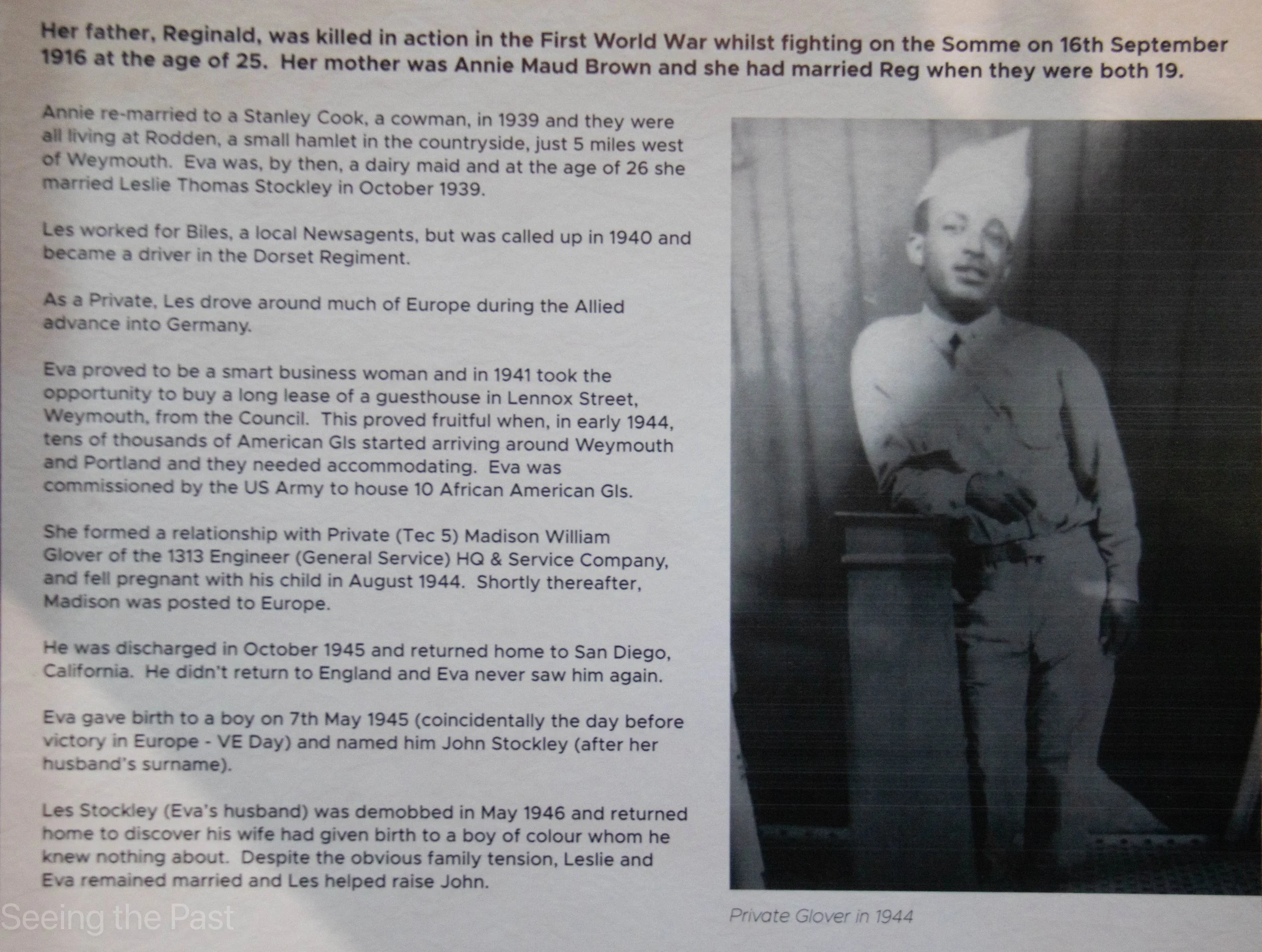
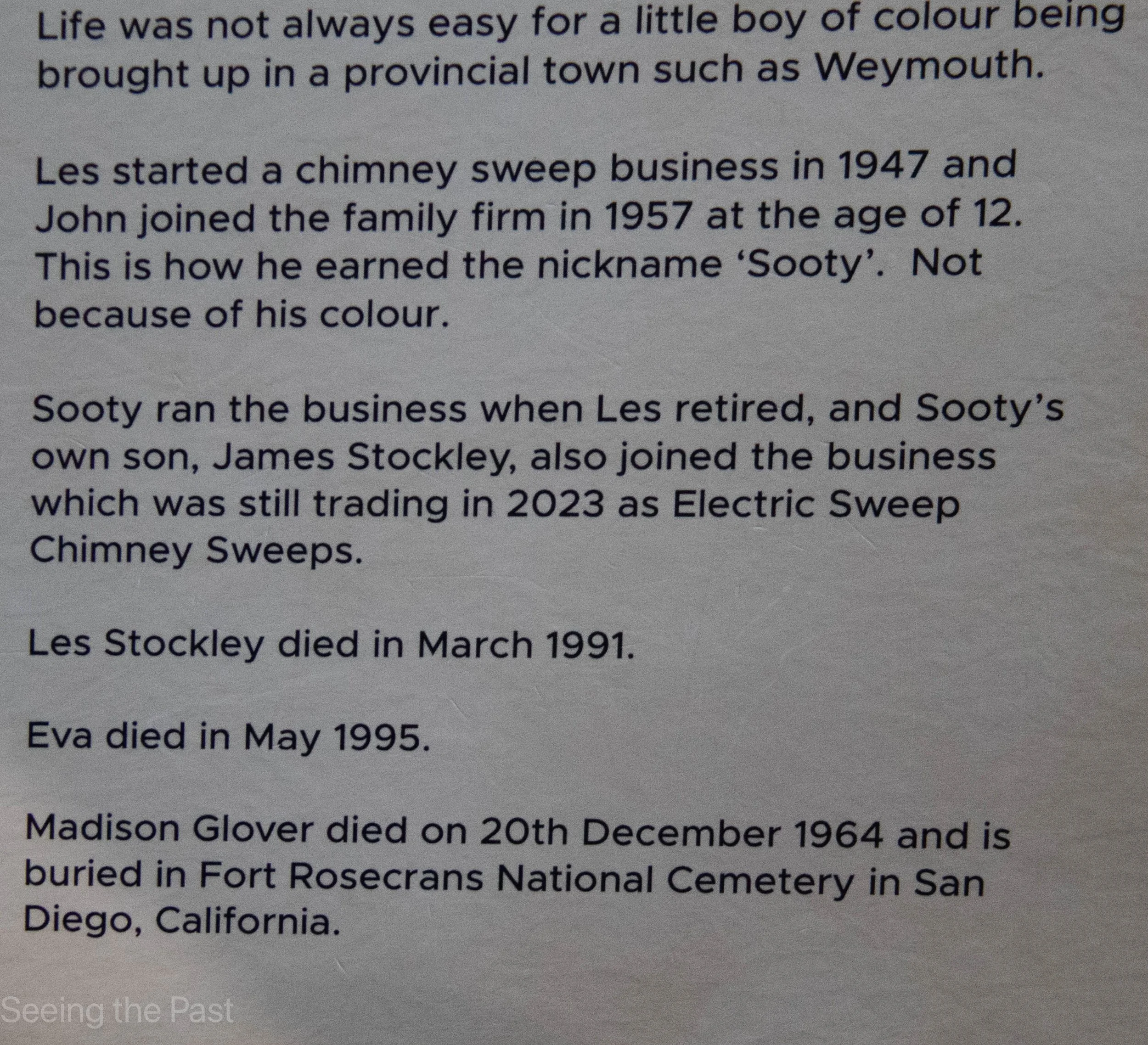
Below: a scene featuring Eva Eliza Thorner Stevens. Read her fascinating story in the next photo down.
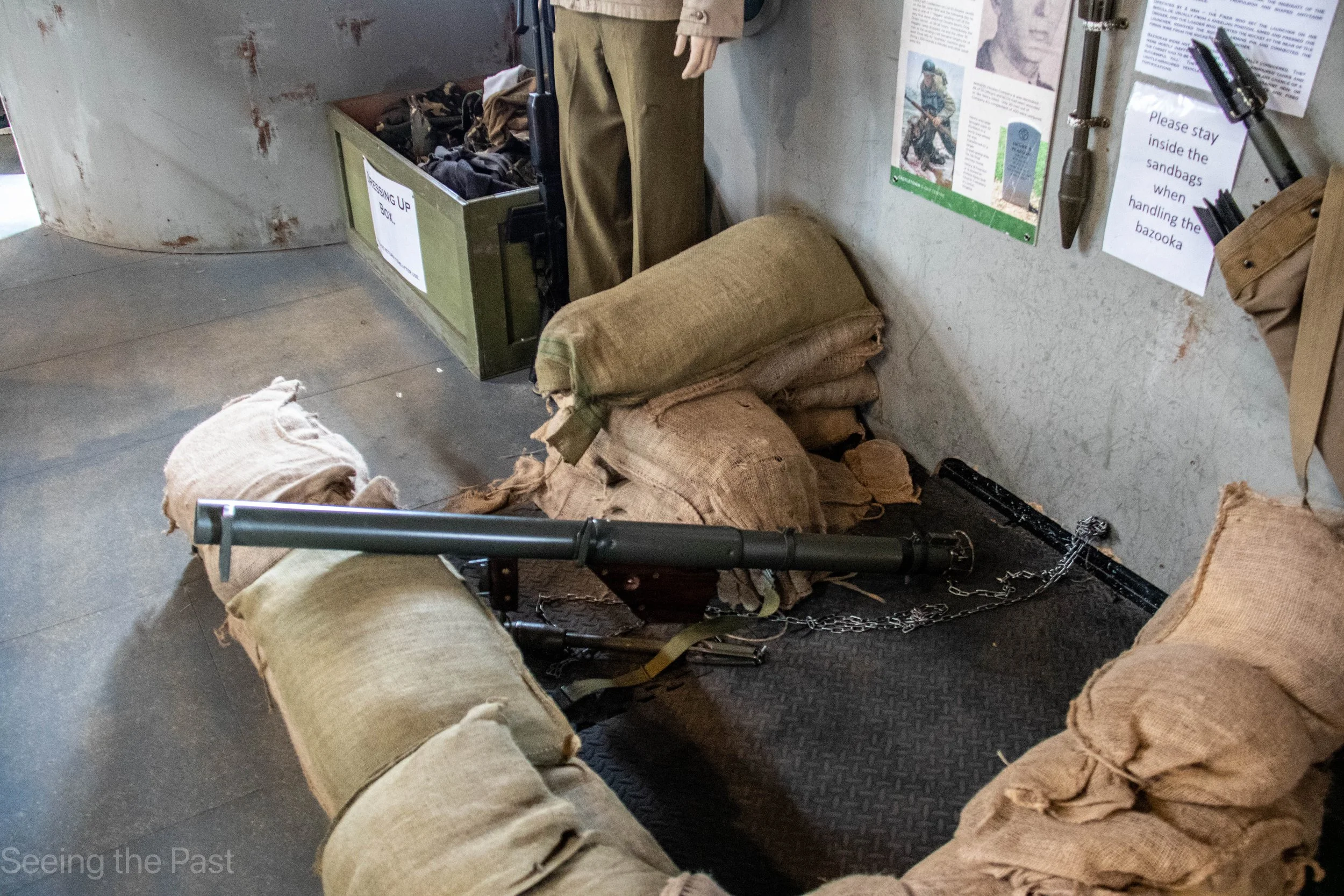
Below: a Bazooka and on the right two M6AI rockets which were used to take out tanks.
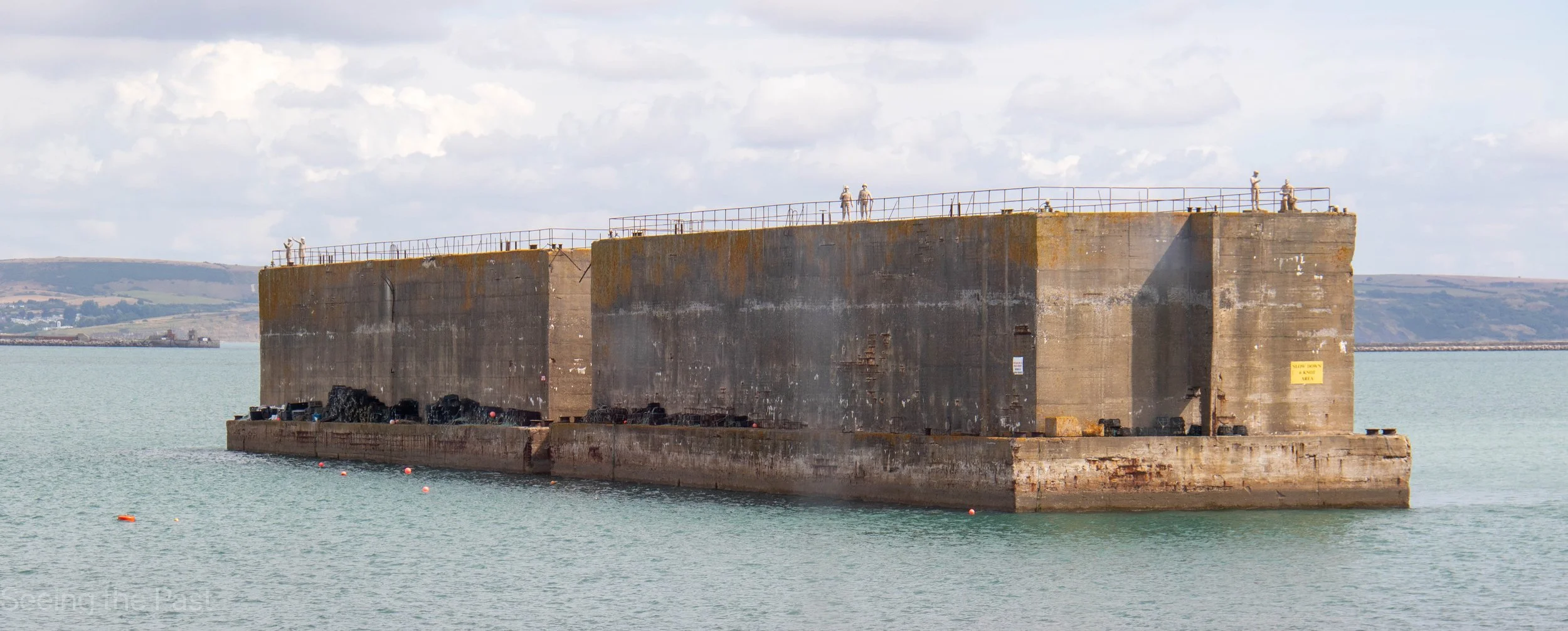
Below: part of a fantastic piece of engineering that helped win WW2. This is a “Phoenix Caisson” that was made of reinforced concrete and amazingly towed over to Normandy, France. The Allies realised they needed ports to deliver vital supplies. If they could not resupply their troops, any invasion, no matter how successful it was, would fail after a few weeks. The Germans built huge defensive works with massive guns and machine gun posts at all the French harbours and so, could not be captured. The only solution was to create two prefabricated harbours, known as “Mulberry Harbours”, to be constructed at Omaha Beach and Gold Beach, in Normandy. They were meant to last at least 6 months but one was used for 10 months. Unfortunately, on 19th June, a three day storm destroyed key parts of the harbour that were not yet anchored to the sea floor at Omaha Beach and left only one at Arromanches, part of Gold Beach.
When they arrived at Normandy, the Caissons were sunk and were then to act as breakwaters. The surviving harbour was so successful that was able to unload 2.5 million men, 500,000 vehicles and 4 million tons of supplies.
After the war, 10 caissons were refloated and taken to Poole Harbour shelter the construction of a new pier. After this, the 10 were again refloated with 2 going to Castletown, as you can see below, and 8 going to Holland where only 6 completed the journey.
Please note that the people on the caissons are models.
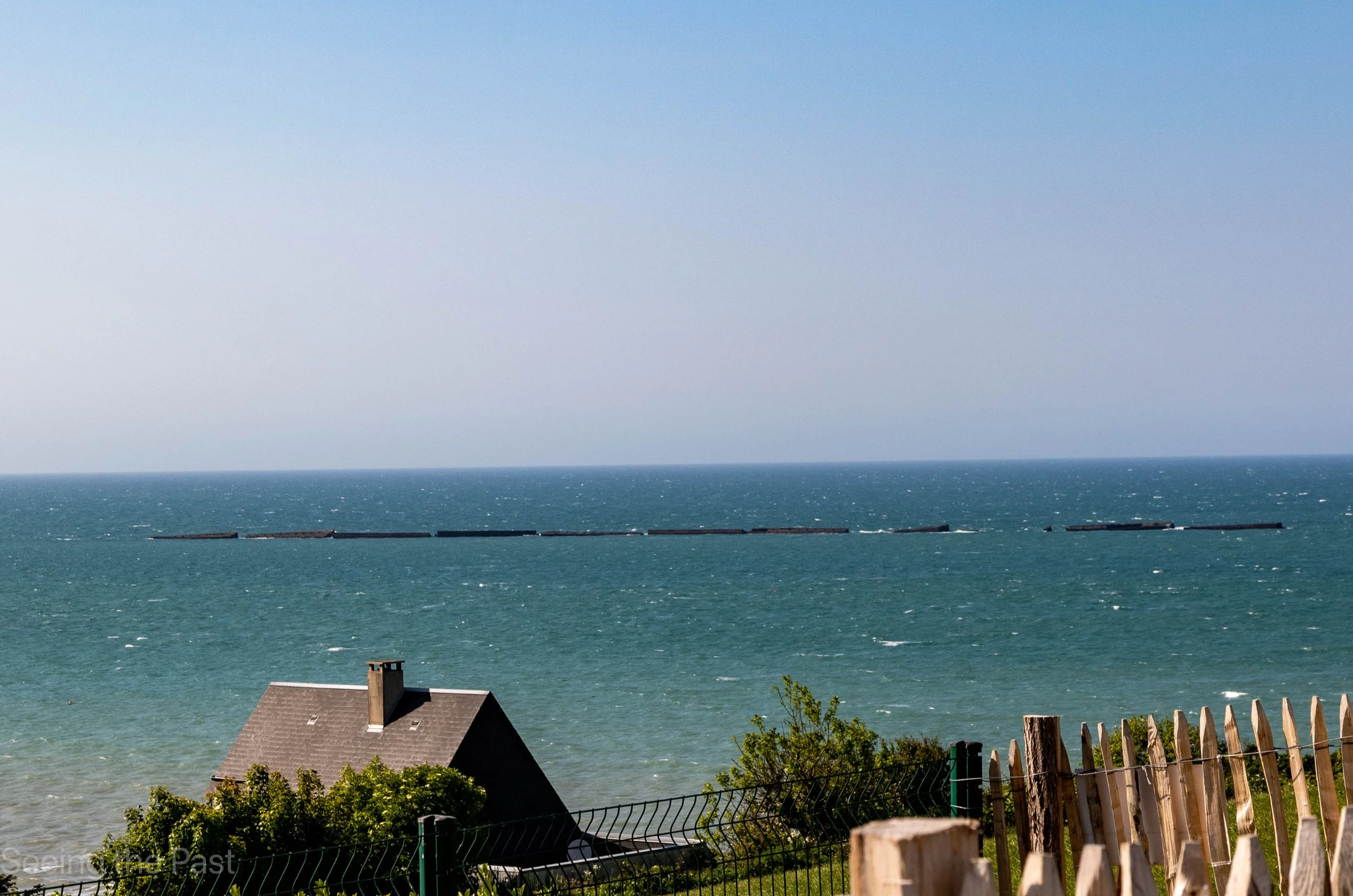
Below: the remains of the Mulberry Harbour that you can see today from the cliffs above Arromanches, Normandy.
Click here for a blog on the Arromanches D Day Museum
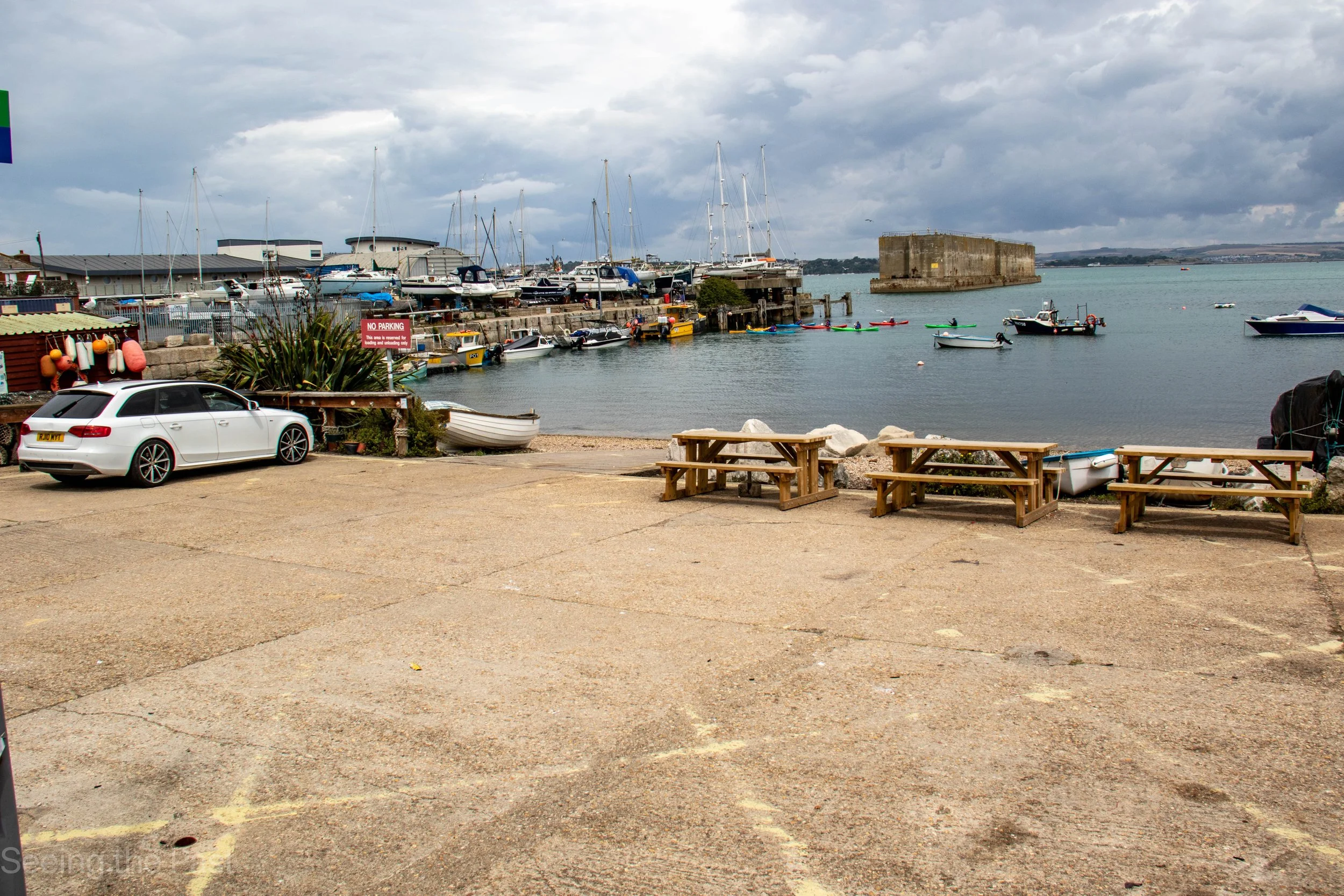
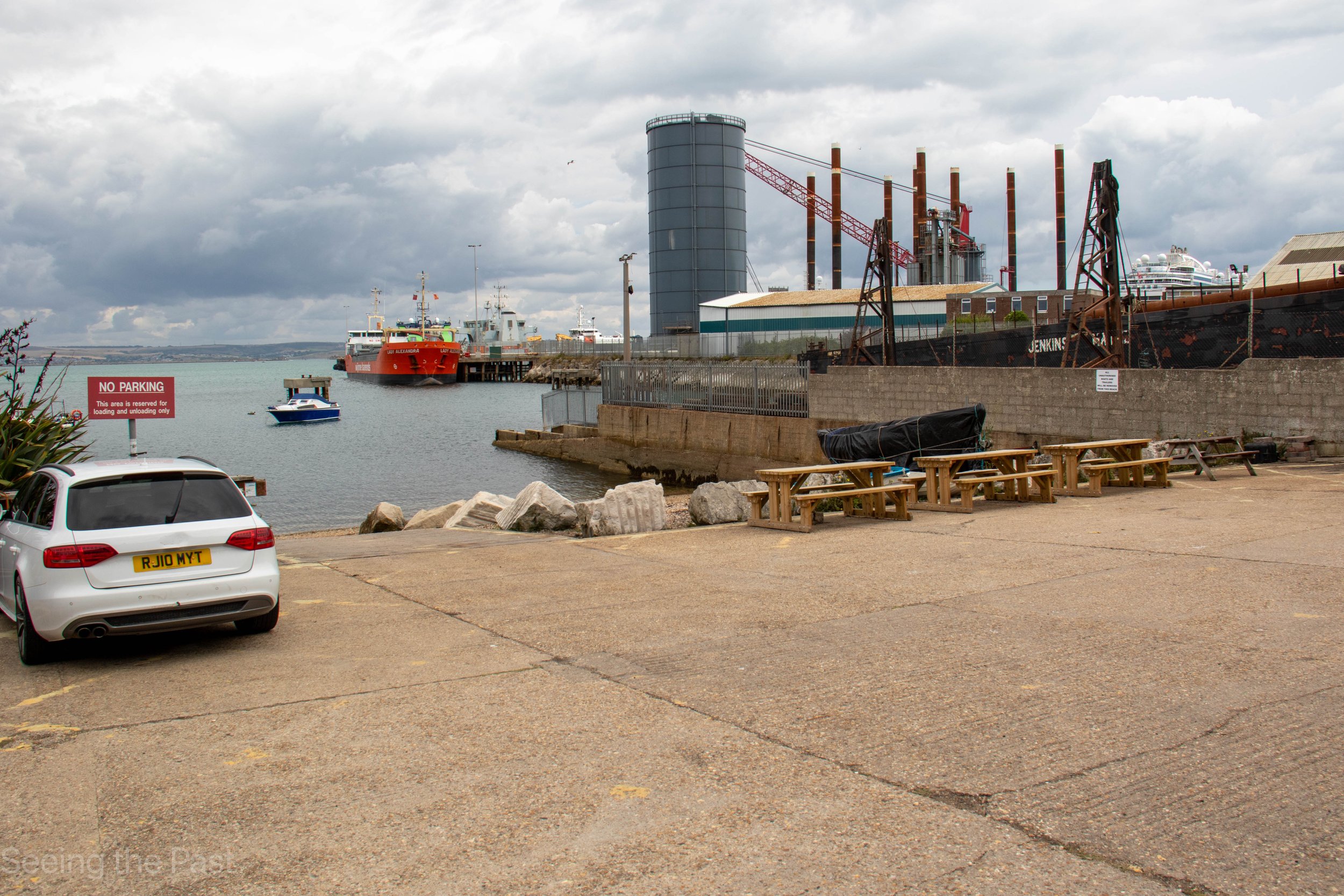
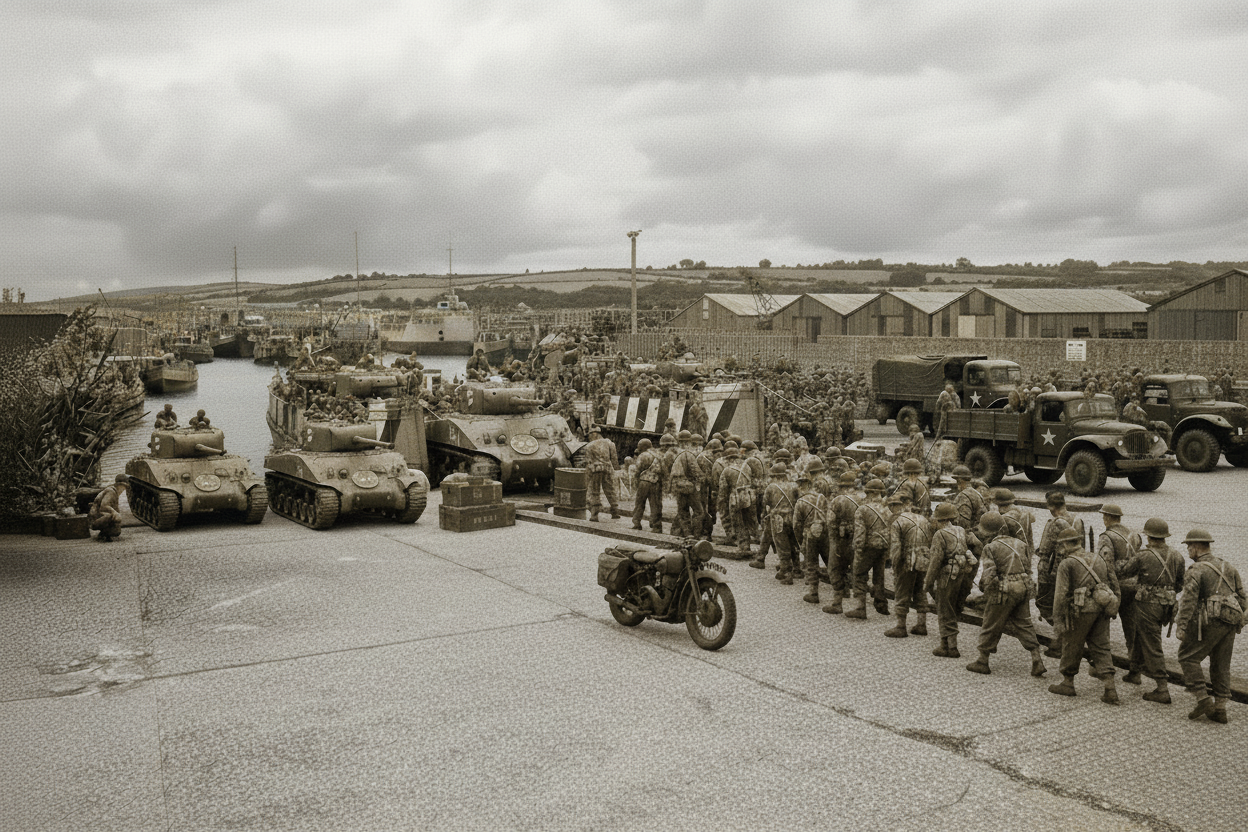
Below; a walk along the road of about 100 yards shows the original embarkation area for troops and equipment to be put on the landing craft the days before D day. The two photos below show what you can see today.
Below; just a piece of fun. I tasked an Ai program to use the previous photo and create a D Day scene. It took several attempts and you may notice a few American soldiers at the end of the queue have British helmets but I hope it gives an impression of the bustling, crowded place that it was for a few days.
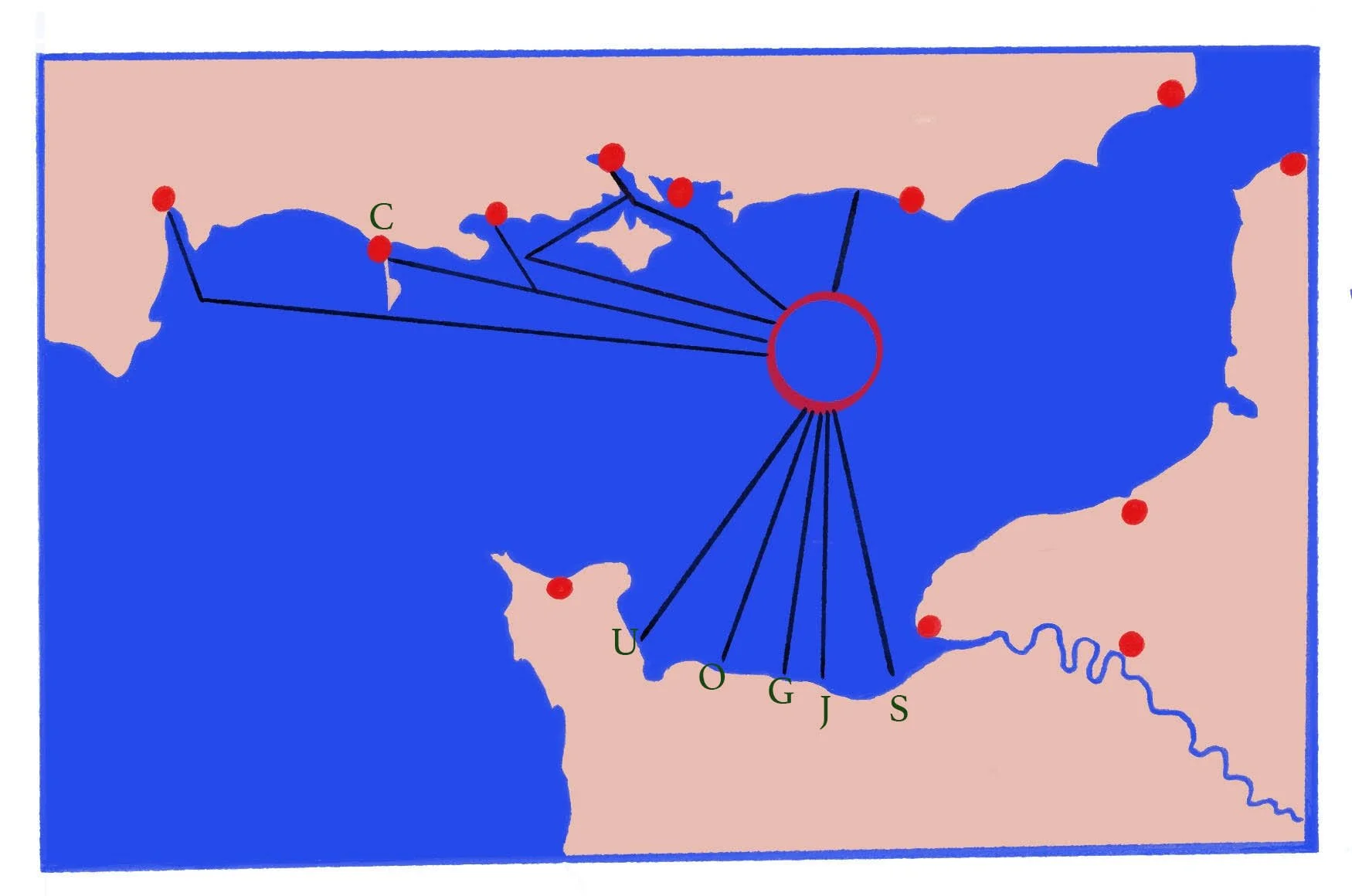
Below is a rough map of the departure points, where they initially headed and the landing beaches. C = Castleton, U = Utah Beach, O = Omaha Beach, G = Gold Beach, J = Juno beach and S = sword Beach. All of these routes had been swept for mines and was patrolled by Allied planes making this part of the proceedings relatively safe.
Essential Information
Use your Sat Nav for Castletown D-Day Centre, Admiralty Buildings, Castletown, Portland, Dorset, UK, DT5 1BD. It is immediately located by Google and Applemaps.
Articles that might interest you.



Tucked away in Isle of Portland in Dorset, the Castleton D Day Centre offers a powerful and immersive window into one of the most significant moments of the Second World War. Far from being a traditional “look but don’t touch” museum, the centre invites visitors to step closer to history — with a remarkable collection of authentic artefacts that can be touched, held, and even sat on, bringing the realities of the D-Day era vividly to life. Added to this are several friendly volunteers dressed in period outfits who have a vast amount of knowledge of those artefacts and are able to answer questions.