
Skara Brae: Discovering Scotland’s Remarkable 4,500-Year-Old Neolithic village.
/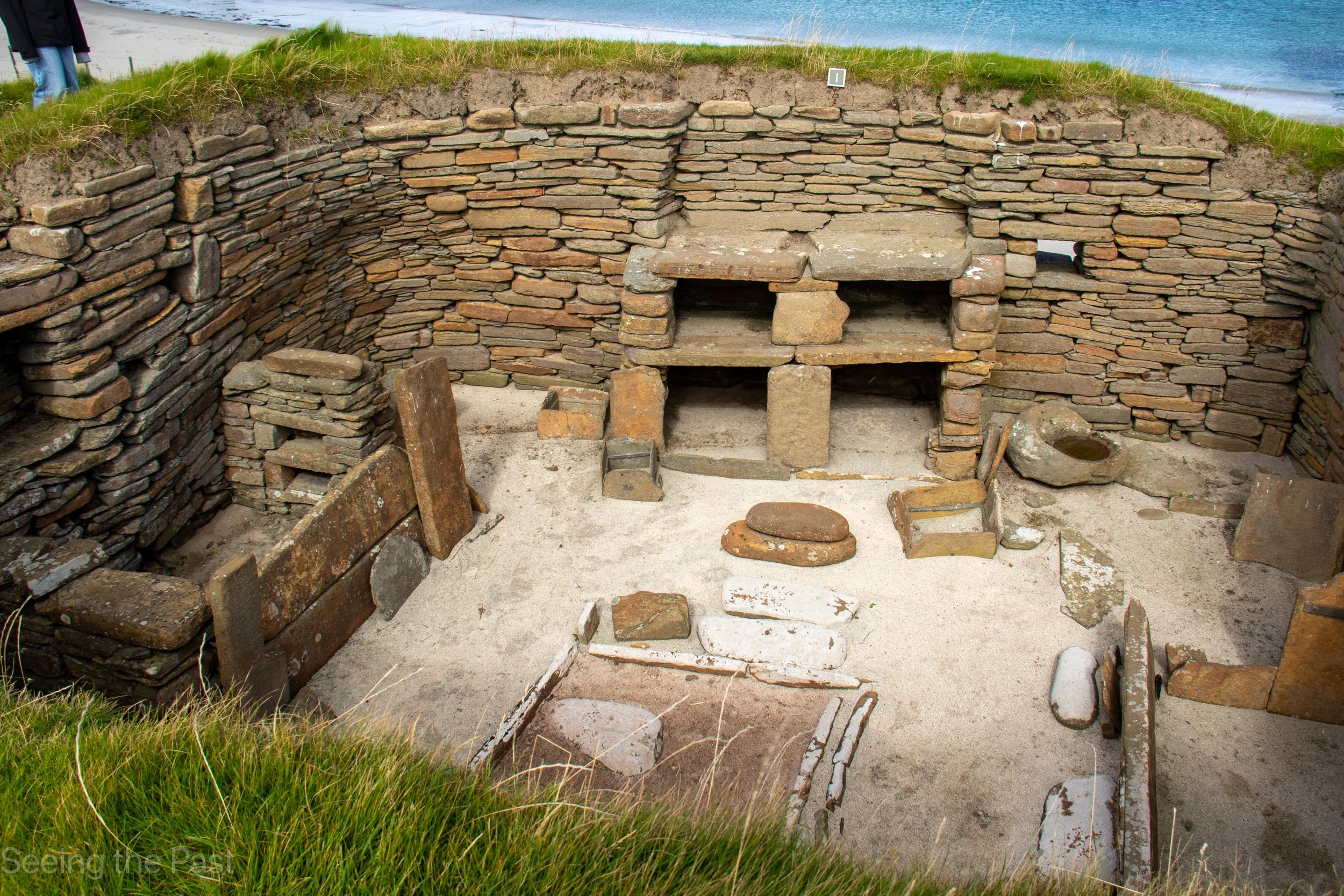
This place has been on me and my wife’s “Bucket List” for years. In the past we have travelled many miles to see one Neolithic structure but at Skara Brae, we came to see nine houses and one other building that may have been a workshop. Furthermore, the buildings have substantial and well built walls, not just a few large blocks positioned next to each other and rather amazingly, furniture. Sometimes archaeological remains take a lot of imagination from us ordinary folk but in this case it is very easy to recognise shelves, beds and hearths. So far, I have used the word amazing only once but this word could apply to everything we saw.
During the winter of 1850, a severe storm hit Scotland , damaged a lot of buildings and killed over 200 people. On the positive side, that storm was ferocious enough to blast away the large pile of sand that had covered up the Skara Brae buildings for more than a thousand years.
Skara Brae is located in the Bay of Skaill on the West Coast of mainland Orkney. It is easy to get to, being only a 16 minute drive from Stromness. Please note, most of Orkney has good roads and very little traffic. Nervous drivers do not need to worry although there is quite a good bus service, serving some of these fascinating sites.
The houses of Skara Brae.
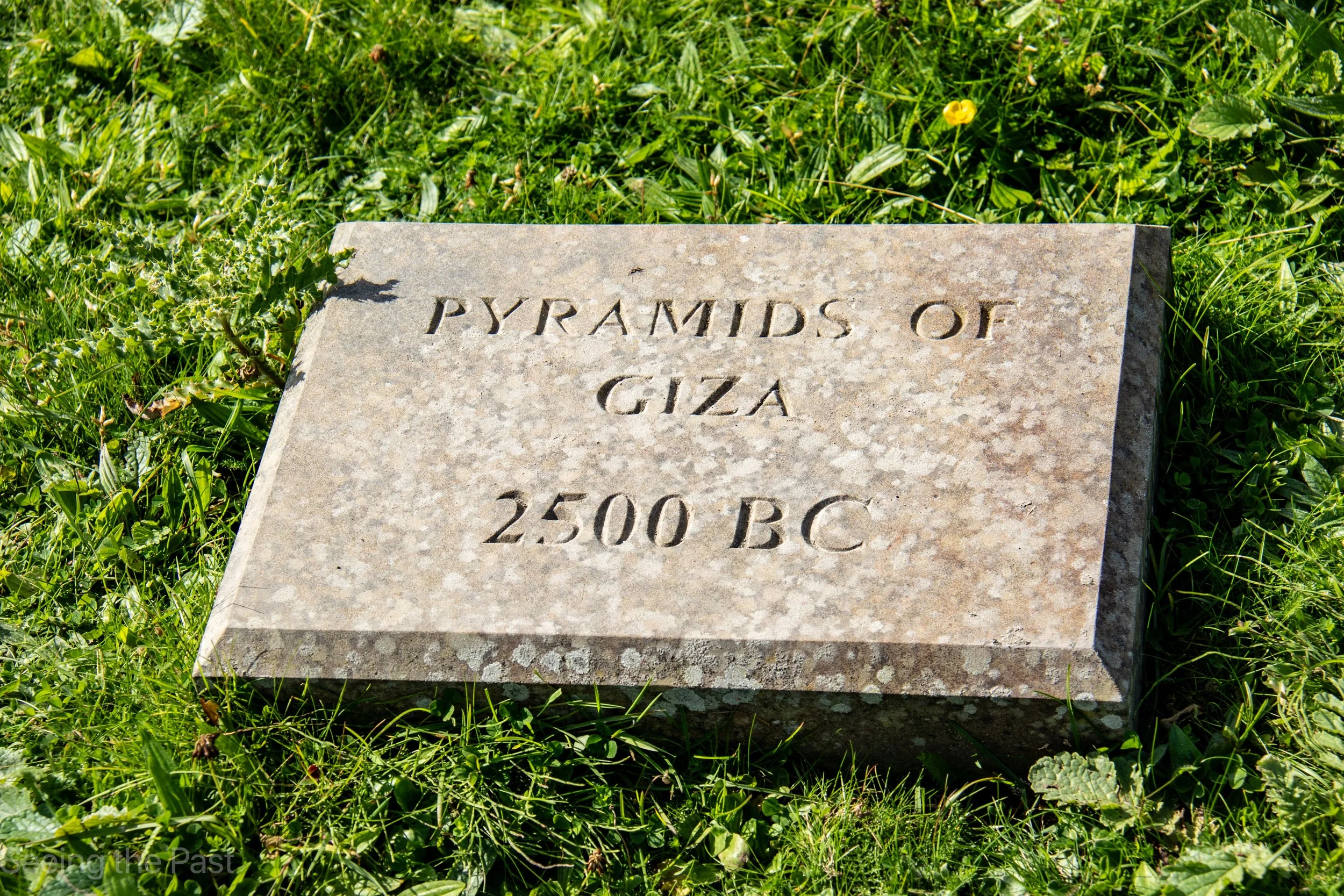
When we started walking towards the village we noticed a timeline in the form of stone plaques on the ground with the date and name of an important event or structure. The timeline helps us to place Skara Brae alongside other important events or structures. It takes us backwards in time from the Moon Landing in 1969 to Skara Brae. The earliest building here dates from 3100 BC, a time before any those mentioned in the list
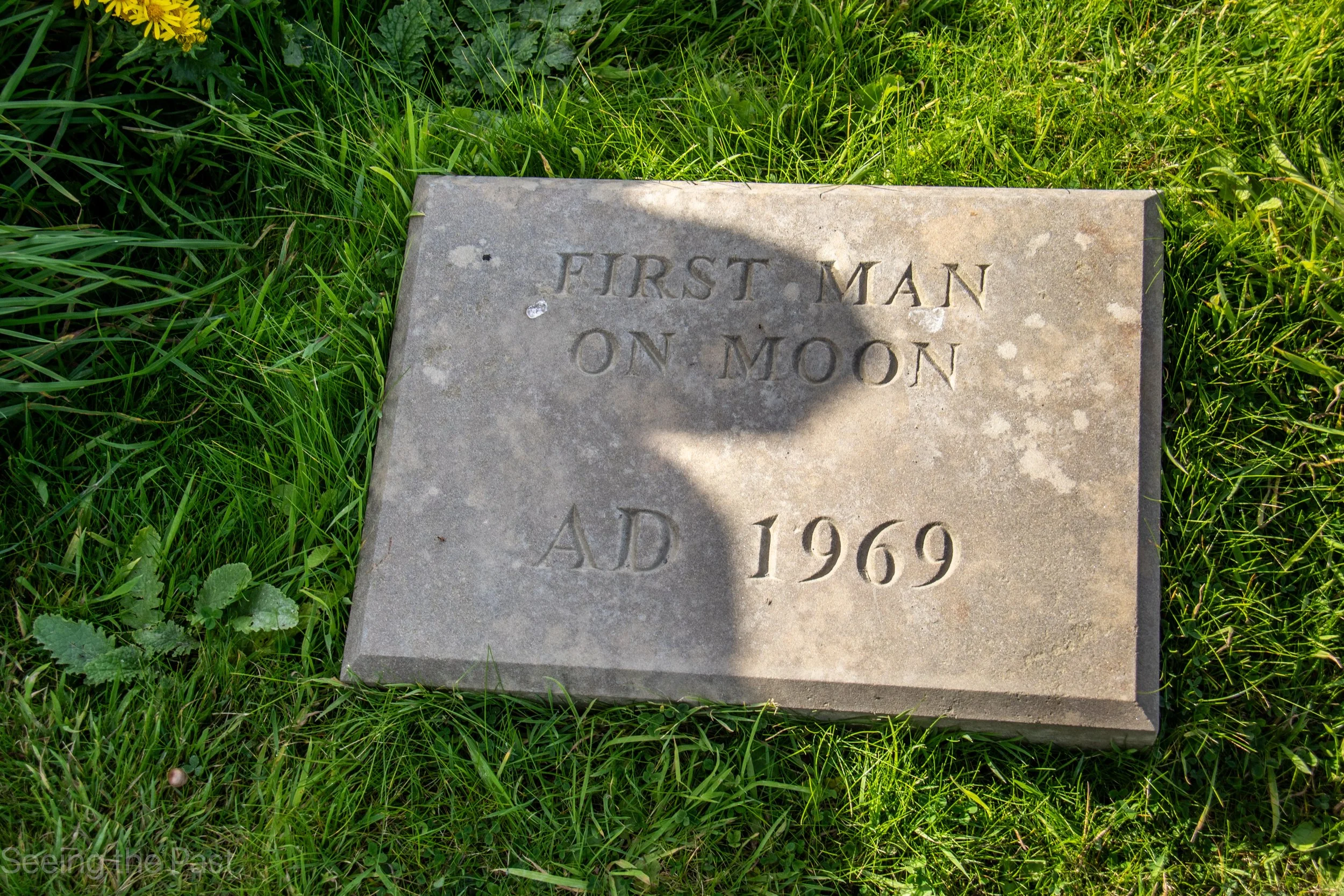
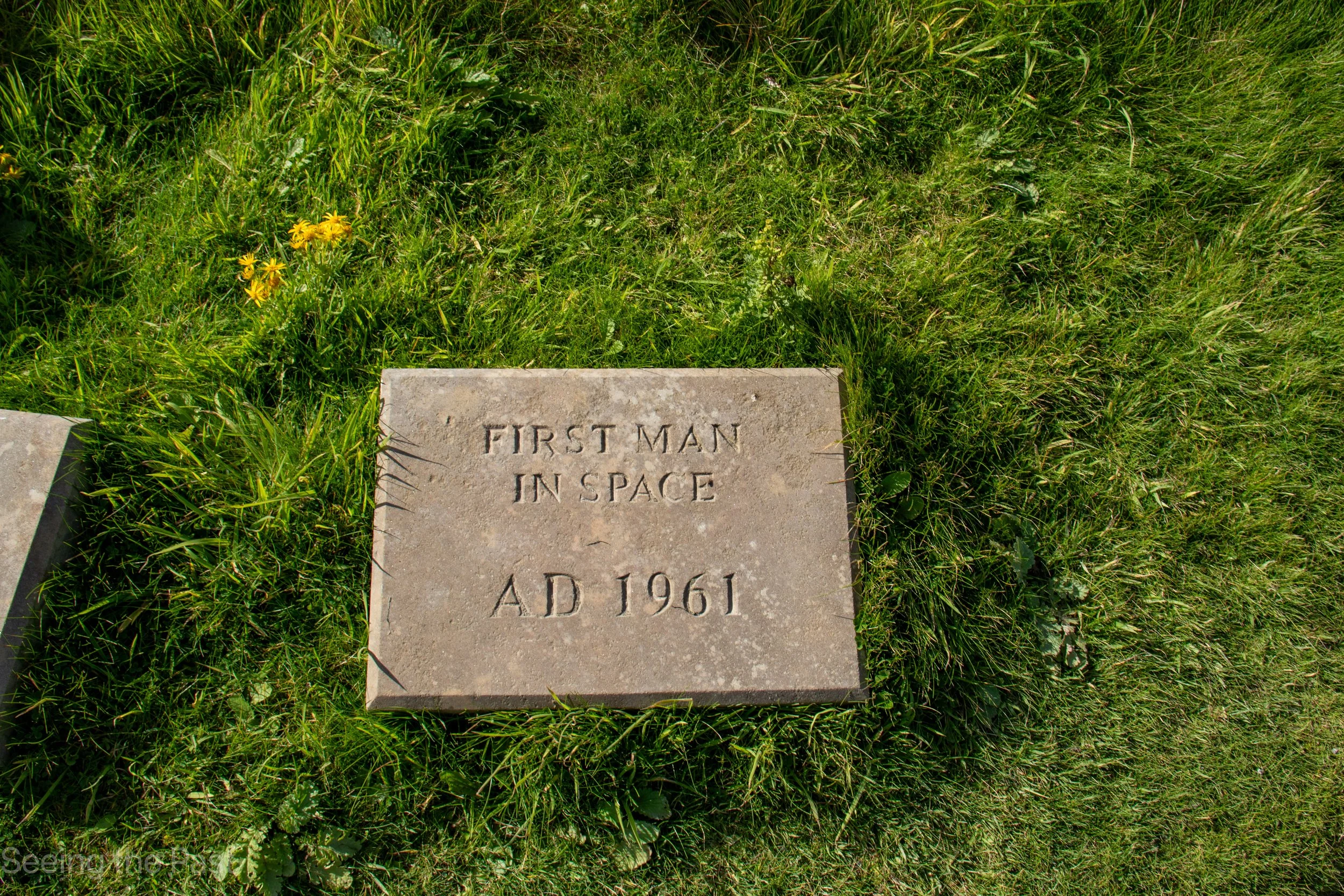
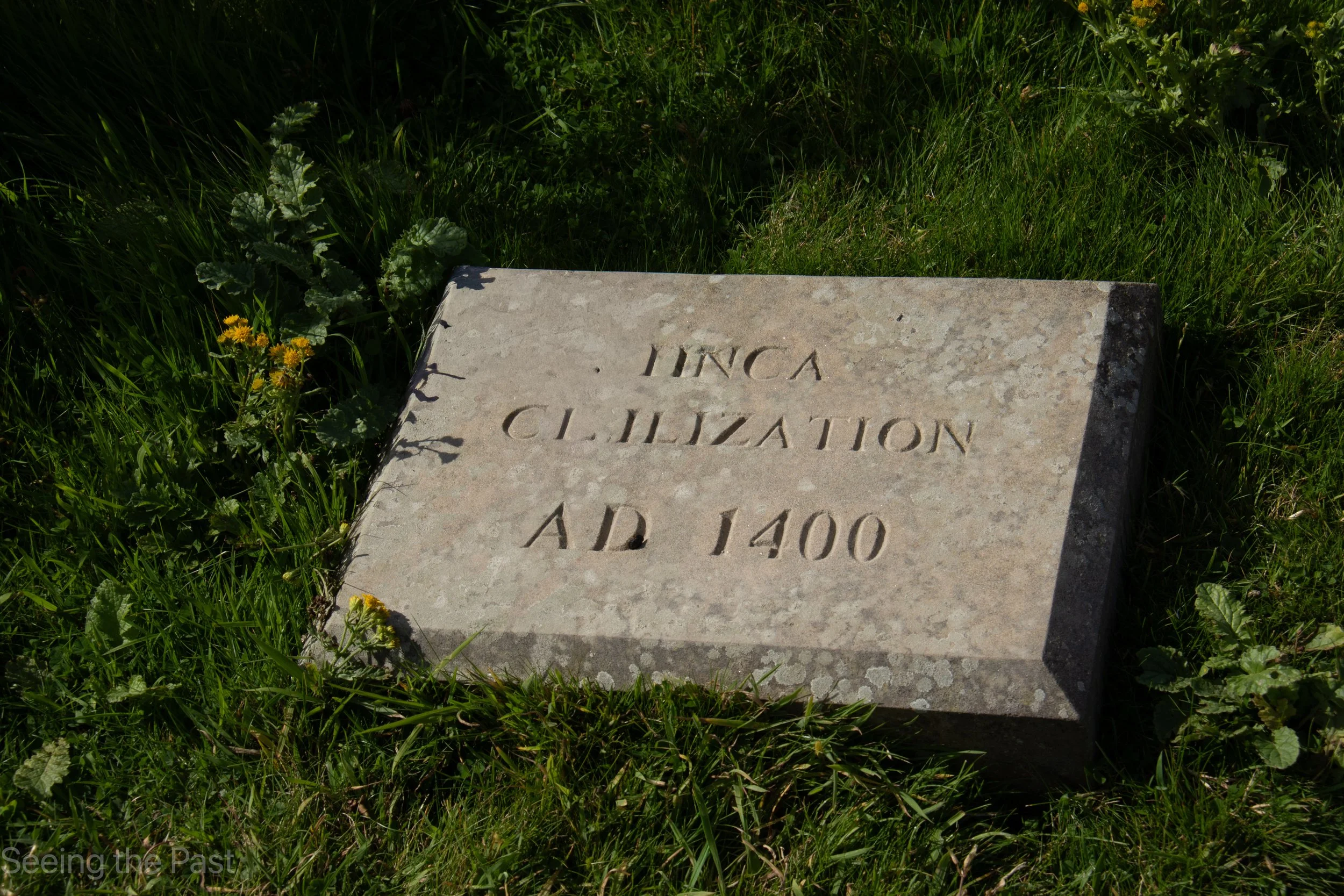
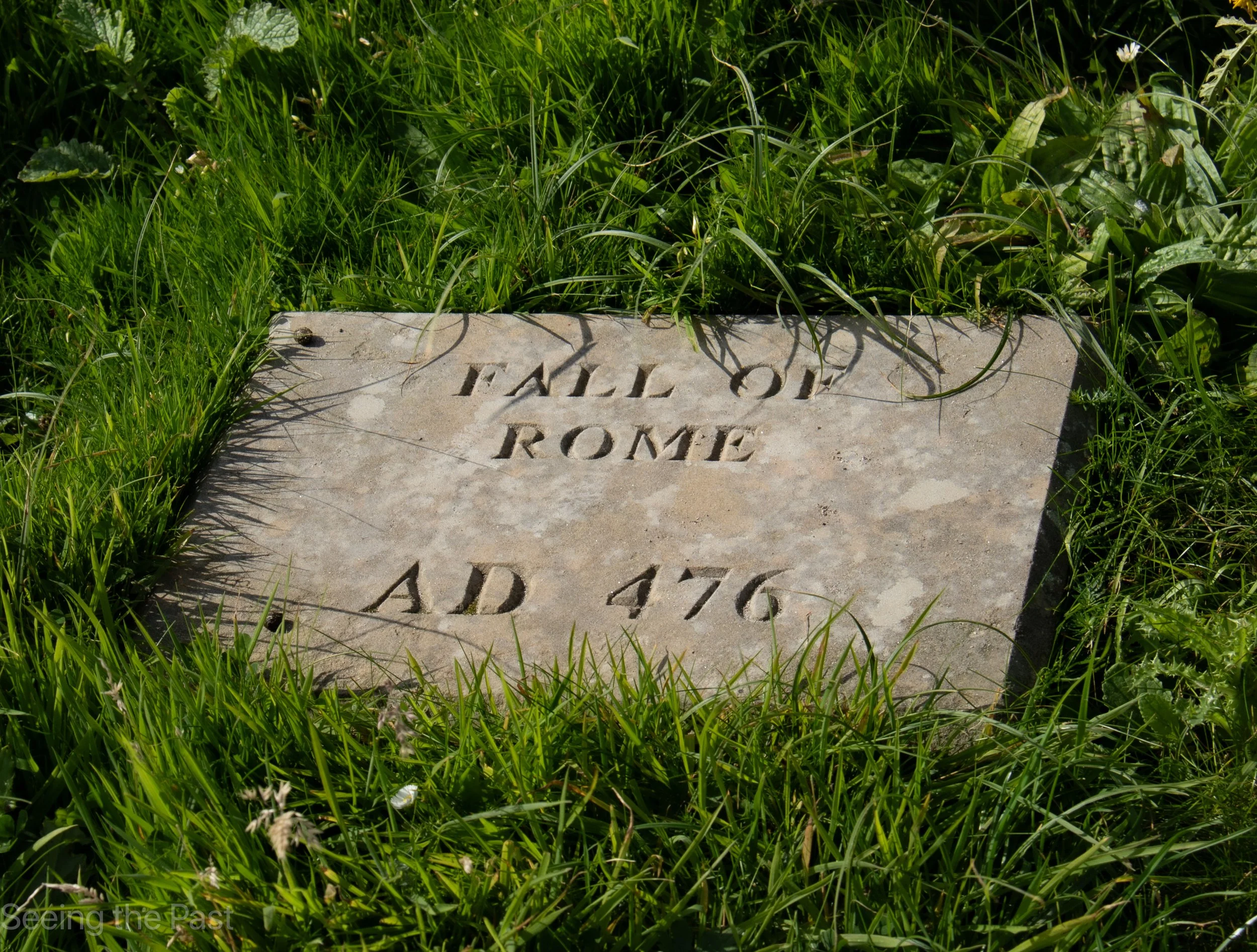
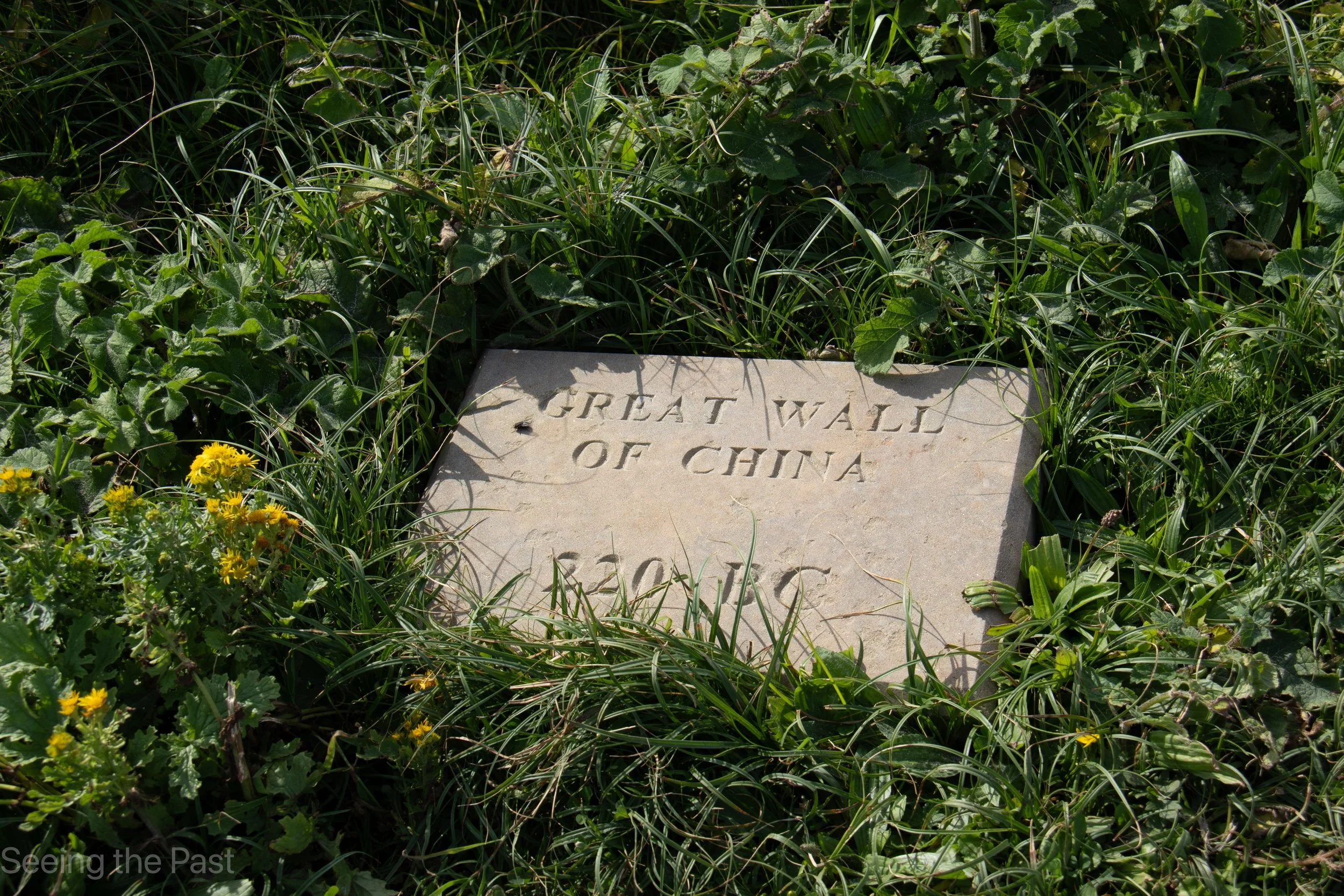
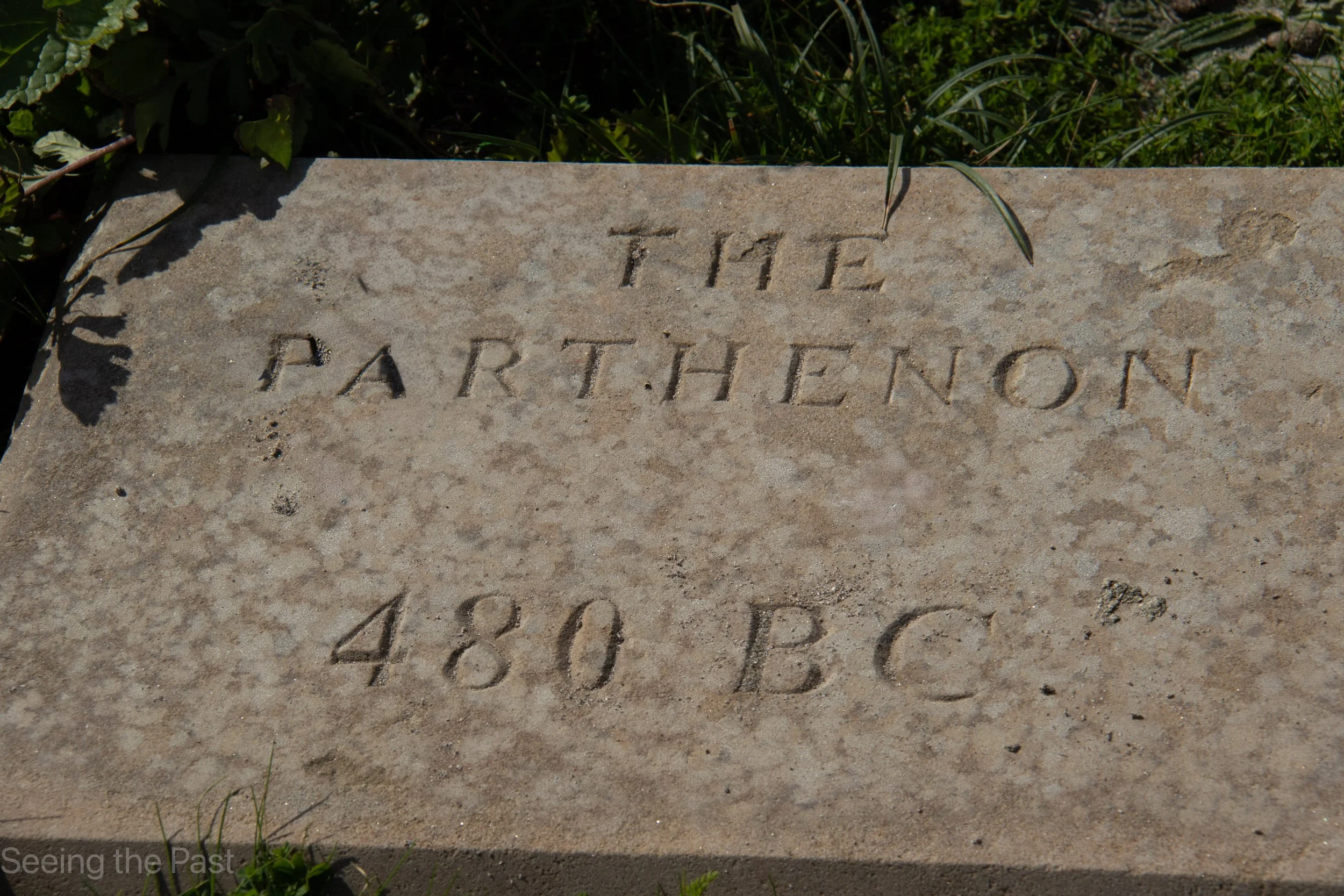
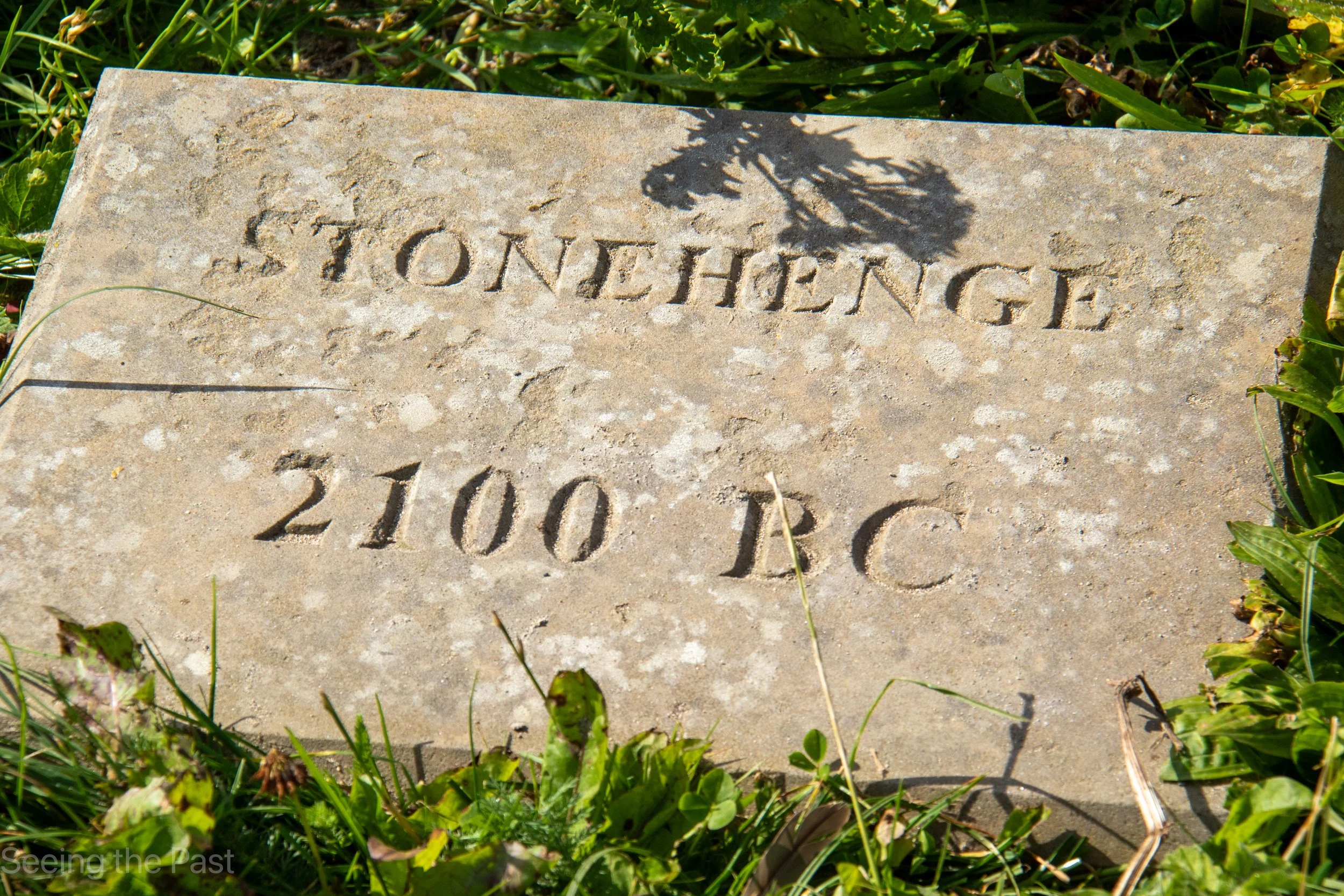
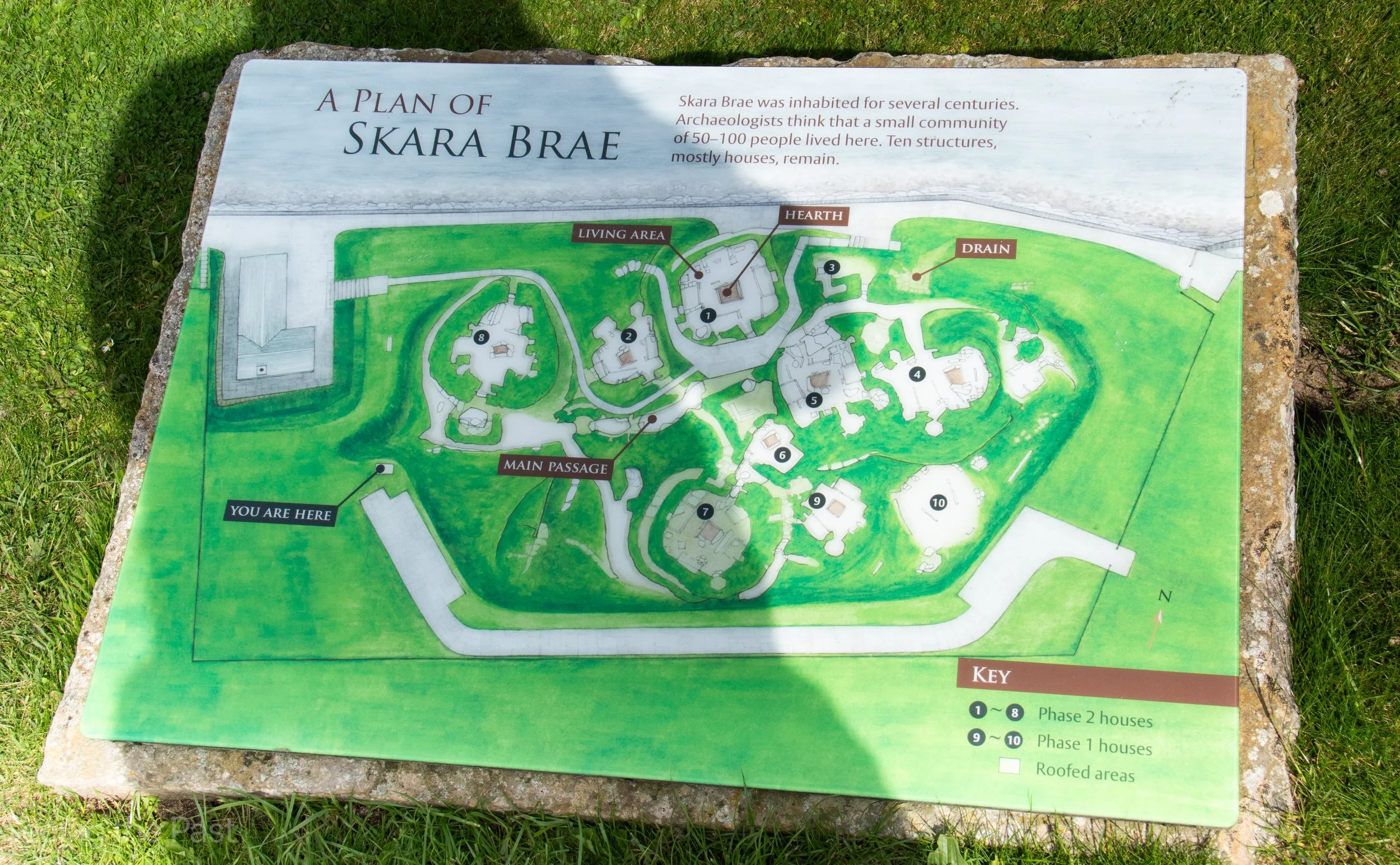
Below, a map of the village on a notice board showing the layout of the village.
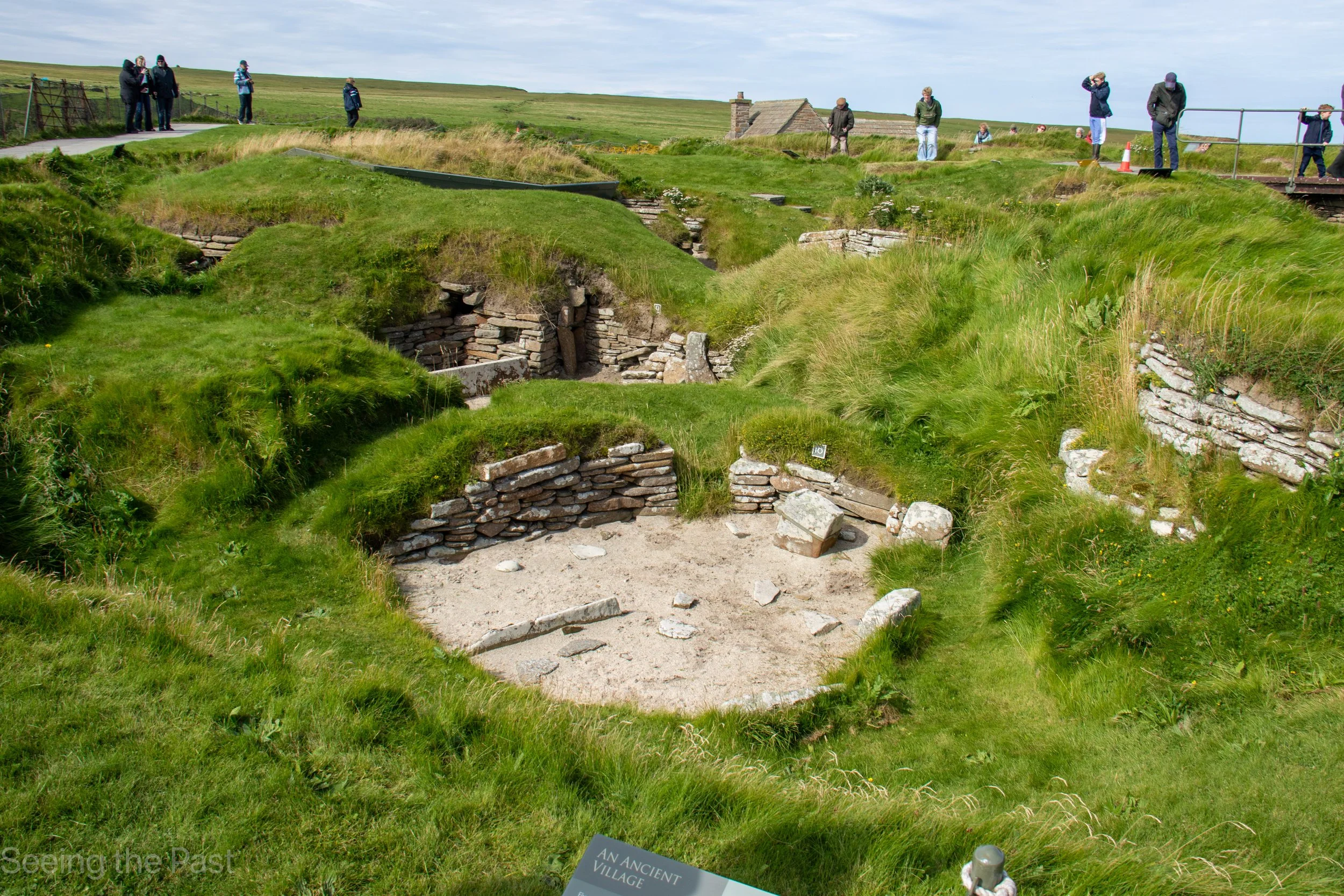
Below, our first view of a a Neolithic house, number 10. Along with the house on its left, House 9, it is one of the earliest houses in the site.
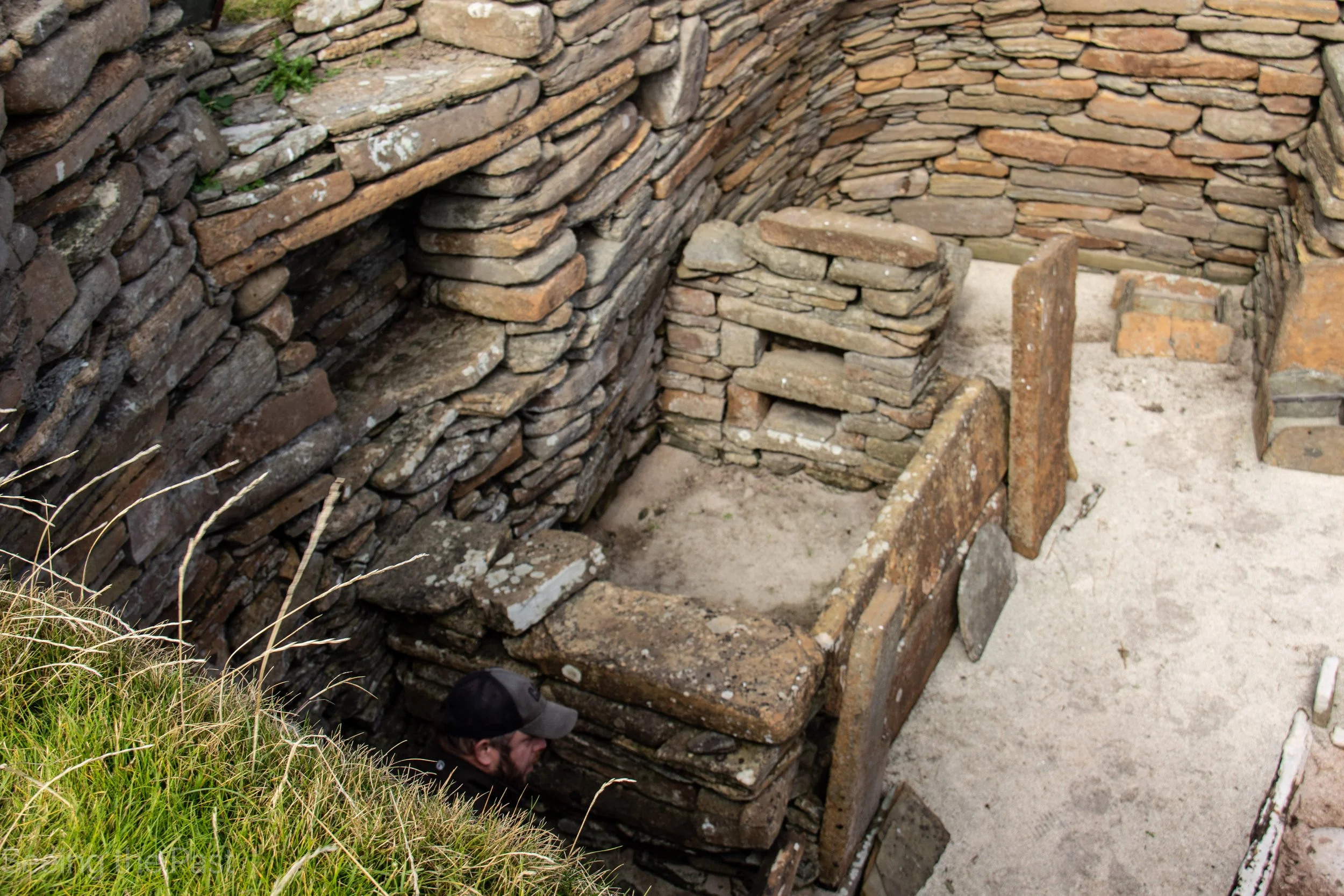
Below are two photos of house 9. These early houses were different from the later ones in that the beds are placed within or recessed in the walls rather than projecting out from the walls into the room. Please note that each one of the buildings would have had a roof. Originally it was thought that they were made of hides but now thanks to large excavations at the nearby “Ness of Brodgar” ,which has now been recovered with soil, it was discovered that a house roof would be made of stone slabs/tiles.
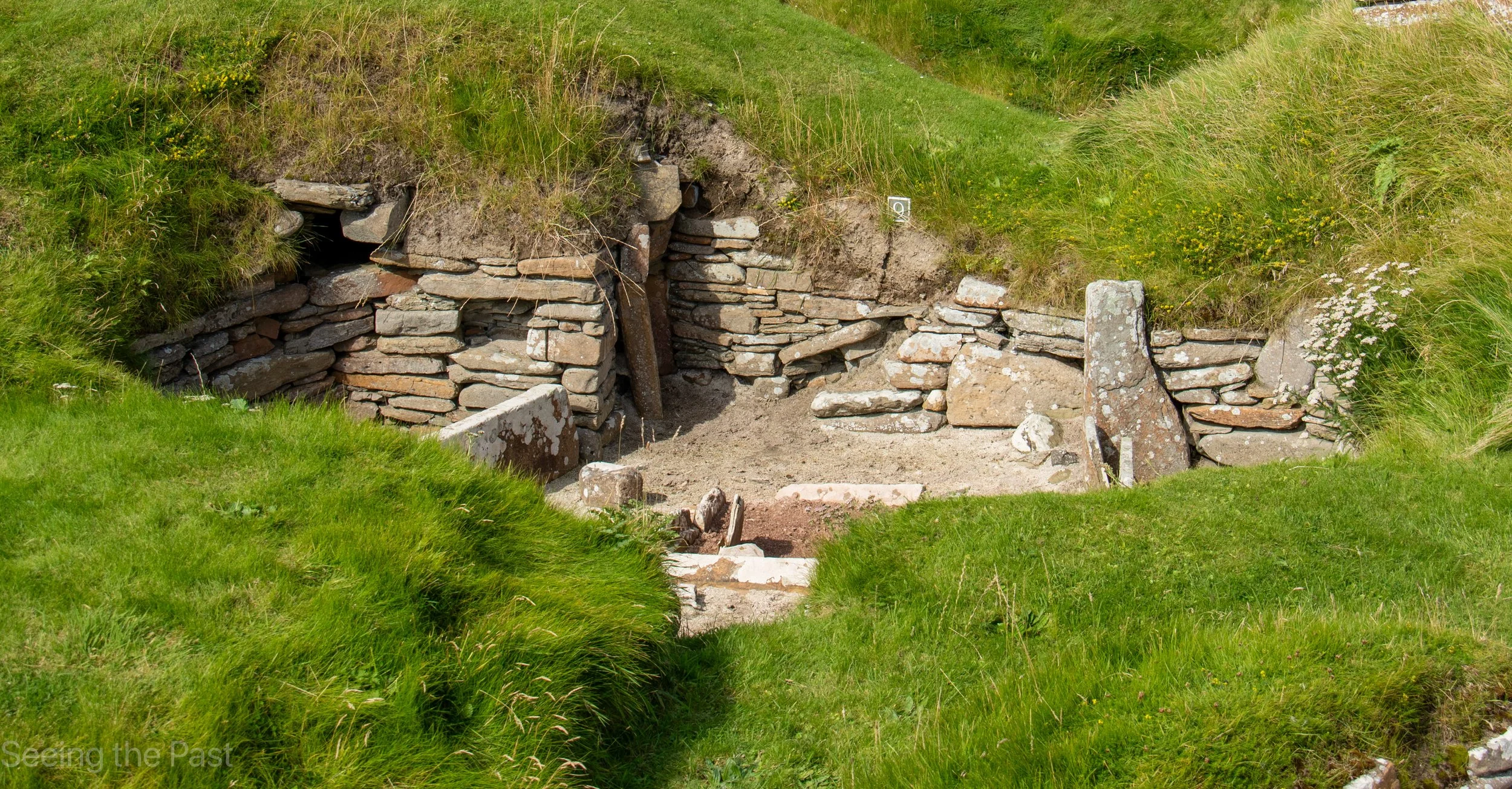
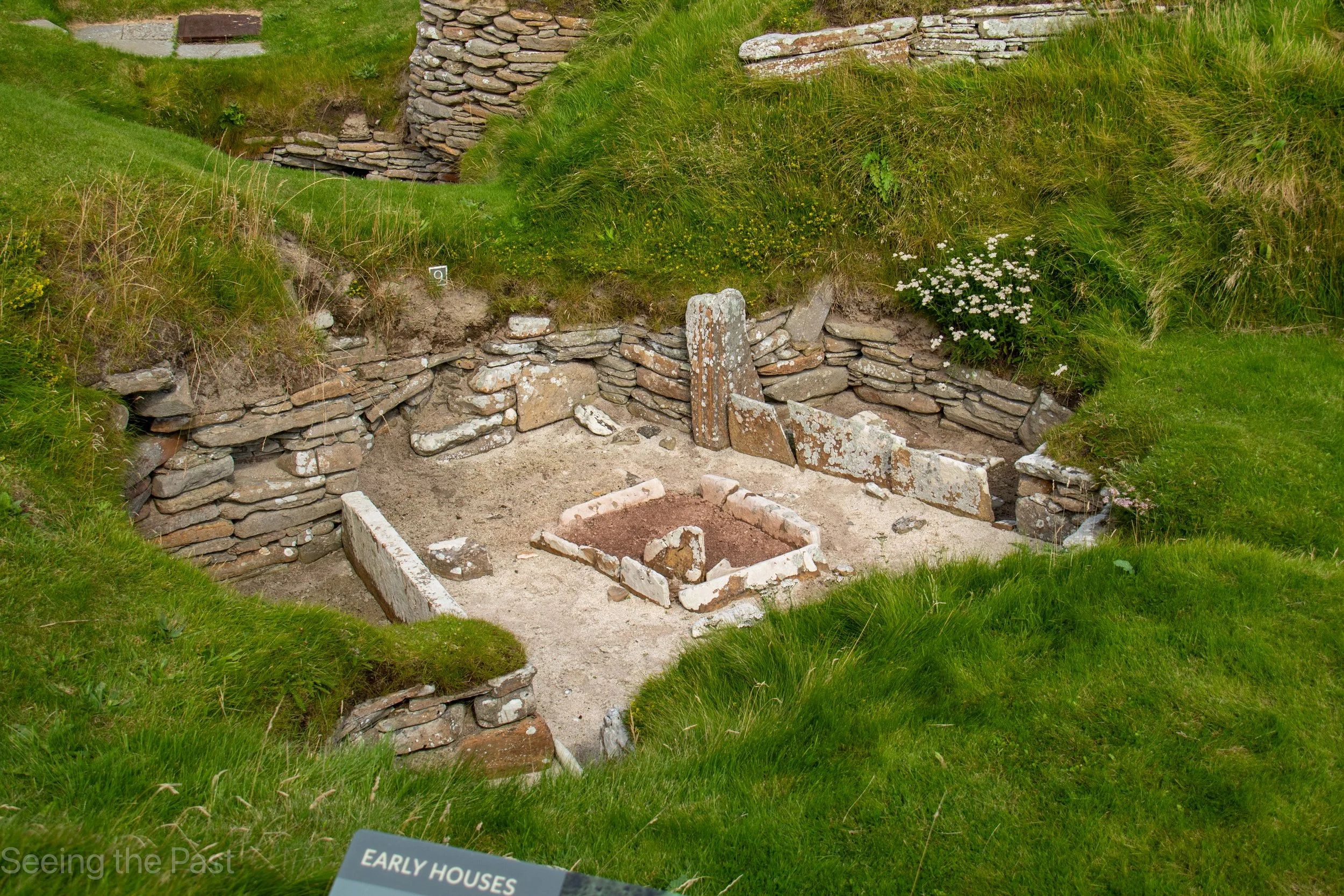
Unfortunately, other houses from this early period are beneath the younger houses and to excavate them would obviously destroy the newer ones that we can see today.
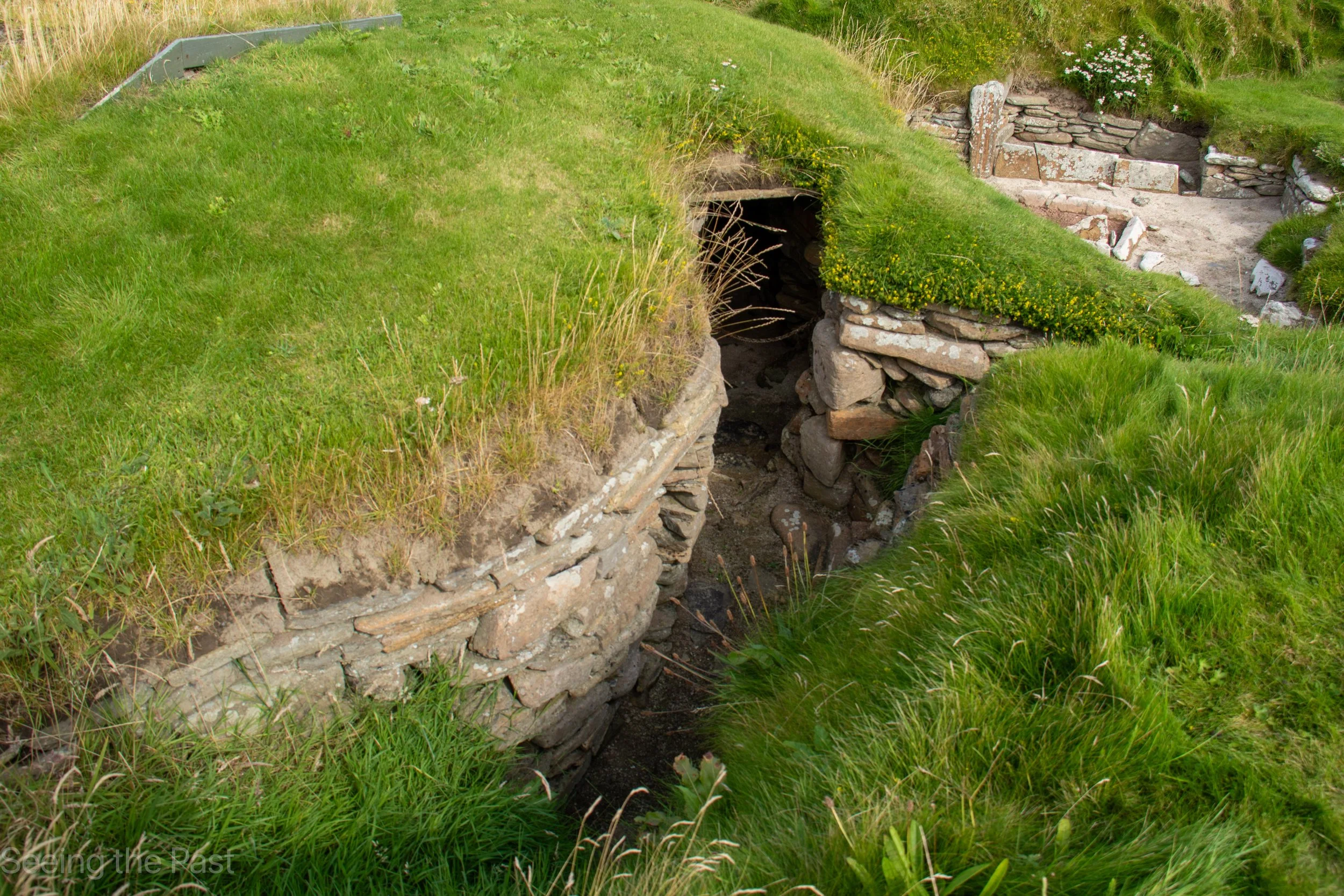
Below is House 7. Unfortunately you cannot get in to see this one but has been covered over to protect it from wind, rain snow and frost. Note the doorway: it is believed that this was a typical style of entrance for all of the houses to keep the wind and rain out. It has been suggested that a stone slab would have been used for a door, this must have been hard to open and close!
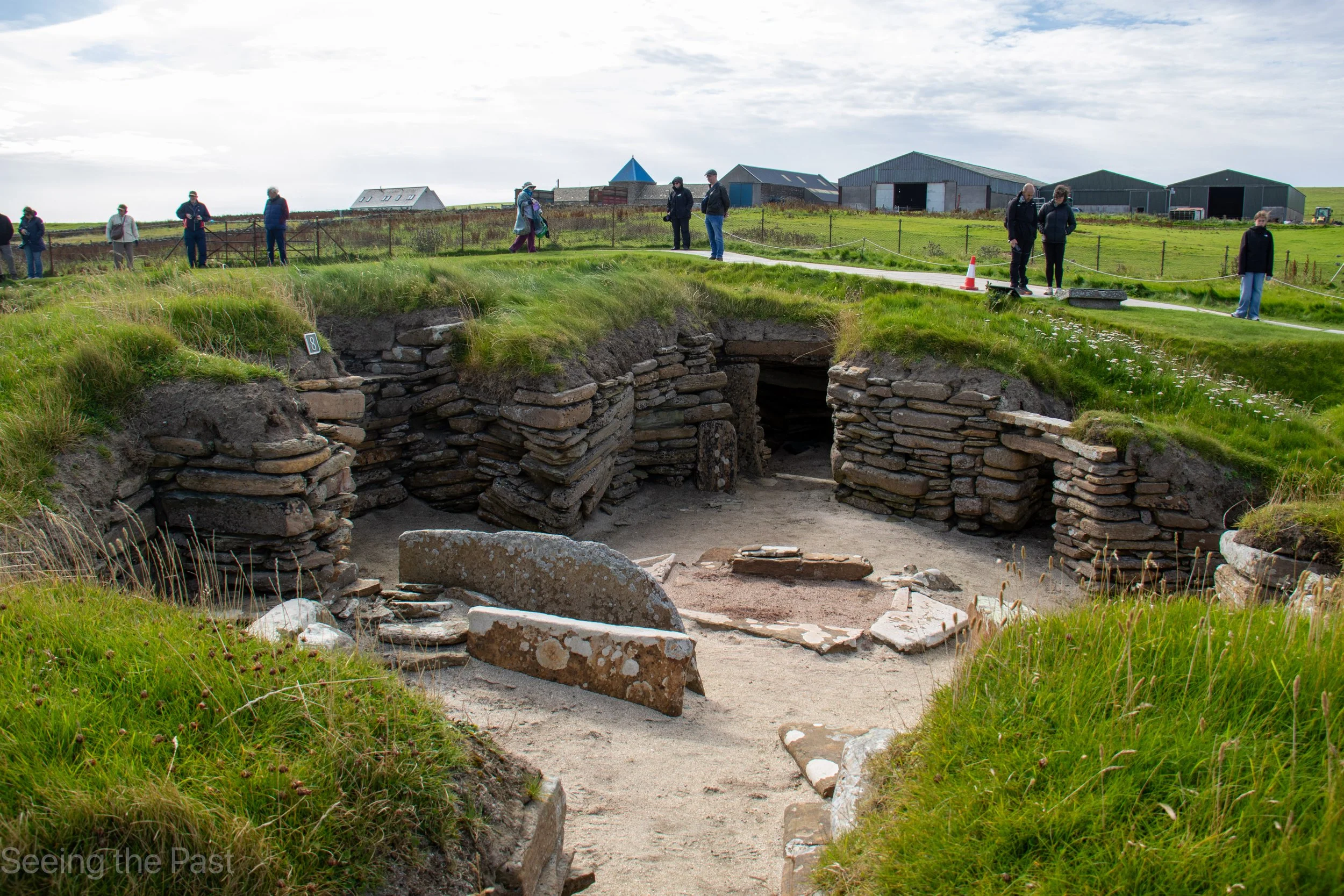
Below is House 8 which is believed to be a workshop. Archaelogists have come up with this idea because there are no beds, boxes or dressers here. When it was fully excavated in 1929 by Gordon Childe, he discovered that the floor was covered with small pieces of Chert. It is a relative of Flint with each fragment is composed of microscopic quartz crystals which makes it a quite hard and when it is struck, like flint snapping, a razor sharp edge is created. So many pieces of Chert on the floor can be explained by being the leftovers of tool making. Flint is only found on beaches in Orkney and so Chert was used. However, Chert was easier to use when it was processed ie it was covered by pieces of heated igneous rock which is then allowed to cool slowly. Lumps of igneous rock have been found by a gap in the wall which is believed to be used as a flue to channel wind into a fire to make it as hot as possible. Fragments of bone and antler have been found that these materials too had been had been skilfully crafted into tools. We certainly can conclude that the people here were both skilled and industrious.
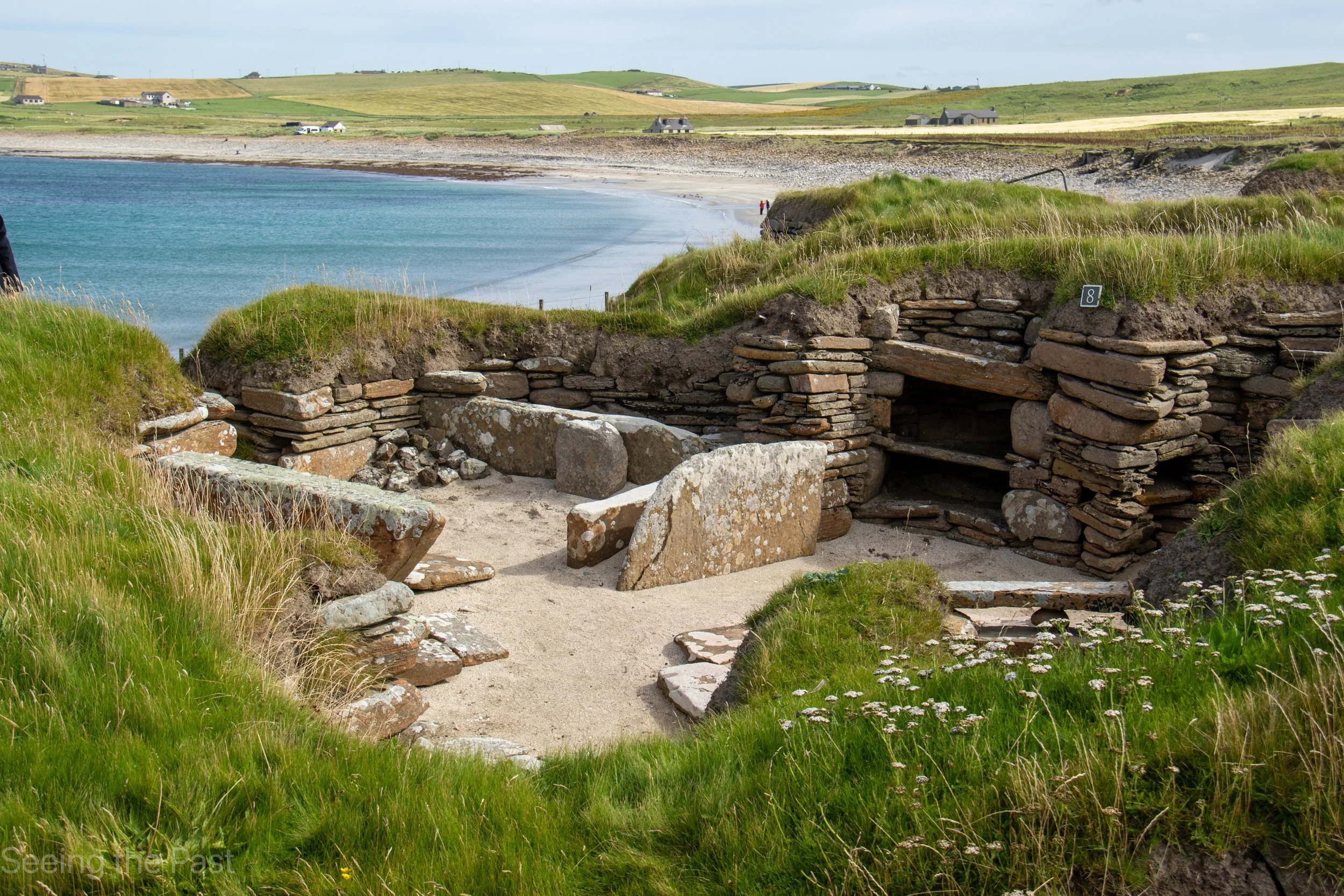
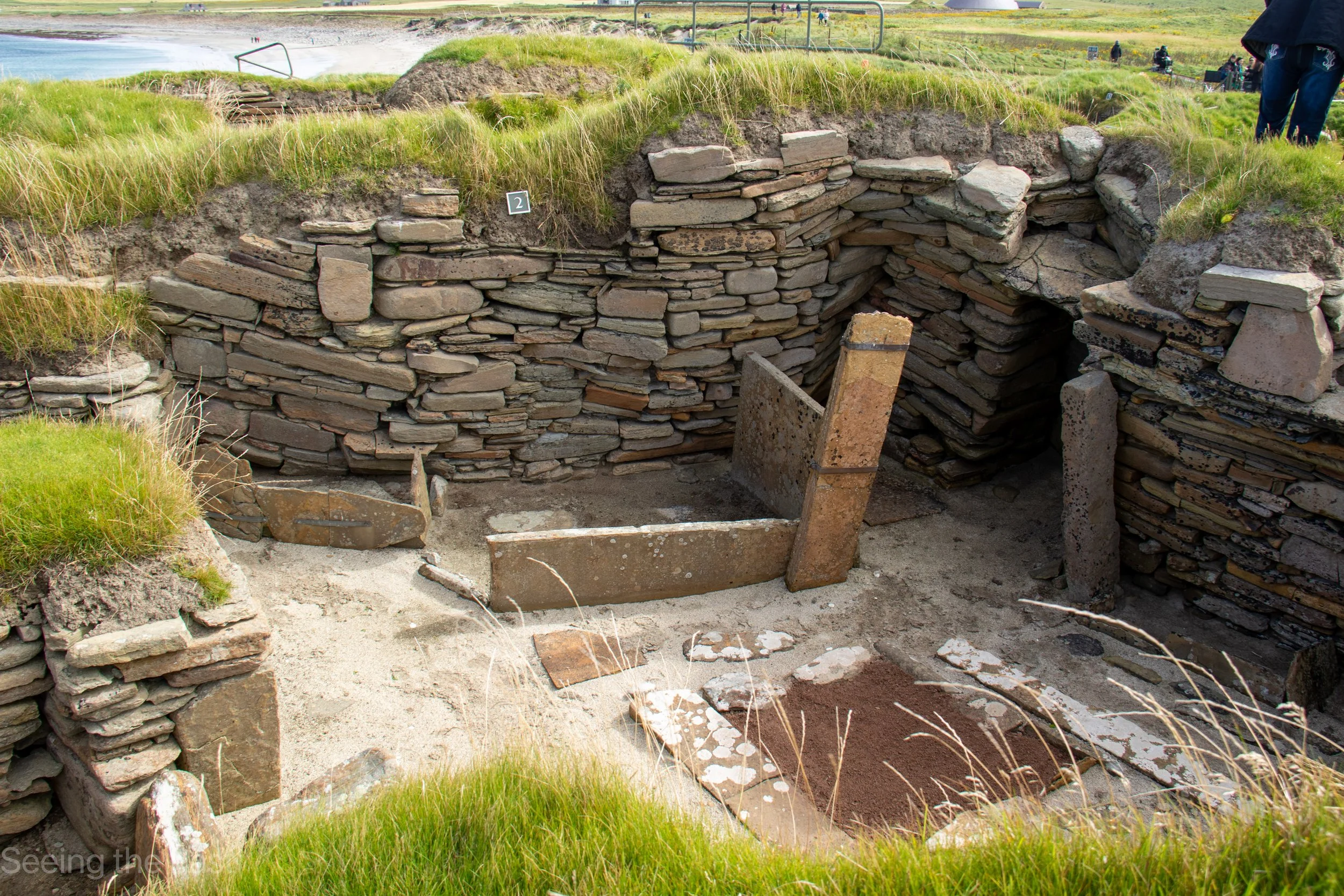
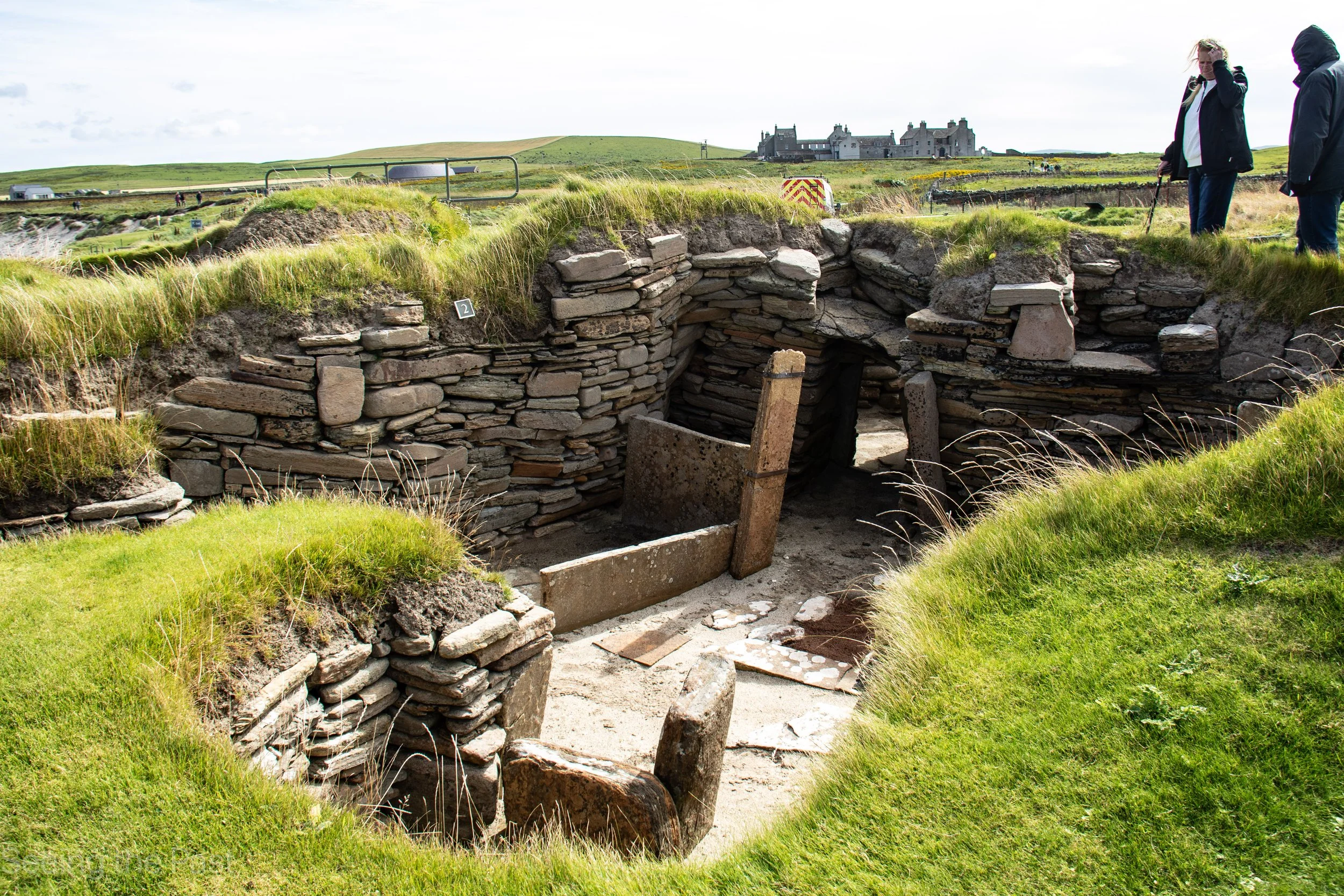
Below 3 photos of House 2. An estate agent would have fun describing the features but compared to the next house, House 1, it is rather small.
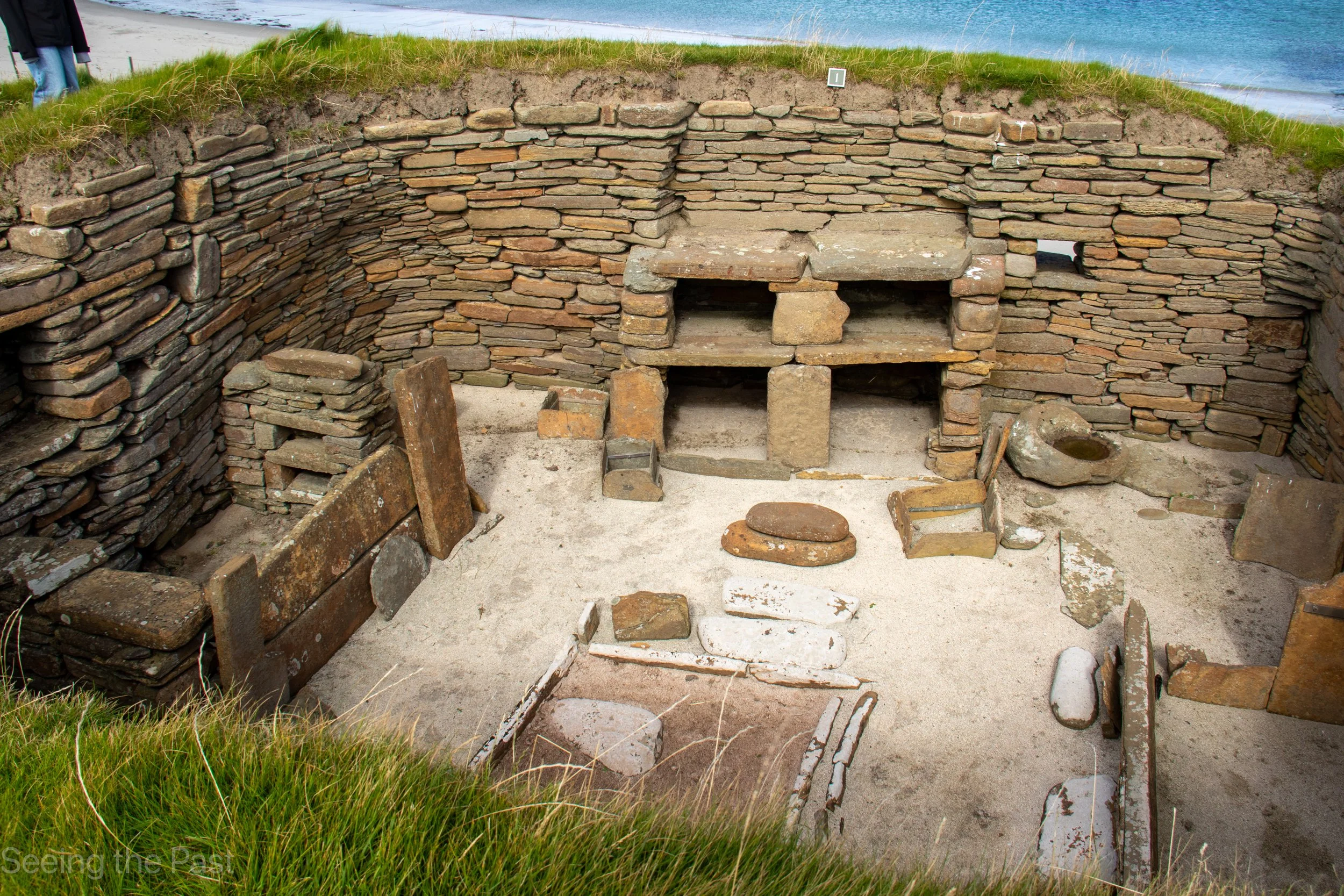
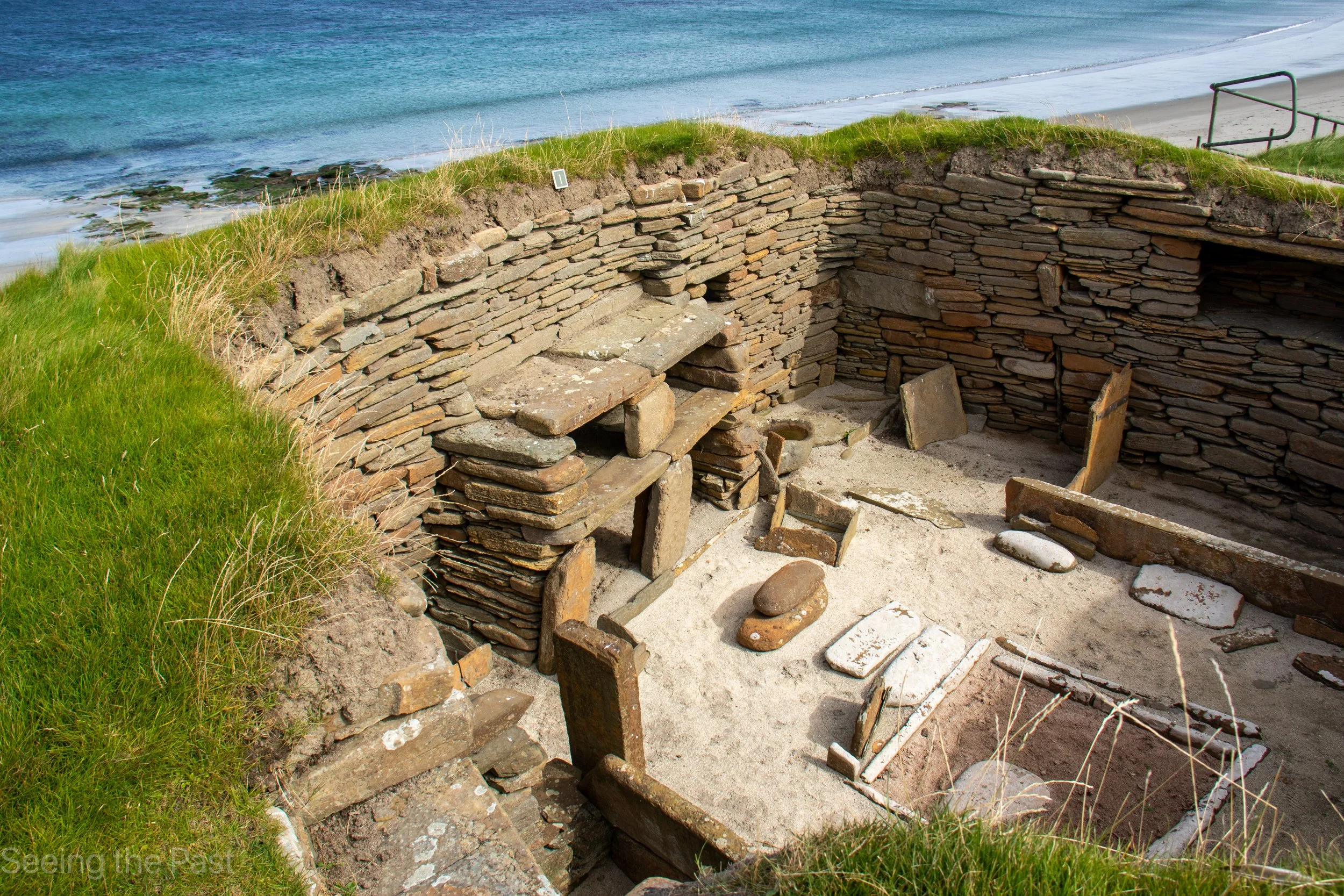
Below are 3 photos of the amazing, House 1. Sadly, this house is close to the sea and may disappear with the rising sea level linked to global warming. Earlier than that, it may be affected by a storm. The whole village was revealed by a storm , one in 1924 washed away part of the village and there is always the chance of another storm destroying it.
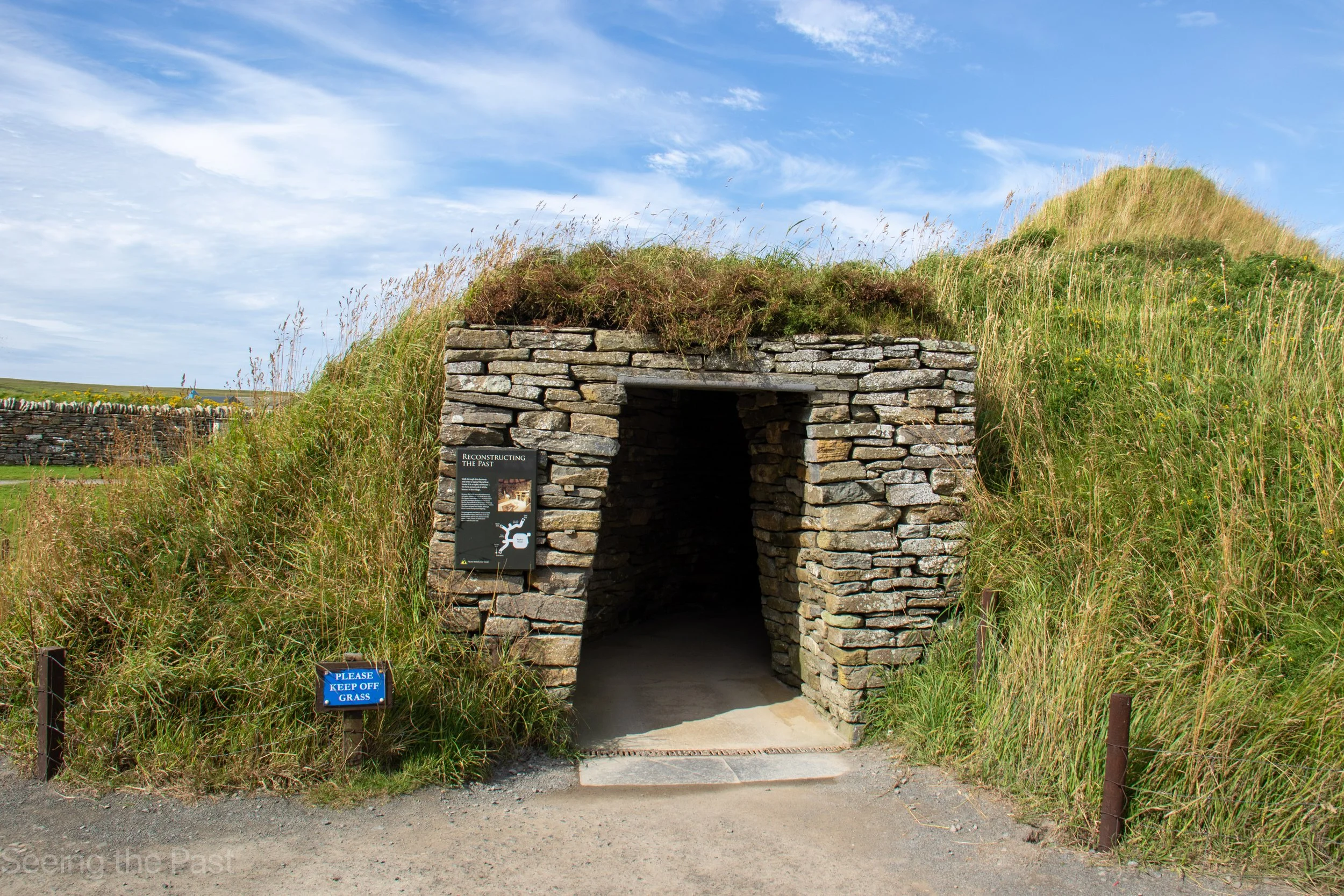
The “House 7 Replica”.
It is worth having a look at the replica house before you walk to the village to get an idea of what you will be observing. On your way back to the entrance building have another peek if you want to consolidate your understandings of this very rare village.
This is how the entrance would have looked in the Neolithic period.(without the sign!)
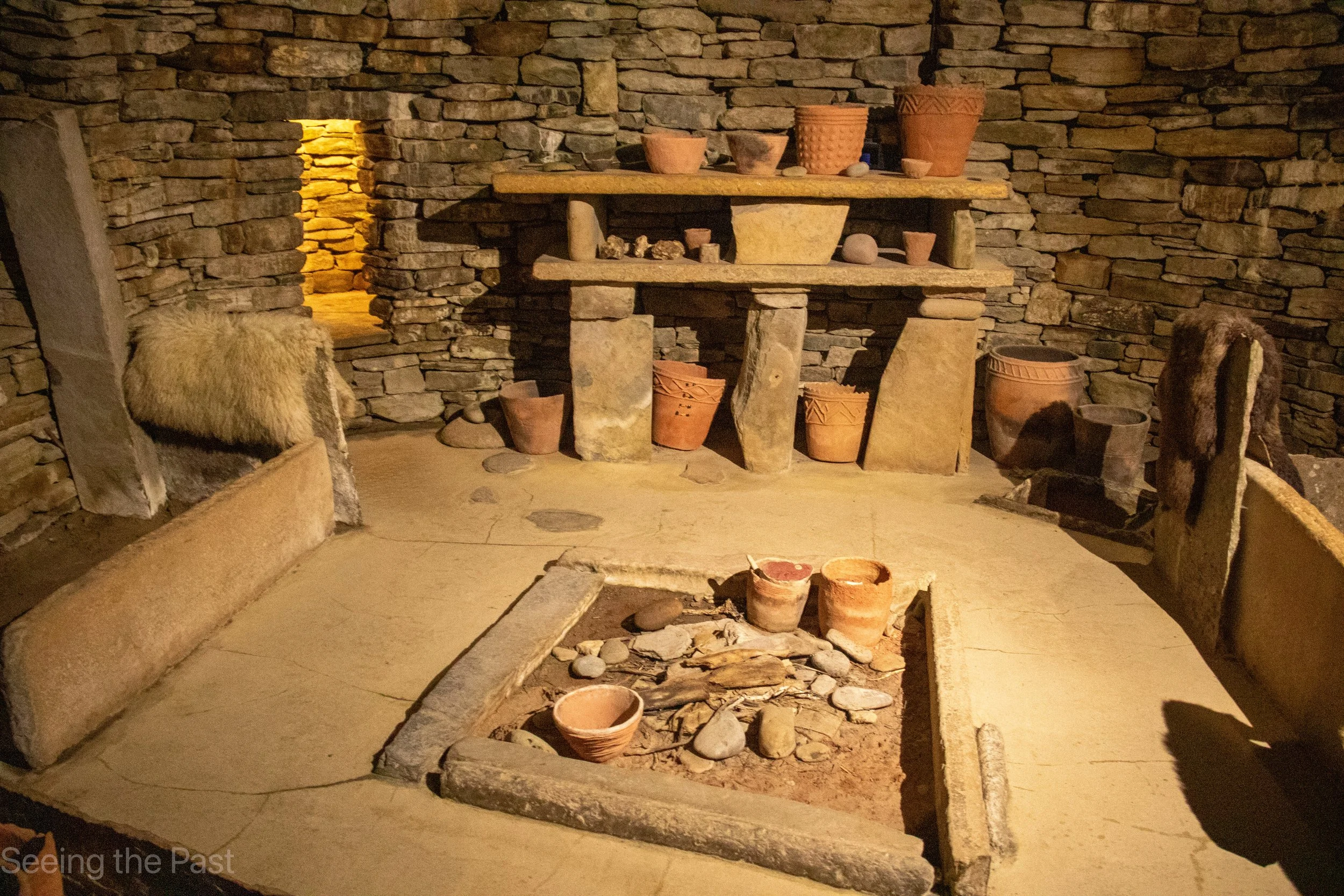
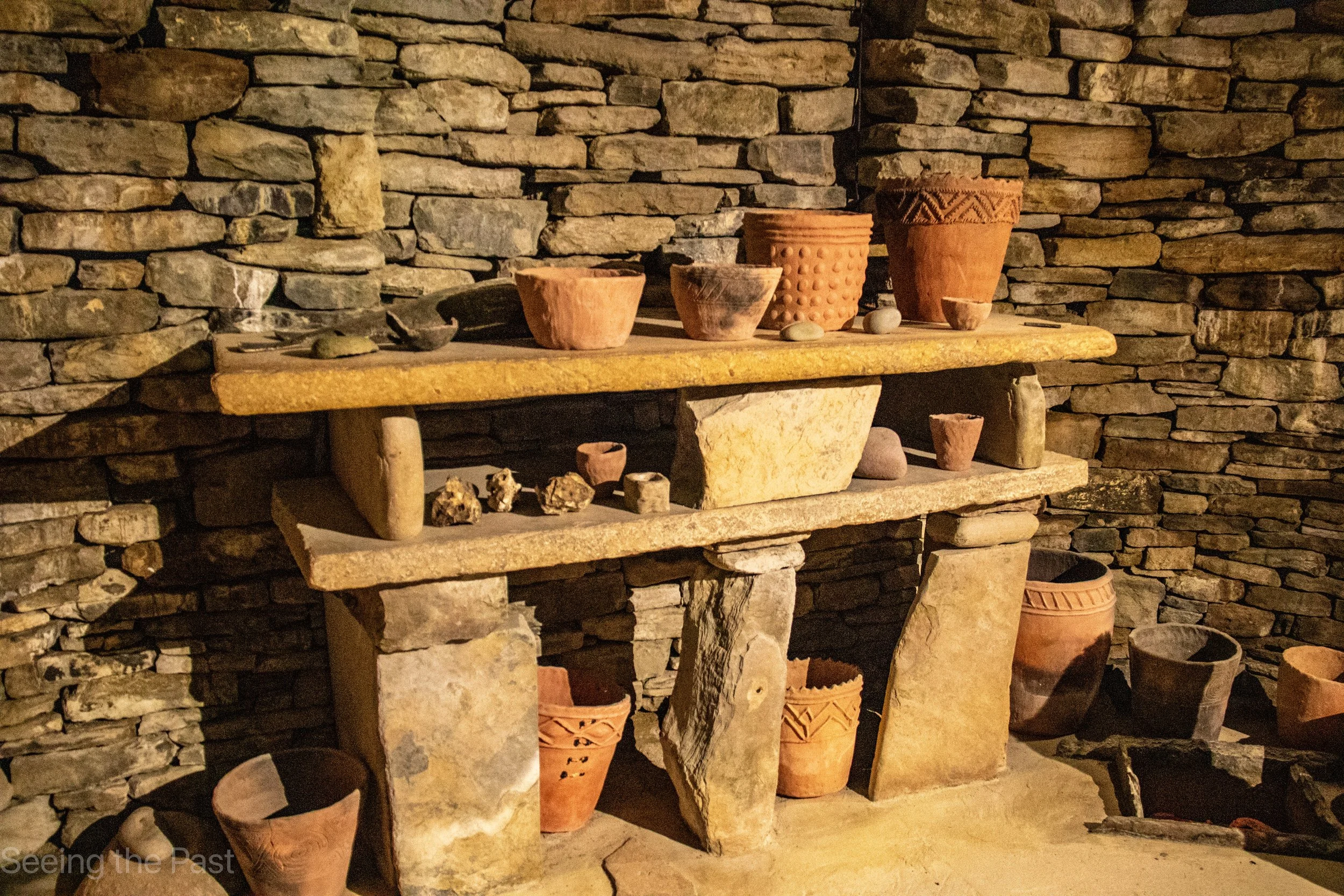
Inside the house is a layout and furnishings that you have seen in most of the houses. There are no windows because the continuous wind outside would make it quite a cold house in the winter. On the dresser are large replica “Grooved Ware” pots that can be seen an exhibition in the entrance building tickets are purchased.
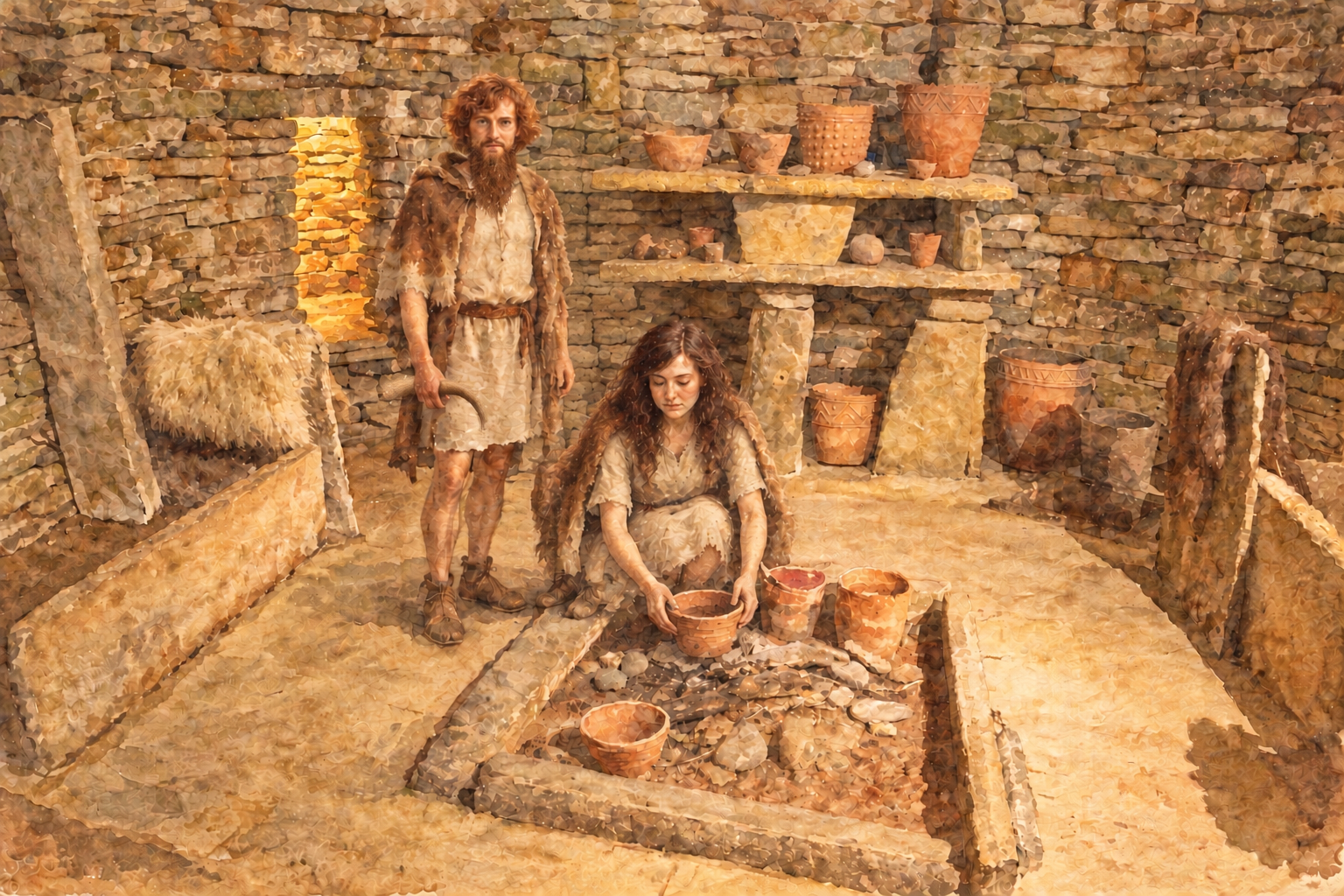
Just for fun, I created a Neolithic painting of myself and Loretta, when we were a bit younger, using Ai and then got it to place us in a watercolour version of the image above.
Below, a closeup of the dresser with the decorative pots. It was obviously important for them to have some decorations on the pots when a plane pot would have done the job.
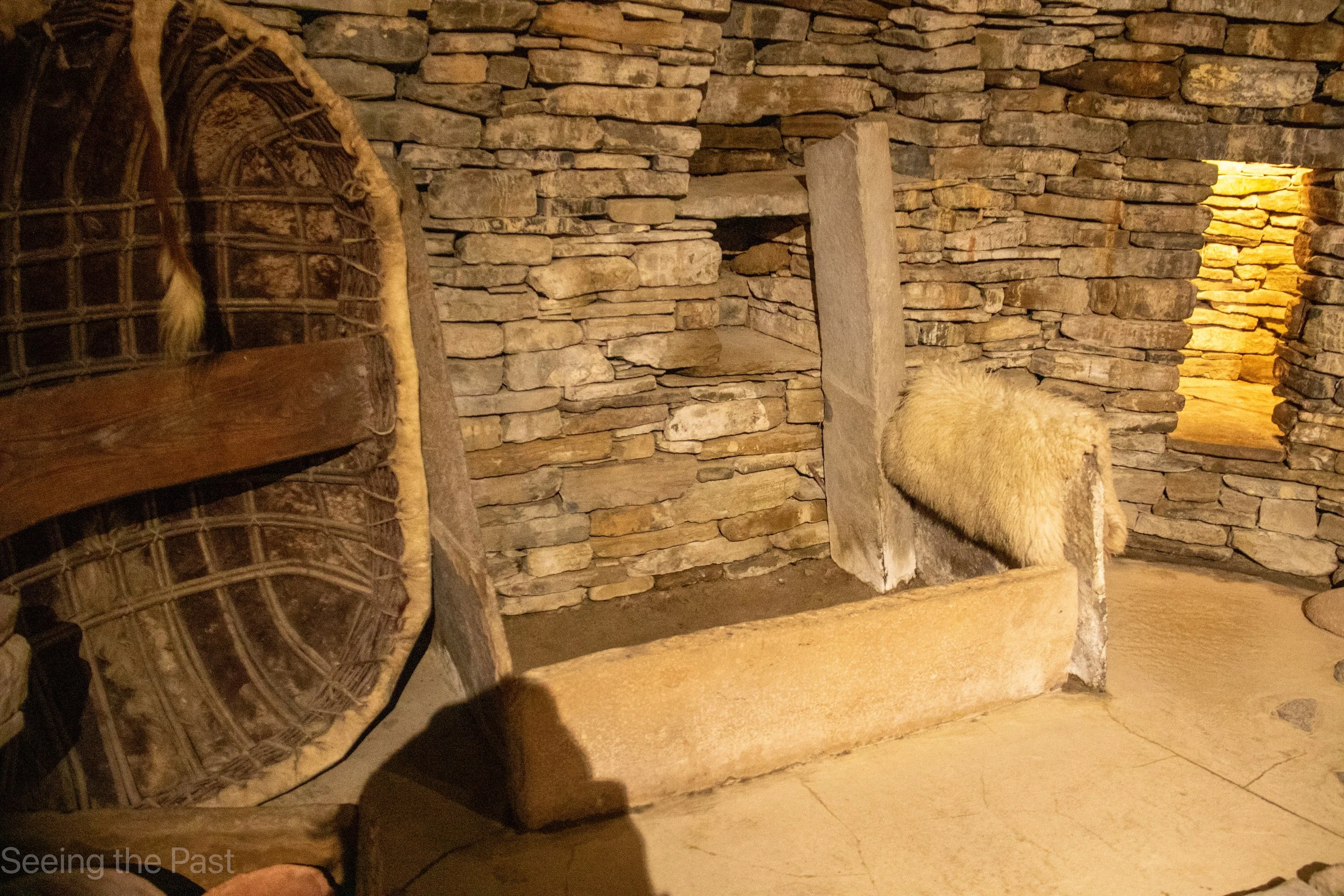
The bed. To make it comfortable, the base would have been covered by something soft and animal skins would be used for covers. There is also a replica boat for catching fish.
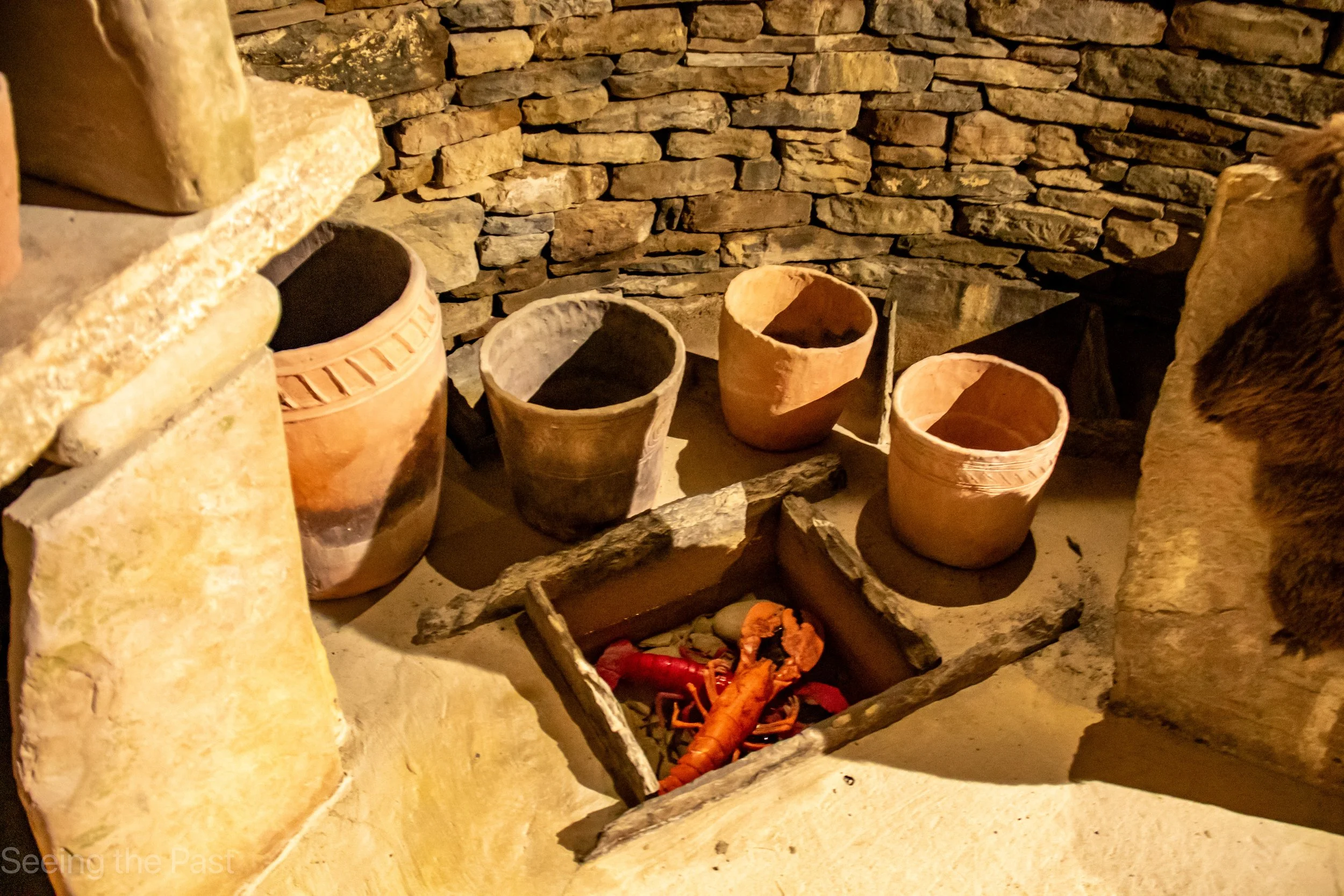
Below, more examples of Grooved ware pots.
The Exhibition
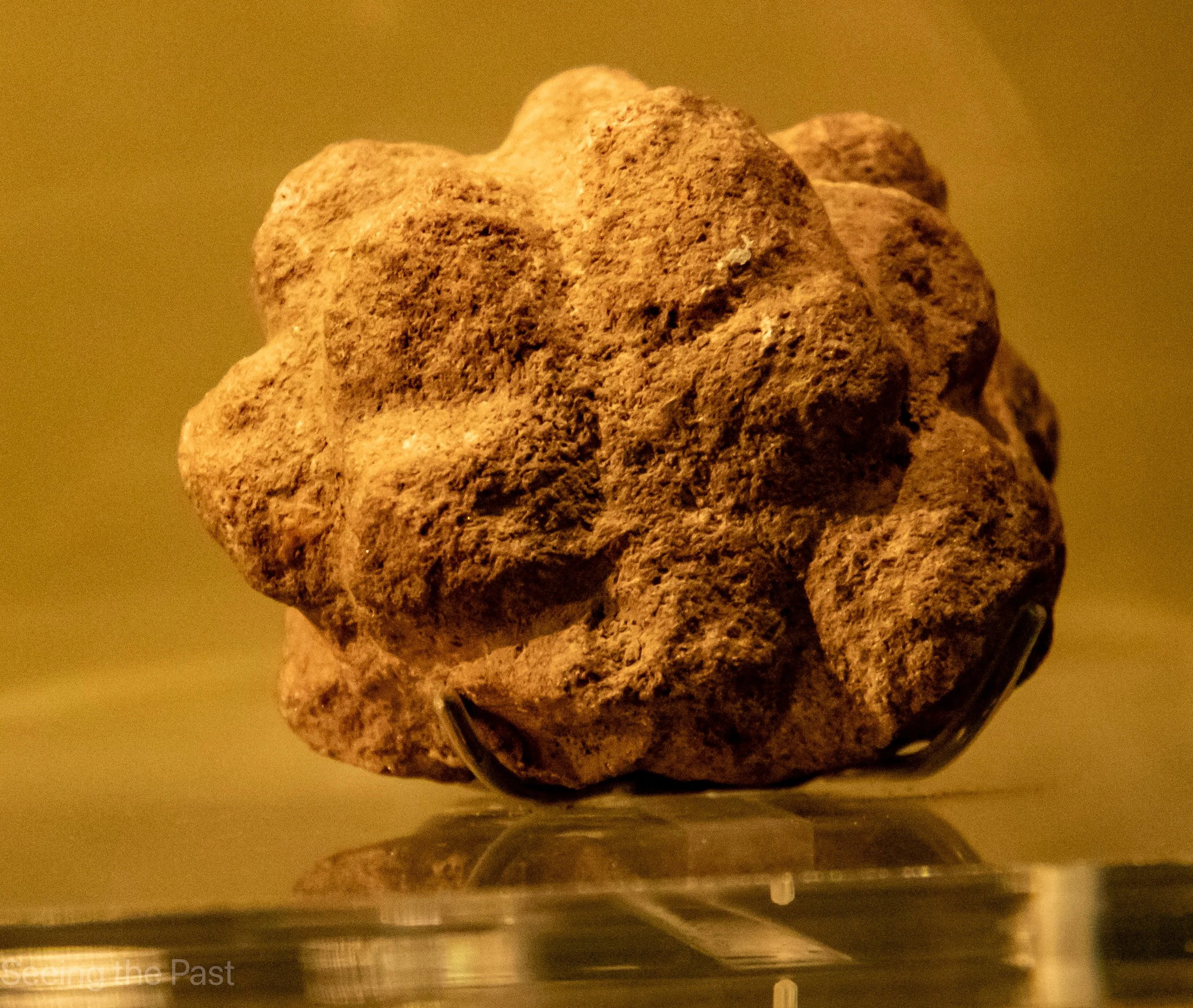
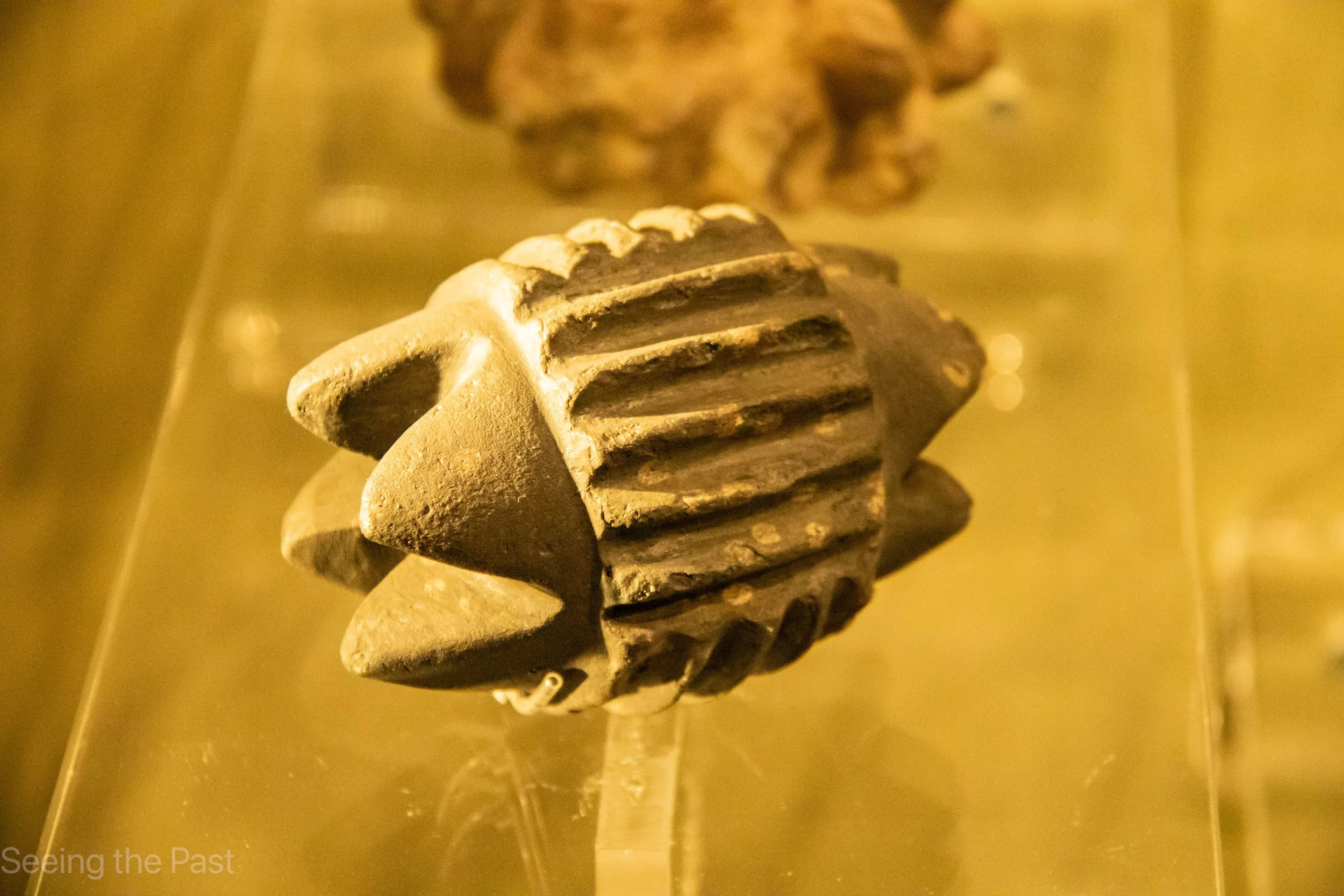
Below, the exhibition area is packed out with artefacts and information screens that will enhance your understanding of the houses at Skara Brae. I begin though with some very peculiar objects. There are several theories about these objects but these weird objects are not easy to interpret convincingly. One suggestion is that these are artefacts used in meetings and are passed to the person who is allowed to speak. If a person does not have the object, they are not allowed to speak or interrupt the holder speaking.
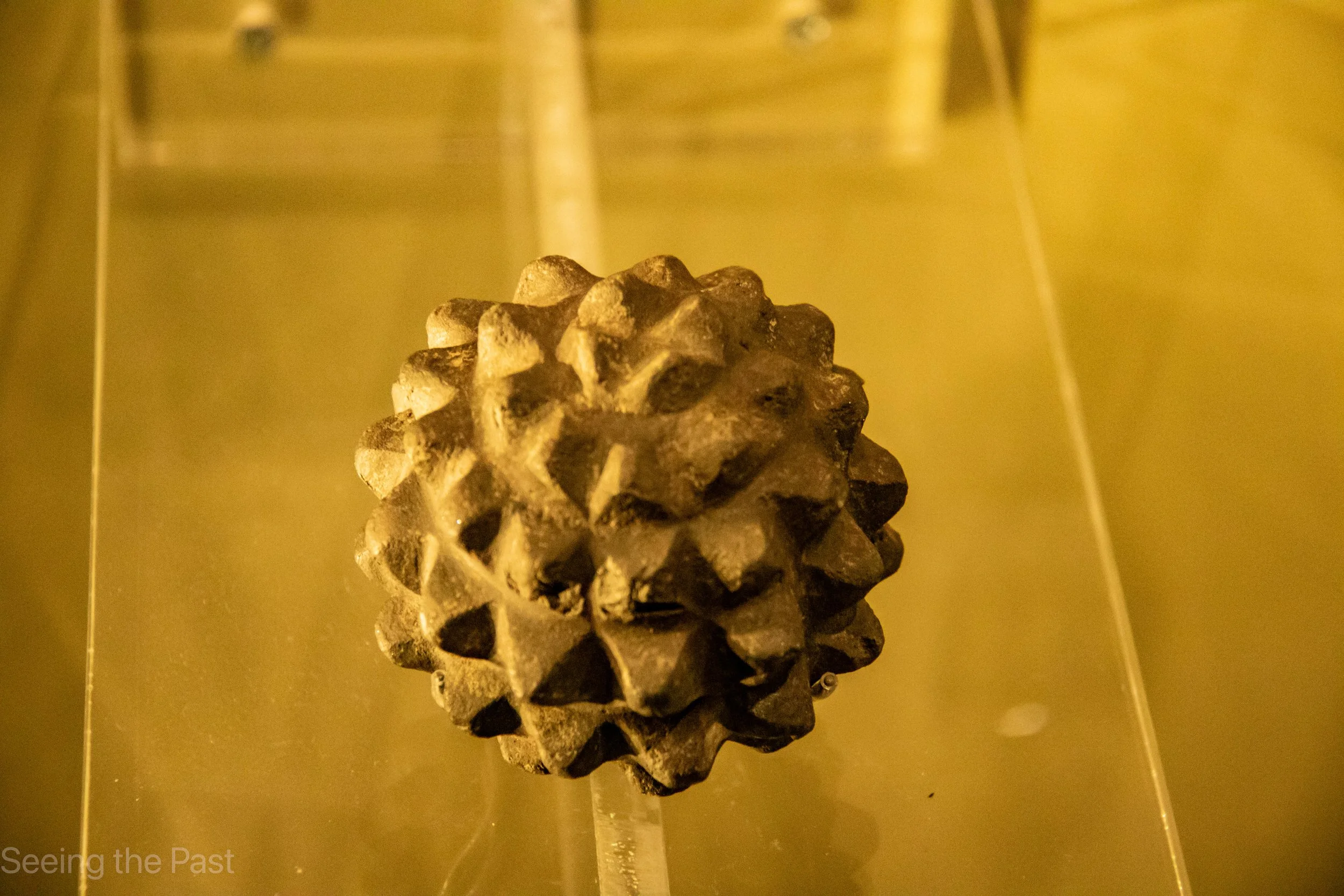
Could the object below be an earlier version of the object above? Could it be a worn down version or a first attempt.
Below, a back scratcher?
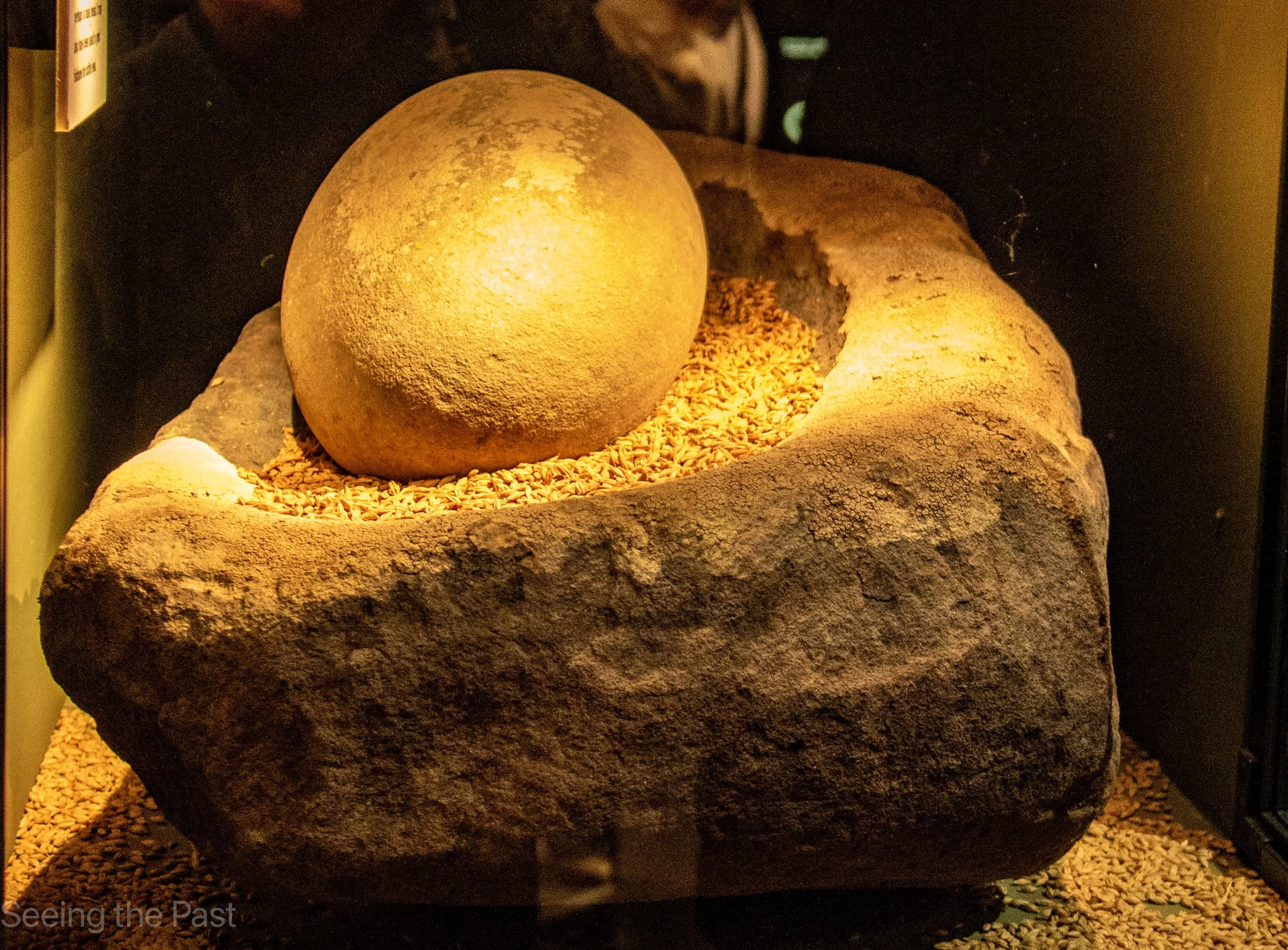
Below, is a quern used for grinding corn into flour. An awful lot of grinding would have to be done to make a decent amount of flour with which to make bread but it was worth it. Querns feature in archaeological sites all over the world.
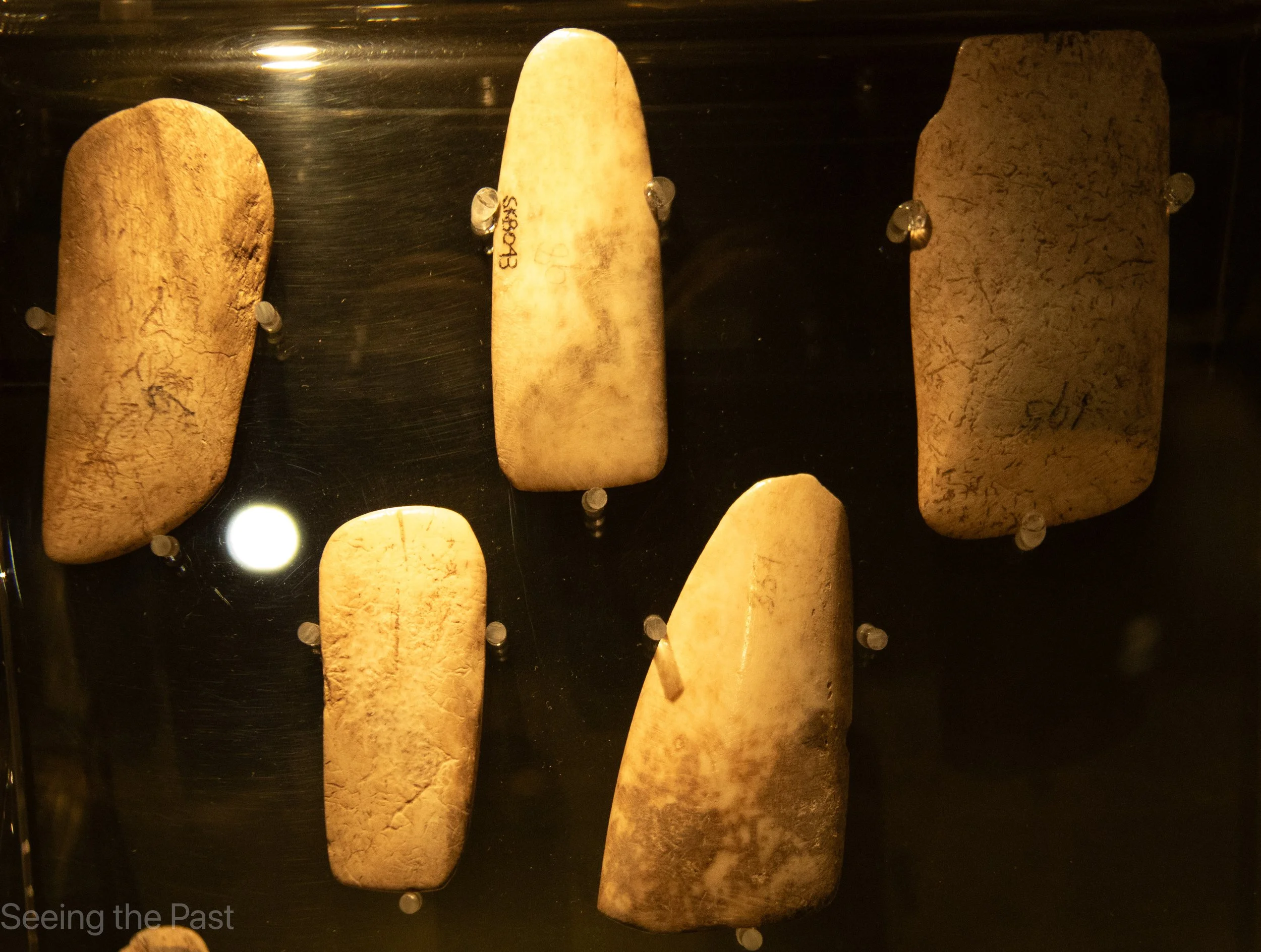
Below, in this photo there are 5 bone blades that could have been used to cut things such as hides or to scrape hides of fat, tissue etc so that they can be used.
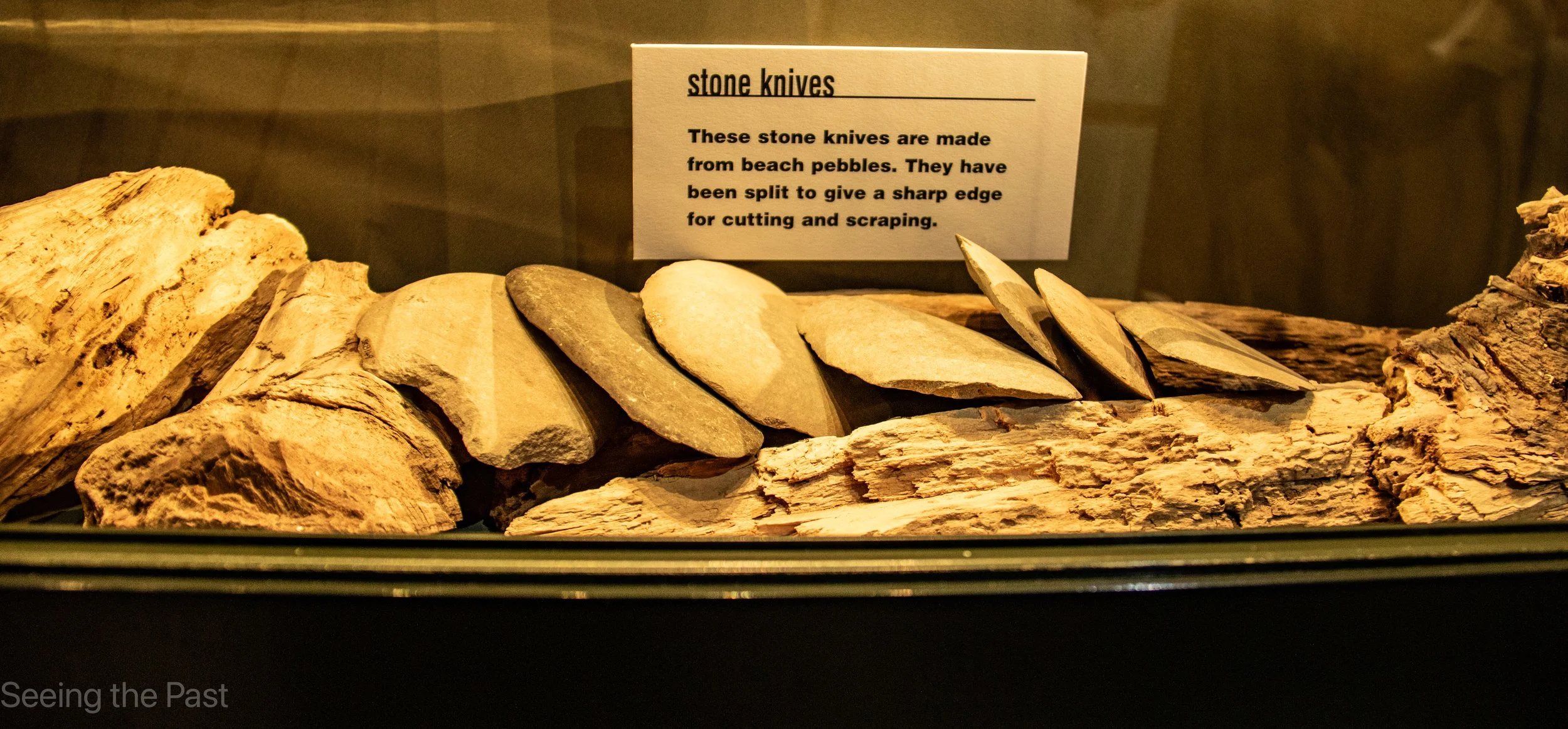
Below a similar cutting and scraping job was done by the split pebbles with sharp edges.
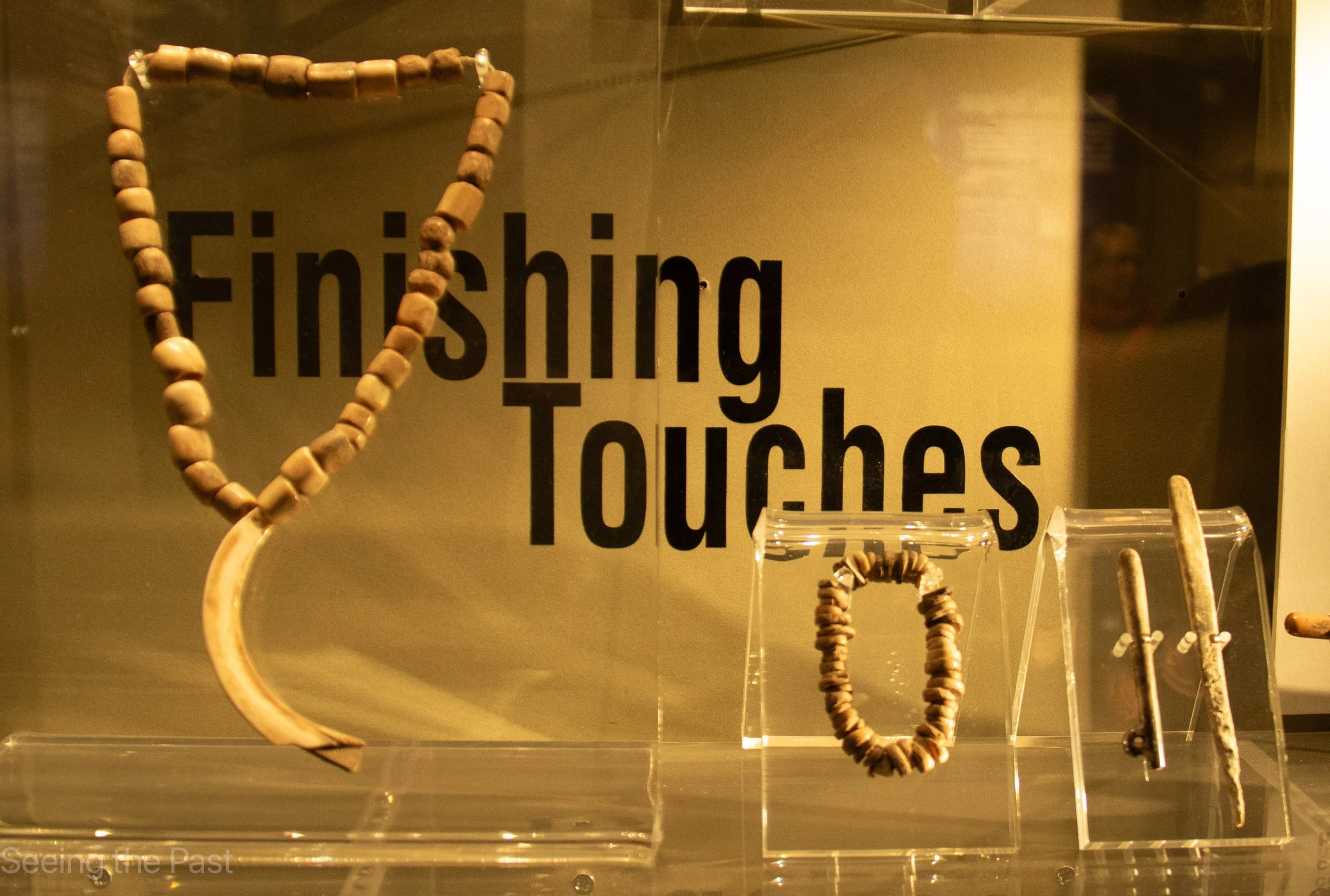
Below, skills have improved in this period and a consequence is improved jewellery such as these bead necklaces and bracelets.
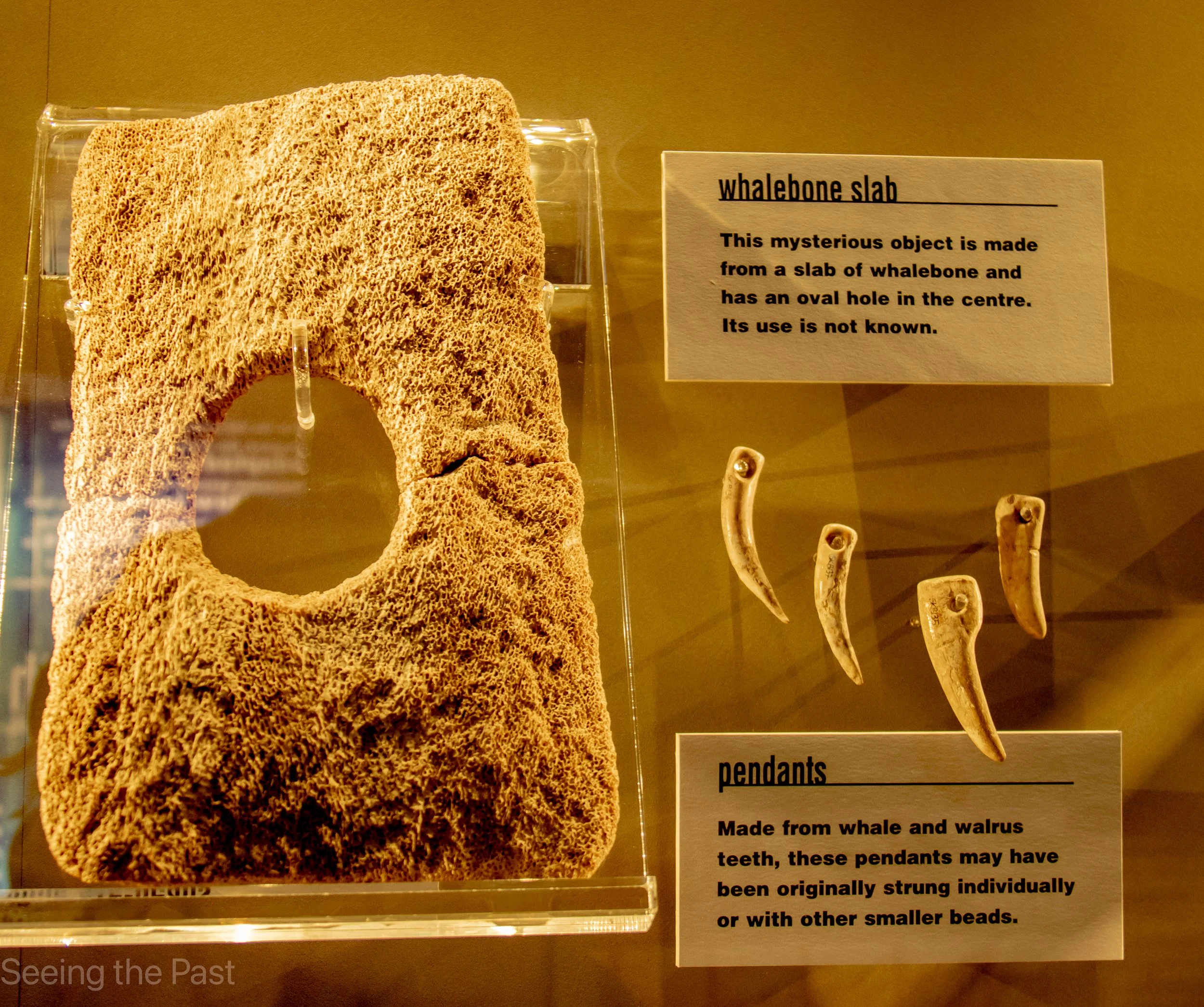
Below, an unknown object made from whalebone and pendants made from whale and walrus teeth.
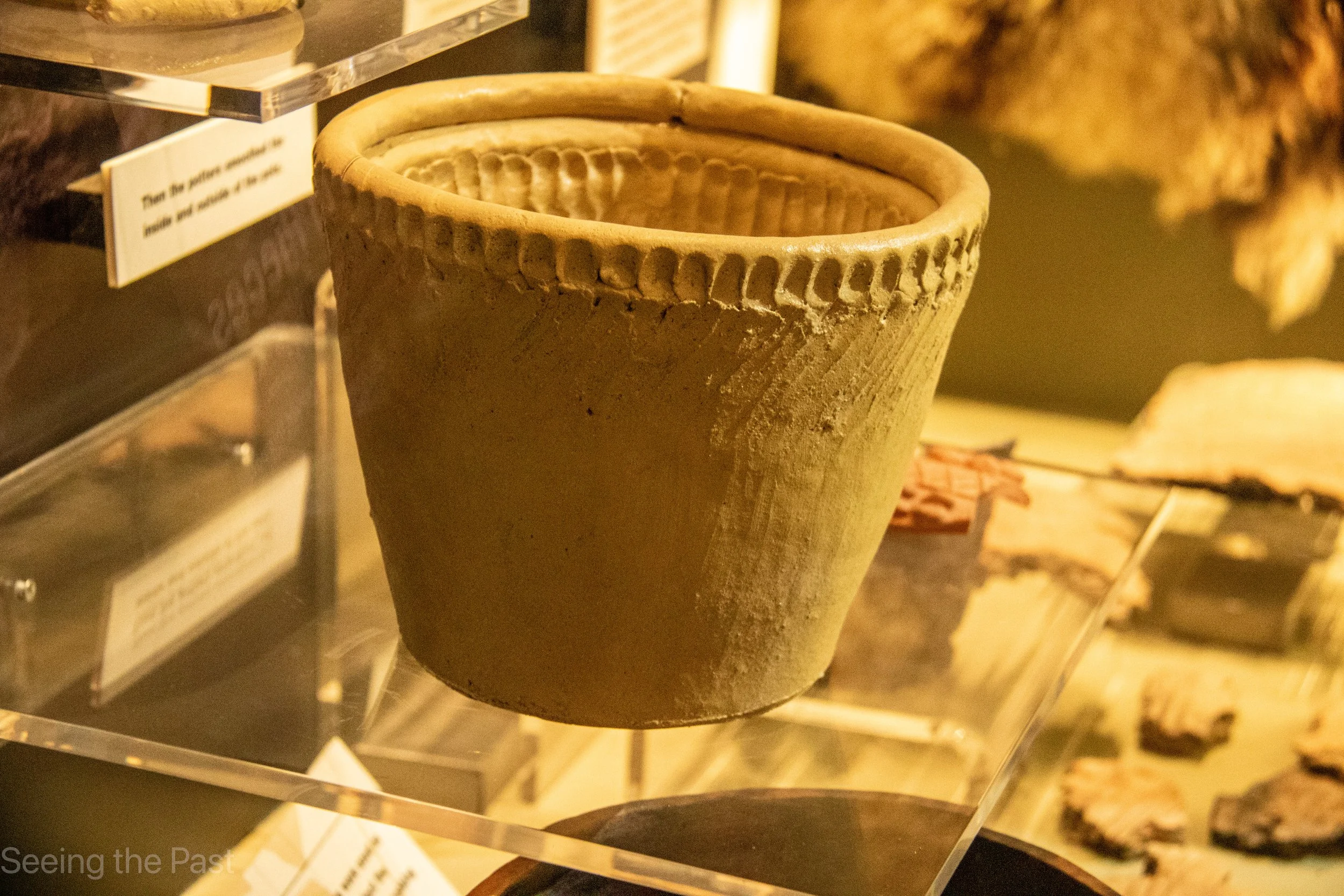
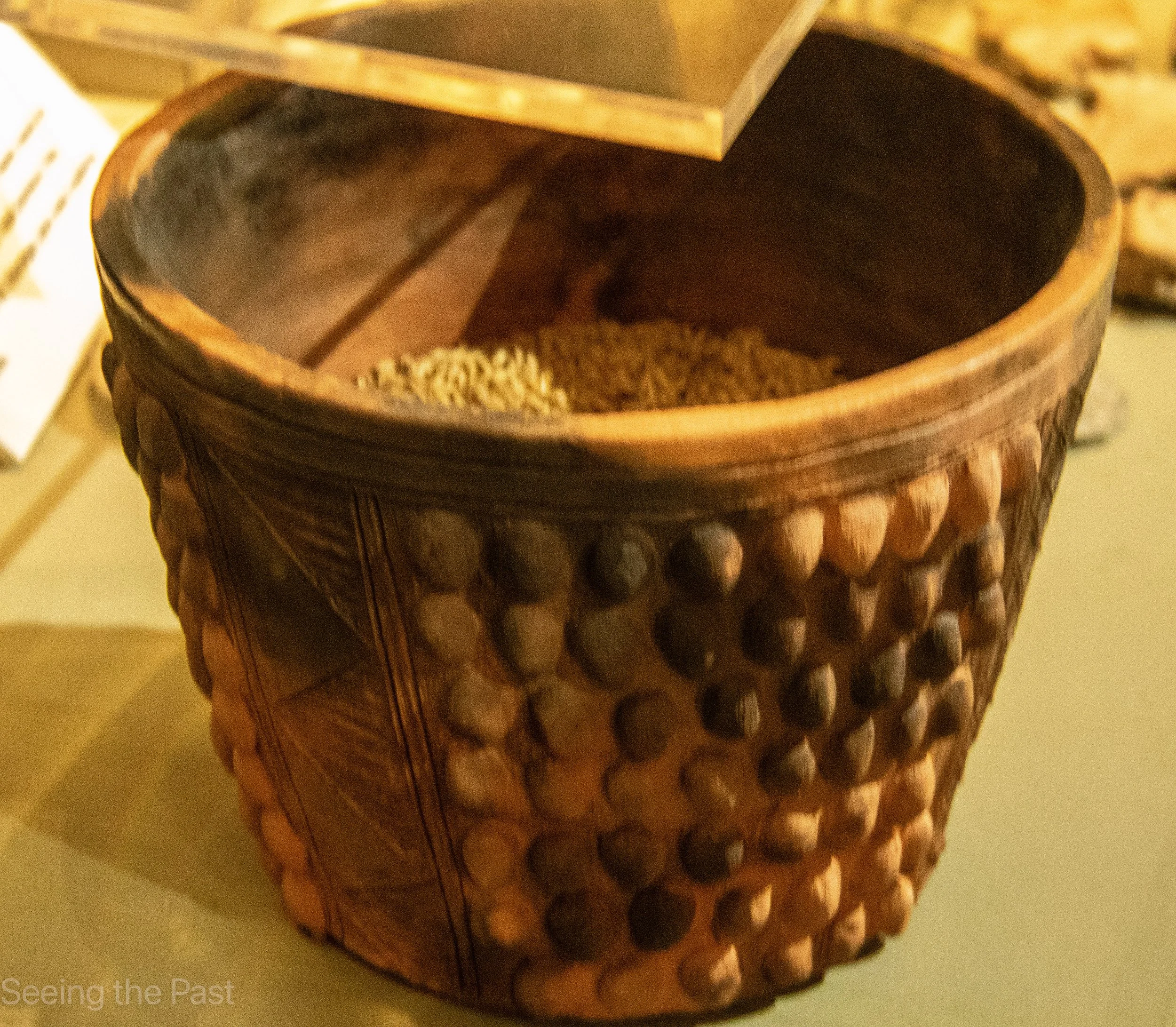
Below, two examples of “Groovedware” pottery. Sadly, these pots are replicas as no complete pots have been found at Skara Brae to date. Original pots were made by making a long snake of clay by rolling it on a flat stone and then coiling it around to form a pot. The coil shape is then smoothed and pointed sticks or bones are used to draw decorative grooves. Groovedware was used in Britain from about 3000 to 2500 BC.
Essential information.
For details on how to get to Skara Brae, opening times and entry ticket prices use this website;
https:///visit/all/skara-brae/plan-your-visit/
Articles that may be of some interest.


Skara Brae in Orkney, is an absolutely amazing Neolithic settlement and has been on our “bucket list for years. Often described as the ‘Scottish Pompeii’, this remarkable prehistoric village dates back around 5,000 years and is older than Stonehenge and the Egyptian pyramids. Hiddenbeneath the sand forthousands of years, it was uncovered after a violent storm in 1850, revealingremarkably well-preservedstone houses, passageways, fireplaces, beds and even stone furniture.