
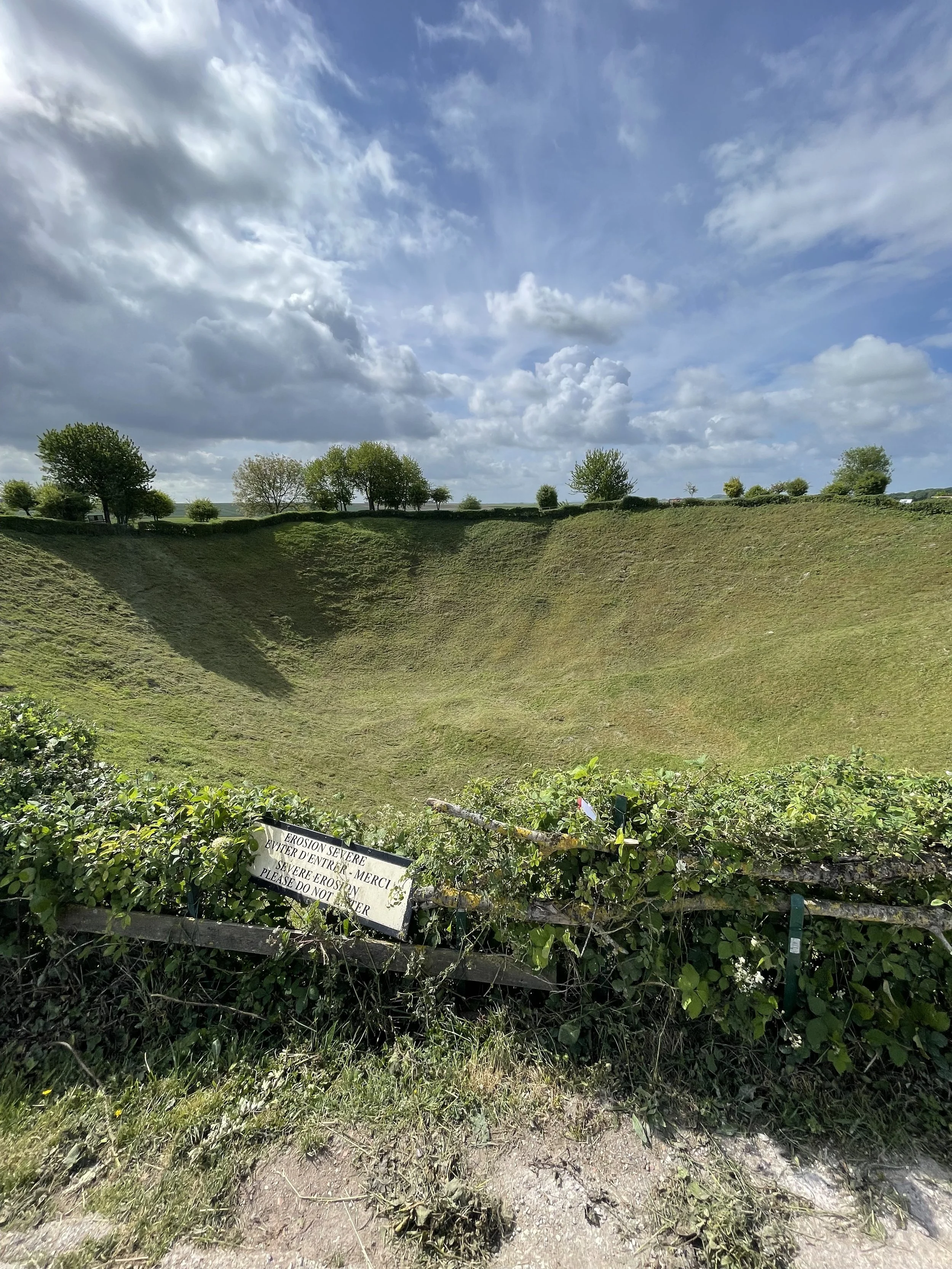
WW1 series. Where the Great War shook the Earth; the story of the Lochnagar Crater.
/Some historians of World War One have stated that any tour of the Battle of the Somme area should start with the Lochnagar Crater. It is a massive crater one hundred metres (328 feet) in diameter and 30 metres (98 feet) deep. Why on earth was it made or rather, how on earth was it made? The Lochnagar Crater was created by the British, when two batches of explosive, 16 metres deep and 20 metres apart, went up at 7.28 am on July 1st. It was hoped that loads of the enemy near La Boiselle, would be killed and others would be stunned and not know what was going on. This, along with another eighteen mines, was the signal for men to “go over the top”, ie get out of their trench, make their way through the already cut barbed wire protection and then run at the enemy.
Read More


Tucked away in Isle of Portland in Dorset, the Castleton D Day Centre offers a powerful and immersive window into one of the most significant moments of the Second World War. Far from being a traditional “look but don’t touch” museum, the centre invites visitors to step closer to history — with a remarkable collection of authentic artefacts that can be touched, held, and even sat on, bringing the realities of the D-Day era vividly to life. Added to this are several friendly volunteers dressed in period outfits who have a vast amount of knowledge of those artefacts and are able to answer questions.